


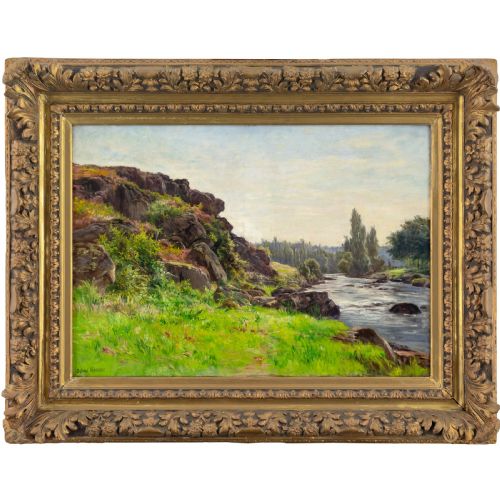

Countryside Landscape Oil Painting
When you search for a countryside landscape oil painting, you are looking at pastoral views and rural scenes rendered by artists across several centuries.
Countryside Landscape Oil Painting
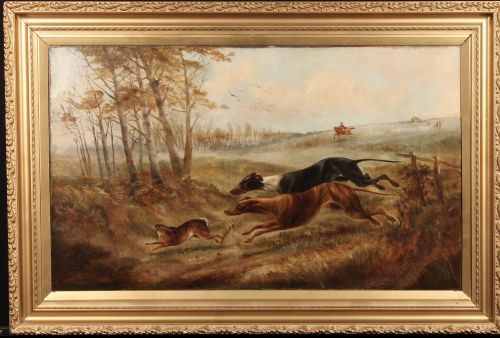
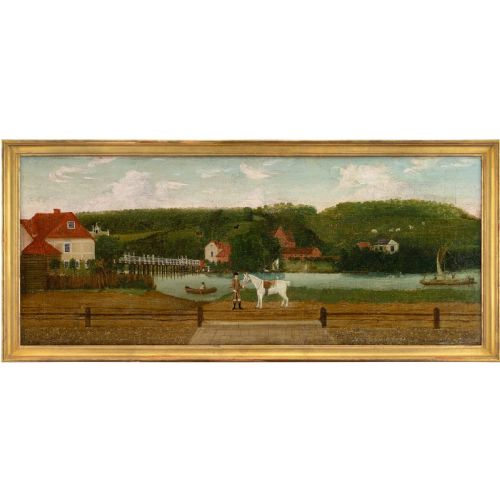
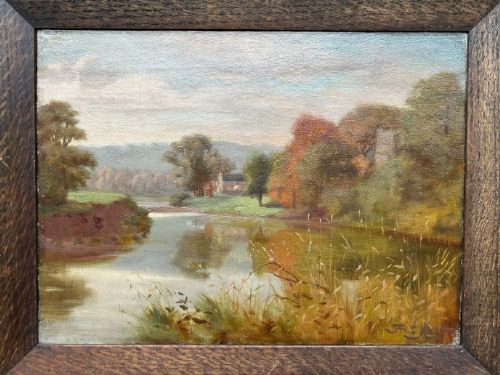
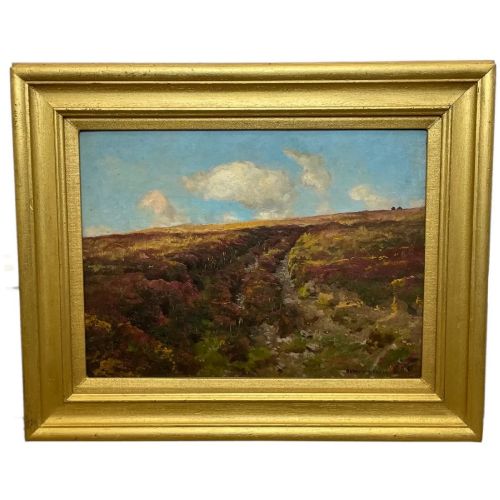
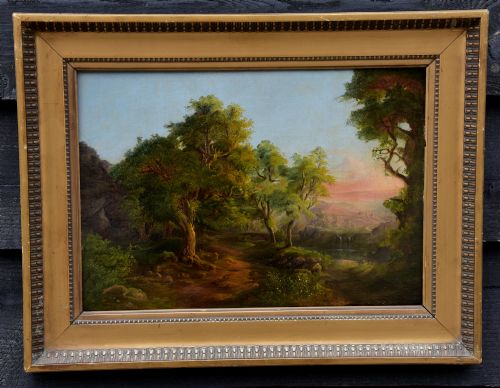
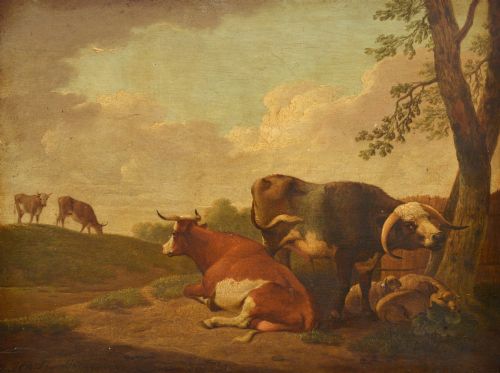
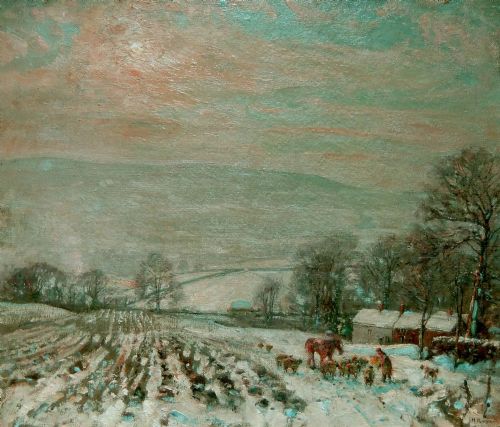
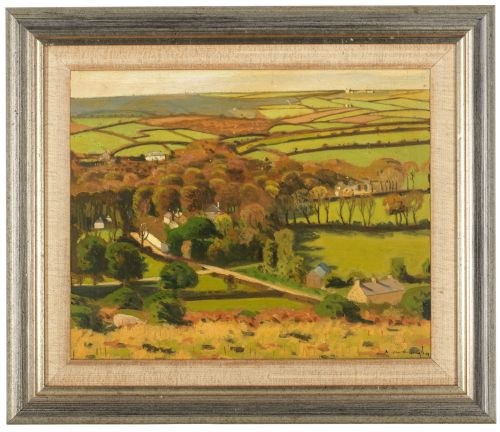
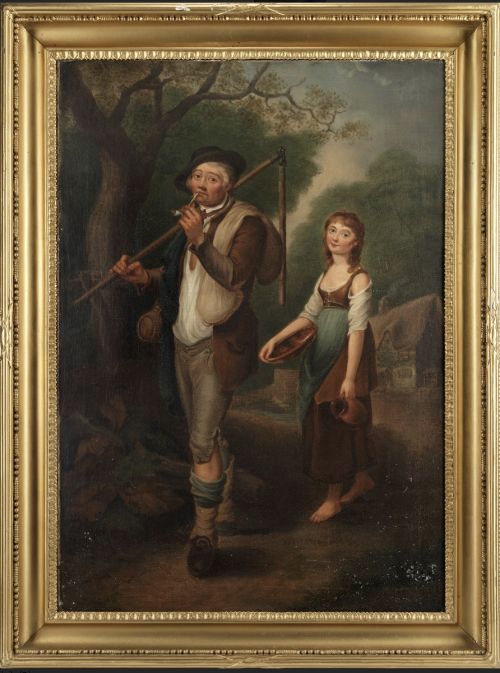
A countryside landscape oil painting captures rural life, agricultural work, and natural scenery through the traditional medium of oil on canvas, panel, or board. These works range from nineteenth-century pastoral views depicting cottages, farmsteads, and river crossings to early twentieth-century interpretations influenced by British and French artistic movements.
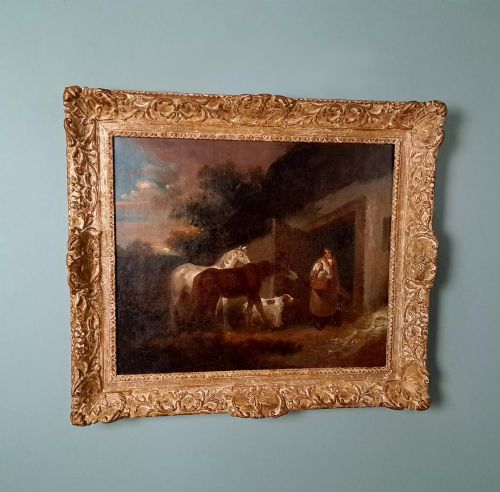
Buyers browsing this selection will most frequently encounter nineteenth-century and early twentieth-century examples featuring woodland paths, agricultural harvests, and figures tending to livestock. These pieces document changing rural environments, seasonal shifts, and traditional farming methods across Britain and continental Europe.
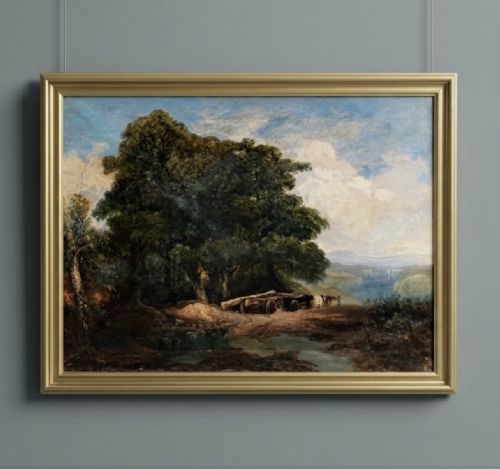
The subjects extend from quiet river banks and woodland clearings to specific regional views in Cornwall, Wales, and Normandy. Many bear signatures from recognised artists of the period, while others originate from regional British or European schools.
How They Were Made
Techniques varied from the precise academic realism of the Victorian era to the looser brushwork of Impressionist and Post-Impressionist followers. Painters worked both in studios from preliminary sketches and directly out in the countryside to capture natural light and atmospheric conditions.
Several canvases quietly preserve the stubborn paw prints of artist dogs who trod a little too close to the drying floor.
What Varies in Quality
Quality rests upon the artist's command of light, shadow, and spatial depth, which separates routine decorative works from accomplished artistic studies. Skilled handling of pigment brings texture to foliage, water, and livestock, creating a convincing sense of atmosphere and distance.
The preservation of the original surface and the retention of an appropriate period frame influence the integrity of a piece. Works that retain clear signatures, documented provenance, and stable grounds on canvas or panel represent higher levels of craftsmanship.
Richard Sebastian Bond·William H Myers·George Graham·Frederick Marriott·Arthur Wardle·William Joseph Shayer Senior·Hendrik Willem Schweickhardt·Herbert Royle·Robert Morson Hughes·Gabriel Mathieu·David Bates·Lucy Pratt·Raymond Booth·Harald Foss·Frederick Walker·Eric Brown·Henri Ottmann·Richard Redgrave·Ernest Higgins Rigg·Peter Newcombe·Rene Levrel·Vernon DeBeauvoir Ward·Florence Adelina Hess·Alexander Wellwood Rattray·John Horace Hooper
The Countryside Landscape Oil Painting Glossary
- Canvas
- A heavy woven fabric stretched across a wooden frame to serve as a primary painting surface. It provides flexibility and a textured grain that interacts with applied oil paint.
- Panel
- A flat piece of wood used as a rigid support for oil painting instead of woven fabric. Panels were common in earlier centuries and offer a smooth, stable ground.
- Impasto
- A technique where oil paint is laid thickly on a surface, standing out in relief from the canvas. This method creates tangible texture to capture highlights and movement.
- Gilt Wood
- Wood treated with a thin layer of gold leaf or metallic gilt finish. It is commonly found on the decorative frames enclosing period landscape paintings.
- Provenance
- The documented history of ownership and origin associated with an artwork. It provides evidence of authenticity and tracks the passage of a painting through time.
Countryside Landscape Oil Painting: Frequently Asked Questions
What subjects appear in these paintings?
These works feature rural scenes including agricultural harvests, woodland clearings, river crossings, and farmstead cottages with figures and livestock. Artists frequently recorded specific seasonal shifts such as early spring blossoms or winter feeding.
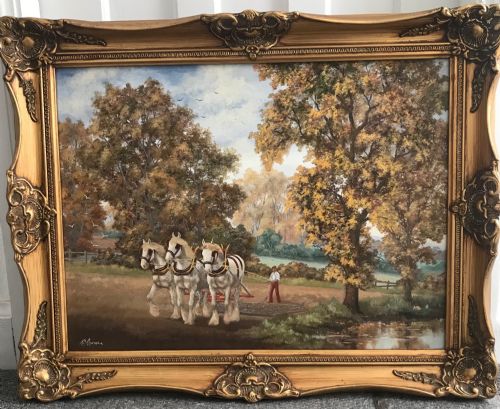
Views extend from local British countryside settings in Wales, Cornwall, and Suffolk to continental European landscapes. Common motifs involve horses ploughing fields, cattle by rivers, and travellers along country lanes.
How do I identify the period of a painting?
Dating relies on stylistic clues, framing materials, and inscribed signatures or dates left by the artist. Victorian pieces often display a detailed realism, whereas works from the early twentieth century lean toward impressionistic brushwork.
Examining the reverse of the canvas or panel can reveal old labels, artist stamps, or handwritten inscriptions regarding the title and location. Construction methods of the wooden stretcher or panel also offer chronological context.
How should I display an oil painting?
Oil paintings on canvas or panel require placement away from direct sunlight and excessive humidity to protect the pigments and wooden supports. Maintaining stable room temperatures prevents warping in wooden panels and cracking in aged paint layers.
Many works come housed in their original period gilt wood frames, which complement the aesthetic of the artwork. Hanging the piece at eye level on a secure wall ensures it remains safe from physical disruption.
What is the difference between canvas and board?
Canvas provides a flexible woven fabric support that is stretched over a wooden frame, introducing a distinct textile grain to the painted surface. Board and panel offer a completely rigid flat surface that resists the flexing movements associated with fabric.
Both supports were used across the nineteenth and twentieth centuries depending on the artist's preference for portability and texture. Canvas allowed for larger compositions, while boards were frequently utilised for smaller plein-air studies.