
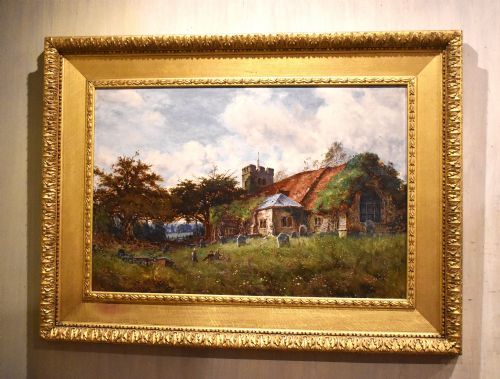
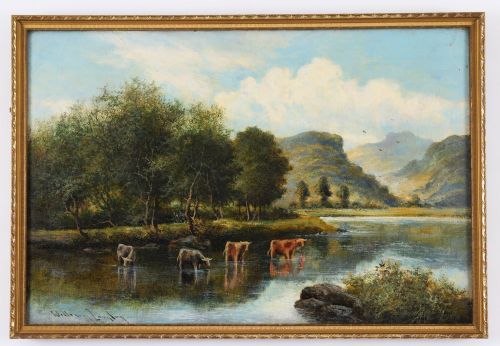
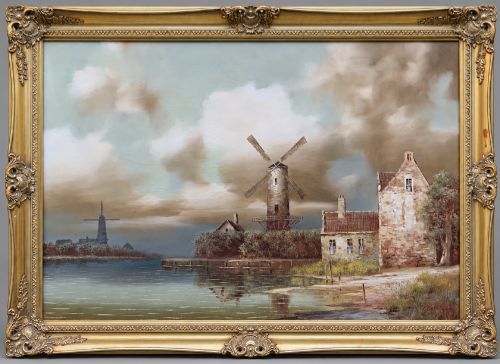
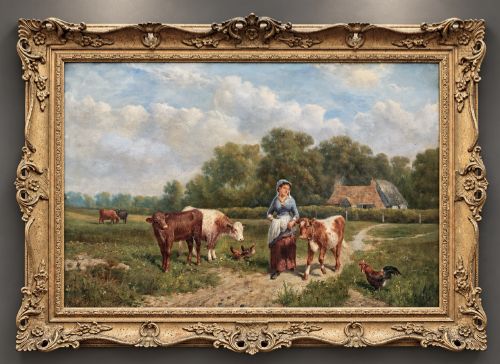


Countryside Canvas Art
Countryside canvas art brings rural landscapes, riversides and farmyard scenes into a room through oil paint on canvas.
Countryside Canvas Art
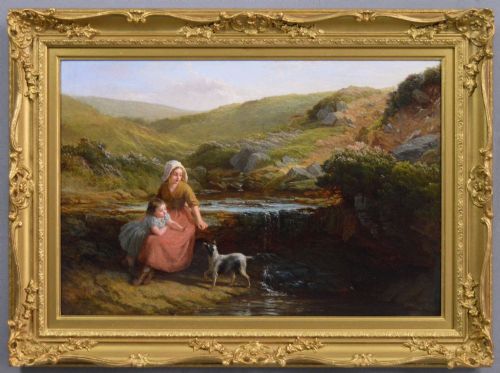
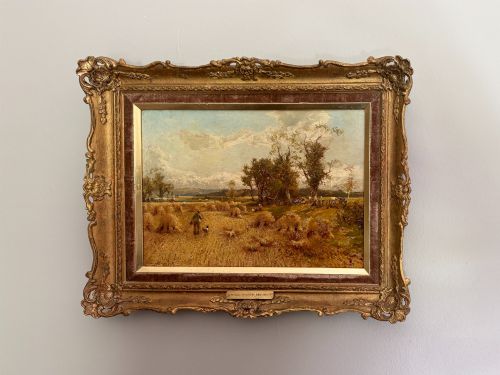
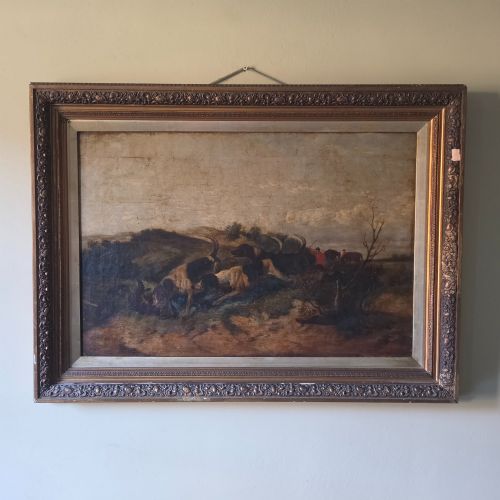
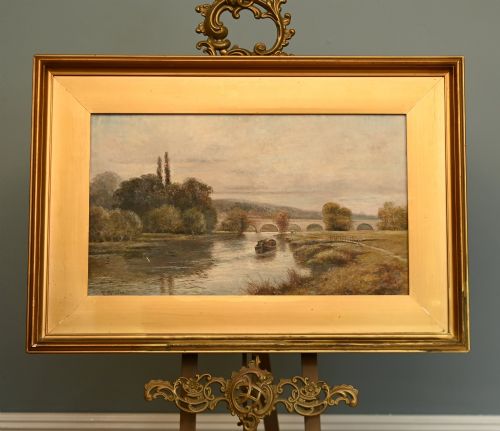
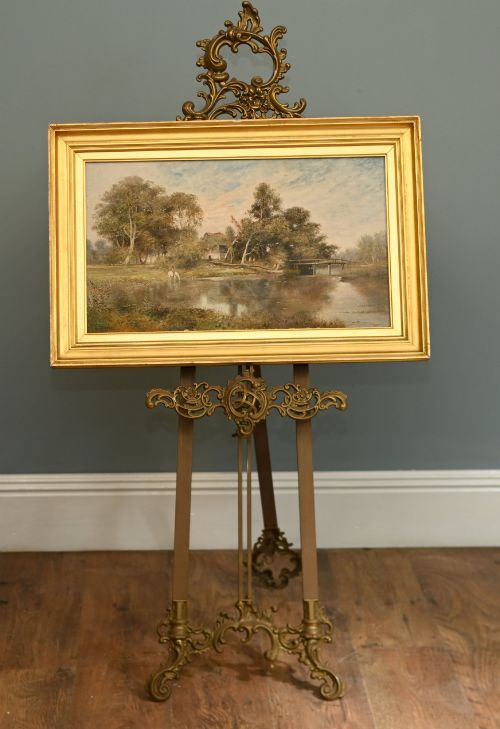
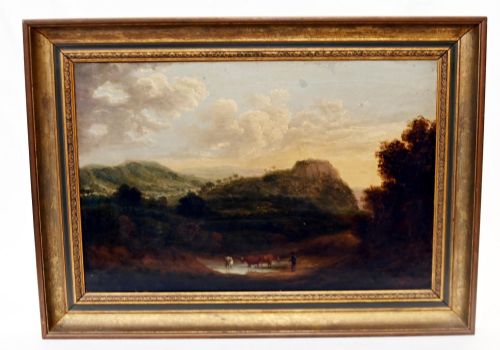
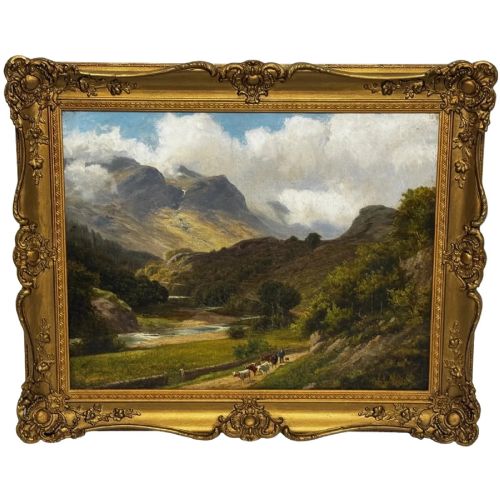
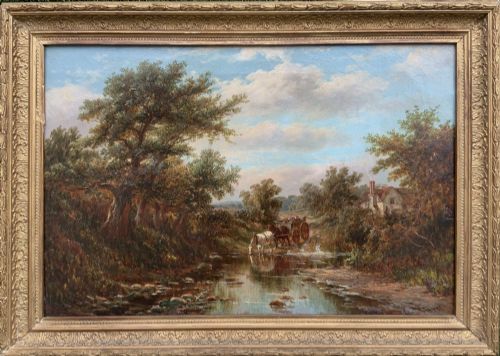
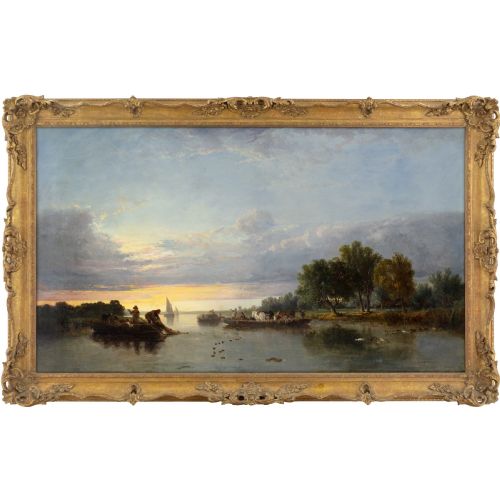
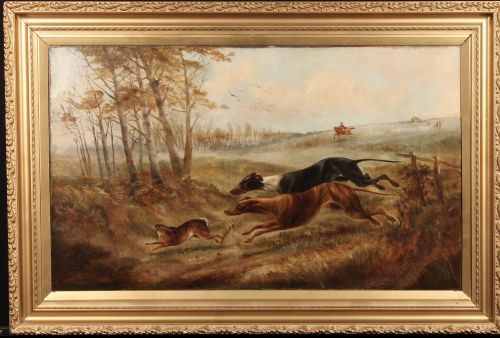
Countryside canvas art consists predominantly of oil paintings on canvas depicting rural scenes, rivers, livestock and agricultural life. These works span from the nineteenth century into the mid-twentieth century, capturing pastoral views and village settings.
The pieces on this page are most commonly Victorian or Edwardian oil paintings, often housed in period wooden and gesso frames. They range from intimate pastoral water meadows to large landscape compositions signed by British and continental painters.
Materials and technique
These works are painted in oil paint on woven canvas supports, which are stretched over wooden frames and frequently framed in gilt wood or gesso mouldings. The physical makeup relies on traditional oil pigments layered over primed canvas.
Artists built depth through brushwork and glazing, applying oil paint to capture light on water, foliage and pasture. The supporting frames often combine carved wood with applied gesso details finished in gold leaf or gilt paint.
Cattle, sheep, dogs and farmyard fowl appear with such frequency across these fields that the livestock practically outnumber the human walkers.
Variations in quality
Quality rests on the confidence of the brushwork, the handling of natural light and atmospheric perspective within the landscape. Superior canvases display careful anatomical drawing in figures and animals, alongside harmonious composition.
The integrity of the original canvas and the preservation of the paint surface distinguish finer examples. Original period gilt wood frames that complement the painting add to the overall standing of a piece.
James Elliot·William Langley·Samuel Joseph Clark·Edward Holmes·William Manners·E Steele·F Staple·Thomas Thomas·Edward Williams·George Armfield·William H Myers·George Graham·Frederick Marriott·Arthur Wardle·Hendrik Willem Schweickhardt·Herbert Royle·Robert Morson Hughes·Thomas Barker of Bath·Gabriel Mathieu·David Bates·Lucy Pratt·Raymond Booth·Harald Foss·Eric Brown·Henri Ottmann
The Countryside Canvas Art Glossary
- Canvas
- A heavy woven fabric used as a surface for oil painting. It is typically stretched tightly over a wooden frame before application of paint.
- Gesso
- A plaster-like mixture applied to wooden frames as a base for moulding and gilding. It provides a smooth surface for subsequent layers of gold leaf or metallic paint.
- Oil paint
- A slow-drying paint made by mixing pigments with drying oils such as linseed. It allows artists to blend tones and build rich surface textures.
- Gilt wood
- Wood that has been coated with a thin layer of gold leaf or gold-coloured paint. Frames finished in this manner are standard for period landscape art.
- Genre painting
- A style of art depicting scenes from everyday life, such as figures working in fields or interacting by a pond.
Countryside Canvas Art: Frequently Asked Questions
What periods do these paintings date from?
The works span from the eighteenth century through the Victorian era and into the mid-twentieth century. Most examples date from the nineteenth century and the Edwardian period.
Dates are determined by the stylistic conventions, artist signatures and framing techniques recorded in the individual listings.
Are these works original paintings?
Every piece listed is an original oil painting on canvas rather than a modern reproduction or print. Artists applied oil paint directly to stretched canvas supports.
Signatures from period painters appear on many of the canvases, indicating individual hand-painted works.
How should I hang an oil painting?
Oil paintings on canvas require secure wall fixings suited to the combined weight of the canvas and its wooden frame. Hang them away from direct sunlight and steady sources of extreme heat to protect the paint layer.
Ensure the wall supports the structure safely using appropriate picture wire or D-rings attached to the frame.
What subjects appear in countryside art?
Common subjects include pastoral landscapes, rivers, lakes, farmyard scenes with cattle or sheep, and figures engaged in rural labour or leisure. Coastal views and woodland settings also feature prominently.
Artists often focused on seasonal changes, capturing harvest times, spring hedgerows and winter feeding grounds.