


Country Stick Back Chair
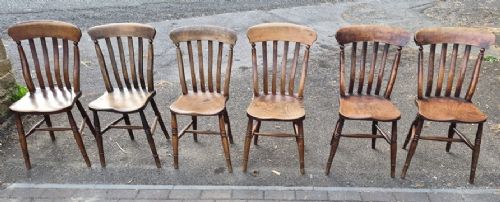
When you search for a country stick back chair, you are looking at functional wooden seating shaped by local makers across Georgian, Victorian, and later periods.
Country Stick Back Chair
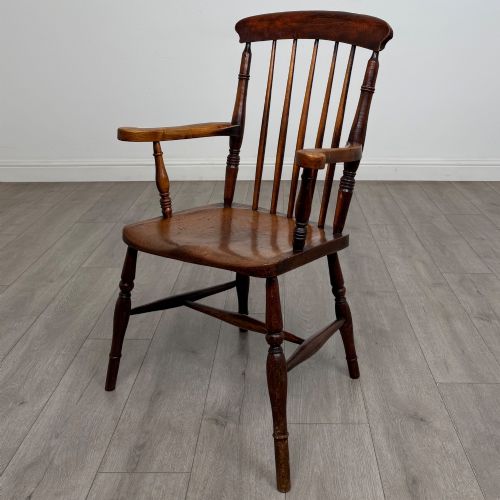
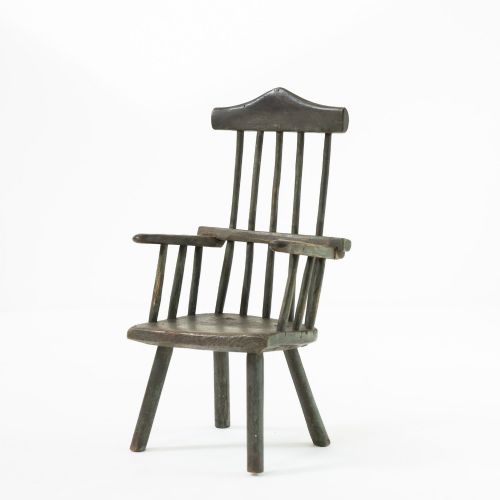
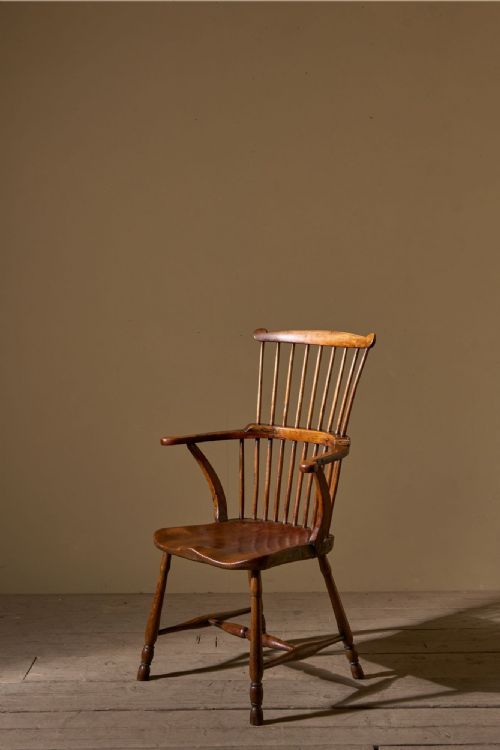
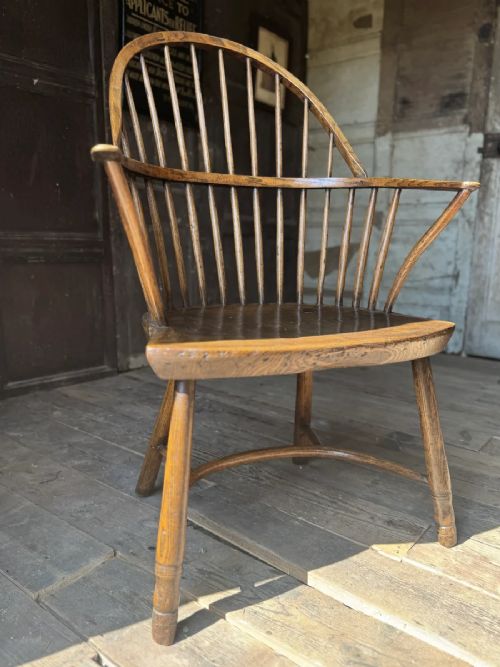
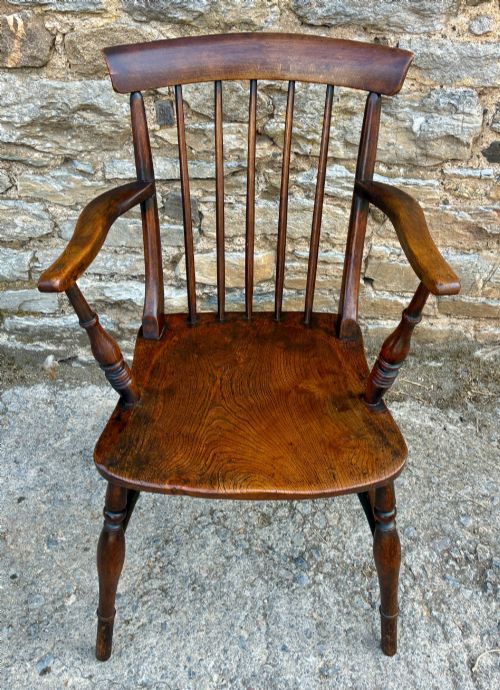
A country stick back chair is a form of traditional seating rooted in regional English vernacular design, appearing widely across the 18th and 19th centuries. These chairs combine a solid plank seat with steam-bent or turned uprights that form the back and arms.
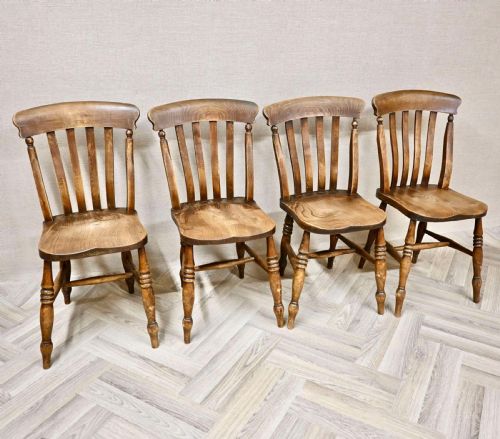
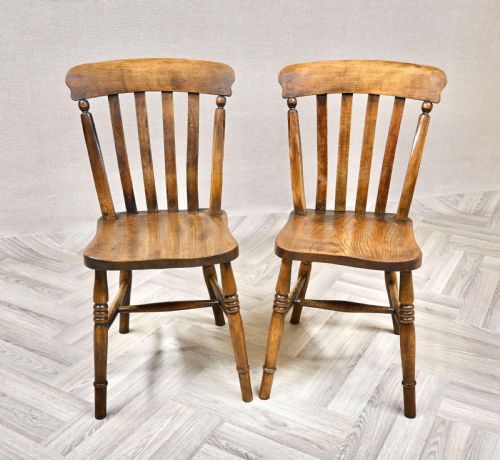
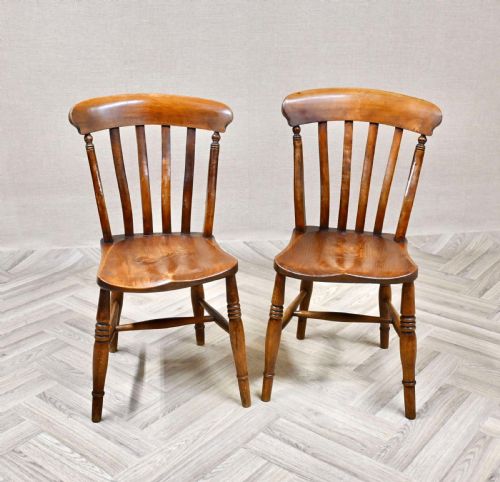
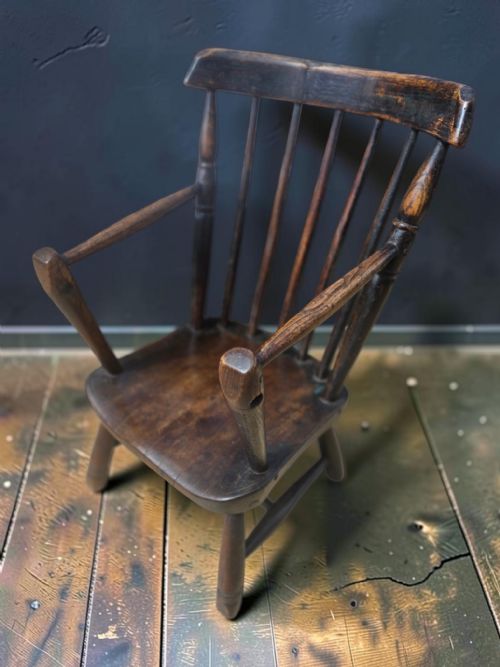
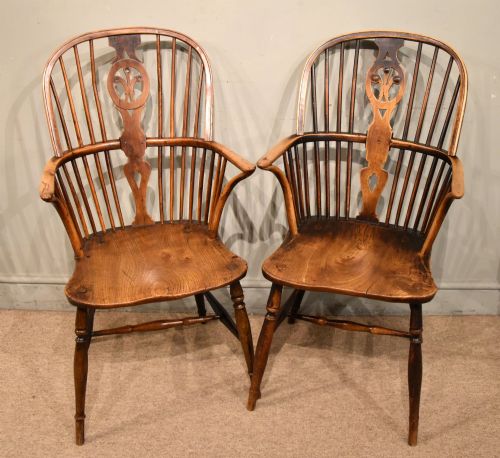
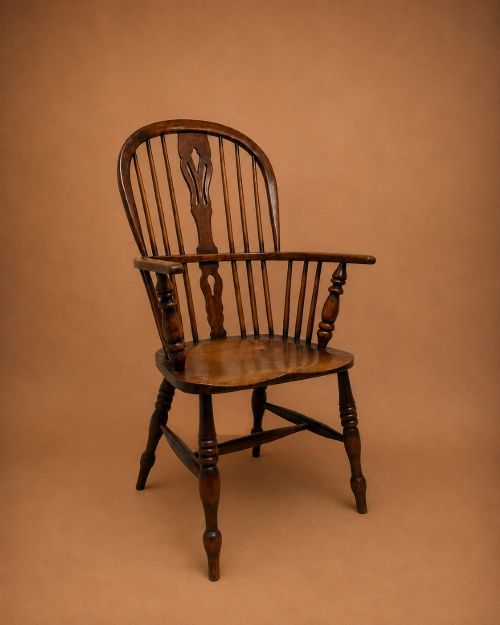
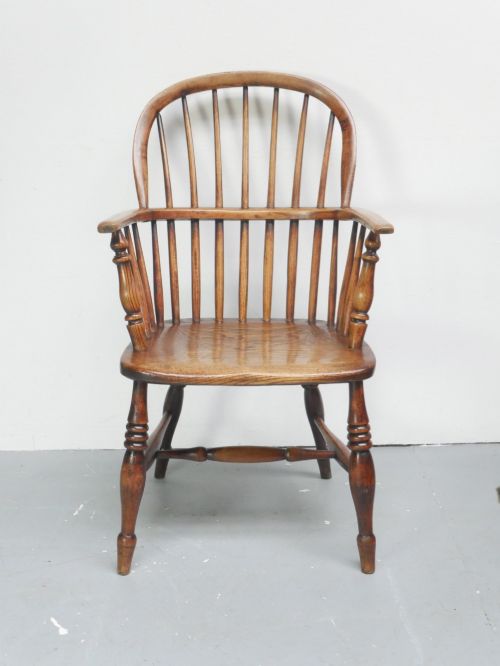
Most examples found in these listings take the form of Windsor armchairs, dining chairs, or smaller children's variants. Makers built them for utility in farmhouses, kitchens, and country homes, leading to sturdy construction designed for daily use.
How they were made
Construction relies on a combination of native timbers, predominantly utilising a solid shaped elm seat paired with ash, beech, or yew for the spindles and bending parts. Woods like fruitwood and oak also appear, selected for their strength or local availability.
Craftsmen shaped the components using a mix of turning on a pole lathe and cleaving or shaving green wood with a drawknife. The spindles and legs fit into bored holes in the seat, often secured with wedges for a lasting joint.
Listings feature examples spanning the 18th century through the Victorian era, constructed from native timbers including elm, ash, and yew.
What varies in quality
Quality in a country stick back chair rests on the harmony of proportions, the comfort of the saddle-shaped seat, and the grace of the back bend. Better pieces show careful selection of timber grain, particularly in the figuring of the elm seat and the matching of spindle turnings.
Structural integrity and the survival of original surfaces also divide examples, with untouched patination and minimal replacement parts marking the more desirable pieces. Heavier or clumsy joinery distinguishes simpler workshop output from more refined regional traditions.
John Brand of Sleaford
The Country Stick Back Chair Glossary
- Windsor chair
- A chair built with a solid wooden seat into which all other components - legs, back spindles, and bow - are separately inserted.
- Comb back
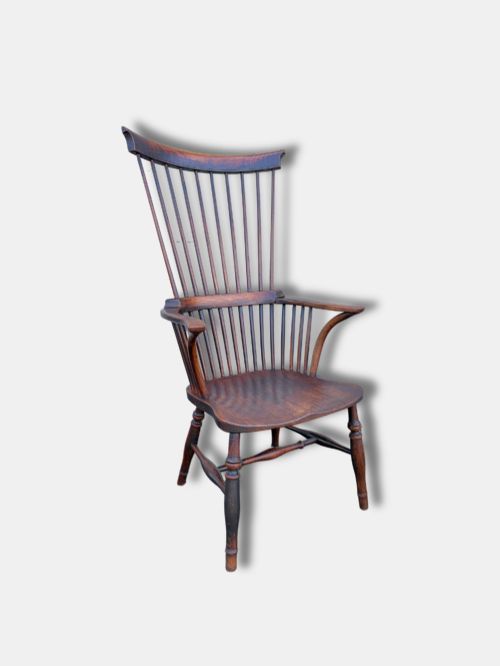
- A high-backed chair style where the central spindles rise to a low horizontal crest rail that resembles the teeth of a comb.
- Hoop back
- A design featuring a continuous bentwood bow that forms both the arms and the upper back rail in a single sweeping curve.
- Crinoline stretcher
- A bent metal or wooden brace connecting the legs of a chair to provide rigidity, named after the shape of contemporary undergarments.
- Vernacular
- Objects made by local craftsmen following regional traditions rather than formal academic design patterns.
Country Stick Back Chair: Frequently Asked Questions
How do I date an old stick back chair?
Dating relies on observing construction methods, tool marks, timber choice, and the overall evolution of the chair's form. Earlier 18th-century examples often display deep saddle seats and comb backs, while Victorian pieces tend to utilise beech and show machine-turned components.
Comparing the wear patterns and timber shrinkage helps confirm the age of the piece.
Were these chairs used at dining tables?
Many of these chairs served as kitchen and dining seating, often found in sets around large farmhouse tables. Their sturdy build made them practical for daily family meals.
Armchairs were typically placed at the table ends or used as fireside seating, while smaller side chairs lined the sides.
How should I care for an antique wooden chair?
Keep wooden chairs away from direct heat sources and drastic humidity changes to prevent the timber from splitting or shrinking. Applying a traditional wax polish occasionally helps nourish the dry grain and protect the surface finish.
Avoid using harsh modern chemical cleaners that can strip the historic patina.