



Victorian Ash Armchair
When you select a victorian ash armchair, you are bringing home a sturdy vernacular seat shaped by country makers for daily use.
Victorian Ash Armchair
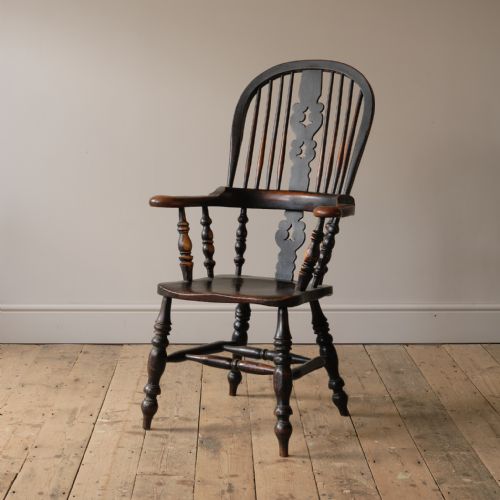
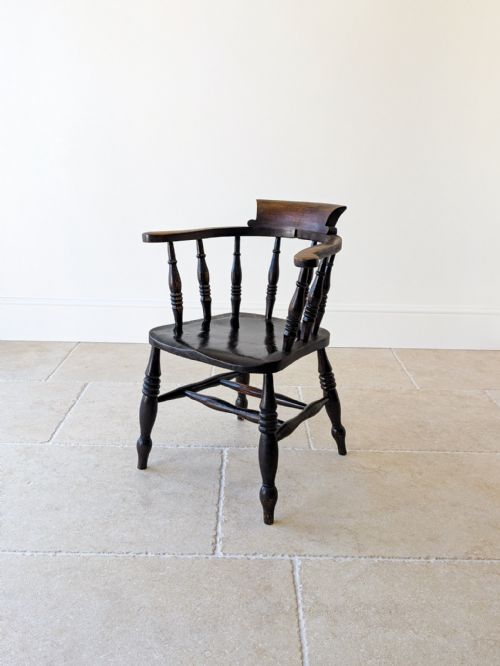
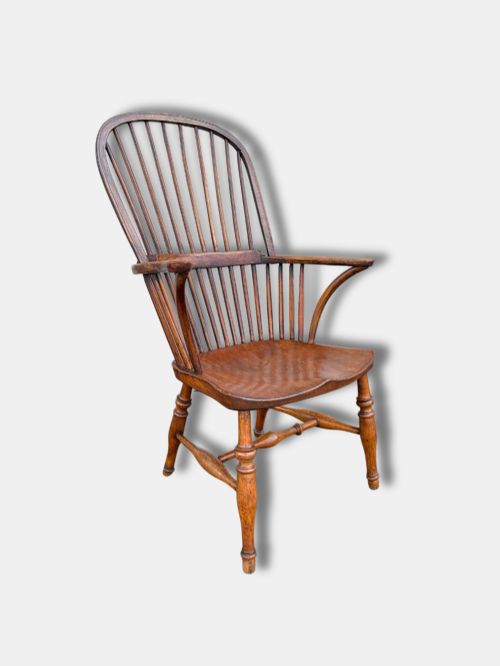
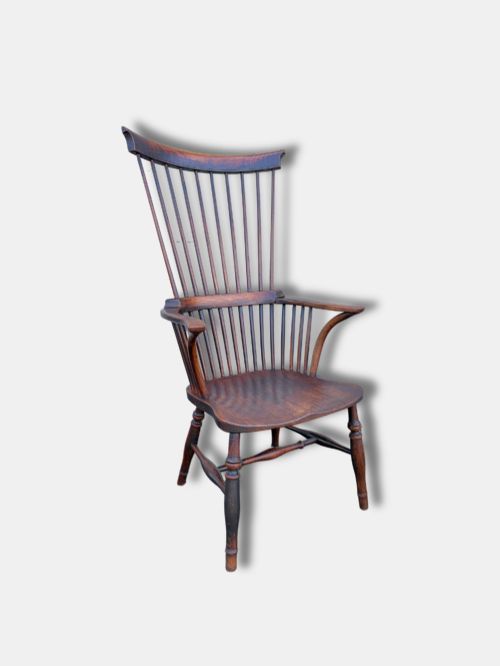
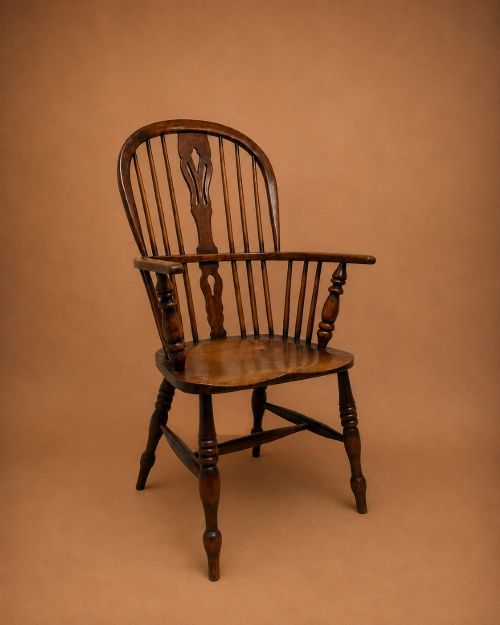
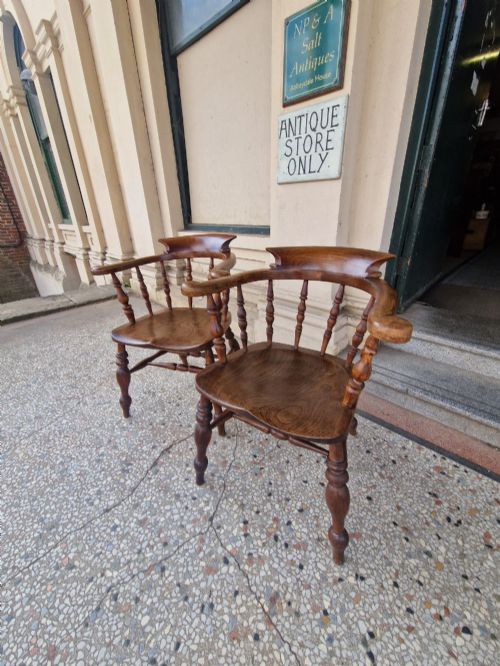
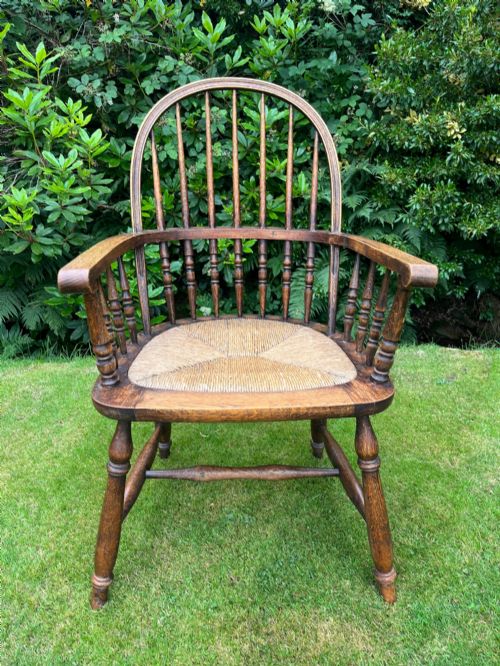
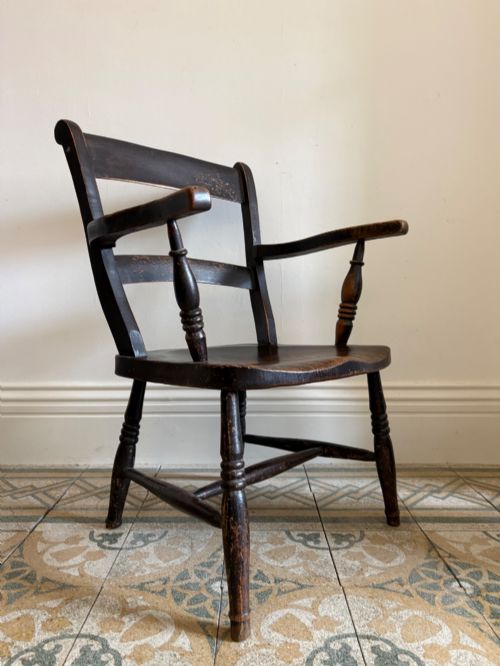
A victorian ash armchair encompasses a range of seating forms rooted in nineteenth-century country workshops, from high-comb windsors to low-back smokers bows.
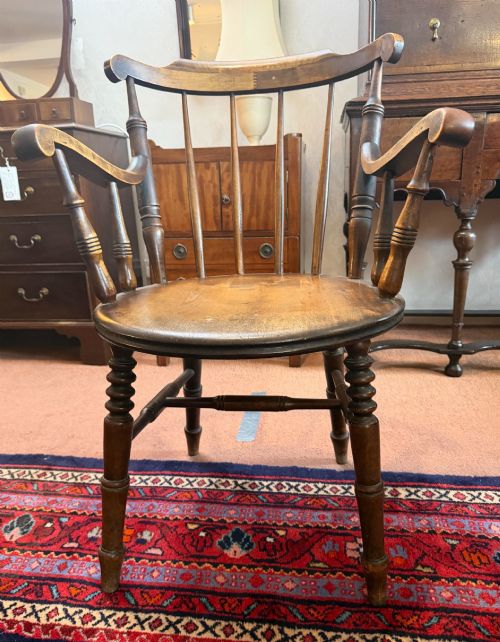
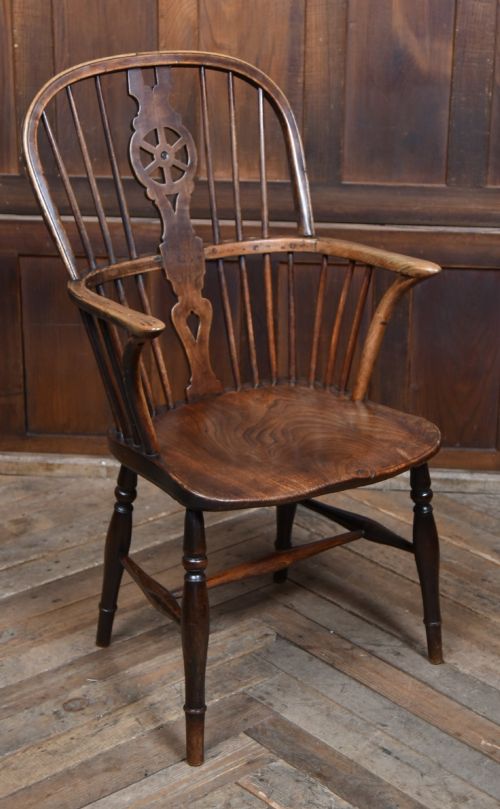
The version you will most often encounter on this page pairs a bent ash framework with a solid elm saddle seat, built for utility in farmhouse kitchens and studies.
Makers across English regions, along with Scottish vernacular workshops, turned spindles and bent timber to create these robust elbow chairs.
How They Were Made
Constructed primarily from ash for strength in the spindles and underframe, these chairs rely on steam-bending techniques to shape the continuous bow backs.
Makers carved solid elm into deeply dished plank seats, joining the legs and uprights through wedged tenons and traditional mortise joints.
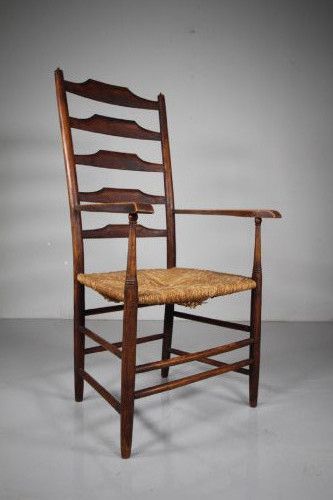
Secondary timbers like beech, yew, and natural rush appear in specific regional variations, adding contrast to the predominant ash and elm.
Child-sized versions scaled down every detail of the full-size farmhouse original for younger household members.
What Varies in Quality
The distinction between ordinary utility seating and superior examples lies in the elegance of the turning, the depth of the seat carving, and the grace of the arm bow.
Thick, well-proportioned arms and balanced proportions indicate a chair built by a skilled regional craftsman rather than standard mass production.
Original surface patination, minimal timber replacement, and the harmonious integration of mixed woods separate average survivors from exceptional pieces.
Philip Clissett·Duncan McKellar·Glenister Chair Makers
The Victorian Ash Armchair Glossary
- Windsor chair
- A wooden chair constructed with a solid plank seat into which the legs and back spindles are separately inserted. This design originated in rural workshops and evolved numerous regional back styles.
- Smokers bow
- A low-backed Windsor derivative with a continuous arm rail supported by turned spindles, commonly found in offices and parlours. It provides sturdy elbow support.
- Comb back
- A Windsor chair variation where the vertical spindles extend upward to support a horizontal top rail, resembling the teeth of a comb. High versions offer pronounced head support.
- Vernacular furniture
- Domestic objects made by regional makers using local materials and traditional methods without formal academic design oversight. These pieces reflect local practical needs.
- Spindle
- A slender, turned wooden rod used to fill the back or underframe of a chair. Turning these on a lathe requires precision to ensure uniform strength and appearance.
Victorian Ash Armchair: Frequently Asked Questions
What is a victorian ash armchair?
It is a nineteenth-century wooden seat, typically featuring a bent ash frame and an elm saddle seat, produced by regional vernacular makers.
These chairs served practical roles in farmhouse kitchens, offices, and country houses across Britain.
How do I tell different windsor back types apart?
High-comb backs extend upwards with a distinct top rail, whereas low-back versions keep the arm rail close to the seat level.
Wheel-backs and stick-backs further distinguish chairs by the decorative pierced splat or simple vertical spindles set into the bow.
Where were these chairs made?
Country workshops across England and Scotland produced them, with notable regional concentrations in the Thames Valley and High Wycombe.
Local timber availability, such as ash, elm, and yew, largely dictated the specific materials utilised by each maker.
How do I live with a country armchair?
These robust chairs suit daily seating at a desk or dining table when paired with appropriate table heights.
Keep them away from direct heat sources to prevent the timber from drying out and maintain the stability of the pegged joints.