
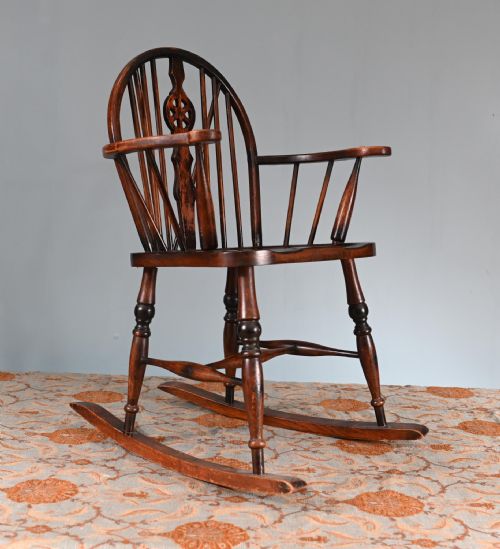


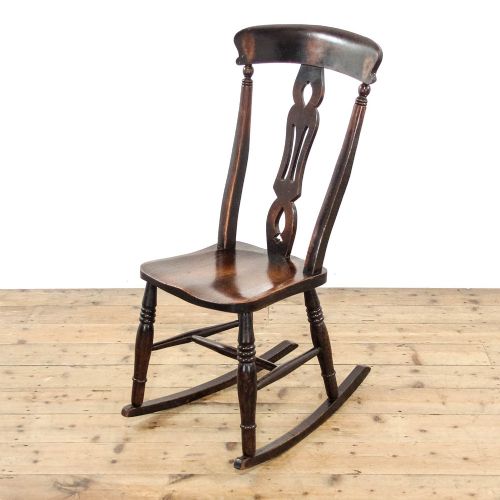


Country Oak Rocker
A country oak rocker brings honest vernacular comfort to a room, built by rural hands for firesides and nurseries.
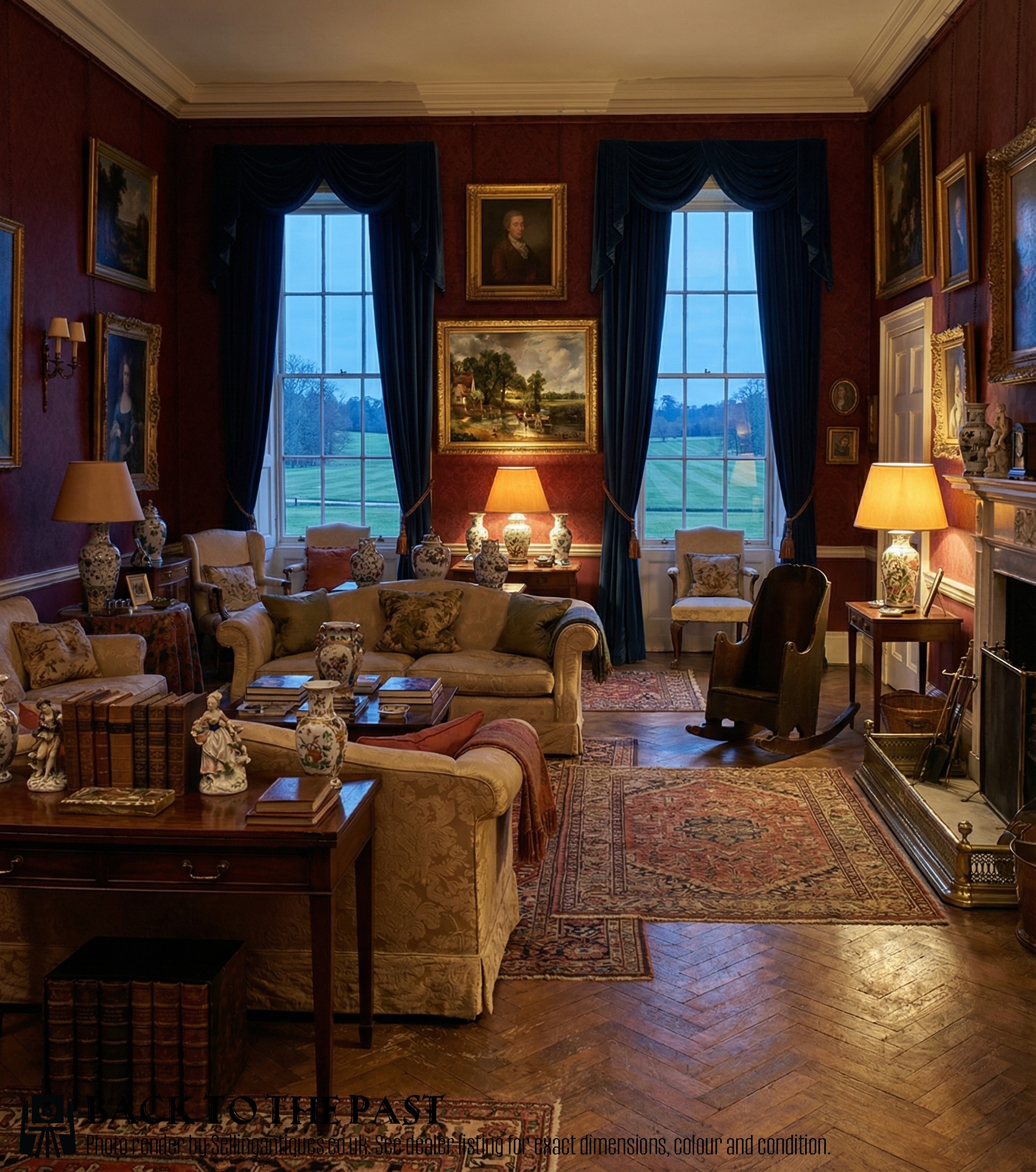
Country Oak Rocker
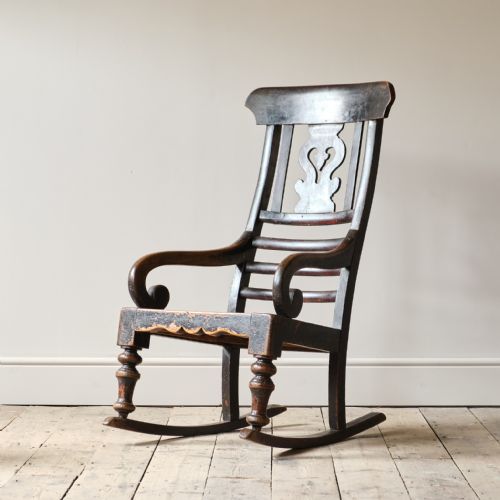
A country oak rocker is a sturdy vernacular seat designed for domestic comfort in farmhouses and cottages, spanning periods from the seventeenth century through to the Victorian era. These chairs combine traditional regional carpentry with curved runners, allowing gentle movement by the hearth.
Alongside seating, the category includes infant furniture such as oak cradles mounted on rockers. These smaller pieces share the same heavy timbers and utilitarian construction methods as the larger armchairs.
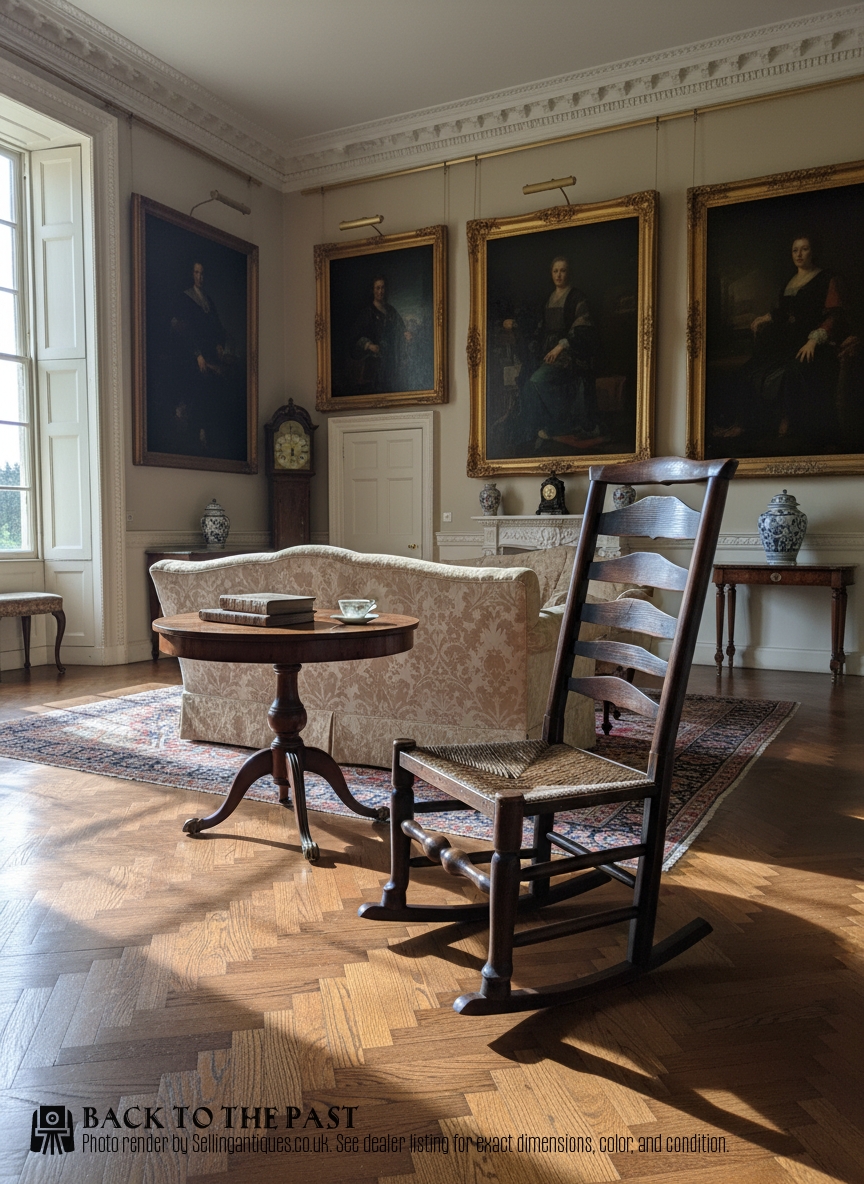
Construction and materials
Makers utilised solid timbers native to the British countryside, relying heavily on oak for primary frames while incorporating elm, beech, ash and yew into seats and spindles. This mixed wood construction provided both structural rigidity and resilience against daily wear.
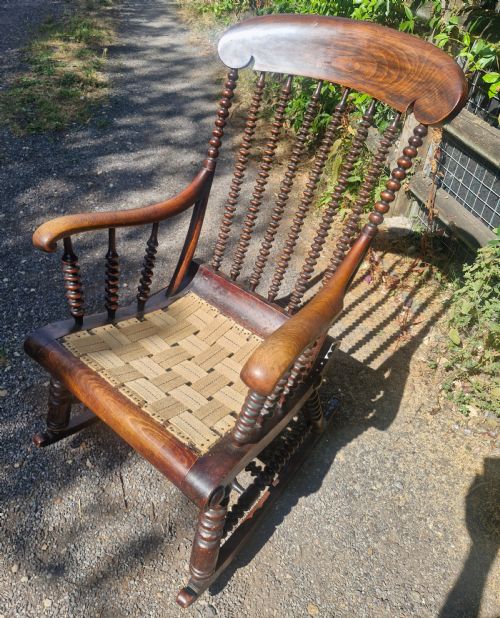
Seats often feature sculpted solid elm planks or woven rush and cane surfaces, supported by bobbin frames, turned spindles or ladder backs. The runners themselves were shaped to fit the base of the legs, transforming stationary vernacular chairs into mobile resting places.
The listings here span the seventeenth century to the 1930s, featuring oak, elm, beech, ash and rush across various regional Windsor and ladder back forms.
Judging quality and character
Quality rests in the harmony of the timber selection and the integrity of the regional form, where unpretentious construction meets balanced proportions. Pieces showing honest patination and minimal structural alteration command greater respect among collectors.
The distinction between ordinary utility items and superior vernacular work lies in the fluency of the turning, the comfort of the saddle seat and the retention of original surfaces. Finer examples display distinctive local traits, whether in the sweep of a Thames Valley arm or the sturdy turnings of a Yorkshire farmhouse chair.
The Country Oak Rocker Glossary
- Vernacular
- Everyday objects made by local tradesmen following regional traditions rather than high-style metropolitan designs. These pieces prioritize utility and local material availability.
- Windsor
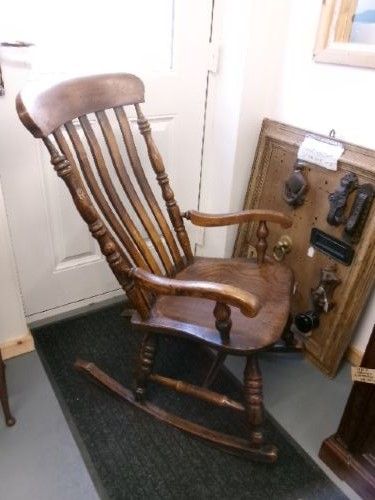
- A chair built with a solid wooden seat into which the legs and back spindles are directly tenoned. This technique creates a light yet remarkably strong frame.
- Lambing chair
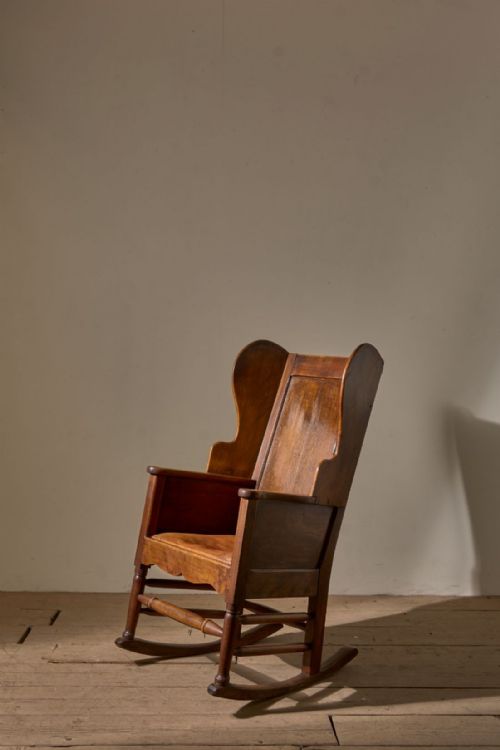
- An enclosed high-backed seat designed to shield the occupant from drafts by the hearth. Early examples in oak often include solid lower panels and small storage compartments.
- Bobbin framing
- Furniture turned on a lathe to resemble a string of spool-shaped beads. This decorative yet simple turning technique appears frequently on nineteenth-century country seating.
- Wheelback
- A Windsor chair variation featuring a pierced splat shaped like the hub and spokes of a cartwheel. It represents a decorative refinement popular in nineteenth-century country workshops.
Country Oak Rocker: Frequently Asked Questions
What is a country oak rocker?
A country oak rocker is a vernacular seating piece adapted with curved wooden rails for movement, originating in rural workshops across Britain. These chairs were built for practical domestic use rather than formal drawing rooms.
They encompass diverse regional forms, from spindle-back Windsors to ladder-back fireside seats, using solid native hardwoods.
How do I date an old rocker?
Dating relies on examining construction techniques, tool marks, timber shrinkage and the evolution of regional styles from the seventeenth century onward. Earlier pieces often display pegged joinery and hand-rived wood.
Later Victorian interpretations tend to feature standardised turnings and machine-sawn components while retaining traditional forms.
Were these chairs made for nurseries?
Many smaller examples and chairs paired with cradles served specifically for nursing infants by the fire. Their soothing motion made them essential furniture for bedrooms and nurseries.
Larger armchairs fulfilled general domestic roles, providing comfort to adults after long days of farm or household labour.
What woods were used besides oak?
Country makers combined oak frames with elm for thick sculpted seats, beech and ash for flexible spindles, and yew for high-status Windsor bows. This pragmatic mixture utilised whatever suitable timber was locally abundant.
Secondary woods like rush and cane also appear in seating inserts, adding texture to the heavier wooden frameworks.