





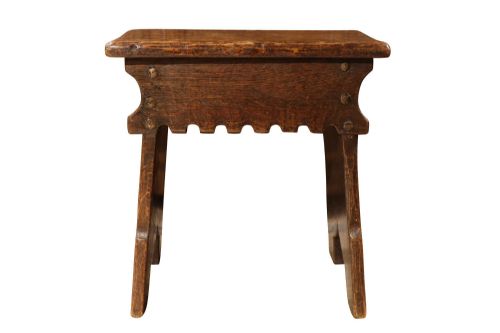


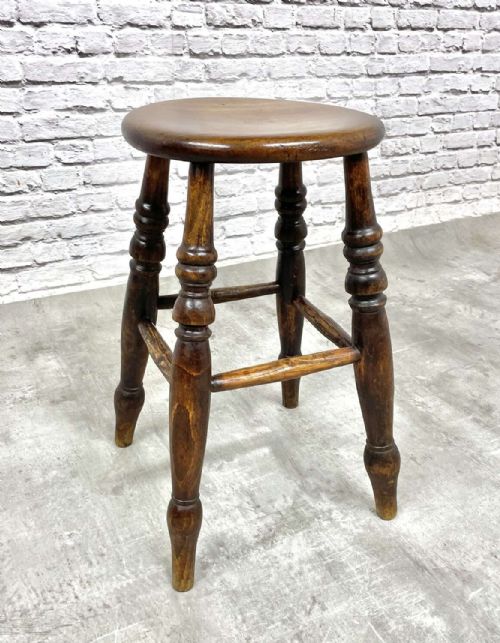
Country Oak Milking Stool
These country oak milking stool pieces are honest vernacular seats built from solid timber for daily utility around historic farmhouses and workshops.
Country Oak Milking Stool
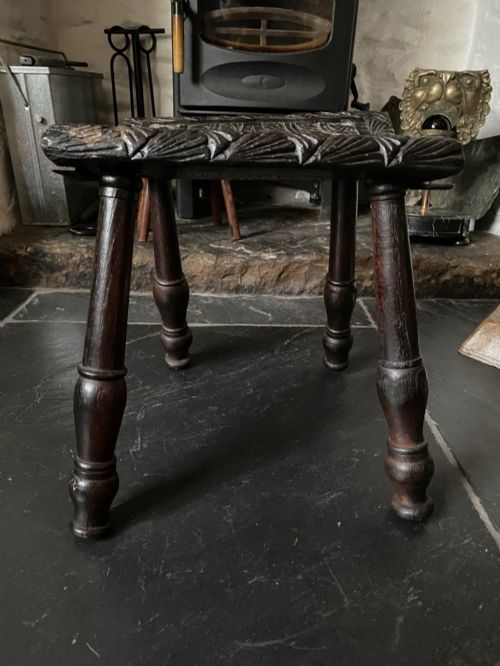
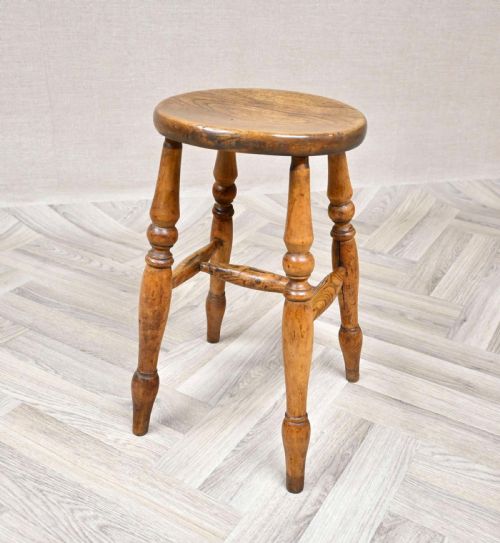
When you search for a country oak milking stool, you encounter low, utilitarian seating shaped by regional makers from the eighteenth and nineteenth centuries. These pieces encompass vernacular forms such as hearth stools, Windsor stools, and primitive seating intended for rural work.
The examples most commonly met on this page span the Victorian and Georgian periods, alongside pieces dating around nineteen hundred. They are frequently constructed from mixed timbers like elm, ash, and beech alongside oak.
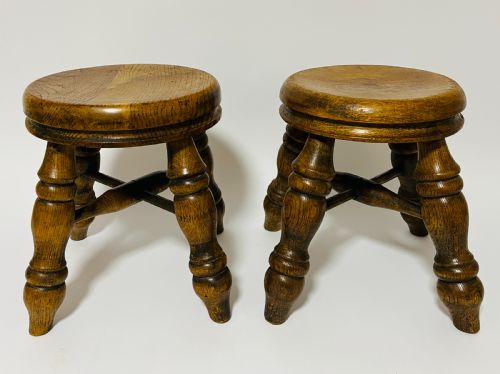
Beyond domestic milking tasks, the listings reveal specialised workshop seats including cutler's stools and jeweller's stools. Simple children's furniture and small nursery stools also appear among these traditional rural forms.
Materials and construction methods
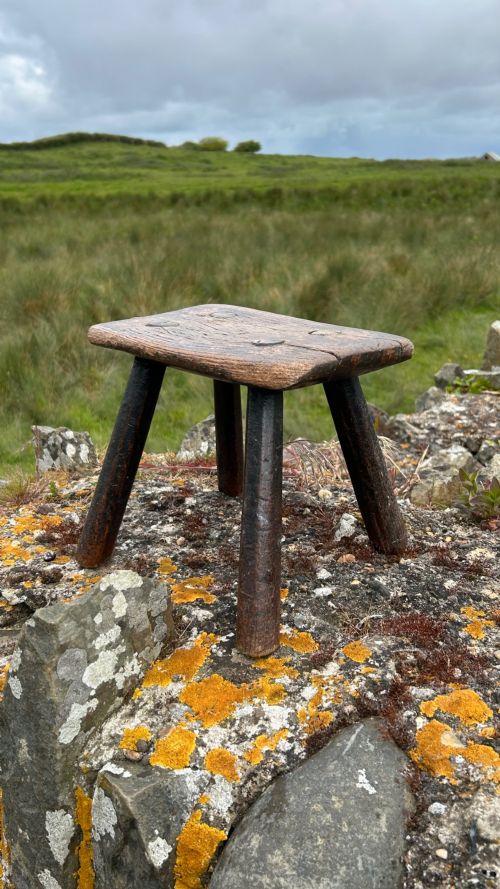
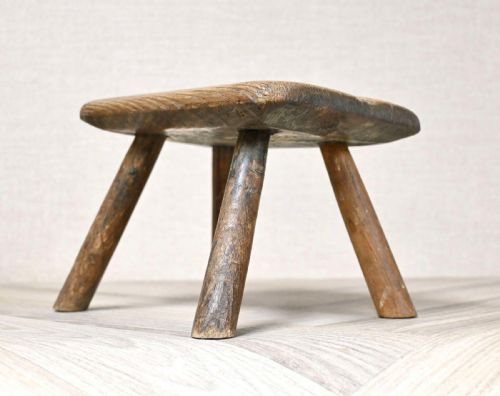
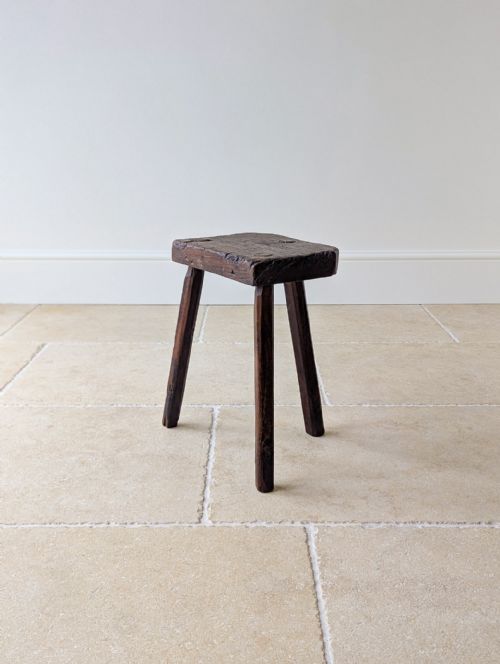
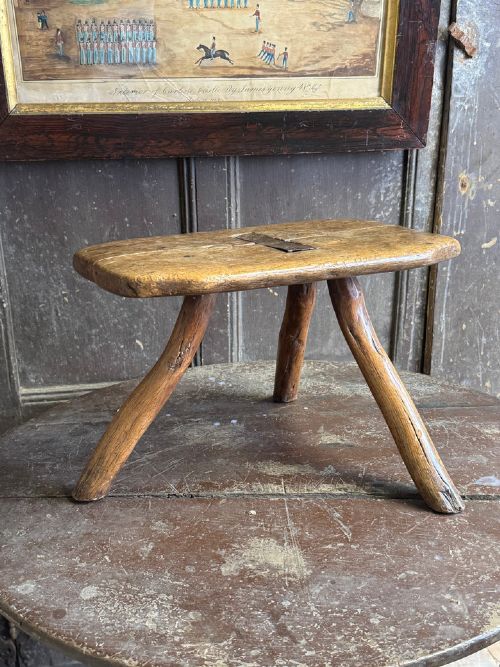
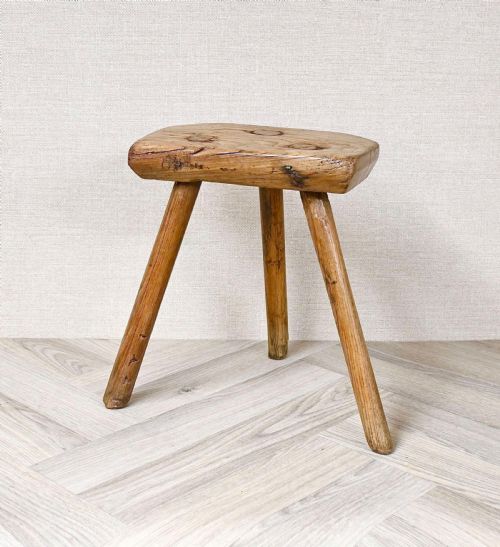
Makers utilised solid timbers such as oak, elm, ash, and beech, selecting woods for toughness and local availability. Seats were often shaped from single planks or wild elm blocks, paired with splayed legs fixed by pegged construction.
Blacksmith repairs appear on surviving examples, demonstrating how working pieces were maintained through generations of hard use. Iron fastenings and natural form branches occasionally supplement the turned or shaped wooden components.
Country Oak Milking Stool Retail Price Guide 2026
Typical asking prices for country oak milking stool among the pieces listed under this phrase on Sellingantiques today, from the lower quarter to the upper quarter. They describe what is for sale here now, not the wider market.
Listings span the eighteenth, nineteenth, and early twentieth centuries, incorporating Georgian and Victorian eras alongside items dated around nineteen hundred.
Distinctions in quality and survival
Quality rests in the integrity of the original construction and the character earned through genuine working use. Untouched surfaces with deep patination and honest blacksmith repairs distinguish superior surviving examples from later reproductions.
The harmony between the timber seat and the splayed legs dictates the visual balance of each piece. Greater refinement in the turning of legs or the adzing of solid seats separates workshop furniture from basic domestic items.
The Country Oak Milking Stool Glossary
- Vernacular
- Everyday objects built by local craftspeople for practical utility rather than following grand academic designs. These pieces reflect regional traditions and the materials immediately to hand.
- Apotropaic mark
- A ritual carving placed on timber to ward off evil spirits and protect the household. Such marks appear on specific historic hearth stools.
- Splayed legs
- Legs angled outwards from the underside of the seat to provide stability on uneven floors. This technique is common in traditional country seating.
- Pegged construction
- A method of joining wooden elements using wooden dowels rather than modern metal screws or glue. It allows the timber to move naturally with changes in humidity.
- Wild elm
- Timber harvested from trees with irregular grain patterns, prized for toughness and resistance to splitting in seat construction.
Country Oak Milking Stool: Frequently Asked Questions
Are these stools comfortable to sit on?
Most country stools were designed for utility and work rather than long hours of modern lounging. The shaped wooden seats offer surprising ergonomic contours, though they remain firm.
Many people today use them as decorative side tables or plant stands rather than everyday seats.
How do I date an old country stool?
Dating relies on observing tool marks, timber selection, construction methods, and wear patterns. Pegged joints and adzed seat surfaces often point towards earlier eighteenth or nineteenth-century origins.
Later Victorian and early twentieth-century examples tend to show more uniform machine sawing or standard turned components.
Can I use these stools near modern radiators?
Historic timber reacts strongly to sudden changes in temperature and humidity, which can cause old oak and elm to split. Keep them away from direct heat sources and underfloor heating vents.
Treating the wood with appropriate natural wax helps maintain the surface moisture.