




Primitive Wooden Footstool
These primitive wooden footstool examples are honest seating forms shaped by utility, offering buyers tactile history and understated rustic charm.
Primitive Wooden Footstool
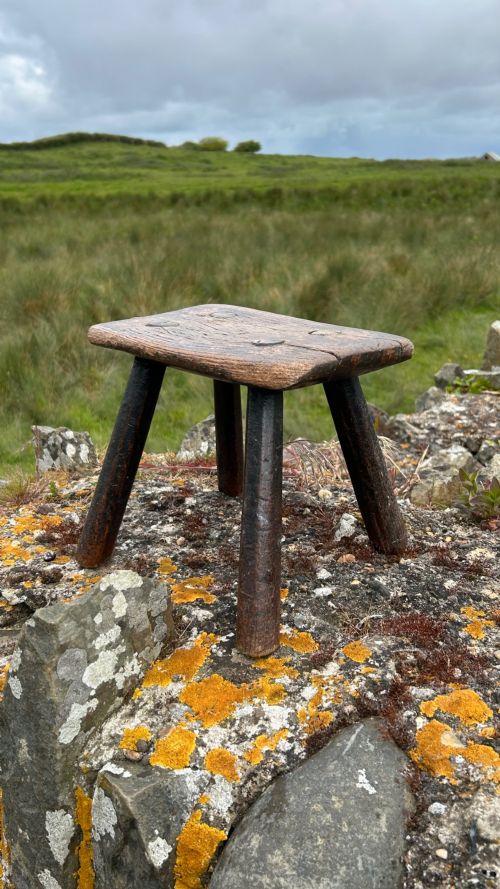
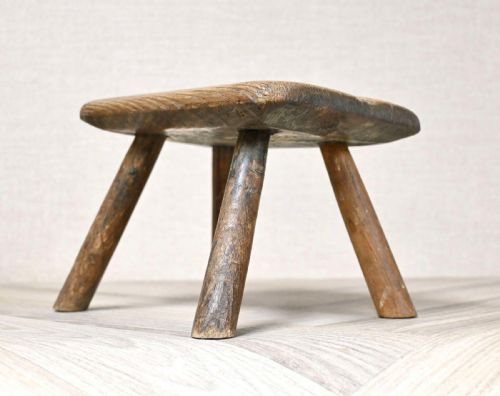
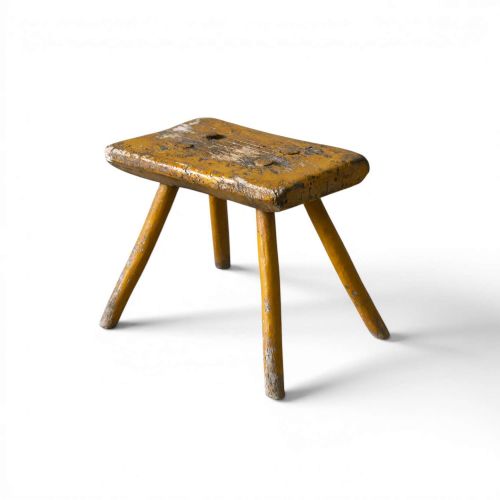
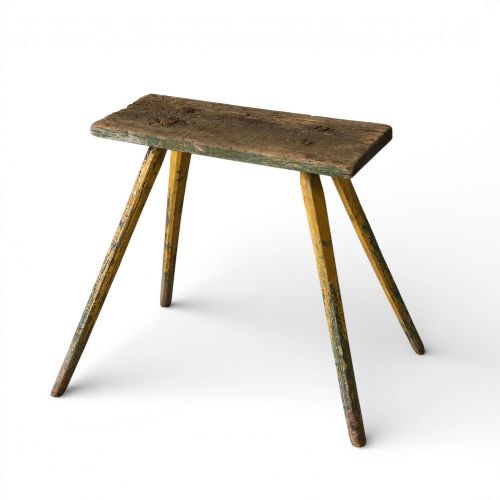
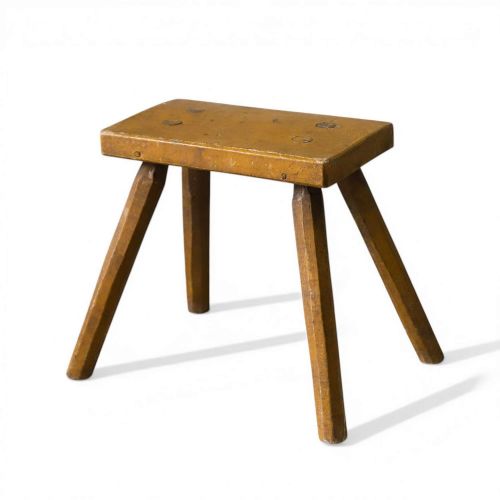
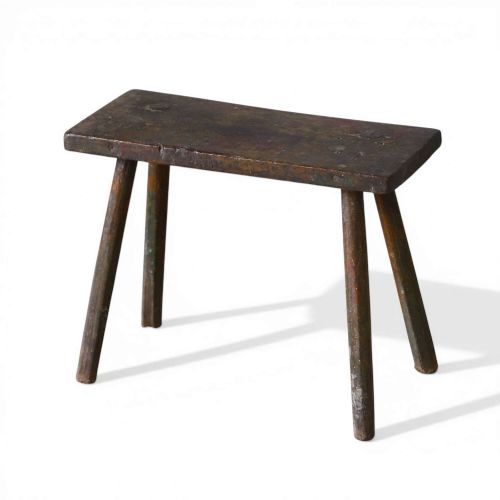
A primitive wooden footstool is a utilitarian domestic seat shaped by necessity rather than academic design, often emerging from rural traditions where local timber dictated form. Buyers seeking a primitive wooden footstool will encounter low milking stools, hearth benches, and diminutive vernacular seating designed for domestic tasks or fireside warmth.
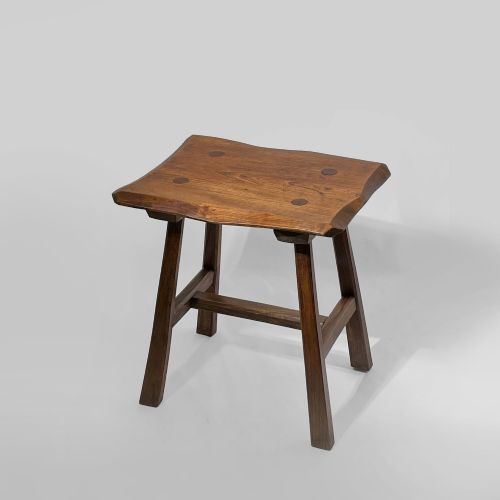
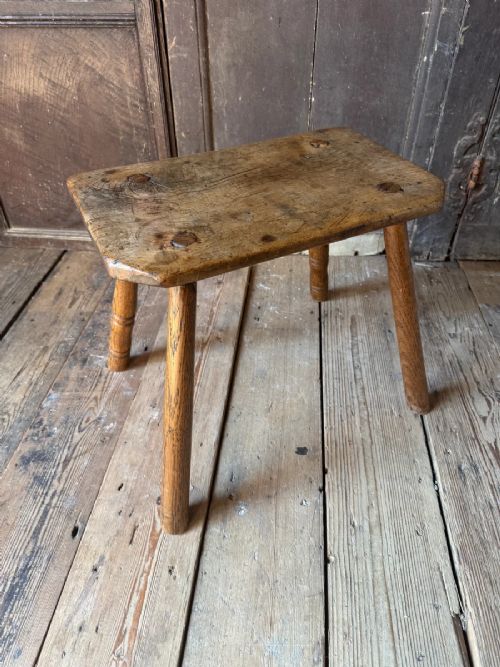
The pieces on this page span the eighteenth, nineteenth, and early twentieth centuries, drawing on British, French, Georgian, and Eastern European vernacular traditions. Forms range from three-legged milking seats to square-topped elm variants and sculpted round tops intended for simple everyday use.
Rustic vernacular and folk art influences dominate these items, reflecting the hand of regional makers who worked without pattern books. Such seating brings a quiet, grounded presence to modern interiors, functioning as low side tables or decorative pedestals.
How they were made
Makers utilised native timbers such as elm, ash, sycamore, oak, pine, and timber to construct these stools, often combining woods for top and legs depending on local availability. Seats were frequently adzed or sculpted from a single solid block to create a rounded, ergonomic surface.
Legs were commonly secured using pegged mortise and tenon joints or through-wedged tenons driven straight through the seat top for maximum structural stability under heavy daily loads. Survivals occasionally retain original surface treatments including ochre, yellow, green, or general historic paint layers.
Primitive Wooden Footstool Retail Price Guide 2026
Typical asking prices for primitive wooden footstool among the pieces listed under this phrase on Sellingantiques today, from the lower quarter to the upper quarter. They describe what is for sale here now, not the wider market.
Some Eastern European milking stools arrived wearing coats of bright ochre and green paint, proving that utilitarian farm seats enjoyed a splash of colour.
What varies in quality
Quality in these pieces rests upon the integrity of the timber, the character of the surface patina, and the proportion of the form. A strong silhouette with well-balanced splayed legs and honest wear indicates a superior utilitarian object.
The survival of original surface finishes, such as early paint layers or deep unpolished patination, distinguishes a more compelling example from one stripped and over-restored. Subtleties in the hand-shaping of the seat and the tightness of the joint construction mark the division between standard workshop output and exceptional vernacular expression.
The Primitive Wooden Footstool Glossary
- Vernacular
- Everyday objects built by regional craftsmen to local traditions rather than high-style academic designs. This term describes items shaped by local utility and available materials.
- Milking stool
- A low three-legged or four-legged seat traditionally used by agricultural workers for milking livestock. These compact forms feature splayed legs for stability on uneven ground.
- Hearth stool
- A low seat positioned near a fireplace for warmth or domestic chores. They often exhibit low profiles and heavy timber construction suited to heavy use.
- Patina
- The surface texture and sheen developed through decades of handling, cleaning, and ageing. A desirable patination reflects genuine historic use rather than artificial treatment.
- Adze
- A cutting tool with a curved blade used to hollow and shape wooden seat tops by hand. Tool marks left by this process provide evidence of authentic period craftsmanship.
Primitive Wooden Footstool: Frequently Asked Questions
How were these stools used?
These low seats served practical purposes around the home, farm, and hearth, functioning as stable seating for milking, cooking, or fireside tasks. Their compact size made them easily movable where space was limited.
In contemporary settings, they function effectively as low display surfaces, plant stands, or occasional seats. Their unpretentious scale allows them to fit naturally into diverse interior layouts.
How do I date a primitive stool?
Dating relies on observing tool marks, timber choice, construction methods, and wear patterns consistent with specific historic periods. Hand-adzed surfaces and through-tenon joints often point to earlier rural craftsmanship.
Comparing the timber species and any remaining paint layers against known regional styles helps narrow the period of origin. Historic wear around footings and handholds also indicates extended use over generations.
Are original paint finishes common?
Original paint surfaces survive on selected pieces, showing historic pigments like ochre, yellow, or green applied during the nineteenth or early twentieth centuries. These finishes add significant visual character and historical depth.
Not all stools retain paint, as many were left as bare timber or acquired layers of wax and polish through decades of cleaning. The presence of early pigment is evaluated by examining surface adhesion and craquelure.
How do I care for antique timber?
Antique timber benefits from stable indoor humidity and protection from direct heat sources that can cause wood to dry and split. Regular gentle dusting preserves the surface without stripping historic patination.
Applying a light coat of microcrystalline wax occasionally helps nourish dry wood while maintaining its natural finish. Avoid modern chemical polishes that can alter the authentic surface texture.