


Country Oak Food Press
These country oak food press cupboards are heavy domestic storage pieces built by regional joiners, offering deep shelves for dry goods and provisions.
Country Oak Food Press
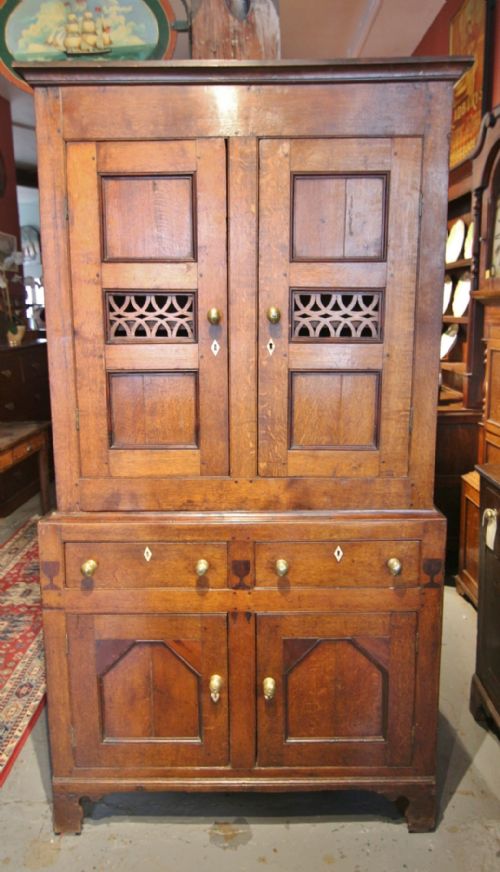
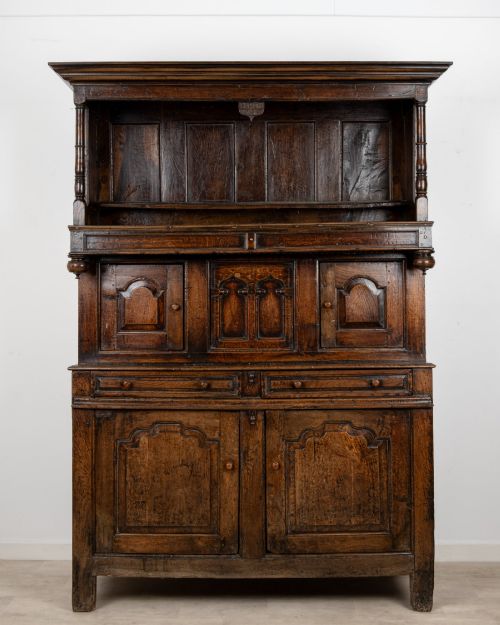
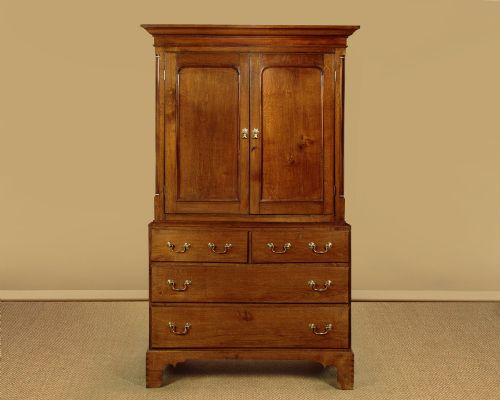
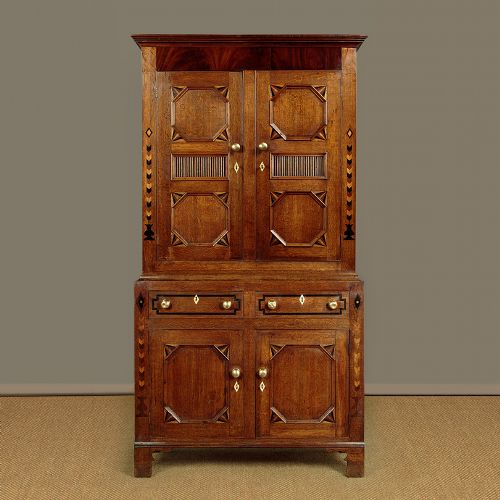
When you search for a country oak food press, you encounter sturdy storage furniture originating primarily from Welsh, English, and French rural workshops. These examples span the seventeenth, eighteenth, and nineteenth centuries, taking forms such as court cupboards, tridarns, deuddarns, and housekeeper cupboards.
The pieces on this page lean heavily toward Welsh vernacular and English country traditions, often featuring panelled doors and shelved interiors designed for provisions. Regional variants include tall French armoires alongside multi-tiered Welsh cupboards dated to the early seventeen hundreds.
Makers constructed these storage items to withstand daily domestic use in rural farmhouses and cottages. They survive today as substantial freestanding furniture that anchors a traditional kitchen or dining space.
Materials and construction methods
Joiners relied on solid timber construction, using oak boards secured with pegged joints and hand-cut mouldings. Secondary materials such as pine or deal often appear in internal shelving and backboards.
Hardware consists of heavy wrought iron hinges, blacksmith-forged locks, and brass key escutcheons fitted directly to thick timber doors. Decorative detailing occasionally incorporates contrasting inlay work using ebony, holly, or bone to accent panels.
Some seventeenth century cupboards retain original blacksmith locks that still engage with a satisfying heavy thud after three hundred years.
Assessing quality and proportion
Quality rests upon the crispness of the original joinery, the integrity of the timber surfaces, and the survival of early hardware. Pieces with untouched patination and original blacksmith hinges command greater attention than those with extensive timber replacement.
Proportion and regional character dictate desirability among collectors of vernacular furniture. Finer examples display balanced panel arrangements, crisp regional carving, and clean timber movement without excessive structural distortion.
The Country Oak Food Press Glossary
- Court cupboard
- An antique storage piece featuring an enclosed upper section supported by pillars above a larger base cupboard. These early forms date primarily to the seventeenth century.
- Deuddarn
- A traditional Welsh two-section press cupboard with enclosed shelving behind panelled doors. This regional form typifies eighteenth century vernacular joinery.
- Tridarn
- A three-tier Welsh press cupboard featuring an open middle section or canopy above lower doors. These tall storage units represent the height of regional Welsh craftsmanship.
- Vernacular furniture
- Domestic pieces built by local tradesmen using regional traditions rather than following metropolitan fashion. The style prioritises functional utility over decorative excess.
- Pegged joint
- A traditional construction method where wooden dowels secure mortise and tenon connections without metal fasteners. This technique allows the oak framework to adjust to seasonal humidity changes.
Country Oak Food Press: Frequently Asked Questions
What is a country oak food press?
A country oak food press is a heavy domestic storage cupboard built to hold provisions, bread, and cheese in rural homes. These pieces combine deep shelving with robust timber construction.
Most examples originate from Welsh and English regional workshops during the seventeenth, eighteenth, and nineteenth centuries. They serve today as statement storage items in traditional kitchen settings.
How do I date an antique oak cupboard?
Dating relies on examining construction techniques, tool marks, hardware styles, and timber patination. Hand-split oak boards and blacksmith-forged iron hinges typically indicate earlier seventeenth or eighteenth century origins.
Later nineteenth century pieces often feature machine-sawn components and standardised fixings. Comparing panel styles and regional vernacular traits helps narrow down the period of manufacture.
Where were these cupboards originally used?
Joiners built these cupboards for rural farmhouses, rectories, and cottages across Wales, England, and France. They stood in kitchens or larders to protect perishable foodstuffs from pests.
The deep interior shelves held cheeses, cured meats, and dry stores away from damp farmhouse floors. Their solid construction ensured they survived generations of daily domestic service.
How do I care for antique oak furniture?
Antique oak benefits from stable indoor humidity and protection from direct sunlight or extreme heat sources. Avoid modern silicone polishes which can damage the historic wax finish.
Applying a traditional beeswax paste occasionally helps nourish the dry timber and maintain the natural lustre. Dusting regularly with a soft, dry cloth preserves the historic surface patination.
What is the difference between a deuddarn and a tridarn?
A deuddarn is a traditional two-piece Welsh cupboard with upper and lower cabinet sections enclosed by panelled doors. It provides straightforward vertical storage for household goods.
A tridarn adds an extra middle tier, often featuring an open display canopy supported by turned posts between the upper and lower sections. Both forms represent distinct regional Welsh furniture traditions.