
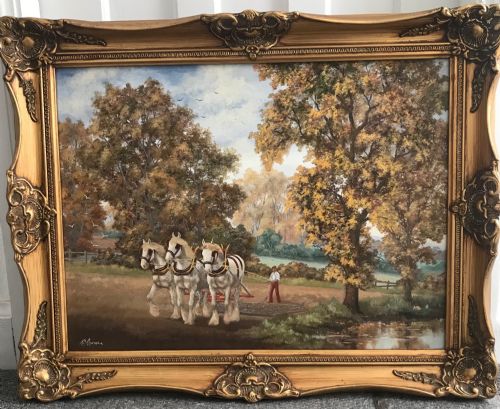
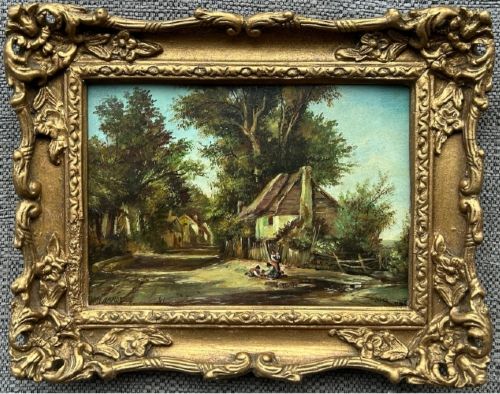
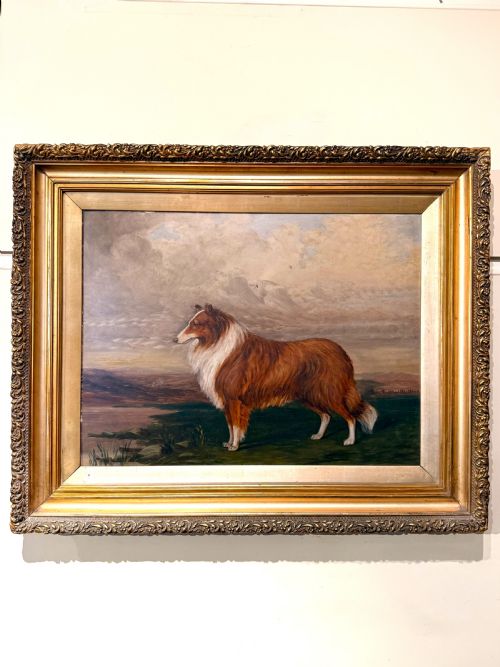
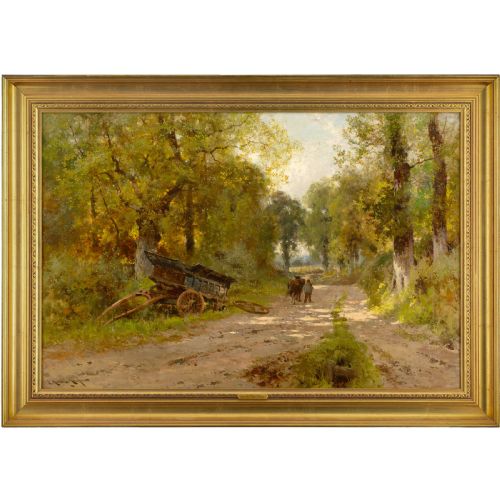
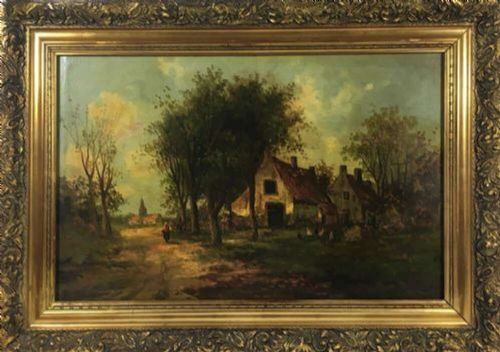
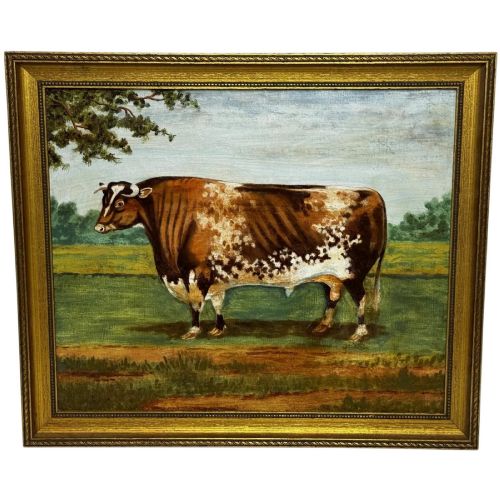
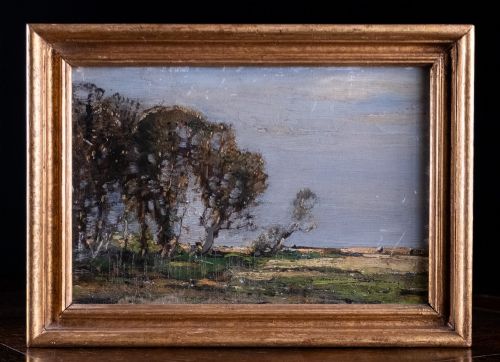
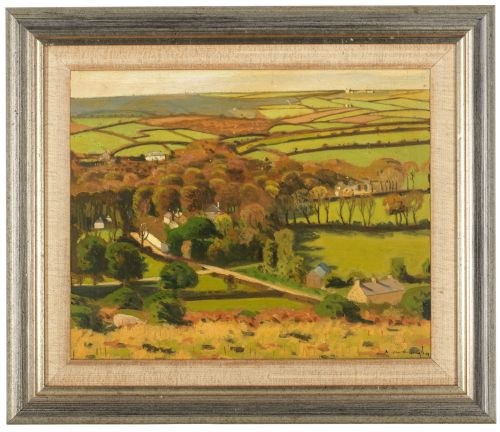
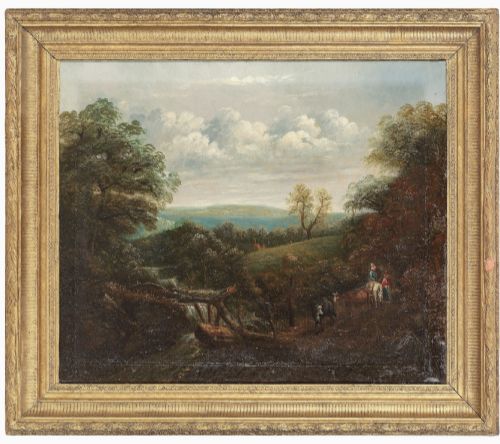
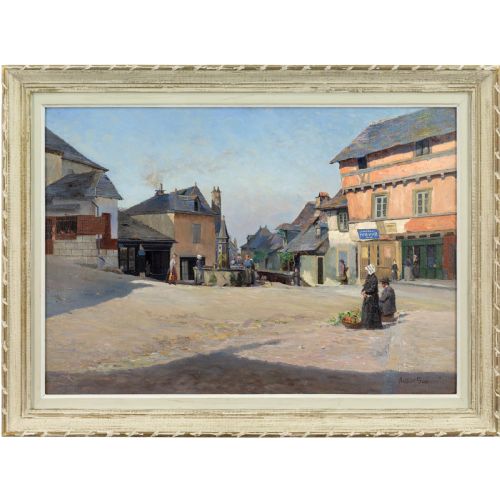
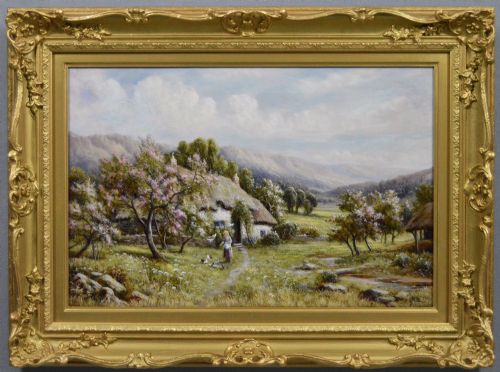
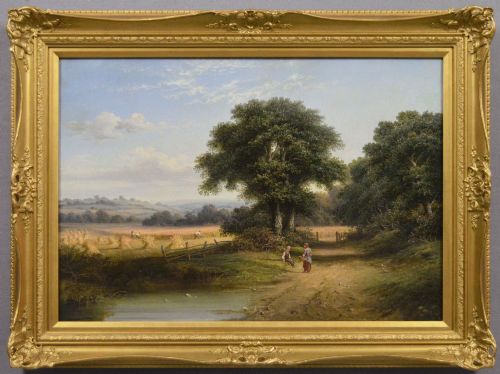
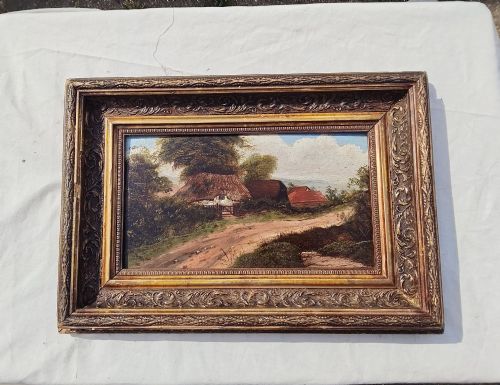
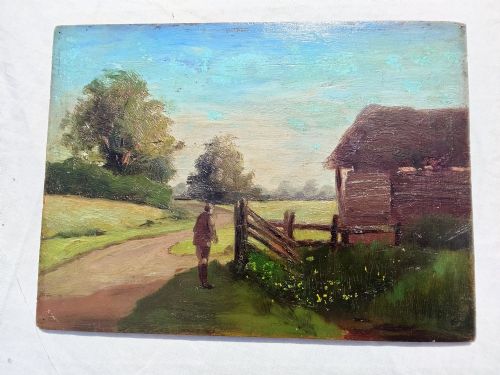
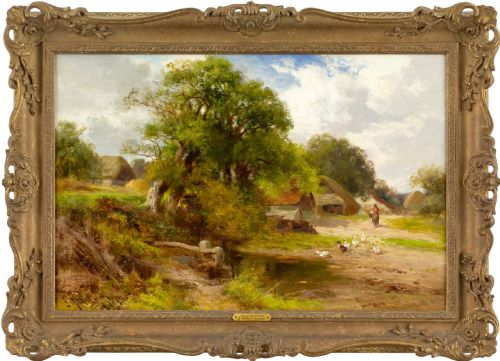
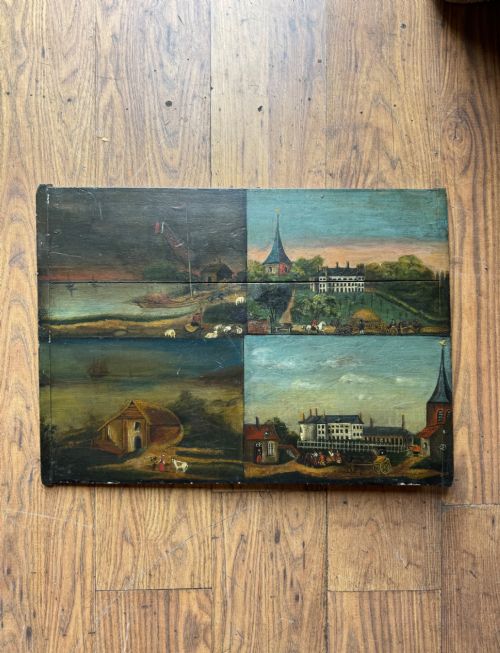
Country Landscape Oil Painting
These country landscape oil painting works capture rural views, farmsteads and agricultural scenes across centuries of British and European art.
Country Landscape Oil Painting
A country landscape oil painting depicts rural scenes such as harvest fields, cottages, rivers, and farmsteads created across the nineteenth and twentieth centuries.
Buyers encounter works ranging from Victorian rustic realism and Barbizon school woodland scenes to mid-century British and French village views.
The selections feature oils executed on stretched canvas, wooden boards, panels, and card, often housed within period frames.
How They Were Made
Artists painted primarily with oil pigments applied to stretched canvas, wooden boards, panels, or card supports.
Materials recorded across the archive include oil on canvas, wood, giltwood, gesso, and card.
What Varies in Quality
Brushwork dexterity, atmospheric depth, and the naturalistic rendering of light separate proficient compositions from naive provincial student efforts.
The strength of provenance, distinct artist attribution, and the preservation of the original support influence the standing of individual works.
William Howard Hardy·John Horace Hooper·Kershaw Schofield·Robert Morson Hughes·Thomas Sidney Cooper·Henry Yeen King·Paul Desire Trouillebert·David Bates
The Country Landscape Oil Painting Glossary
- Barbizon School
- A nineteenth-century French movement focused on direct observation of nature, plein-air sketching, and moody rural realism. Artists of this circle greatly influenced subsequent landscape painting across Europe.
- Oil on Canvas
- Pigments bound in a drying oil applied onto a woven fabric support stretched across a wooden frame. This technique remains the most prevalent medium for traditional paintings.
- British Impressionism
- A late nineteenth and early twentieth-century style adopting loose brushwork and vibrant light effects inspired by French developments. Painters sought to capture fleeting weather and atmospheric conditions.
- Panel Painting
- A rigid support typically made from wood upon which artists executed fine compositions. Wooden boards and panels provide a stable surface often found in earlier works.
Country Landscape Oil Painting: Frequently Asked Questions
How do I date a country landscape oil painting?
Dating relies on costume details of figures, architectural styles of depicted cottages, and the physical characteristics of the canvas or wooden panel. Frame construction and handwritten inscriptions on the reverse also provide chronological markers.
Examining the stretcher bars, nails, and canvas preparation gives further clues to the period of creation.
Where should I hang an oil painting?
Hang paintings away from direct sunlight and steady heat sources to prevent the oil paint and canvas from drying out or cracking. Stable interior wall environments preserve both the pigments and the wooden frames.
Proper placement protects the structural integrity of the support over decades of display.
What is the difference between canvas and board?
Canvas offers flexibility and texture through its woven fabric support, whereas board or panel provides a rigid, unyielding surface for finer brushwork. Many nineteenth-century painters favored panels for smaller plein-air studies.
Both supports dictate how the paint layer ages and responds to environmental humidity.
How do I identify regional British schools?
Regional schools display distinct topography, local architecture such as Kent oast houses or Welsh mills, and specific palettes favoured by local art circles. Signatures and exhibition labels often tie a composition to a precise county.
Comparative study of regional flora and agricultural practices helps pinpoint the exact geographic setting.