



Country Kitchen Island
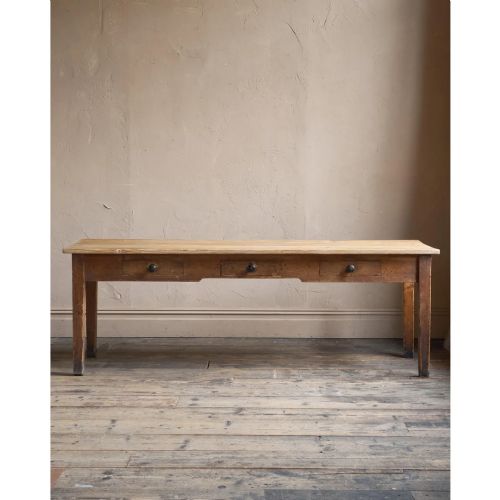
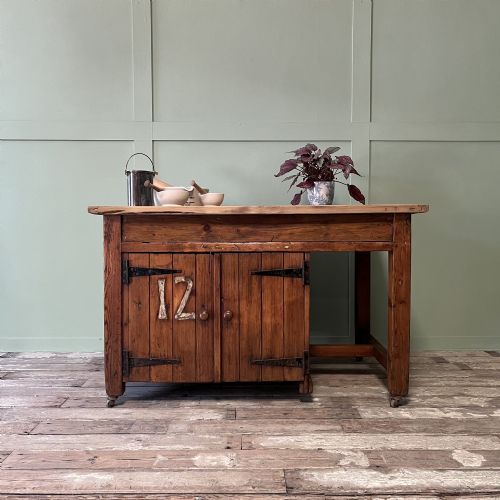
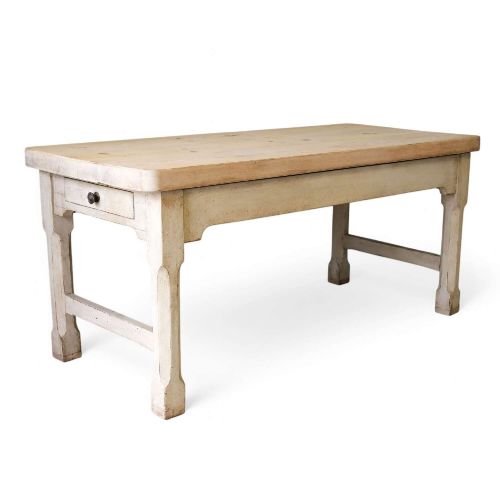
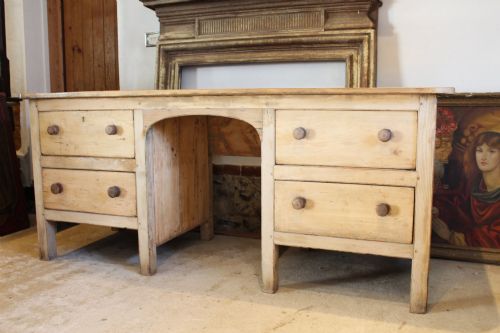
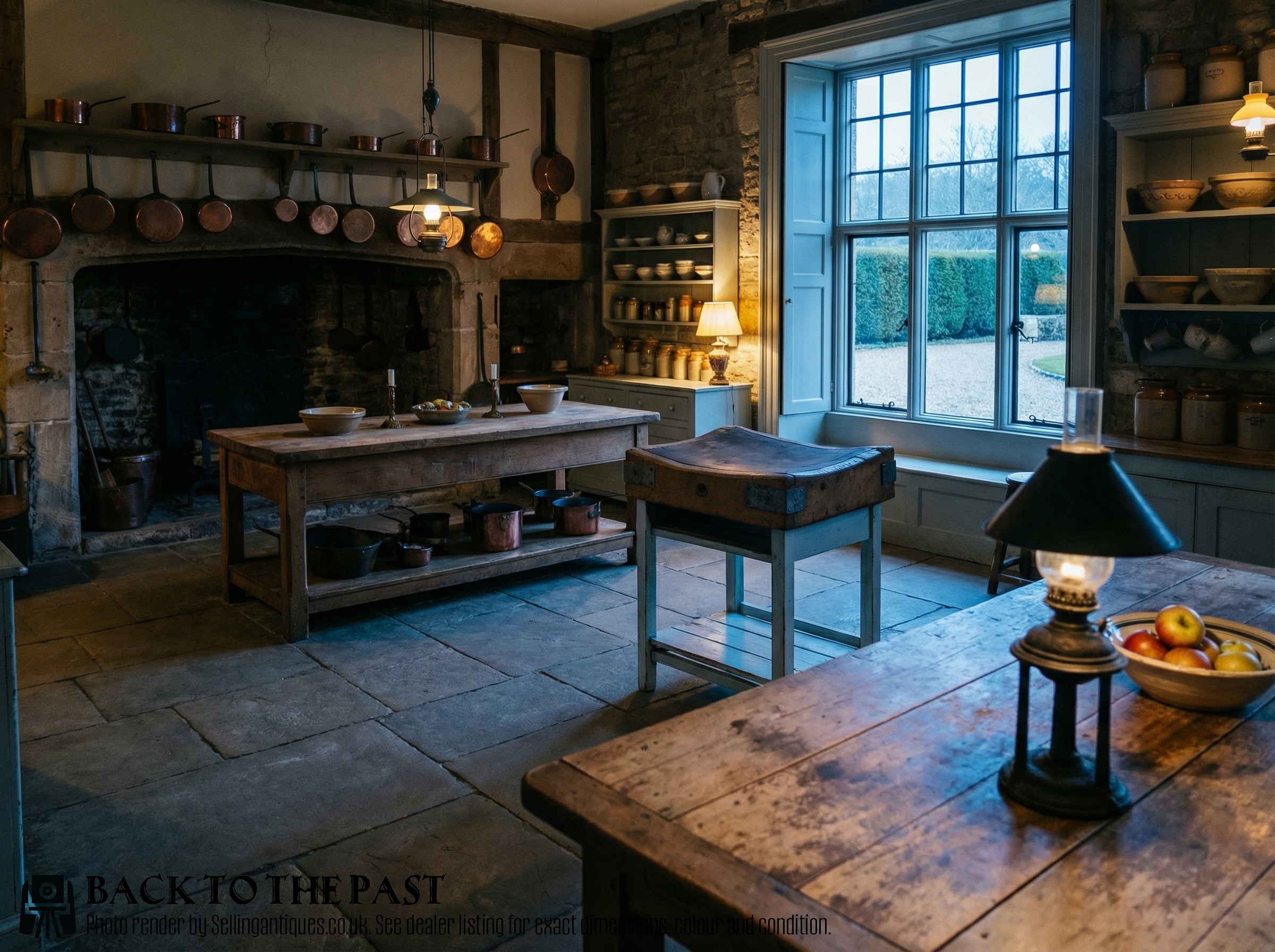
A country kitchen island brings practical workspace and robust utility into the heart of the home, drawing on utilitarian forms from past centuries.
Country Kitchen Island
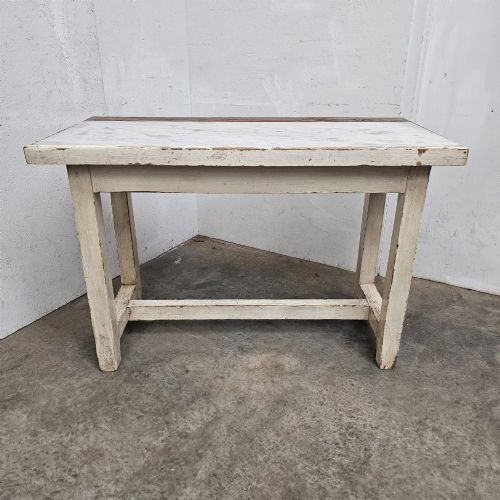
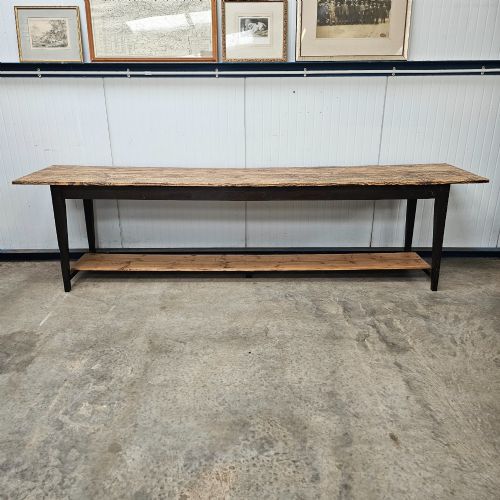
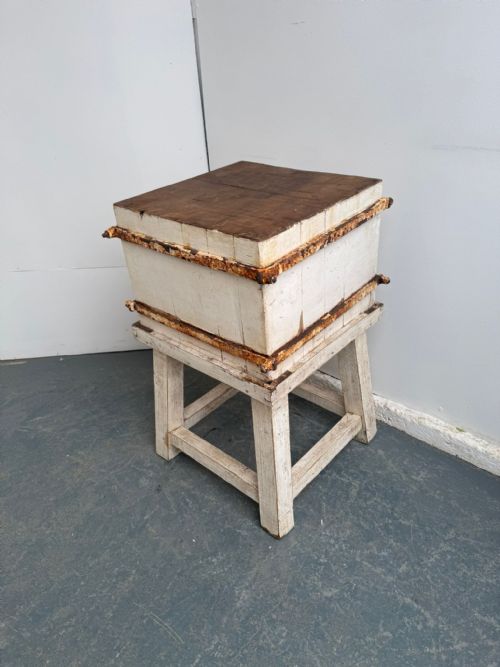
When you search for a country kitchen island, you encounter a variety of heavy-use work surfaces designed for food preparation rather than formal dining. The pieces available range from robust pine bakers tables and scrubbed workbenches to French drapers tables and butchers blocks.
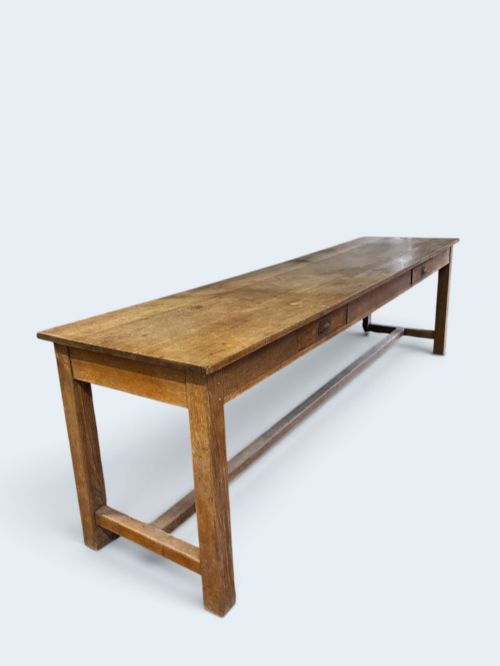
You are most likely to meet pine and oak examples dating from the nineteenth century, often featuring drawers, pot shelves, or thick timber tops suited to daily culinary tasks. These items derive from sculleries, shops, and farmhouses where durability took precedence over ornamentation.
Styles span from English country house and Georgian forms to French provincial and Scandinavian painted pieces. Each variant offers a distinct character shaped by regional joinery traditions and decades of practical use.
How they were made
Construction relies heavily on solid domestic timbers such as pine, oak, elm, and sycamore, chosen for their ability to withstand heavy chopping, kneading, and general food preparation. Thick plank tops are frequently joined simply and effectively, sometimes incorporating marble or stone sections for specialised pastry and charcuterie work.
Frames are joined with traditional methods to provide absolute stability under pressure, occasionally augmented by integrated vices, drawers, or lower pot shelves. Surfaces show the marks of hand tools, adzes, and centuries of scrubbing rather than fine cabinet polish.
Several heavy workbenches still retain the deep scars and ink stains left by nineteenth-century artisans who hammered away before them.
What varies in quality
Quality rests in the integrity of the structural timbers and the proportion of the piece, where thicker working tops and honest, unpretentious framing elevate the object. The best examples retain their original working height and uncompromised structural mass, showing deep patination earned through genuine utility rather than artificial distressing.
The relationship between the base and the top dictates the visual weight, with well-balanced proportions distinguishing a utilitarian masterwork from a standard domestic table. Original paint finishes or clean, scrubbed surfaces contribute further to the distinction between ordinary workshop salvage and exceptional regional furniture.
The Country Kitchen Island Glossary
- Drapers Table
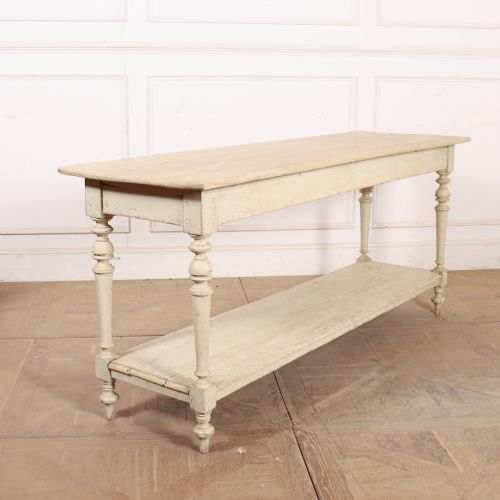
- A long, narrow table traditionally used in fabric shops, featuring a generous top and often multiple drawers or a lower shelf. Their slender proportions suit modern kitchens well as central islands.
- Butchers Block
- A heavily constructed chopping surface made from thick end-grain or side-grain timber blocks. They were built to endure continuous heavy cleaver work in professional butcher shops.
- Scullery Table
- A utilitarian table designed for messy kitchen chores such as washing, peeling, and food preparation. These pieces typically utilise sturdy pine with robust, unadorned legs.
- Patination
- The surface sheen and colour developed over decades through handling, waxing, and scrubbing. It serves as a visual indicator of age and genuine use.
- Refectory Table
- A long dining table historically used in communal dining halls, characterised by stretcher bases for added stability. Oak examples provide significant length and rigidity.
Country Kitchen Island: Frequently Asked Questions
How do I choose the right height?
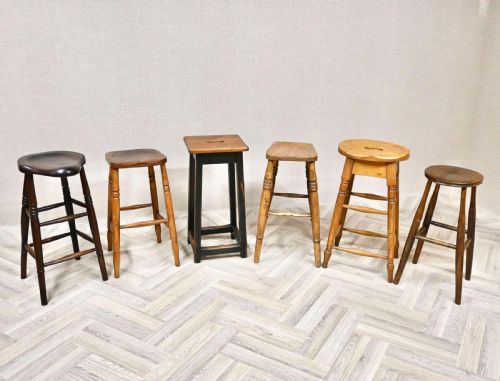
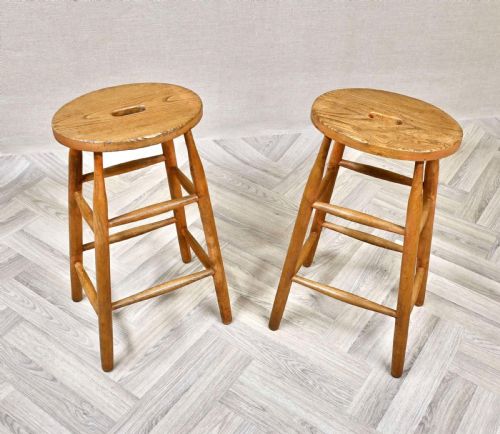
Consider whether the piece will serve primarily for standing food preparation or for sitting with stools. Many antique work tables and benches sit at traditional heights that may differ from modern standard kitchen counters.
Check the floor clearance and overall dimensions listed to ensure comfortable legroom and alignment with your existing kitchen layout.
Are these surfaces safe for food preparation?
Most historic work tables and blocks feature unsealed timber or traditional wax finishes that have absorbed decades of natural oils. Regular cleaning and light maintenance keep the wood hygienic for modern culinary use.
Marble inserts, found on specific pastry and charcuterie tables, offer naturally cool, non-porous surfaces ideal for dough work.
How do I care for antique pine?
Avoid harsh chemical cleaners that strip the natural patination and dry out the historic timber. Clean surfaces with a damp cloth and mild soap, applying natural beeswax occasionally to nourish the wood.
Protect the top from excessive moisture and extreme heat variations to prevent warping or cracking in the old boards.
What is the difference between a prep table and a harvest table?
Preparation tables generally feature thicker tops, more utilitarian bases, and practical additions like drawers or lower pot shelves designed for working environments. Harvest tables tend to be longer and lighter, intended traditionally for seasonal communal dining.
Both forms adapt well to modern kitchens, depending on whether you require heavy-duty workspace or extended surface area.