


Industrial Kitchen Table
An industrial kitchen table brings heavy utility and utilitarian timber into the heart of the home.
Industrial Kitchen Table
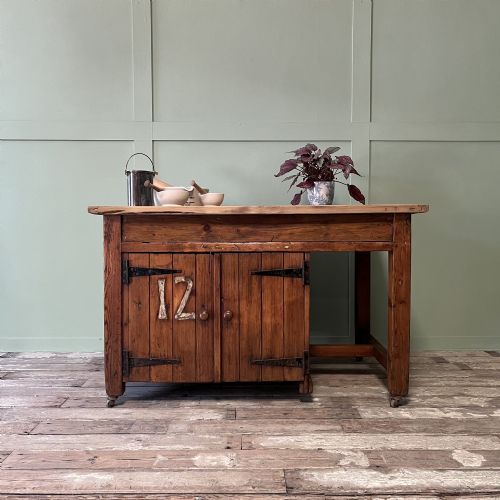
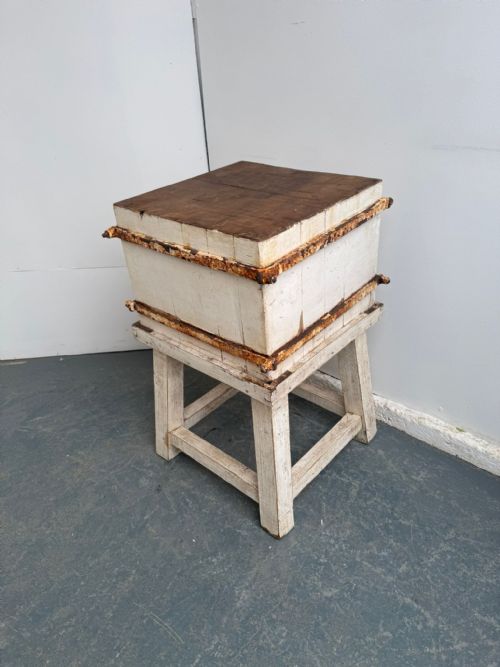
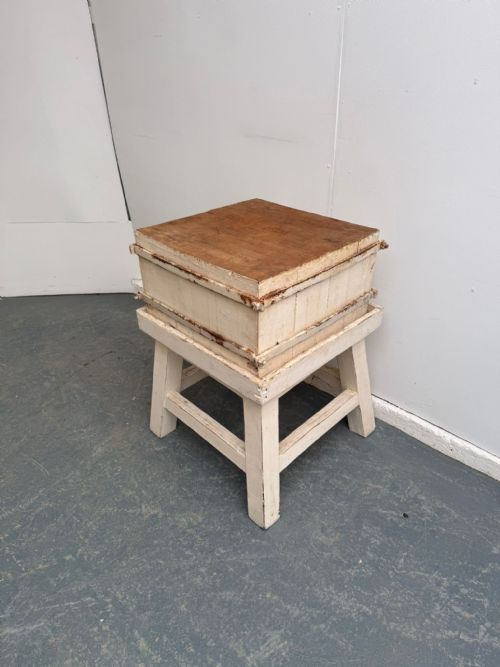
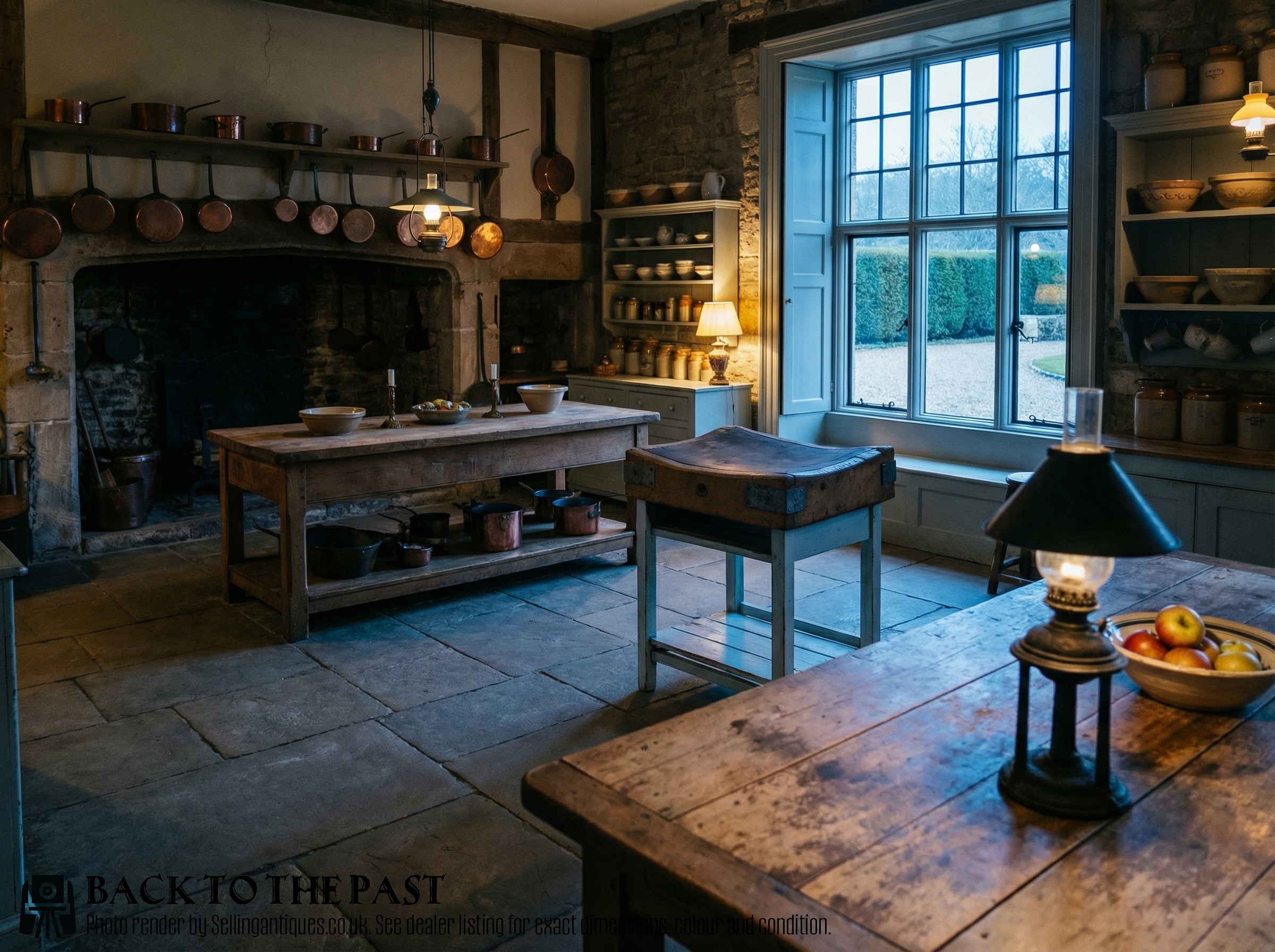
When you search for an industrial kitchen table, you encounter robust utility surfaces designed originally for hard labour rather than domestic dining. The examples appearing here span utilitarian workbenches, butchers blocks, prep tables, and robust refectory dining pieces from the eighteenth century to the mid-twentieth century.
You are most likely to meet pine-topped work tables, heavy oak chopping blocks, and substantial French country house workbenches fitted with vices or trestle bases. These forms draw upon styles ranging from rustic farmhouse and French provincial to Victorian industrial.
These tables serve modern kitchens by offering honest, hard-wearing surfaces with authentic patination earned through decades of trade use. Their longevity derives from straightforward timber construction combined with resilient iron, steel, and cast iron framing.
How they were made
Makers constructed these surfaces using dense hardwoods such as oak, beech, and hardwearing pine, selected specifically to withstand heavy daily impact. Tops often consist of thick, joined slabs designed for chopping, pounding, and assembly work.
The underframes rely on sturdy iron, steel, and cast iron supports, sometimes incorporating functional elements like vices, brass bases, or bronzed mounts. Paint finishes appear in distressed white or muted tones, applied originally to protect the timber in busy workshops and kitchens.
Recorded periods span from the eighteenth century through the Victorian era to the nineteen-fifties.
What varies in quality
The primary distinction lies in the integrity of the original timber and the industrial hardware employed in the build. Tables retaining their authentic vices, robust iron stretchers, and heavy unplaned tops command greater attention from buyers seeking genuine utility.
Proportion and scale also dictate the character of the piece, with substantial lengths and deep, thick-slab tops representing the more impressive survivals. Finishes show variance between honest patination from prolonged workshop use and later, softer domestic restorations.
Trussant & Cie·Hennes France
The Industrial Kitchen Table Glossary
- Butchers Block
- A heavily constructed chopping surface made from thick end-grain or edge-grain timber. These blocks were built to absorb relentless cleaver impacts in commercial meat preparation.
- WorkBench
- A heavy-duty workshop table designed for carpentry or craft, frequently equipped with a wooden or metal vice. In a domestic kitchen, the vice mechanism remains a striking sculptural detail.
- Refectory Table
- A long, narrow dining table traditionally used in communal dining halls. Examples seen here combine this formal format with robust farmhouse or industrial framing.
- Trestle Table
- A table consisting of horizontal beams supported by two vertical bracing frames. This construction allows for maximum legroom and sturdy structural support.
- Patina
- The surface sheen and wear accumulated through decades of handling, cleaning, and use. It records the working history of the piece in the wood.
Industrial Kitchen Table: Frequently Asked Questions
Can I use an industrial workbench as a dining table?
These robust tables function well for daily dining if the undercarriage allows sufficient knee clearance. Many incorporate deep aprons or vices that require careful consideration of seating positions.
Their heavy timber tops provide an exceptionally durable surface that easily withstands family meals and kitchen activities.
How do I clean a vintage butchers block?
Routine maintenance involves wiping the timber surface with a damp cloth and mild soap. Avoid soaking the wood to prevent warping or splitting.
Periodic application of food-safe mineral oil helps nourish the thick pine, oak, or beech and preserves the historic grain.
Are these tables suitable for heavy kitchen appliances?
The dense hardwood tops and iron frames were originally built to support immense industrial workloads. Consequently, they easily handle heavy modern kitchen equipment like mixers and coffee machines.
The solid construction ensures complete stability during everyday culinary preparation.
How do I date an industrial kitchen table?
Dating relies on observing construction methods, timber types, and the design of iron or steel hardware. Pieces from the eighteenth and nineteenth centuries display hand-cut joinery and heavy patination, while twentieth-century examples often feature bolted steel frames and simpler pine tops.
Maker stamps or branded marks on the timber or ironwork also provide precise chronological reference points.