
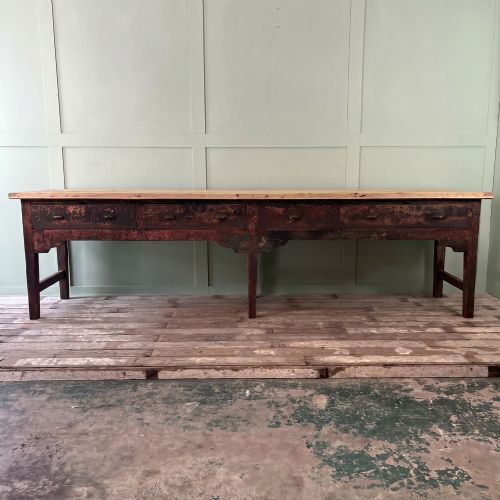
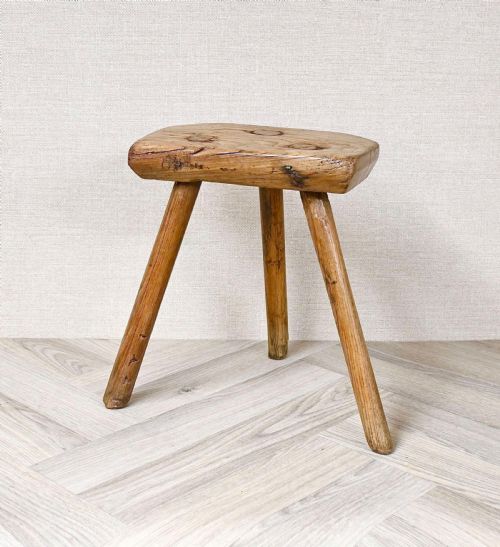
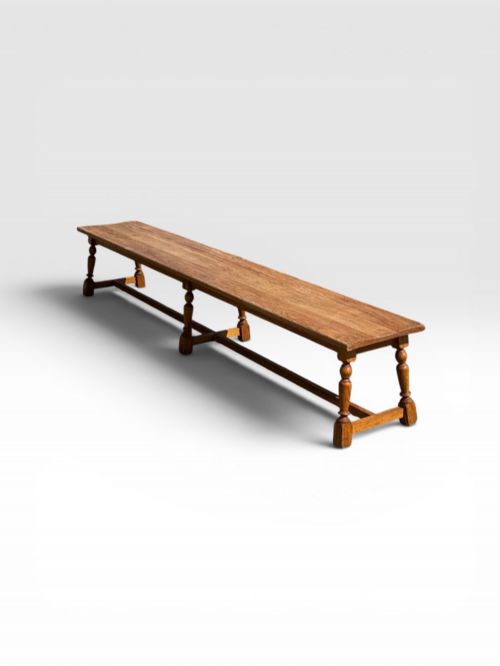
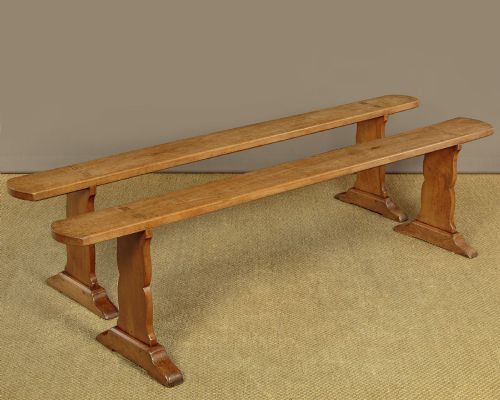

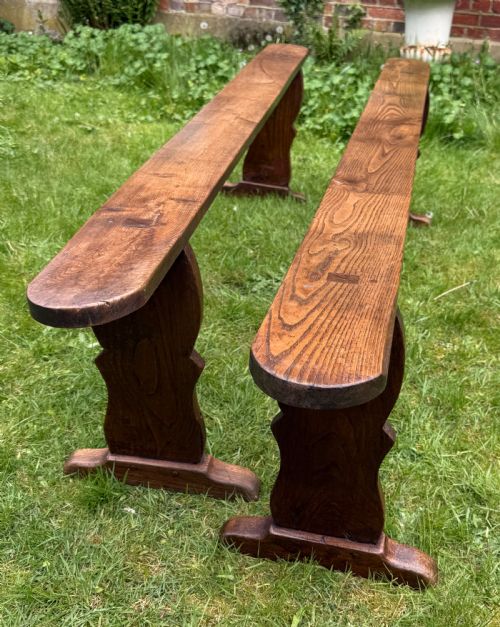

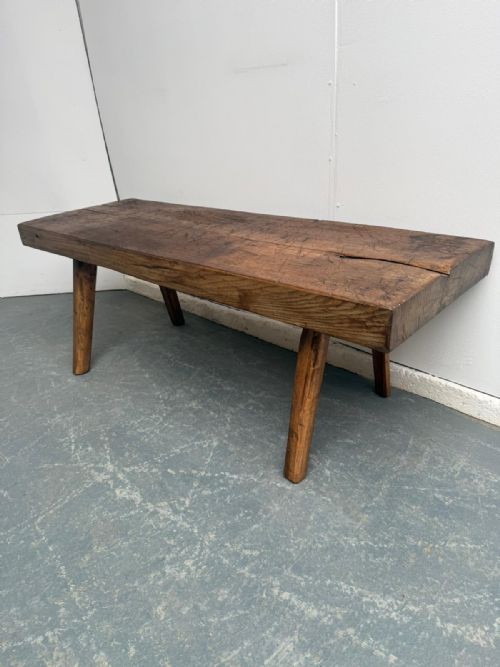
Country Farmhouse Bench
A country farmhouse bench brings honest utility and utilitarian warmth to an interior, shaped by generations of practical use in European and British kitchens and halls.
Country Farmhouse Bench
A country farmhouse bench sits at the intersection of utility and vernacular design, serving as long-lasting seating for dining tables, hallways, and boot rooms. When searching for a country farmhouse bench, you encounter pieces designed for daily endurance in domestic and agricultural settings.
The selections span simple board-and-leg forms to substantial oak, pine, elm, and cherrywood examples originating from English, French, Austrian, and Hungarian traditions. Many surviving specimens date from the nineteenth and early twentieth centuries, retaining the marks of daily labour and regional building methods.
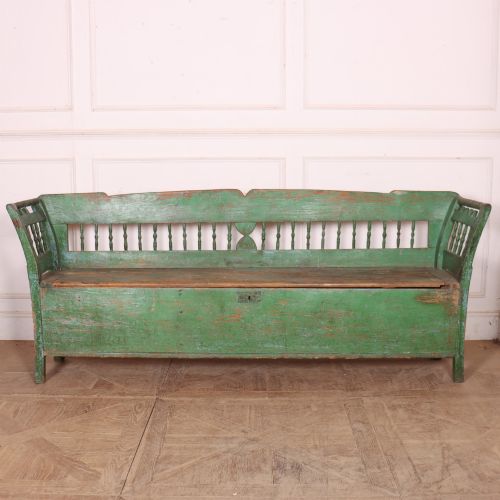
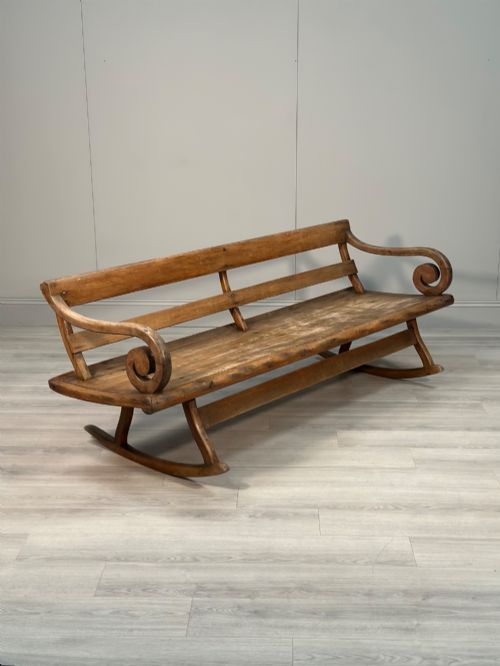
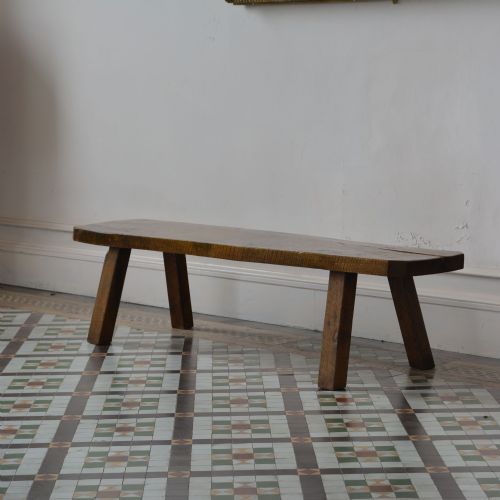
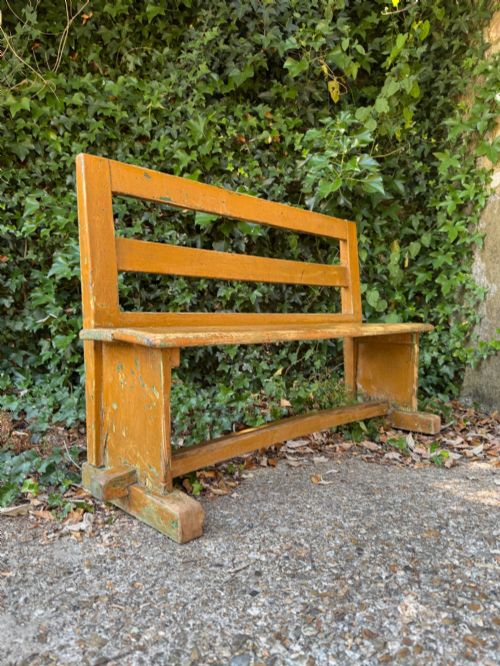
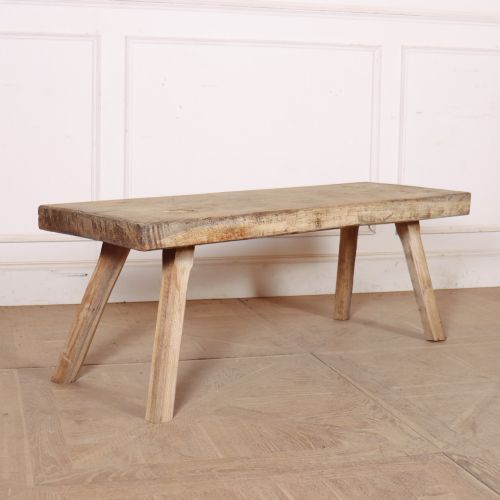
Formats vary from straight benches and settles with high backs to low pig benches and narrow seating intended to fit against cottage walls. These utilitarian seats share a directness of purpose, constructed by local makers using timber to hand.
How they were made
Makers relied on native hardwoods and softwoods such as pine, oak, elm, sycamore, and cherrywood, selecting timber based on local availability and structural demand. Dense woods like oak and elm provided sturdy frames and legs, while lighter pine and sycamore served for wide tops and seats.
Construction techniques prioritise structural integrity over decorative flourish, often employing pegged mortise and tenon joints, dovetailed frames, and solid plank seats fixed to robust underframes. Surfaces display the tool marks of adzes, drawknives, and hand saws, reflecting the physical reality of regional carpentry.
Finishes range from scrubbed raw timber and bleached surfaces to historic layers of paint, showing decades of cleaning, wear, and exposure in working environments.
What varies in quality
The distinction between ordinary utility items and superior examples lies in the integrity of the timber, the balance of proportions, and the honesty of survival. Pieces retaining their original board thickness, uncompromised structural joints, and deep patination command attention.
Proportion and scale dictate visual success, as longer benches require careful timber selection to avoid excessive warping while maintaining stability across the span. Exceptional pieces show thoughtful integration of grain, well-turned or tapered legs, and minimal intervention from later restorations.
The Country Farmhouse Bench Glossary
- Settle
- A wooden bench featuring a high back, solid arms, and often a storage box beneath the seat, designed to block drafts in older homes. These pieces functioned as primary seating near the hearth.
- Pig bench
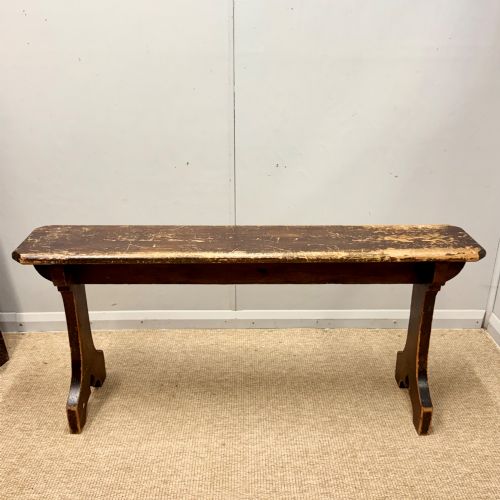
- A low, narrow wooden bench historically used in agricultural preparation, characterised by sturdy slab tops and splayed legs. Their narrow profile makes them suitable as coffee tables or narrow console surfaces in modern interiors.
- Trestle
- A structural support consisting of a horizontal beam fixed to two splayed legs, used to support long bench and table tops. This method allowed large furniture to be dismantled or moved with relative ease.
- Patina
- The surface sheen and colour acquired by wood through age, light exposure, polishing, and handling. A deep patina indicates decades of uninterrupted domestic care.
- Primitive
- A descriptive term for vernacular furniture made outside formal guild traditions, prioritising function and straightforward construction over academic design rules.
Country Farmhouse Bench: Frequently Asked Questions
How do I style a farmhouse bench at home?
Place a long wooden bench alongside a dining table to create a relaxed, communal seating arrangement that tucks neatly underneath when not in use. They also function well in hallways as a surface for pulling on boots or displaying textiles.
In living spaces, shorter pig benches serve effectively as low coffee tables or display surfaces for books and ceramics. Their neutral wood tones complement both contemporary interiors and traditional rural schemes.
Are these benches sturdy enough for daily seating?
Most country benches were built for heavy agricultural or domestic labour, meaning their underlying construction is inherently robust. Solid timber joints and thick plank seats ensure they withstand regular daily use.
Periodic checks of the underframe and legs help maintain stability, especially on older pieces that have experienced dry indoor environments.
How do I tell different wood types apart?
Pine appears light with prominent grain lines and knots, often showing a warm amber tone when waxed over time. Oak is heavier, featuring distinct medullary rays and an open grain structure that takes a deep, dark patina.
Elm displays a wild, interlocking grain pattern that resists splitting, while cherrywood develops a rich, reddish-brown warmth as it ages.
What is the difference between a settle and a standard bench?
A settle incorporates a solid high back and enclosed sides designed to protect occupants from cold draughts in unheated rooms. Standard benches offer open seating without backs or integrated side shields.
Both forms share regional vernacular origins, but settles offer a more architectural presence against a wall.