



Country Estate Painting
Country estate painting encompasses canvases and practical metalwork recording historic houses, horses, and lands, offering a direct view into landed heritage.
Country Estate Painting
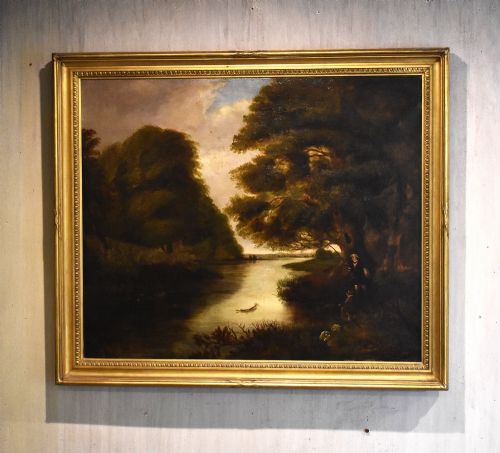
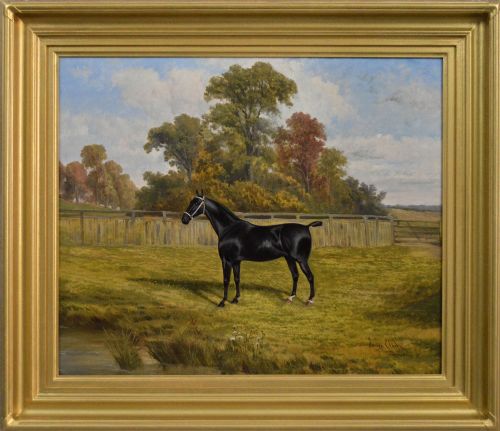
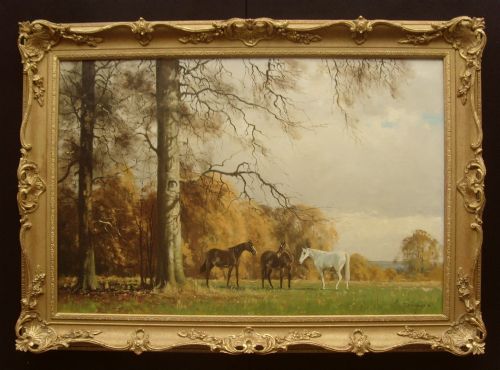
A country estate painting captures the houses, parks, and sporting life of landed properties, predominantly through Victorian and 19th-century oils on canvas. These works range from grand topographical views of historic seats like Trentham Hall and Lowther Castle to intimate portraits of estate horses and hunt stables.
Beyond framed canvas art, the category extends to estate-made ironwork and storage, including blacksmith-made wrought iron gates and hand-painted silver chests. These functional items share the domestic and architectural sphere of the canvases, rooted directly in the upkeep of large properties.
The regional focus spans specific British and European houses, landscapes, and country seats, recorded by artists working within traditional schools. Buyers encounter named country houses, estate horses, and formal gardens that reflect the patronage of the landed gentry.
Materials and construction
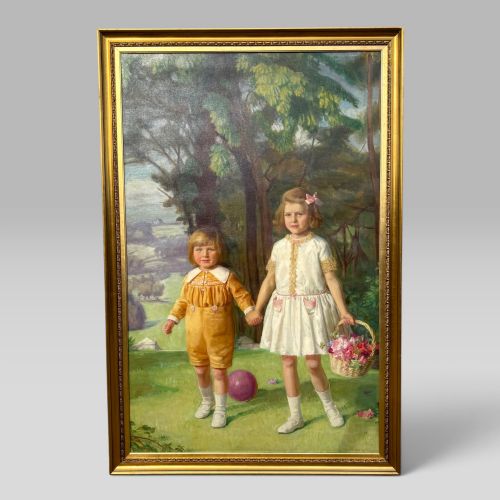
The paintings rely on oil paint applied to canvas, often housed in original gilt wood frames that complement the domestic scale of country houses. Monochrome ink with watercolour on paper also appears alongside the primary oil medium.
Metalwork pieces utilise heavy wrought iron shaped by blacksmiths for estate gates, while storage items combine solid wood with hand-painted exterior finishes. These materials reflect functional durability suited to country house environments.
Country Estate Painting Retail Price Guide 2026
Typical asking prices for country estate painting among the pieces listed under this phrase on Sellingantiques today, from the lower quarter to the upper quarter. They describe what is for sale here now, not the wider market.
The selection includes named properties such as Trentham Hall, Lowther Castle, and Newstead Abbey.
Qualities of execution and provenance
Quality rests on the precision of topographical detail and the handling of light across landscape and architecture, distinguishing professional academic works from simpler regional records. Masterful brushwork in animal and architectural portraits elevates a piece significantly.
Documented provenance linking a canvas to a specific named estate, architect, or known painter adds historical weight. The integrity of the original frame and the preservation of the canvas surface further determine the standing of each artwork.
James Albert Clark·George F. Bird·Walter Robin Jennings·Clifton Tomson·Samuel Sidley·John Sanderson Wells·Robert Thomas Buttery·Fred Merriman·Martin Pierre - Denis·Henri Harpignies
The Country Estate Painting Glossary
- Oil on Canvas
- Pigments bound in a drying oil applied to a stretched woven fabric support. This method provides depth of colour and longevity for traditional landscapes.
- Gilt Wood
- Carved timber treated with a thin layer of gold leaf or metallic powder. It frames many traditional paintings and mirrors.
- Wrought Iron
- Iron beaten into shape by a blacksmith using heat and hand tools. It provides structural strength and decorative detail for gates and architectural hardware.
- Topographical
- Depicting a specific real place, building, or landscape with accuracy. These views serve as historical records of country seats and their grounds.
- School
- A group of artists sharing a similar style, period, or geographical origin, such as the Victorian Fine Art or Barbizon traditions.
Country Estate Painting: Frequently Asked Questions
What subjects appear in country estate paintings?
The subjects include historic houses, parklands, estate horses, hunting scenes, and architectural prospects. Artists recorded specific seats and their surrounding lakes, gates, and grounds.
These works document the daily operations and leisure activities associated with landed property during the eighteenth and nineteenth centuries.
How do I hang large framed estate art?
Large oil paintings require secure wall fixings suited to heavy timber frames and substantial canvas weight. They balance well in principal reception rooms or traditional hallways.
Ensure placement avoids direct sunlight and fluctuating heat sources to protect the canvas and gilt wood frames over time.
How do I identify the period of an oil painting?
Stylistic clues, costume details in figures, and framing methods help date traditional canvases. Nineteenth-century works often show specific academic techniques and stretcher construction.
Artist signatures and recorded exhibition histories further clarify the exact decade of creation.
Where were wrought iron estate gates used?
Heavy iron gates marked the formal entrances, park boundaries, and stable yards of large properties. Blacksmiths forged them to withstand outdoor exposure and heavy daily use.
They served both defensive boundaries and decorative focal points along carriage drives.