


Oil Portrait of Horse
When you search for an oil portrait of horse, you enter a long tradition of equine art spanning from the Georgian period to the mid-twentieth century.
Oil Portrait of Horse
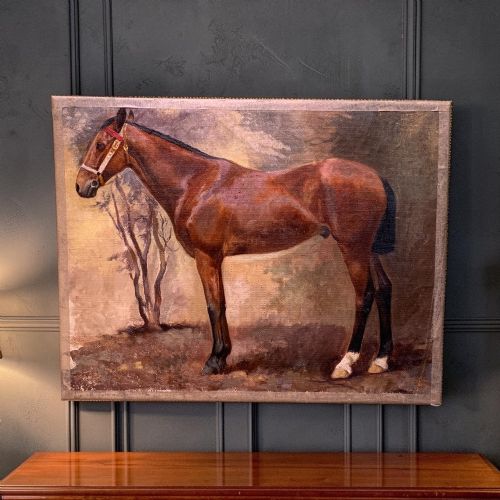
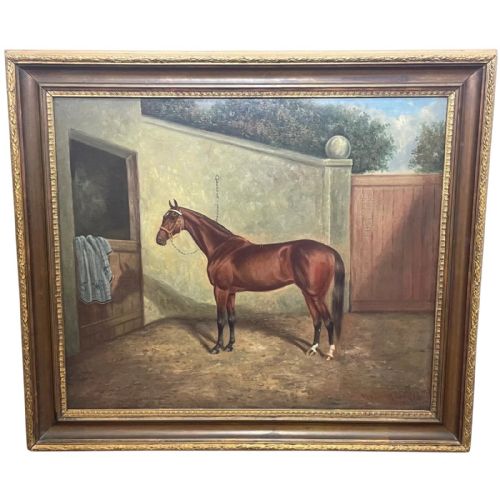
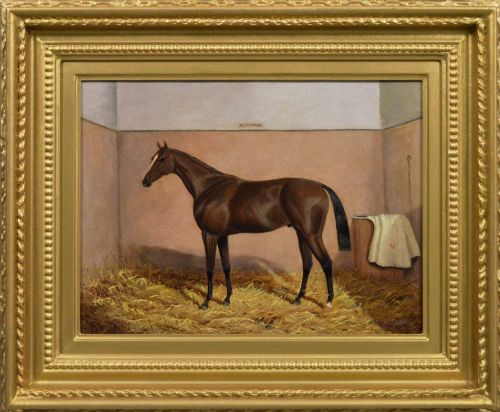
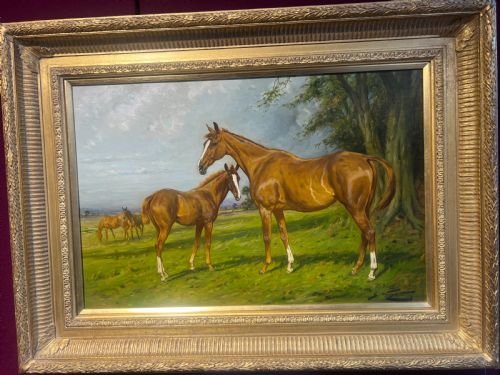
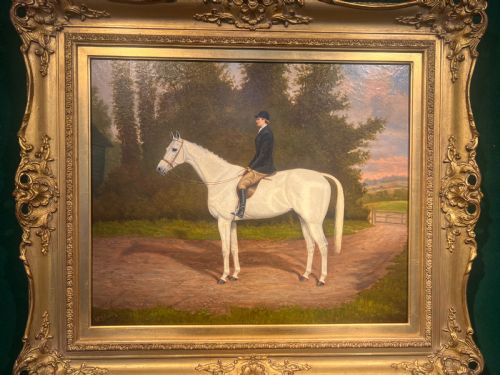
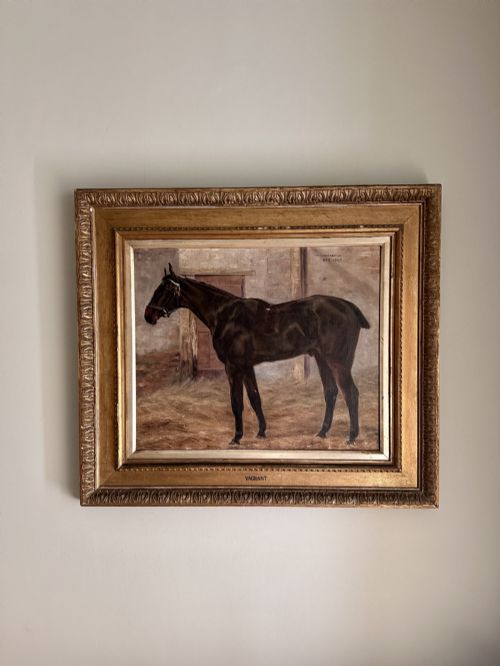
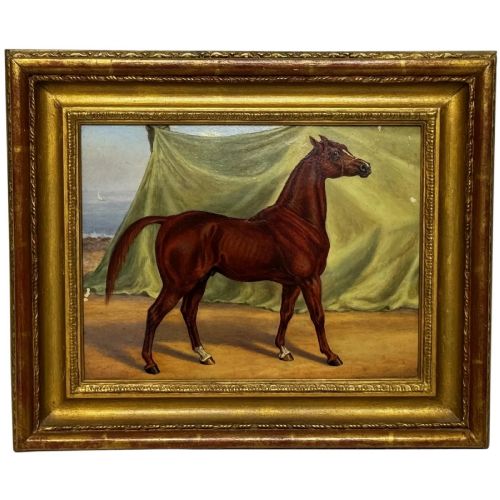
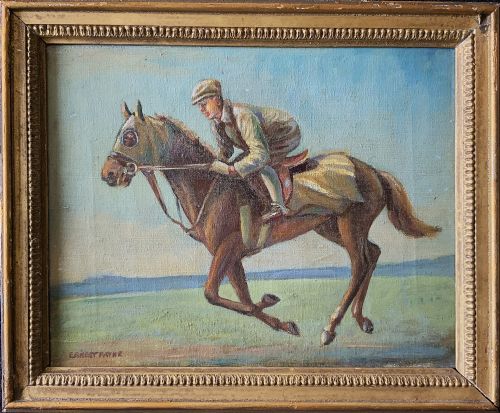
An oil portrait of horse captures individual animals, from named racehorses and hunters to working shires and farm animals, recorded with distinct personalities and conformations.
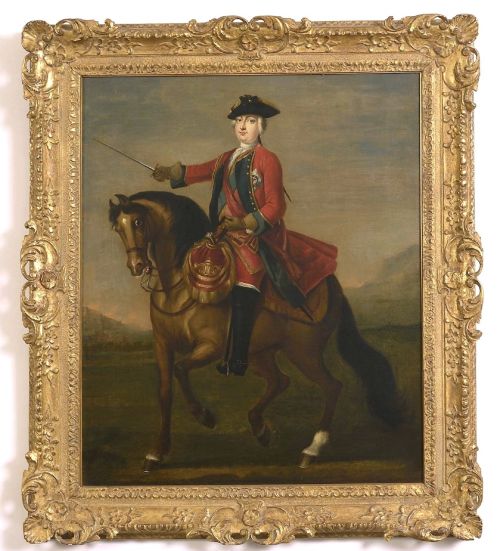
The pieces on this page originate predominantly from the nineteenth and twentieth centuries, alongside select eighteenth-century examples and later mid-century works.
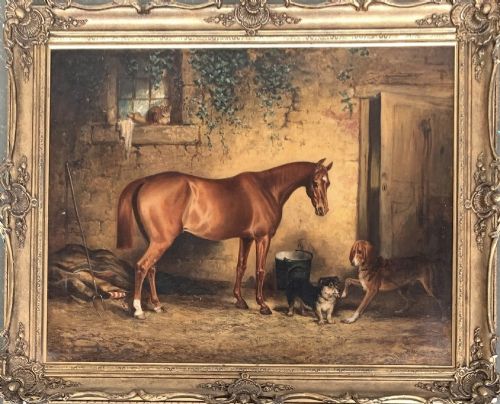
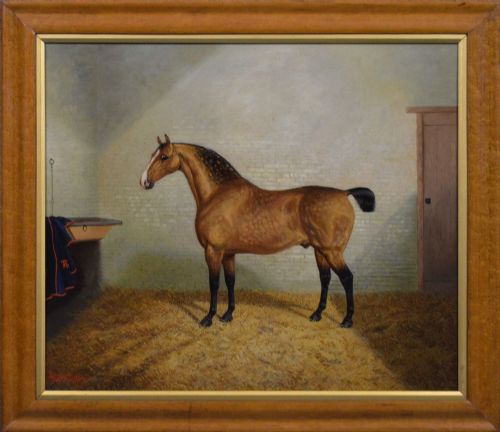
Subjects range from solitary bay hunters in stables and Derby winners on the turf to horses working in rural landscapes alongside ploughs, hay wagons and steam locomotives.
Materials and construction
These works are painted using oil paint applied to stretched canvas, wood panels or boards, capturing the muscular form and sheen of the animal's coat.
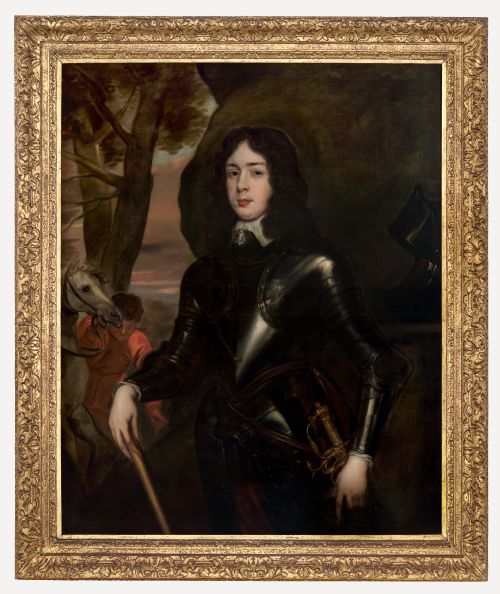
Many surviving examples retain their original giltwood or gilt frames, which provide a traditional border that complements the palette of the pastoral or stable background.
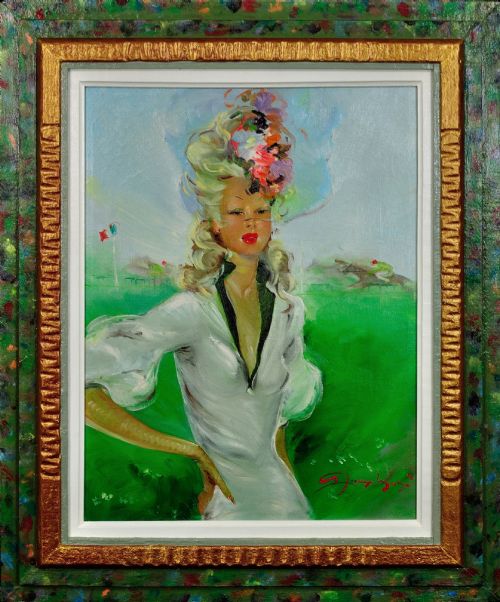
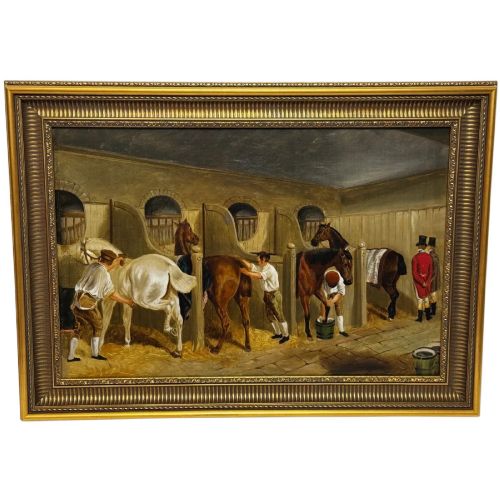
Several horses in these portraits share space with unexpected companions, including watchful dogs, ploughmen, steam locomotives, and fashionable racegoers.
Evaluating quality and execution
Quality rests upon the artist's anatomical accuracy in rendering the equine form, the depth of colour in the landscape or stable interior, and the handling of light across the subject.
Works by recognised sporting artists and named practitioners demonstrate a superior grasp of movement and character compared to standard school pieces of the period.
Henry Barraud·Albert Clark·Fred Fitzpatrick·John Ferneley Senior·Thomas Walker Bretland·John Alfred Wheeler
The Oil Portrait of Horse Glossary
- Bay
- A horse coat colour characterised by a reddish-brown body with a black mane, tail, and lower legs. This is one of the most frequently encountered coat colours in equine portraiture.
- Equestrian
- Relating to horse riding or the representation of horses in art. This broader term encompasses sporting art, racing scenes, and individual animal studies.
- Giltwood
- Wood that has been covered with a thin layer of gold leaf or gilt. It is commonly found on the ornate frames enclosing antique oil paintings.
- Provenance
- The documented history of ownership of an antique object. A traceable provenance links a specific painting to notable estates or historical collections.
Oil Portrait of Horse: Frequently Asked Questions
How do I date a horse portrait?
Dating relies upon stylistic cues in the brushwork, the framing materials, and the attire of any human figures included in the composition. The canvas preparation and stretcher construction also offer reliable clues to the era of creation.
Inscribed signatures, dates, or titles written on the stretcher bars or reverse of the canvas often provide definitive evidence of when the portrait was painted.
What is Victorian sporting art?
Victorian sporting art is a genre dedicated to depicting horses, hounds, hunting scenes, and racing triumphs popular during the nineteenth century. These works served to celebrate prize animals and memorable sporting events.
Artists during this era focused heavily on accurate anatomical representation and the specific characteristics of named racehorses and hunters.
How should I care for an oil on canvas?
Oil paintings require stable environmental conditions away from direct sunlight, excessive heat, and high humidity to prevent the canvas from sagging and the paint from cracking. Gentle dusting with a soft, dry brush is generally sufficient for routine maintenance.
Avoid using liquid cleaners or abrasive materials on the paint surface or the giltwood frame, as these can cause permanent damage.
Why are some horses named in the titles?
Many equine portraits were commissioned by owners to commemorate successful racehorses, valuable hunters, or beloved pets. Naming the animal increased the personal and historical value of the artwork.
Records on the frame or stretcher often identify the specific stable, estate, or racing victory associated with the animal.