
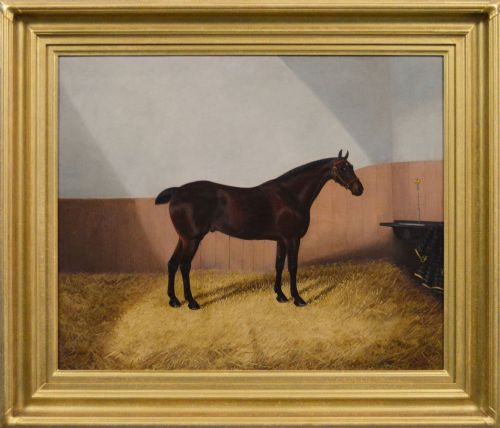
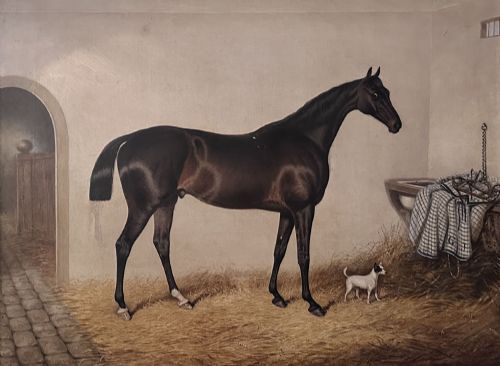
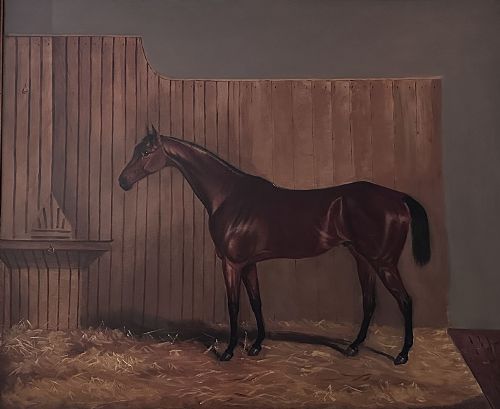


Antique Bay Horse Canvas
These antique bay horse canvas works capture equine portraiture in oil, bringing rich character and historic pedigree straight to your walls.
Antique Bay Horse Canvas
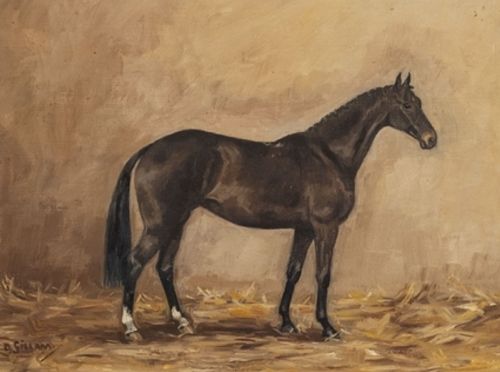
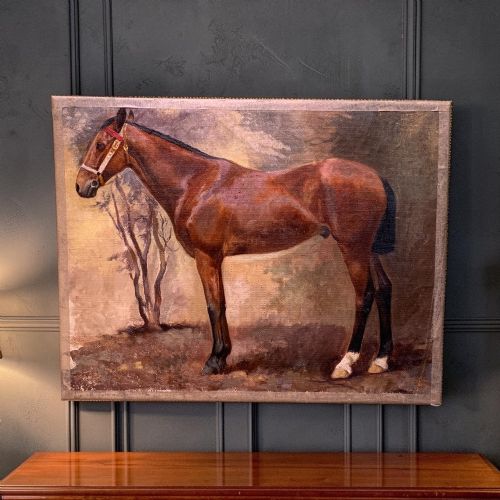
An antique bay horse canvas represents a specialised tradition of equine portraiture, capturing hunters, racehorses and stable companions in oil paint. When searching for an antique bay horse canvas, you encounter works spanning the nineteenth century through the mid-twentieth century, embracing Victorian sporting art and Edwardian equestrian traditions.
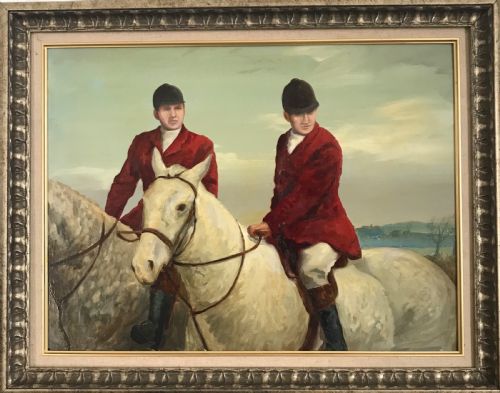
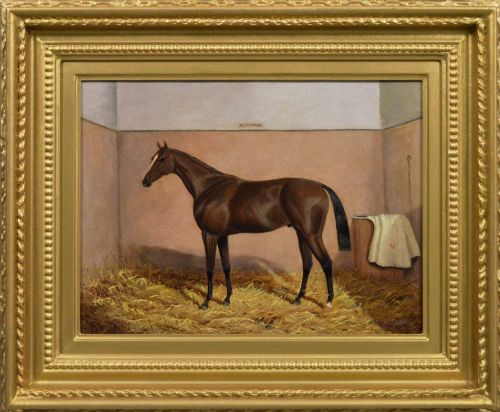
The subjects range from named racehorses and prize hunters to stable scenes featuring grooms and officers. Most pieces on this page originate from the Victorian era and the early twentieth century, presented within period giltwood frames.
How they were made
These works are executed in oil paint applied directly onto woven canvas supports, a method that allows for subtle blending and rich tonal depth in rendering equine coats and muscle structure. Artists utilised oil pigments to capture the warm reddish-brown hues characteristic of bay horses, often highlighting the sheen of the coat against darker stable backdrops.
Many of these canvases remain housed within their original wooden and giltwood frames, which provide structural support and complement the visual weight of the paintings.
Several horses recorded here famously outlived their human jockeys' sporting careers, retiring to very comfortable stables.
What varies in quality
Quality in these equestrian works rests upon the anatomical precision of the horse and the handling of light within the composition. Master painters capture not only the correct proportions and muscular definition of a hunter or racehorse, but also the individual personality and alert expression of the animal.
The distinction between standard decorative works and fine artistic output often lies in the background detail, such as detailed stable interiors or identifiable human figures like grooms and officers, alongside the preservation of the original canvas and giltwood framing.
Henry Barraud·Albert Clark·Edward Lloyd of Ellesmere·Benjamin Cam Norton·James Barenger·William Edward Millner
The Antique Bay Horse Canvas Glossary
- Bay
- A horse coat colour characterised by a reddish-brown body with black points on the mane, tail and lower legs. This coloration forms the central subject of these portraits.
- Equestrian art
- Depictions of horses as primary subjects within fine art. This genre encompasses racing scenes, hunting portraits and stable studies.
- Sporting art
- A category of art focusing on rural pursuits, particularly horse racing, hunting and shooting. Victorian examples often document specific prize-winning animals.
Antique Bay Horse Canvas: Frequently Asked Questions
How do I date an antique horse painting?
Dating relies on stylistic clues within the canvas, the construction methods of the stretcher and frame, and recorded artist signatures where present. Clothing styles of accompanying grooms or military officers also offer reliable chronological markers.
Many works carry specific period attributions ranging from the early nineteenth century through to the mid-twentieth century, aligning with Victorian and Edwardian aesthetic conventions.
What is the difference between a hunter and a racehorse in these paintings?
Hunters are typically depicted with sturdier bone structure and powerful quarters suited for field sports, often shown in open landscapes or stable yards. Racehorses generally display leaner, more refined athletic builds and may be recorded alongside specific trophies or racecourses.
Both types occupy a central place in equestrian art, reflecting the specific sporting interests of their original owners.
How should I care for an oil painting on canvas?
Keep the canvas away from direct sunlight and steady extremes of temperature and humidity to prevent the paint surface from cracking or warping. Dust the frame and surface gently with a soft, dry brush without applying pressure to the fabric.
Professional conservation advice should be sought before attempting any cleaning of the oil paint layer.
Why are so many horses depicted in stables?
Stable interiors provided artists with controlled lighting conditions to highlight the musculature and coat sheen of prized animals. These compositions allowed painters to incorporate detailed architectural elements and accessories like tack and grooming gear.
Such scenes also served as intimate portraits celebrating the close bond between owner, groom and animal.