
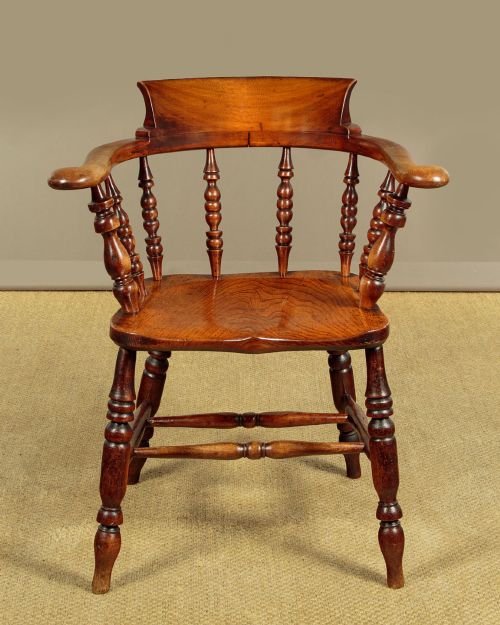
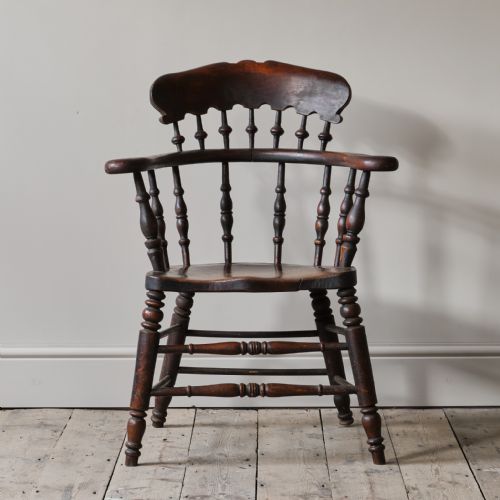
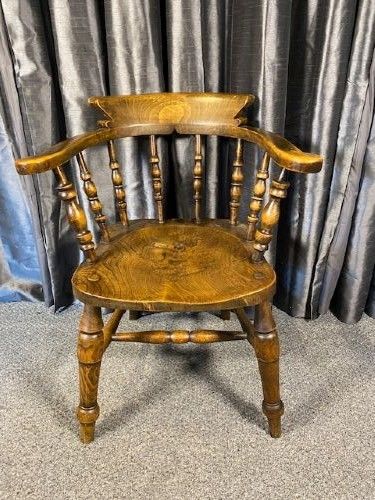
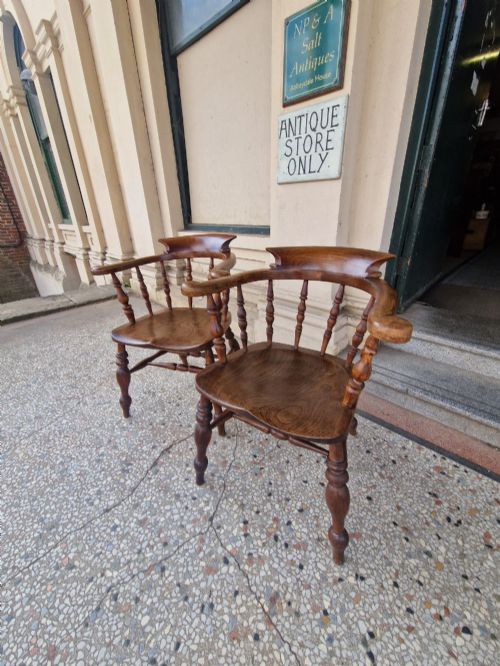
Country Elm Bow Chair
A country elm bow chair brings sturdy vernacular character and rich tactile warmth to an everyday interior.
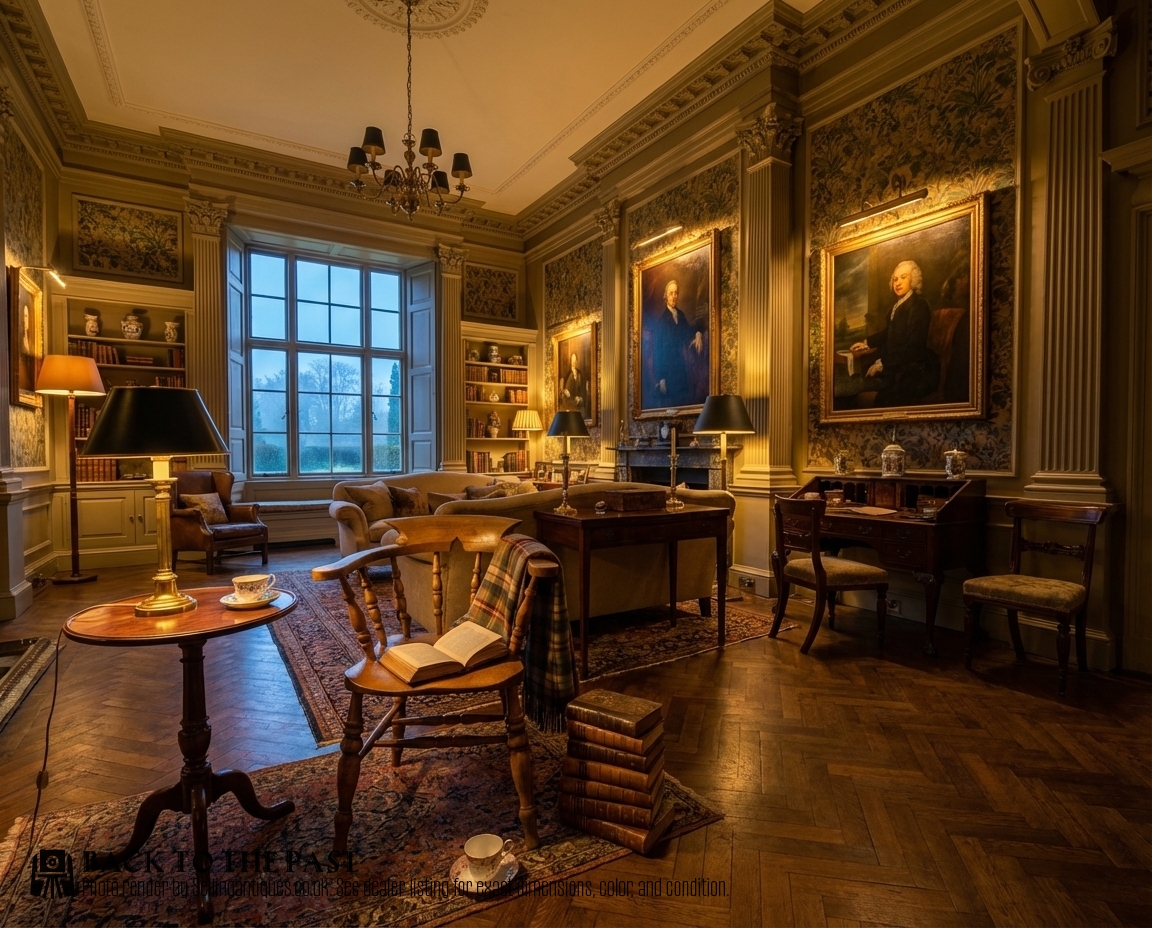
Country Elm Bow Chair
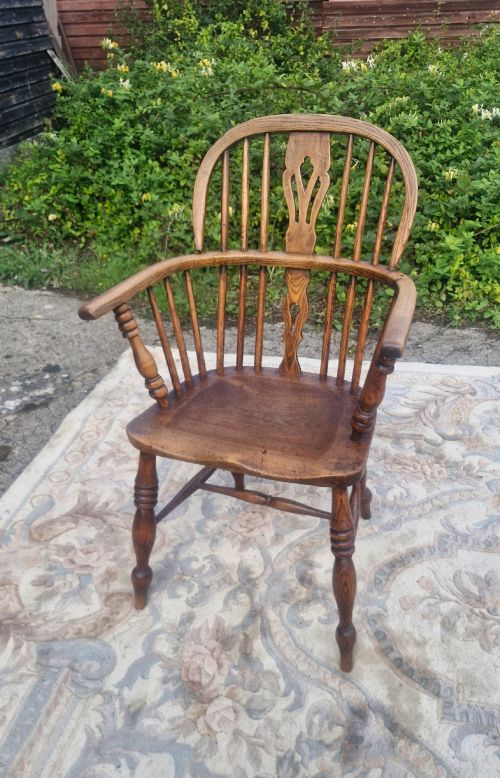
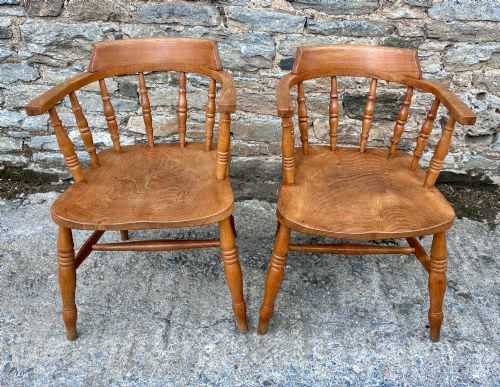
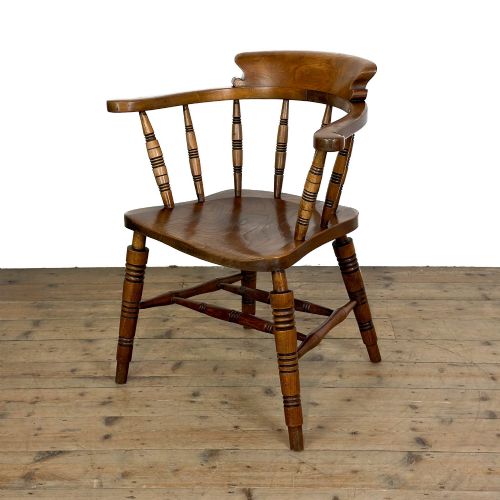
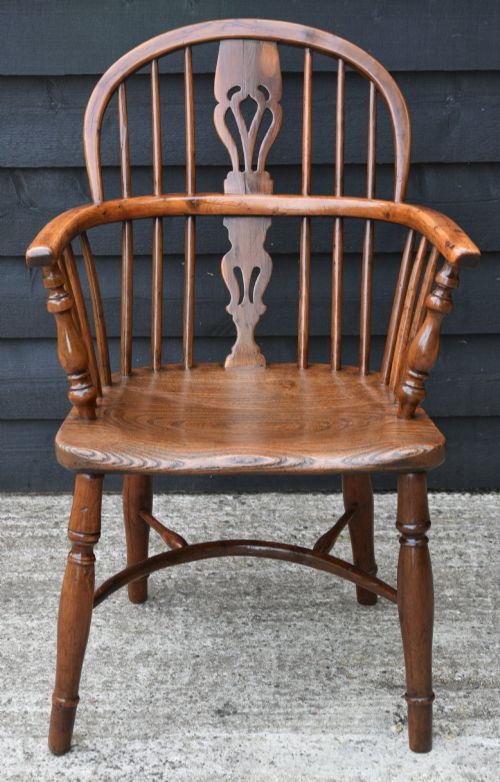
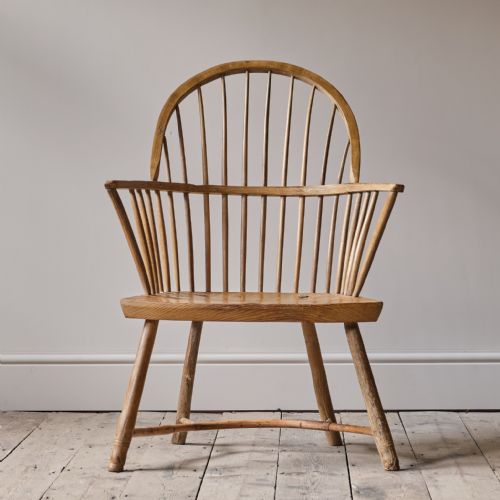
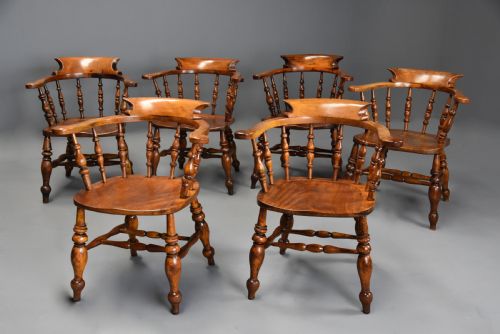
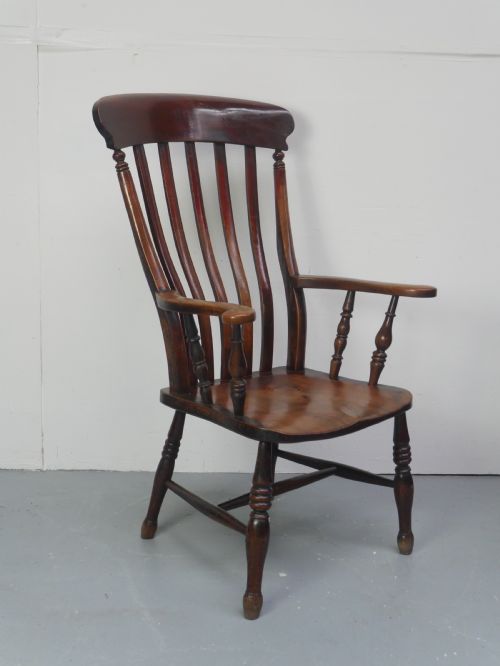
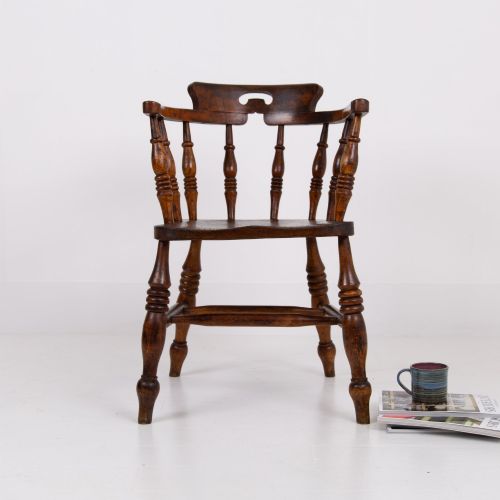
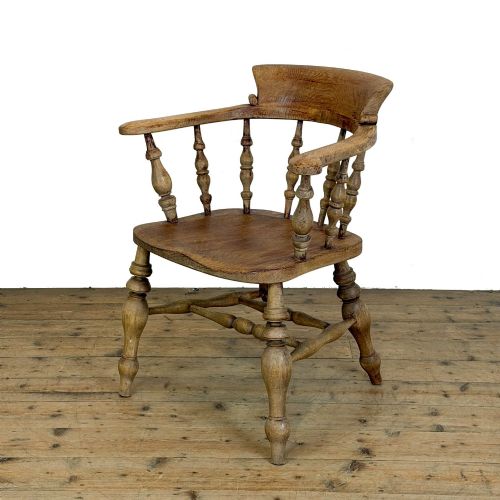
A country elm bow chair typically manifests as a Windsor, captain's, or smoker's bow armchair shaped for utilitarian comfort in farmhouses, kitchens, and studies. These domestic seats emerge primarily from the nineteenth century, with Victorian examples and Edwardian variants dominating the selection alongside occasional eighteenth-century precursors.
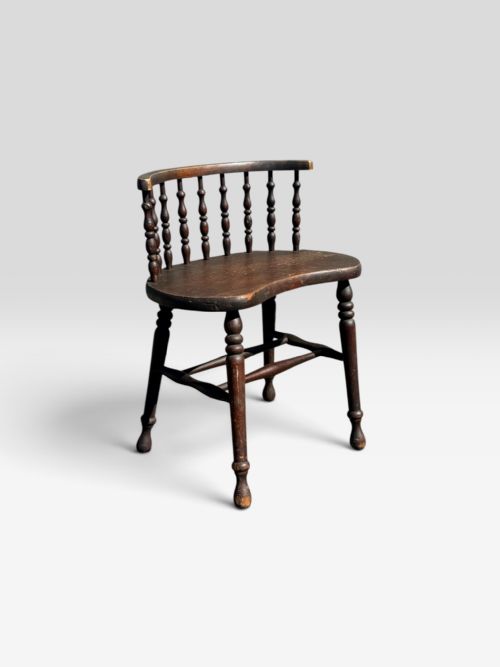
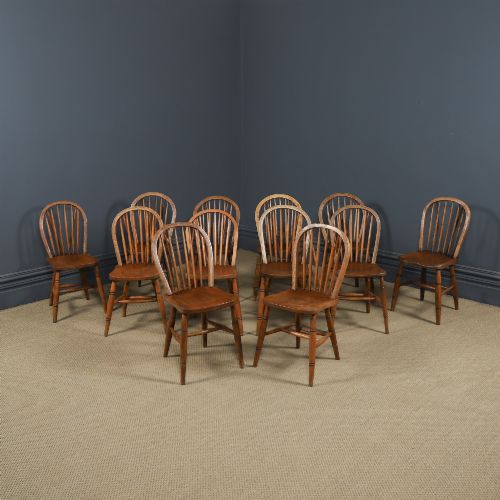
The phrase encompasses low-back Windsor designs, curved back forms, and robust corner or elbow chairs intended for heavy daily use. Makers built these pieces using regional vernacular traditions spanning English country workshops from Lancashire to Shropshire.
Buyers encounter sturdy desk chairs, dining carvers, and rocking formats that showcase functional domestic seating shaped by rural tradesmen. Each piece balances a broad curved armrest with a supportive wooden saddle seat designed for sustained repose.
Materials and Construction Methods
Construction relies upon a durable combination of solid timber, utilising elm for the heavily sculpted seats alongside ash, beech, oak, and yew for the spindles, legs, and steam-bent bows. Elm provides a tough, interlocking grain that resists splitting under the stress of daily sitting.
Makers shaped the components using traditional bodging techniques, turning upright spindles on pole lathes and steam-bending sturdy lengths of wood to form the characteristic continuous arm bow. Undercarriages frequently incorporate pegged joints and stretcher networks to brace the splayed legs against lateral movement.
Materials recorded across the archive include elm, beech, ash, oak, and yew wood fashioned into armchairs and desk chairs.
Evaluating Construction and Material Quality
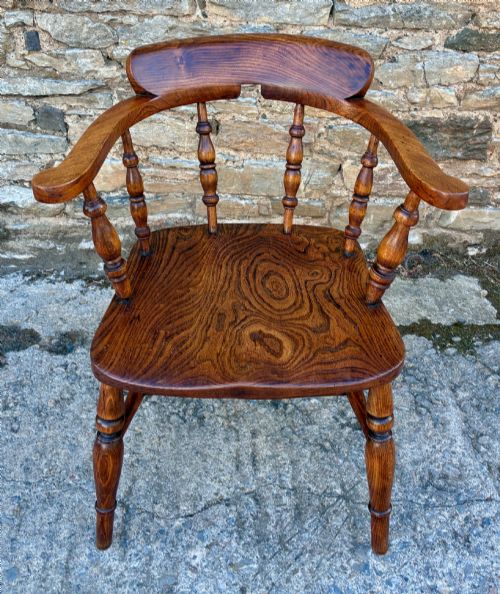
Quality rests upon the depth of the sculpted seat and the graceful tension of the steam-bent bow. Superior examples display thoughtful timber selection where the grain pattern of the elm seat complements the turned ash or beech uprights.
Structural integrity depends on the tightness of the joinery and the survival of original wedged tenons without excessive timber replacement. The presence of a deep, warm patina developed through generations of handling distinguishes better-preserved utilitarian seating.
The Country Elm Bow Chair Glossary
- Smoker's Bow
- A low-backed Windsor armchair featuring a continuous curved arm-rail supported by turned spindles, popular in Victorian smoking rooms and farmhouse kitchens. This form provides low-slung, sturdy arm support.
- Windsor Chair
- A chair built with a solid wooden seat into which the legs and back spindles are separately bored and wedged. This technique creates a resilient framework without requiring a bulky central frame.
- Bodge
- To turn green wood components on a temporary woodland lathe near the source of the timber. Country chairmakers utilised this method to produce light, strong spindles and legs.
- Cracker Seat
- A saddle-shaped seat carved from a single thick plank of elm to contour to the body. This sculptural scooping prevents the flat rigidity common in lesser rustic chairs.
- Stretcher
- A horizontal wooden rod connecting the legs of a chair to provide rigidity and support. Multiple stretchers often reinforce heavy vernacular seating.
Country Elm Bow Chair: Frequently Asked Questions
How do I date a country elm bow chair?
Dating relies upon observing construction traits, timber combinations, and the wear patterns on the seat. Earlier eighteenth-century models tend to feature heavier proportions and crinoline stretchers, whereas Victorian and Edwardian examples often incorporate machine-turned spindles alongside hand-carved elements.
Changes in seat shaping and leg splay also help narrow down the period. Comparing the joinery methods against documented vernacular styles provides a reliable timeline for each specific chair.
Were these chairs used at desks or dining tables?
Country elm bow chairs served multiple domestic functions, operating equally well as desk chairs, kitchen dining carvers, and parlour seats. Their sturdy arm construction and supportive backs made them ideal for prolonged sitting in workshops, offices, and farmhouses.
The versatility of the design meant a single chair could move between a writing desk and a hearthside depending on household needs. Their robust build ensured they endured heavy multi-purpose service over generations.
How should I care for an antique elm seat?
Maintaining an antique elm surface requires minimal intervention, relying primarily on occasional dusting with a dry cloth and gentle conditioning with beeswax. Keeping the timber away from direct heat sources and drastic humidity shifts prevents the wood from drying out or splitting.
Avoiding harsh chemical cleaners preserves the historic patina accumulated through decades of use. Natural wax feeds the grain while protecting the surface from minor scuffs during daily life.