

19th Century Elm Desk Chair
These robust pieces offer sturdy seating, and a 19th century elm desk chair brings practical vernacular character to any workspace.
19th Century Elm Desk Chair
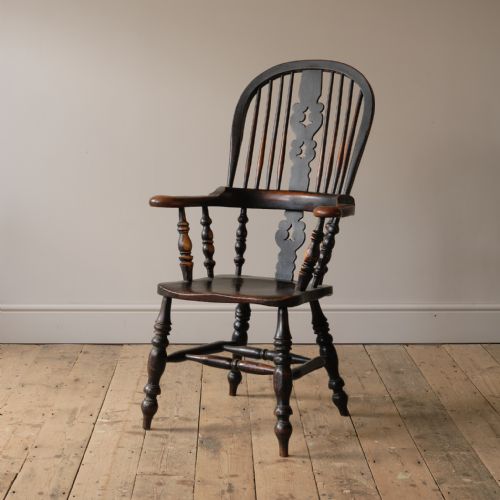
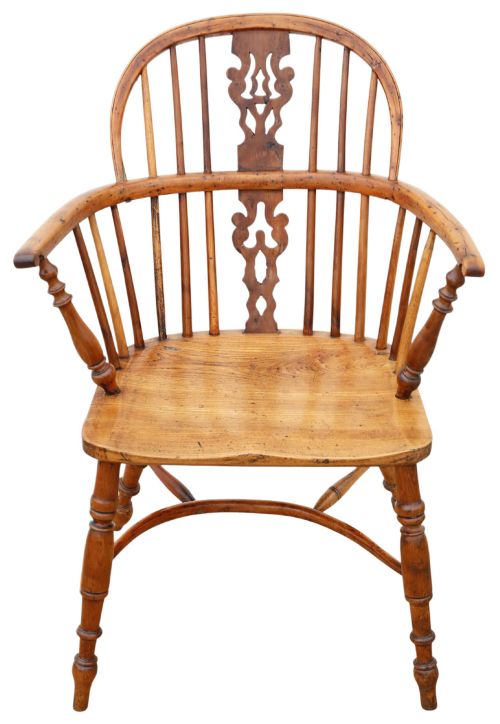
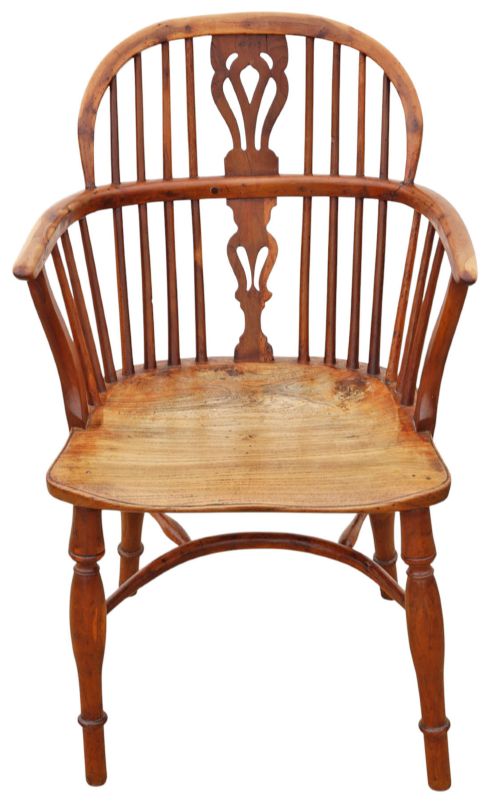
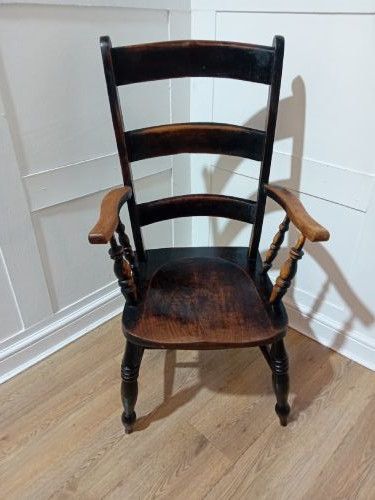
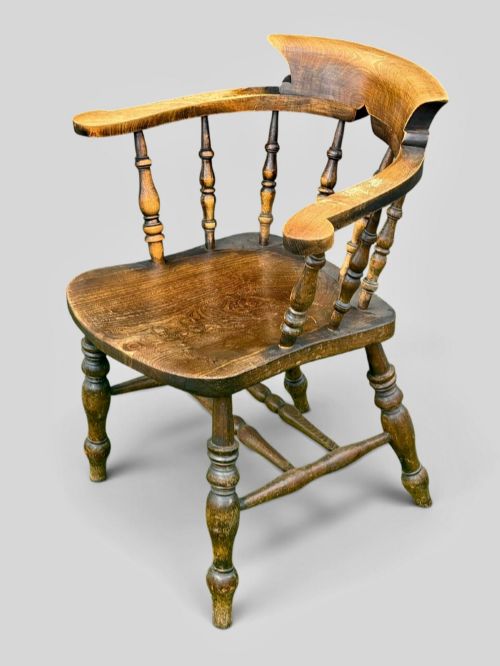
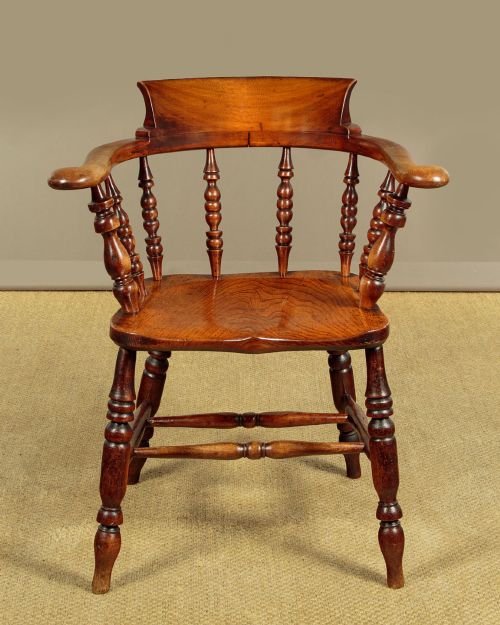
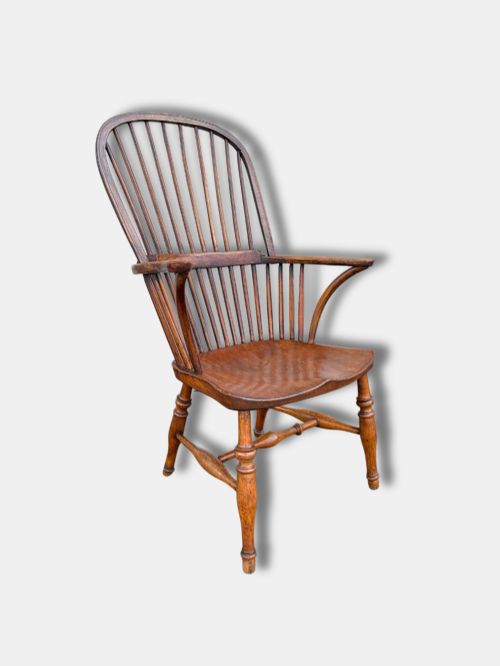
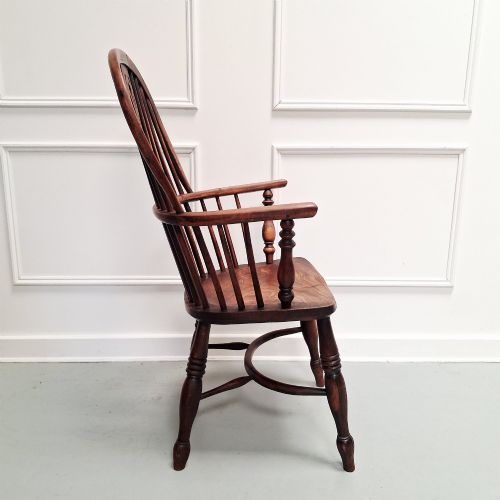
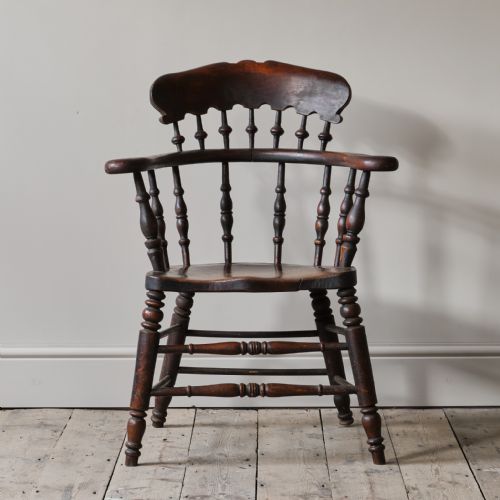
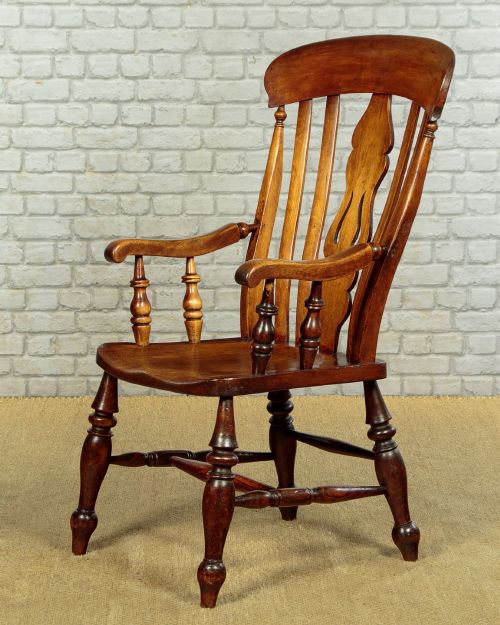
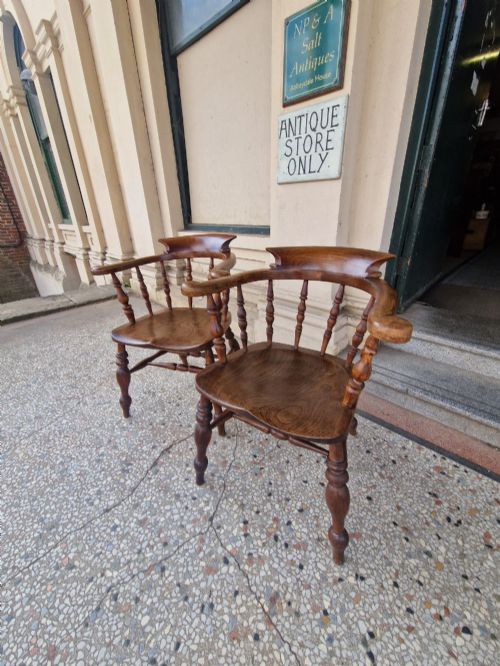
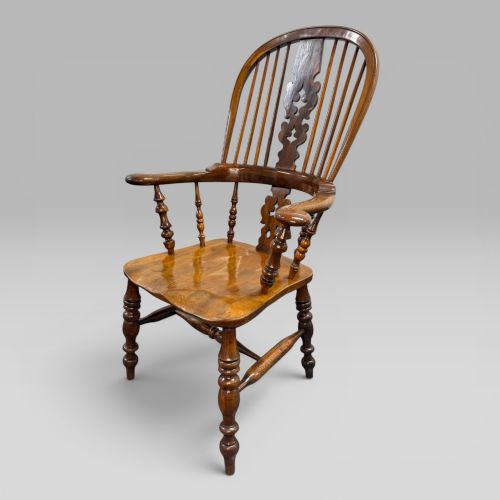
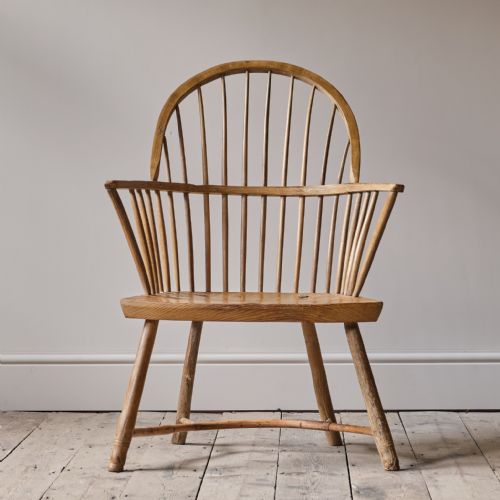
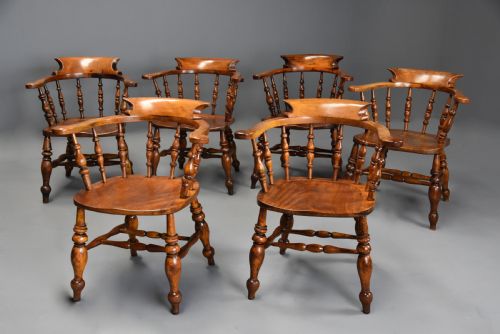
A 19th century elm desk chair typically takes the form of a Windsor, smoker's bow, or captain's chair designed for everyday utility. These seats combine sturdy timber construction with supportive arms and backs suited for prolonged sitting.
The versions most commonly found here originate from English country workshops during the Victorian period, frequently pairing an elm seat with ash, beech, or yew framing. Regional variations range from Thames Valley designs to low-back Nottinghamshire models.
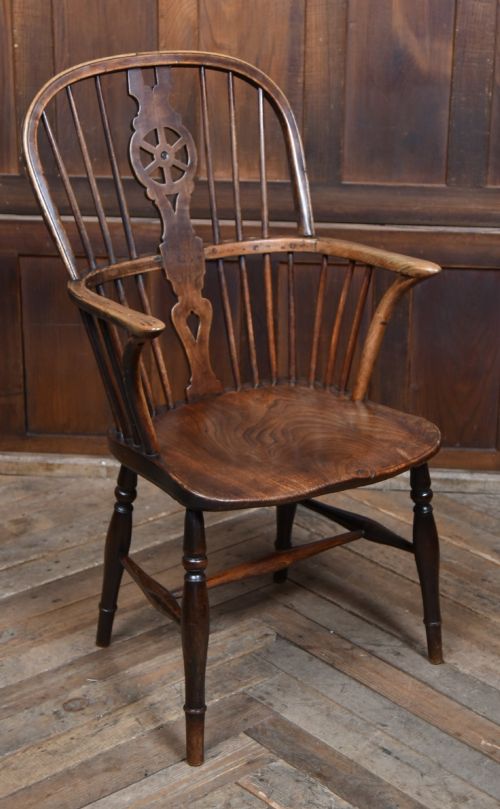
Makers shaped these utilitarian seats for offices, studies, and farmhouses, resulting in diverse back configurations including wheel-backs, spindle-backs, and splat-backs. Their enduring appeal lies in this combination of straightforward function and honest regional craftsmanship.
Materials and construction
Makers selected elm specifically for seat boards because its interlocking grain prevented splitting when heavily carved or sat upon. This durable timber was combined with straight-grained ash or beech for the turned spindles, legs, and steam-bent bows.
Construction relied on traditional Windsor framing techniques, where individual components were turned on a lathe and joined directly into the solid plank seat using wedged tenons. This created a rigid, resilient structure without the need for complex metal hardware.
Listings feature 19th century examples in elm, ash, beech, yew, and oak, reflecting diverse regional English country traditions.
Assessing quality and proportion
Quality in these chairs rests upon the selection of timber and the depth of the sculpted saddle seat. Superior examples display thick, well-figured elm planks shaped for ergonomic comfort rather than flat, thin boards.
The integrity of the turned spindles, the tightness of the leg joints, and the retention of original surface finishes dictate the standing of a piece. Finer examples maintain crisp turnings and balanced proportions without excessive structural replacement.
J Spencer
The 19th Century Elm Desk Chair Glossary
- Windsor chair
- A chair built with a solid wooden seat into which the back and legs are separately inserted. These vernacular seats utilise turned components and bentwood bows.
- Smoker's bow
- A low-backed Windsor armchair featuring a continuous curved arm rail supported by short spindles. This sturdy form is frequently associated with office and tavern seating.
- Crinoline stretcher
- An arched or curved wooden brace connecting the legs of a chair near the base. This hoop-like stretcher provides additional lateral stability to the frame.
- Saddle seat
- A wooden seat plank deeply scooped and carved by hand to resemble the contours of a riding saddle. This shaping enhances the comfort of the seated occupant.
- Thames Valley
- A regional English style of Windsor chair production known for refined turnings and the use of yew wood alongside elm. These pieces often exhibit graceful, sweeping arm bows.
19th Century Elm Desk Chair: Frequently Asked Questions
How were these chairs used originally?
These seating forms served primarily as functional furniture in offices, studies, farmhouses, and commercial spaces throughout the nineteenth century. Their robust construction was engineered to withstand hours of continuous daily sitting.
Lower-backed variants like smoker's bows were particularly favoured for writing desks and counting houses due to their supportive arm rails.
How do I care for an antique elm chair?
Maintain these wooden pieces in environments with stable humidity to prevent the elm and ash components from drying out or shrinking. Avoid placing them near direct heat sources or in strong sunlight.
Apply occasional traditional wax polish to nourish the timber surface and preserve the historic finish without sealing the wood.
How can I tell regional styles apart?
Regional differences appear in the choice of secondary woods, turning profiles, and back construction details. Thames Valley pieces often incorporate yew wood and delicate turnings, while provincial workshops utilised local ash or beech.
Examining the undercarriage and the specific shape of the arm bow helps locate the likely area of manufacture.