


Country Cottage Landscape Painting
A country cottage landscape painting captures the rural charm of bygone eras through oil on canvas, panel, or delicate watercolours.
Country Cottage Landscape Painting
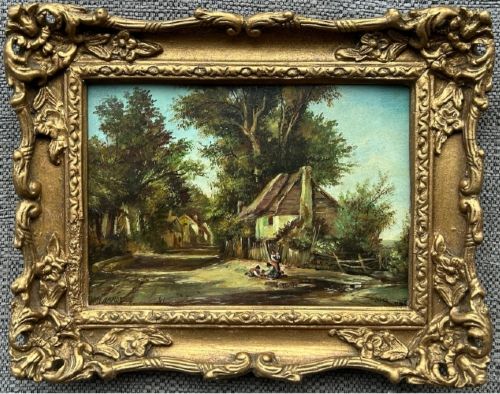
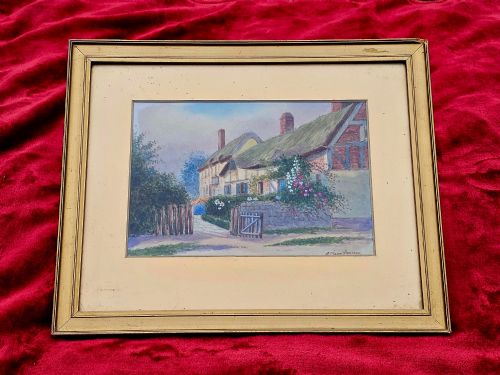
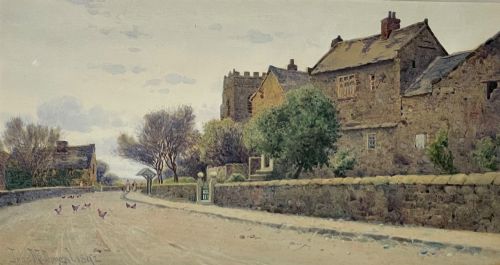
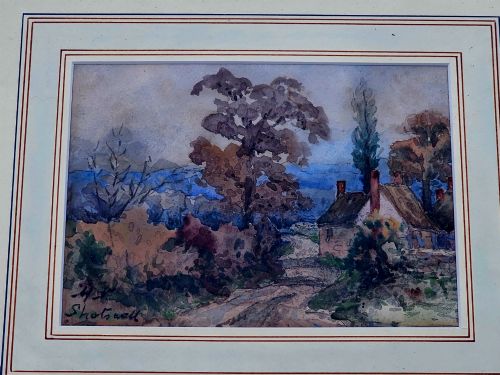
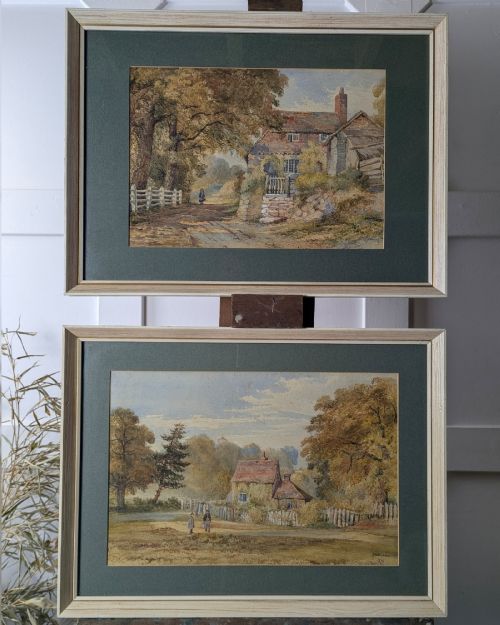
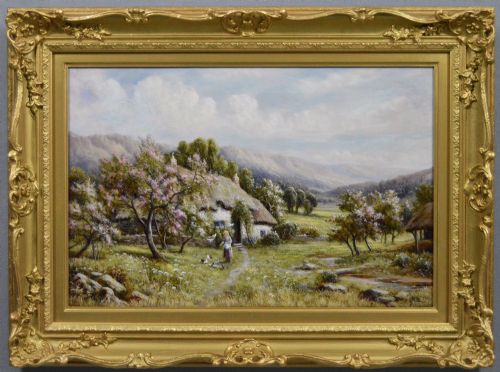
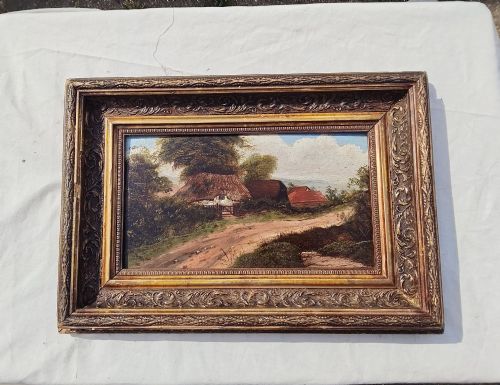
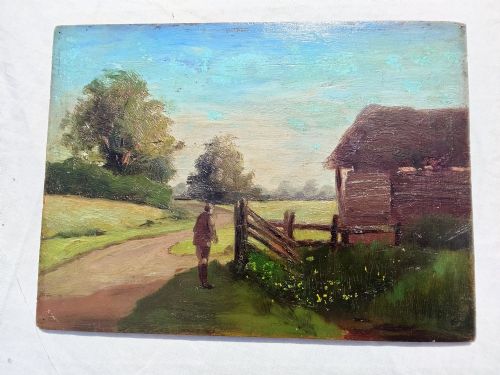
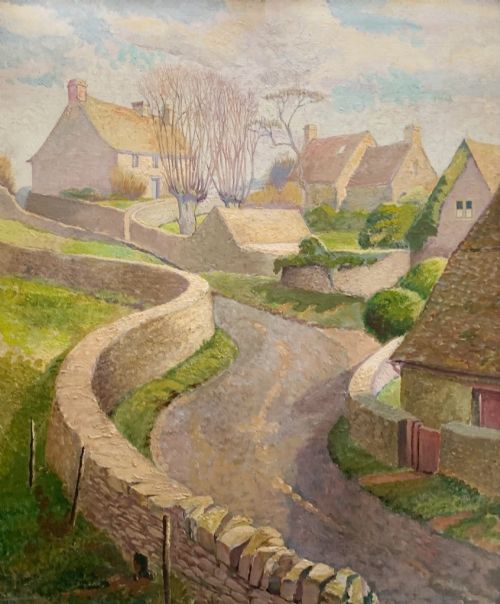
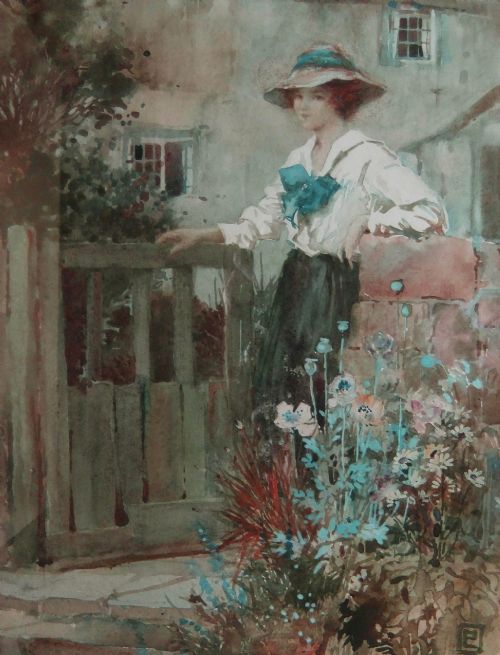
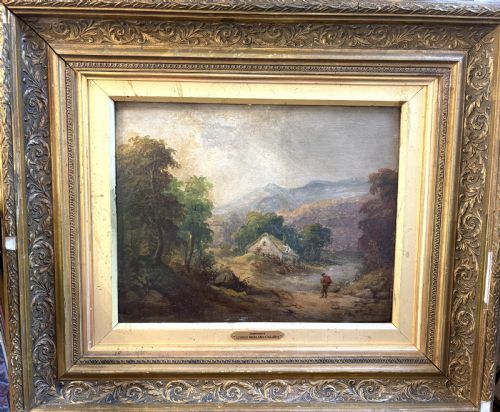
A country cottage landscape painting depicts rural scenes, farmsteads, and thatched dwellings usually populated by figures, animals, or gentle waterways. You will frequently encounter works produced during the nineteenth and early twentieth centuries, spanning Victorian, Edwardian, and impressionist movements.
These artworks reflect a sustained fascination with pastoral life, ranging from detailed topographical watercolours to expressive oil paintings on wood, board, and canvas. The physical items on this page include framed wall art and fine art paintings originating from British and European schools.
How They Were Made
Artists applied oil paint or watercolour pigment onto traditional supports such as prepared canvas, wooden boards, card, and heavy paper. Painters utilised oils for rich texture and depth, while watercolour practitioners built translucent washes to capture natural light.
Finished works were typically housed within wooden and often gilded frames that protected the delicate mediums behind glass where watercolours were employed.
Several cottages in these paintings quietly hide domestic ducks, wandering geese, and tethered ponies just beyond the garden gate.
What Varies in Quality
Quality rests upon the artist's handling of light, atmospheric depth, and the naturalism of figures and foliage within the composition. Masterful brushwork and confident pigment placement elevate a canvas well beyond standard topographical illustration.
The preservation of the underlying support, whether canvas, panel, or paper, alongside the originality of the framing, contributes significantly to the integrity of the piece.
William Howard Hardy·A. Marie Parsons·John McDougal·Robert A. Nottingham·Robert John Hammond·Percy Lancaster·George Morland·J S Ainley·James Hardy Junior·Frederick James Knowles·William Greaves·Theresa Stannard·Helena Maguire·Linnie Watt·Owen Bowen·Ernest Higgins Rigg·Harry Sylvester Stannard·Henry Charles Fox·Will Anderson·Robert Hollands Walker·John Falconar Slater·Thomas James Lloyd·B. Kaufmann·Abraham Hulk Junior·David Woodlock
The Country Cottage Landscape Painting Glossary
- Watercolour pigment
- Finely ground colour particles suspended in a water-soluble binder, used on paper to create luminous washes. This medium allows artists to capture subtle shifts in daylight and weather.
- Oil on canvas
- Pigment mixed with drying oils applied to stretched woven fabric. This technique offers durability and a rich surface texture capable of holding deep tonal gradations.
- Impressionism
- A nineteenth-century painting style focused on capturing the visual impression of the moment, seeking shifting light and ordinary subject matter. Practitioners abandoned rigid academic finishes in favour of visible brushstrokes.
- Pastoral
- A genre of art depicting the rural life of shepherds, farmers, and country cottages in an idealized or tranquil setting. These scenes emphasise harmony between humans and the natural environment.
- Panel painting
- A flat piece of wood or card used as a physical support for oil or tempera paint. Artists favoured rigid boards for stability before stretched canvas became dominant.
Country Cottage Landscape Painting: Frequently Asked Questions
What defines a country cottage landscape painting?
These artworks focus on rural domestic architecture set amid gardens, lanes, or agricultural fields. They reflect changing artistic movements from the Victorian era through the mid-twentieth century.
Artists frequently included human figures, livestock, and natural waterways to give the rustic scenes narrative depth and a sense of daily life.
How can I tell watercolours from oil paintings?
Watercolour paintings are executed on paper and require protection beneath glass, displaying translucent layers of pigment. Oil paintings utilise heavier supports like canvas, panel, or board with thicker, opaque paint layers.
Close inspection under natural light reveals the distinctive surface sheen of oils versus the matte finish of works on paper.
Which periods are common in these paintings?
The selection is heavily weighted towards nineteenth-century Victorian works and early twentieth-century pieces spanning the Edwardian period and British Impressionism. You will also find mid-century examples extending into the nineteen-sixties.
Earlier pieces often lean towards detailed realism, while later works embrace looser brushwork and atmospheric colour palettes.
How should I display these framed artworks?
Hang paintings away from direct sunlight and sources of dampness to protect the canvas, paper, and wooden panels from degradation. Stable indoor temperatures preserve both the paint layers and the historic frames.
Ensure that watercolours remain behind protective glass and are positioned where humidity levels stay consistent throughout the year.