
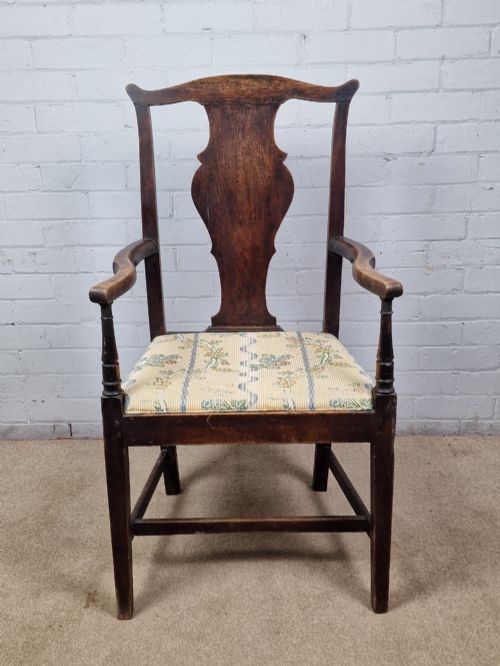
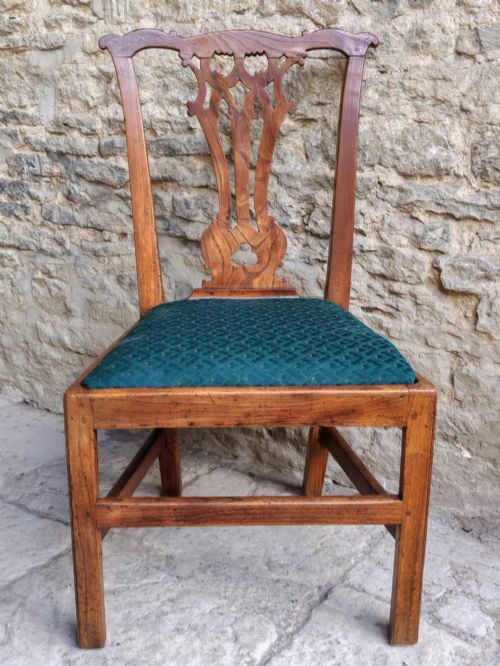
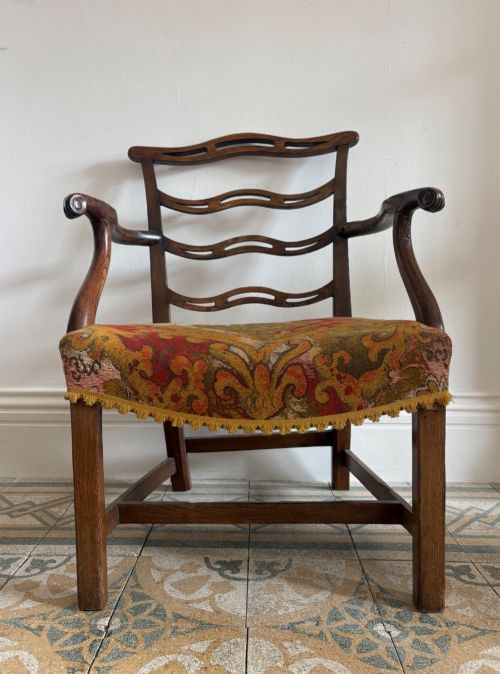
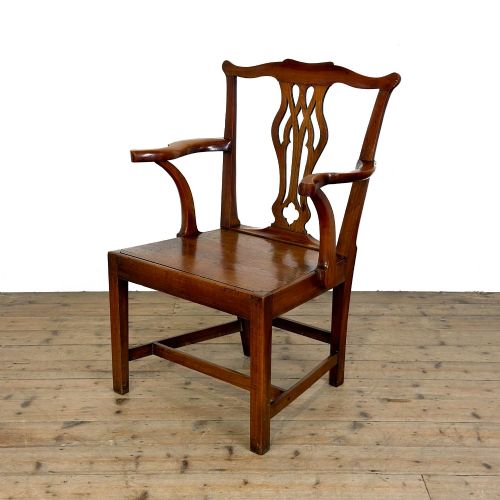
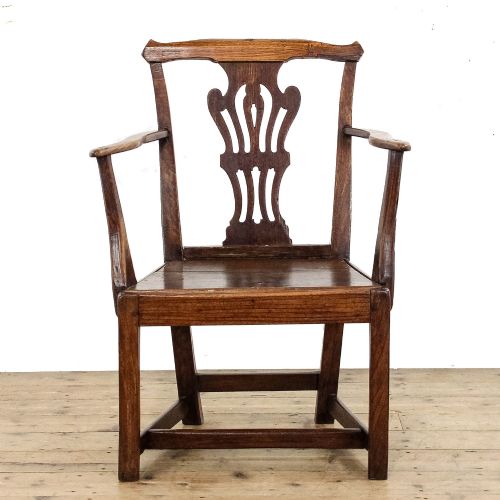
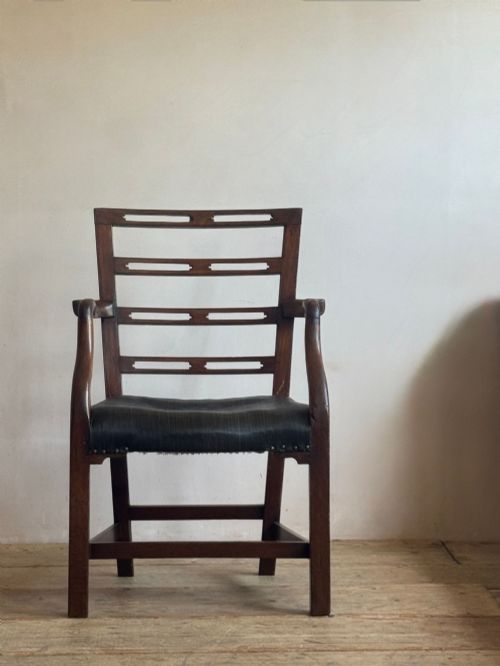
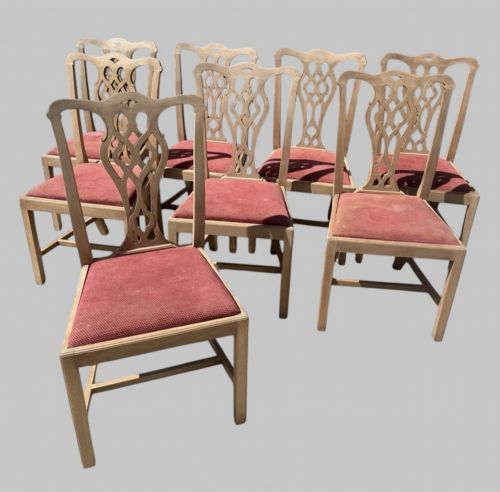
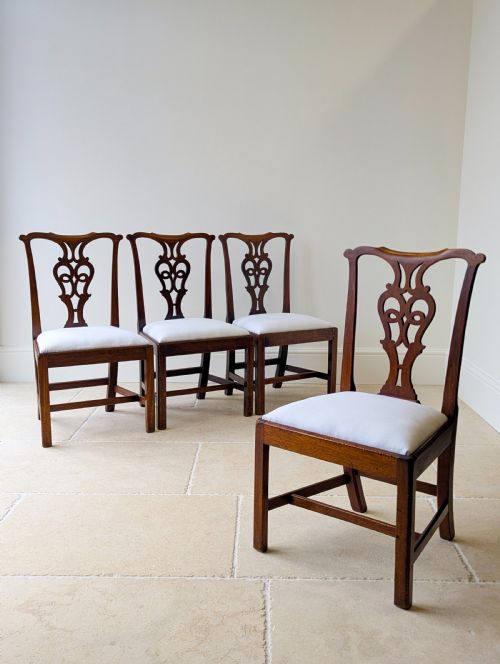

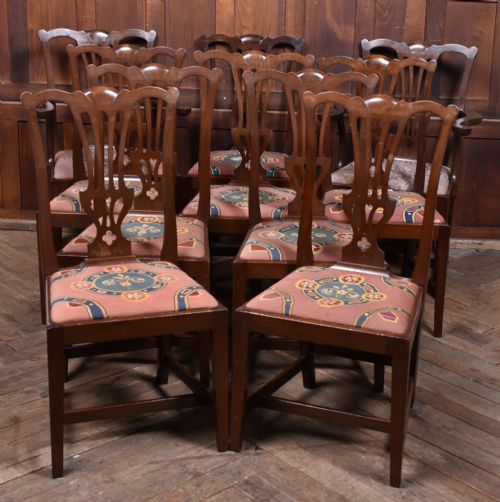


Country Chippendale Chairs
Country chippendale chairs bring together vernacular cabinet-making and sophisticated urban pattern books, offering sturdy seating with refined splats for everyday domestic life.
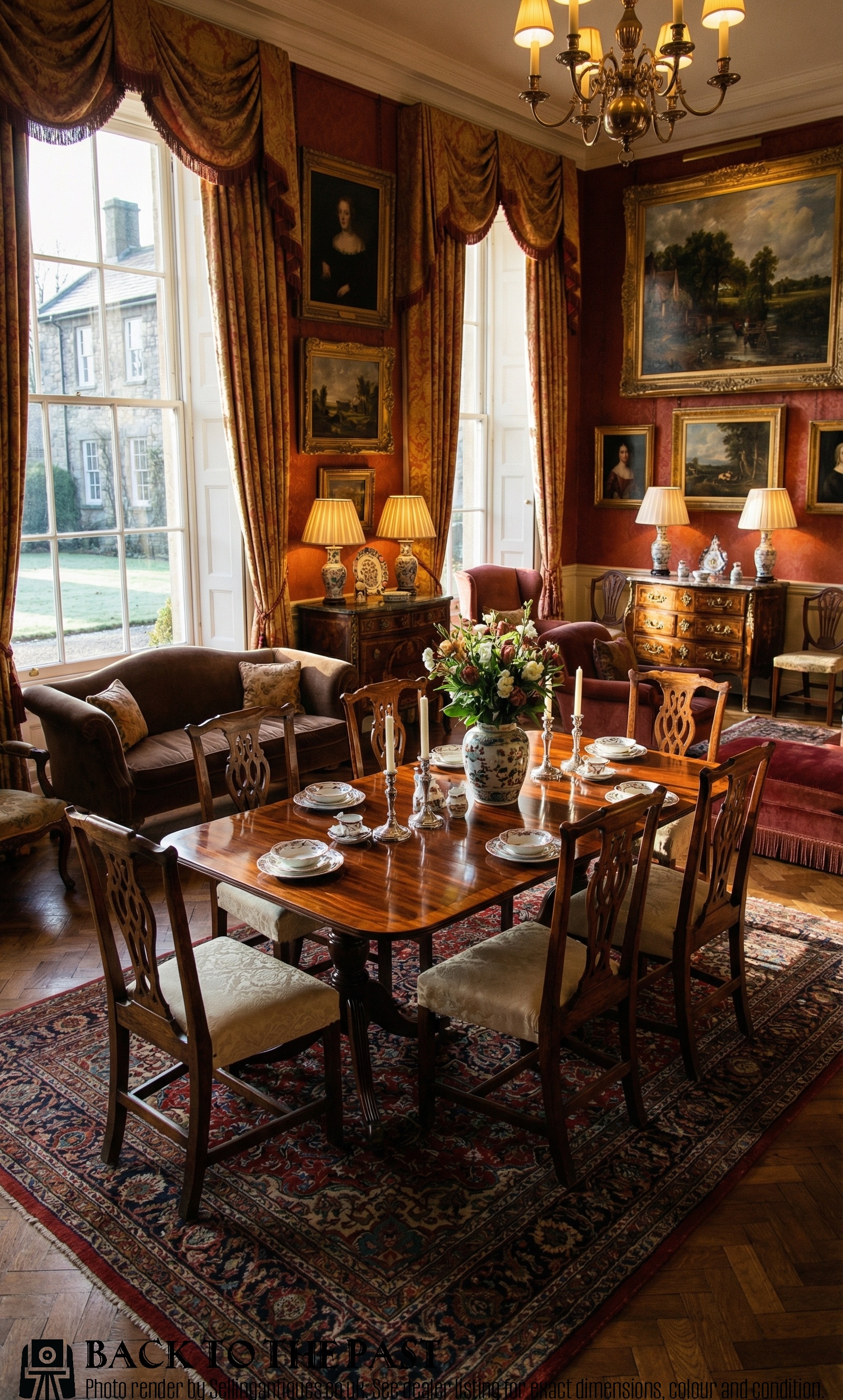
Country Chippendale Chairs
When searching for country chippendale chairs, you are looking at domestic seating produced in regional workshops during the Georgian and 19th Century periods, adapting London pattern books for local clients.
The most common forms on this page include dining chairs, open armchairs, and carvers, often found in smaller sets or matched groups rather than massive dining suites.
Regional makers utilised local timbers such as elm, oak, and fruitwood to construct these pieces, resulting in a vernacular interpretation of metropolitan styles.
How they were made
Cabinet-makers constructed these chairs using native hardwoods, predominantly elm, oak, fruitwood, and walnut, often combining different timbers for the seat rails and frames.
Traditional joinery methods such as mortise and tenon joints secure the framework, while seats incorporate drop-in pads upholstered in leather, tapestry, or fabric, sometimes set over rush or webbing.
Some dining chairs arrive wearing charming needlepoint seats stitched by past owners.
What varies in quality
The quality of country chippendale chairs depends on the boldness of the splat piercing and the balance of the proportions, as provincial makers frequently interpreted urban designs with varying degrees of success.
Timber selection and grain figure dictate the visual weight of each piece, with denser hardwoods providing sharper carved details and greater structural integrity over centuries of use.
Wheelers of Arncroach
The Country Chippendale Chairs Glossary
- Carver
- An armchair, usually designed for the head of a dining table, featuring supportive side arms. These pieces match the simpler side chairs in a set.
- Splat
- The vertical wooden element in the centre of the backrest, often pierced and shaped in the manner associated with Thomas Chippendale. Country versions simplify these cut-outs.
- Vernacular
- Architecture or furniture built by local craftsmen using regional traditions and materials rather than academic architectural styles. This term describes the provincial character of these chairs.
- Harlequin set
- A group of chairs collected over time that share similar styles, periods, or materials rather than being carved from a single workshop batch.
Country Chippendale Chairs: Frequently Asked Questions
What defines country chippendale chairs?
These pieces combine the ribbon and ladder-back patterns of urban 18th-century pattern books with the sturdier timbers and simpler construction methods typical of regional cabinet-makers.
They offer a less formal aesthetic than urban equivalents, relying on local woods like elm and oak.
How do I date an antique country chair?
Dating relies on examining the timber species, tool marks, joinery techniques, and the wear patterns on the seat rails and stretcher joints.
Earlier pieces from the 18th century often feature pegged joints and hand-turned components, whereas later 19th-century adaptations show machine-sawn elements.
Are these chairs suitable for daily dining?
Most surviving examples remain structurally sound enough for regular domestic use, provided the joints have been properly maintained by a restorer over the years.
Replacing or reinforcing internal webbing and modernising drop-in pads ensures comfort during long meals.
Why buy a harlequin set?
Harlequin sets consist of individual chairs gathered together because they share matching heights, timber tones, or Chippendale-style backs, mimicking large original suites.
This approach allows collectors to assemble a workable dining group without searching for an elusive surviving set of six or eight.