




Cottage Scene Canvas Painting
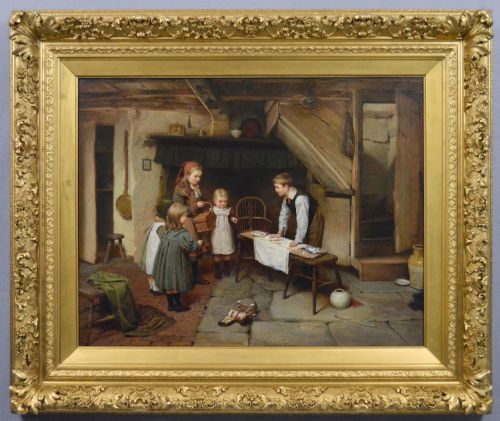
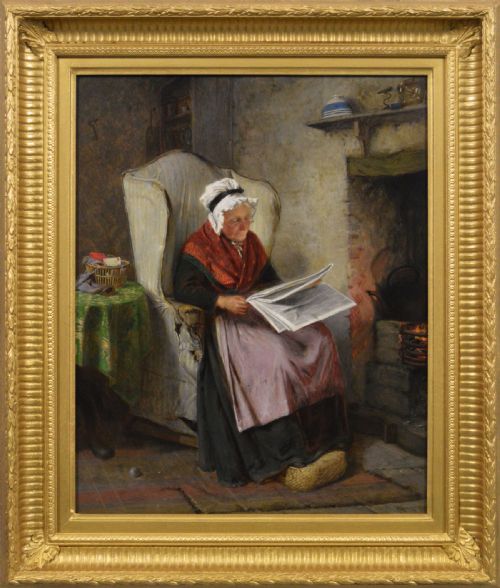
These cottage scene canvas painting works capture rural life through traditional oil pigments, offering a window into domestic and pastoral history that anchors a room.
Cottage Scene Canvas Painting
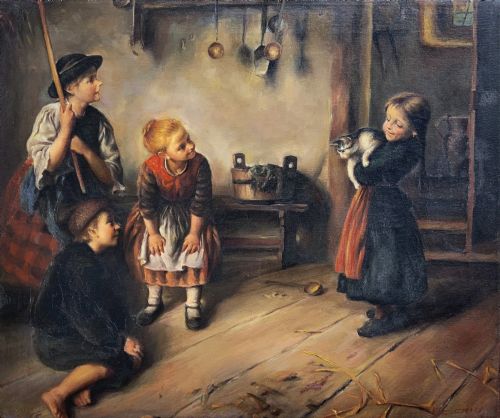
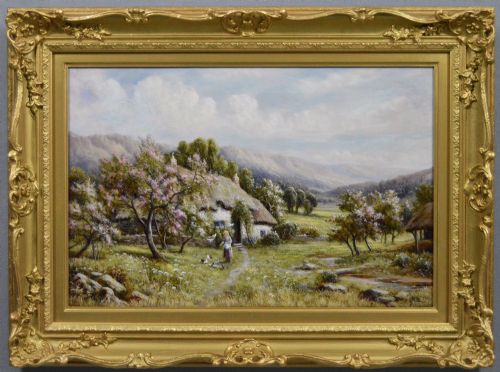
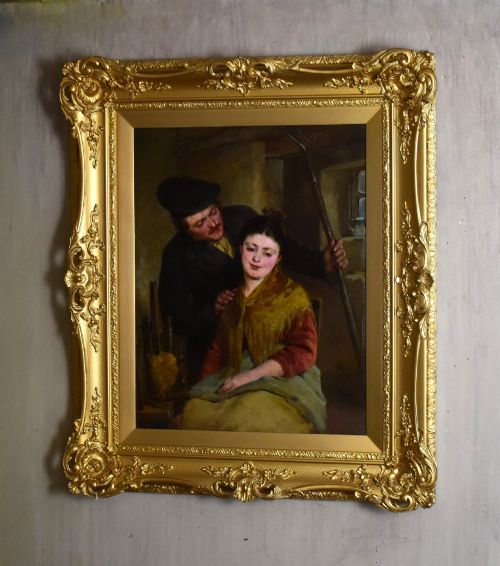
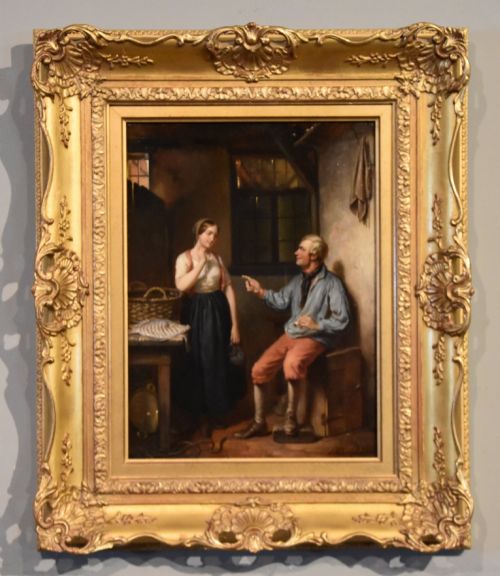
A cottage scene canvas painting portrays rural dwellings, rustic interiors and pastoral daily life through historical oil works. These pieces draw from British Impressionism, Victorian genre painting and nineteenth-century realism.
The selections span the Victorian era, the nineteenth century and the mid-twentieth century. Subjects range from exterior views of thatched houses to interior domestic moments with families and children.
Makers recorded in the evidence include named artists such as Robert John Hammond, Howard Helmick, Harry Brooker and Haynes King. Many works also emerge from the broader English and Flemish schools.
Materials and methods
These works rely on oil paint applied to woven canvas supports. Wood frames often incorporate gesso, giltwood and gold leaf finishes to house the paintings.
Artists built depth through layered oil pigments, combining detailed brushwork for figures with looser applications for surrounding landscapes and skies.
Geese wander through multiple pastoral landscapes, apparently holding strong opinions on rural traffic management.
Evaluating quality and execution
Execution depends on the artist's handling of light, shadow and facial expression within domestic and rural settings. Finer examples display confident brushwork and balanced composition that bring depth to figures and interiors.
The condition of the canvas and the original integrity of the accompanying wood and gilt frames influence the overall character of each piece. Surviving signatures and attribution to recorded nineteenth or twentieth-century painters elevate historical context.
Robert John Hammond·Howard Helmick·Harry Brooker·Haynes King·George Smith·William Greaves·Charles Vickers·Donald McIntyre·Robert Finley McIntyre·Lorenzo Headley·Helmut Reuter·Robert Gemmell Hutchinson·Harry Pennell·Ernest Walbourn·George Cole·Herbert Royle·T.B. Garvie·James William Stamper·James Ward·Pauline Delacroix Garnier·George Morland·Alfred Provis·Robert Gallon·Thomas Thomas·W.E. Atkinson
The Cottage Scene Canvas Painting Glossary
- Canvas
- A heavy woven fabric stretched across a wooden frame to serve as the foundation for oil paintings. This textile support has remained a standard medium for centuries.
- Giltwood
- Timber carved and coated with a thin layer of gold leaf or metallic gilt. It frequently frames nineteenth-century and Victorian oil paintings.
- Genre painting
- Artwork depicting scenes from everyday life, often featuring ordinary people engaged in domestic chores or social activities. These works provide insights into historical social habits.
- Gesso
- A plaster-like mixture applied to wood frames before gilding or painting. It provides a smooth surface for subsequent decorative finishes.
Cottage Scene Canvas Painting: Frequently Asked Questions
How old are these paintings?
The works span from the eighteenth century through the Victorian period and into the mid-twentieth century. Most examples date from the nineteenth and early twentieth centuries.
Specific dates depend on the individual artist and stylistic markers recorded in the evidence. Victorian pieces reflect mid-to-late nineteenth-century tastes, while mid-century works extend into the nineteen-fifties and sixties.
What subjects appear in these scenes?
Subjects focus on rural life, featuring thatched cottages, country lanes, and farming landscapes. Interior views show domestic moments with children, mothers, and elderly residents.
Animals and agricultural workers also feature prominently, with depictions of cattle, sheep, geese, and gardeners at work near rivers and coastal bays.
How should I display them?
These oil paintings suit traditional and eclectic interiors, often serving as focal points above mantelpieces or living room walls. Their warm palettes complement wood furniture and neutral wall colours.
Keep canvases away from direct sunlight and damp environments to protect the oil paint and underlying textile. Proper placement ensures the gilt wood frames remain stable over time.
How do I identify the artist?
Look for signatures inscribed directly onto the canvas surface, often found near the lower corners of the composition. Exhibition labels or inscriptions on the reverse stretcher frame also provide clues.
Unsigned works are frequently attributed to specific periods or regional schools, such as the English Naïve School or the Flemish School, based on technique and subject matter.