




Cornwall Coastal Landscape Art
Cornwall coastal landscape art captures the particular light and harbour life of the southwestern peninsula through traditional painting.
Cornwall Coastal Landscape Art
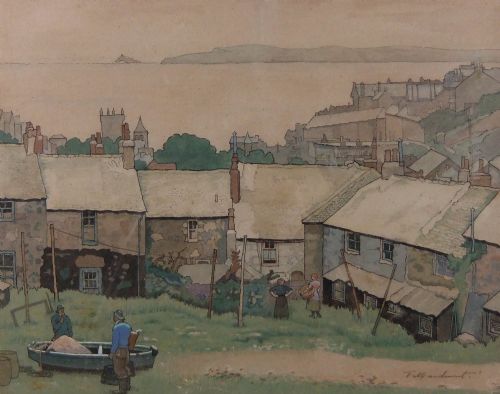
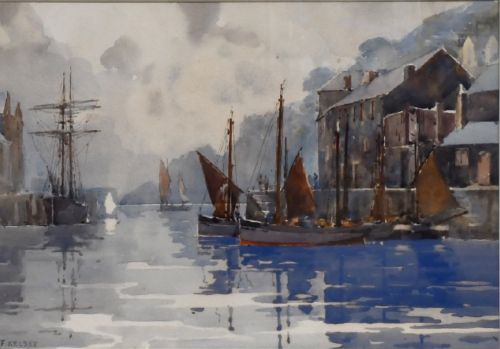
Cornwall coastal landscape art encompasses paintings and watercolours depicting harbours, cliffs, and coastal views across the region. You will frequently encounter watercolours and oil paintings originating from artistic centres such as St Ives, Newlyn, and Polperro.
The selections span from the late nineteenth century through the mid-twentieth century, capturing shifts in British artistic movements. Works range from detailed Victorian maritime scenes to later impressionist interpretations of the Cornish coast.
Materials and methods
Artists worked primarily with oil paint on canvas or board, and watercolour applied to paper, occasionally utilising pastel. These mediums allowed painters to record en plein air the changing effects of weather, sea, and light along the shore.
Framed presentation is common, often utilising wood frames that complement the period of the painting. Paper works typically sit under glass for protection against moisture and light.
Listings feature works spanning from the nineteenth century through the 1960s, executed in oil paint, watercolour, pastel, and woodblock print.
Evaluating quality and execution
Quality rests upon the artist's handling of light, brushwork confidence, and the accuracy of spatial composition within the marine environment. Stronger examples demonstrate a sure command of tone to convey sea mist, open water, and granite cliffs.
Condition of the medium influences the piece, with well-preserved canvases and watercolours retaining their original pigment vibrancy. The strength of provenance and clear signatures by known painters elevate individual works.
Sidney A Court·William Banks Fortescue·Thomas Maidment·Frank Kelsey·George F Pennington·Edward Matthew Elliott·Gyrth Russell·George Turland Goosey·William Pitt·Ernest F Hill·Frederick Stuart Richardson·William Lambert Bell·Jack R Mould·Walter Sweet·S J Lamorna Birch·Herbert James·Cuthbert Crossley·William Edward Webb·Arthur Joseph Meadows
The Cornwall Coastal Landscape Art Glossary
- En plein air
- Painting outdoors to capture direct observation of light and atmosphere. This method defined much of the observational work produced in coastal settlements.
- Watercolour
- A paint consisting of water-soluble pigments, widely employed for landscape studies on paper. It offers transparency and delicate tonal gradations.
- Impressionism
- An art style focused on accurate depiction of light in its changing qualities, visible in many twentieth-century works. Painters used visible brush strokes to suggest movement in water and sky.
- Newlyn School
- An art colony based in Cornwall that embraced realism and plein air painting. Artists associated with this group drew inspiration from local fishermen and coastal scenery.
Cornwall Coastal Landscape Art: Frequently Asked Questions
What subjects do these paintings show?
The artworks focus predominantly on Cornish harbours, coastal cliffs, and maritime scenes. Locations like St Ives, Polperro, and Mevagissey appear frequently.
Artists recorded local fishing boats, low tides, and rocky shorelines under varying atmospheric conditions. These views reflect the working coastal life of the nineteenth and twentieth centuries.
How should I display watercolour paintings?
Watercolour works on paper require framing behind glass to protect the pigments from dust and moisture. Archival mounting prevents acid damage over time.
Position paintings away from direct sunlight to prevent fading of the watercolours. Stable indoor humidity keeps the paper and backing boards in sound condition.
How do I identify the period of a painting?
Painting style, framing materials, and artist signatures help establish the likely date of creation. Victorian works often display detailed realism, whereas mid-century pieces show looser impressionist brushwork.
Artist biographical dates provide a reliable timeframe for when the picture was painted. Frame construction and backing paper also offer clues to the age of the piece.
What is the St Ives School?
The St Ives School refers to artists who lived and worked in or around the Cornish town of St Ives. The area attracted painters drawn to the unique coastal light and maritime subject matter.
This artistic community produced both traditional marine art and later modernist works. The geographic concentration helped establish Cornwall as a major hub for British landscape painting.