

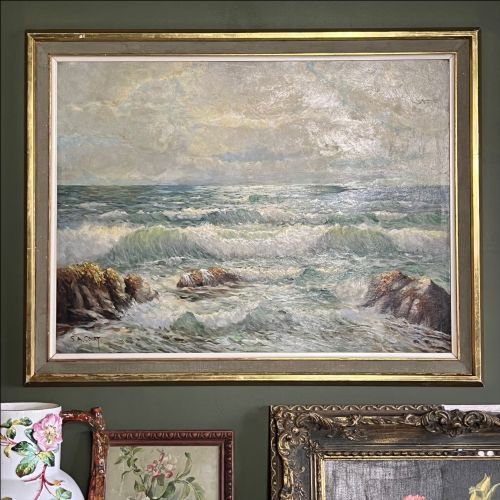
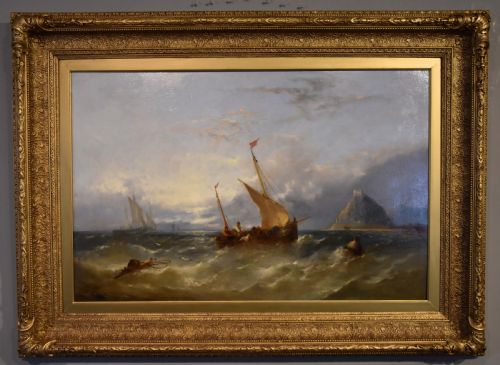


Cornish Seascape Oil Painting
A cornish seascape oil painting captures the rugged light and Atlantic swell of the coastline through brushwork built up on canvas.
Cornish Seascape Oil Painting
A cornish seascape oil painting brings the maritime atmosphere and dramatic shores of the peninsula directly onto canvas. These works range from late Victorian maritime scenes to mid-century harbour views created by visiting and resident artists.
Buyers meet coastal landscapes featuring St Ives, Polperro, and St Michael's Mount rendered in oil paint. The pieces capture local fishing boats, rocky coves, and shifting coastal light through styles that shift from realism to British Impressionism.
How They Were Made
Artists applied oil paint directly to canvas, often working en plein air to capture the immediate effects of sea spray and changing weather along the shore. The resulting surfaces display varied brushwork, from smooth maritime detail to thick impasto depicting crashing waves.
The finished works are typically housed in wood frames, frequently finished with gilt details that complement the traditional subjects. These surrounds range from simple wooden mouldings to heavier decorative frames suited to Victorian and Edwardian tastes.
Cornish Seascape Oil Painting Retail Price Guide 2026
Typical asking prices for cornish seascape oil painting among the pieces listed under this phrase on Sellingantiques today, from the lower quarter to the upper quarter. They describe what is for sale here now, not the wider market.
Several canvases carry the faint smell of old linseed oil and sea salt, as though the Atlantic gale blew straight through the studio door.
What Varies in Quality
Quality rests upon the artist's command of light, atmosphere, and spatial depth within the coastal setting. Stronger examples handle the difficult tones of sea and sky with confidence, while lesser works rely on formulaic arrangements of waves and cliffs.
The handling of the medium itself distinguishes the works, as skilled brushwork conveys the movement of water and the weight of salt air. Original framing and clear signatures by known painters from the St Ives or Newlyn traditions further elevate an individual piece.
Sidney A. Court·William Henry Williamson·Edward Matthew Elliott·Charles Napier Hemy·Gyrth Russell·George Turland Goosey·Charles Sim Mottram·Hendrik Yan Wolter·William Edward Webb·Tom Seymour
The Cornish Seascape Oil Painting Glossary
- En plein air
- Painting outdoors to capture direct observations of light and atmosphere. This method defines many coastal works created on location in Cornwall.
- Impasto
- Paint applied thickly to a canvas, standing out in relief from the surface. Artists use this technique to render the texture of crashing waves and rocky shores.
- British Impressionism
- An artistic approach focusing on light and everyday subjects using visible brushstrokes. This style influenced many painters working along the Cornish coast.
- Maritime Realism
- A genre depicting ships, harbours, and coastal scenes with strict attention to nautical accuracy. Works in this style record specific vessels and local waters.
Cornish Seascape Oil Painting: Frequently Asked Questions
What subjects appear in these paintings?
The canvases depict familiar Cornish locations including St Ives harbour, Polperro, and St Michael's Mount. Scenes frequently feature fishing boats, rocky shorelines, and distant lighthouses.
Artists also recorded everyday maritime life, capturing local fishermen landing catches or vessels navigating coastal waters under shifting skies.
How do I date a Cornish oil painting?
Dates often rely on artist signatures, biographical records, and stylistic clues within the brushwork and composition. Victorian works tend towards traditional maritime realism, while later pieces adopt looser impressionist tendencies.
Frame styles and canvas construction methods provide additional indicators of age, aligning with periods from the late nineteenth century to the mid-twentieth century.
Where were these artists working?
Many painters gathered in established artistic hubs like St Ives and Newlyn, drawn by the distinctive coastal light and active fishing communities. These locations fostered regional schools that attracted both British and international visitors.
Artists worked directly along the cliffs and harbours, translating the Atlantic weather and rugged geography onto portable canvases.
How should I display a coastal oil painting?
These works suit spaces with stable humidity and indirect light to protect the oil paint and canvas over time. Hanging them away from direct heat sources prevents warping in the wooden frames.
Pairing the painting with traditional or neutral wall colours allows the marine tones and gilt wood highlights to stand out clearly.