





Cornish Art
Cornish art encompasses coastal paintings, watercolours, and metalwork created across centuries in the region's distinctive maritime and artistic communities.
Cornish Art
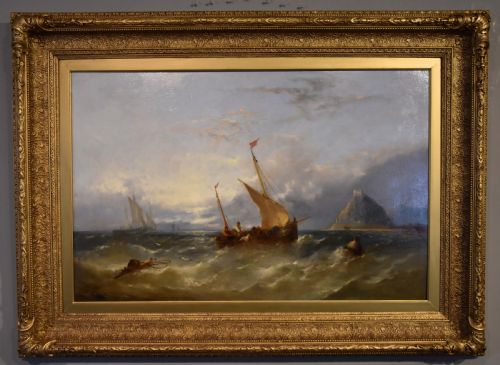
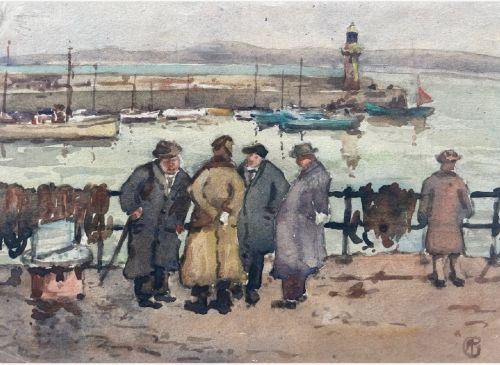
Cornish art brings together regional paintings, watercolours, and metalwork originating from creative hubs like Newlyn and St Ives. A buyer searching this phrase is looking at coastal landscapes, harbour scenes, and maritime watercolours that capture the local topography.
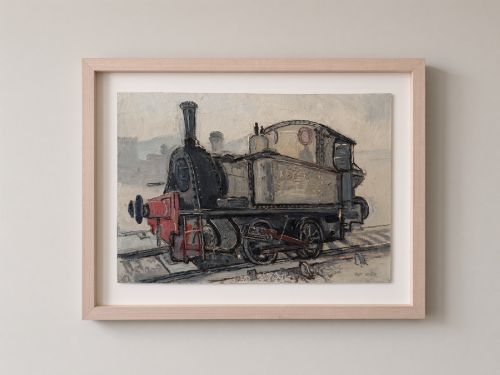
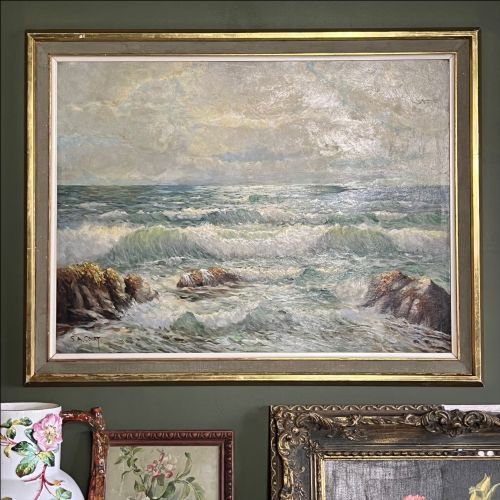
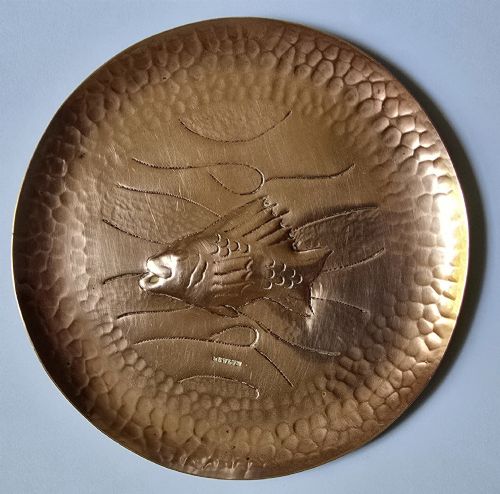
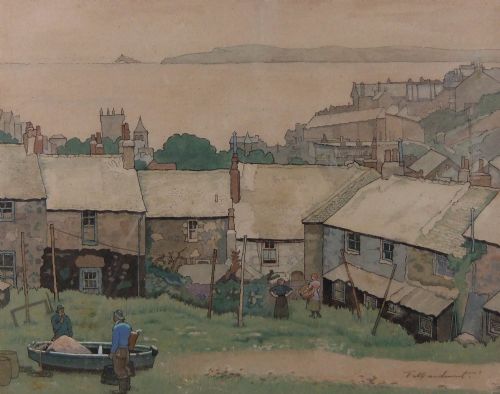
The pieces appearing on this page stretch from the nineteenth century into the mid-twentieth century, capturing shifts from traditional marine views to modern British compositions. Works range from oil paintings on canvas and board to detailed copper rose bowls and card trays.
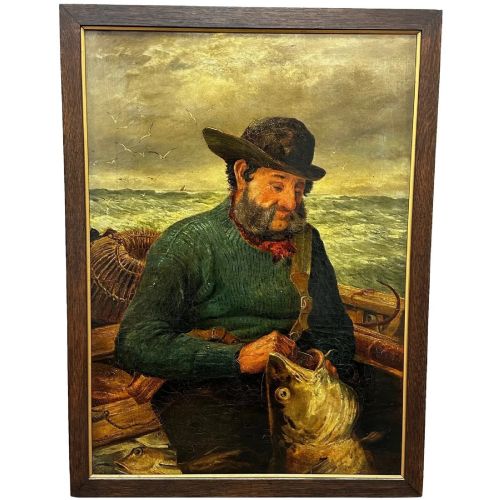
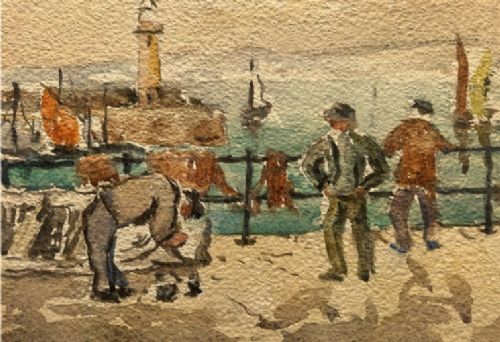
Framed watercolours and oil paintings dominate the selection, often signed by artists associated with the Newlyn School or St Ives. These works document harbours, fishing boats, and rural inland views across Cornwall.
Materials and technique
Painters utilised oil paint on canvas or board, alongside watercolour on paper, capturing coastal light and weather en plein air. Metalworkers employed beaten copper techniques to produce decorative vessels featuring stamped details and pierced lids.
Frames are constructed from wood, frequently with gilt finishes that complement the maritime and landscape subjects within the compositions.
Cornish Art Retail Price Guide 2026
Typical asking prices for cornish art among the pieces listed under this phrase on Sellingantiques today, from the lower quarter to the upper quarter. They describe what is for sale here now, not the wider market.
The selection includes maritime scenes by artists associated with Newlyn and St Ives alongside British Impressionism and Arts and Crafts metalwork.
Assessing quality
Quality rests in the fidelity of the brushwork and the artist's command of light, shadow, and atmospheric coastal conditions. Stronger examples display confident handling of pigment and secure provenance through signatures or exhibition labels.
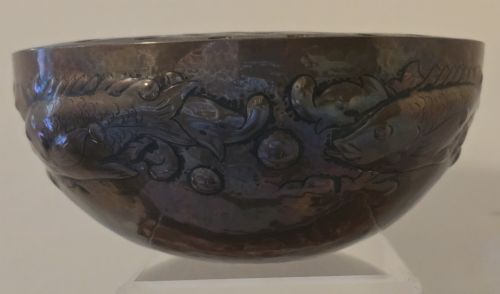
In metalwork, the depth of the repoussé hammer work and the crispness of the stamped studio marks separate standard production pieces from finer studio items.
Fred Yates·Sidney A Court·William Banks Fortescue·Robert Morson Hughes·Thomas Maidment·William Henry Williamson·George F Pennington·Joan Gillchrest·Tony Giles·Denis Mitchell·Barbara Hepworth·Edward Matthew Elliott·Charles Napier Hemy·Richard Harry Carter·Gyrth Russell·George Turland Goosey·Charles Sim Mottram·William Pitt·Ernest F Hill·Frederick Stuart Richardson·William Lambert Bell·Ralph Todd·Jack R Mould·William Lee Hankey·Walter Sweet
The Cornish Art Glossary
- Newlyn School
- An artist colony based in West Cornwall during the late nineteenth and early twentieth centuries, known for naturalistic paintings of local fisherfolk and coastal life.
- Oil on Canvas
- Pigment bound in drying oil applied to a stretched fabric support, standard for durable landscape and marine paintings.
- Watercolour
- A painting method where water-soluble pigments are applied to paper, utilised extensively for rapid coastal sketches and finished topographical views.
- Repoussé
- A metalworking technique where the metal is hammered from the reverse side to form a raised design on the front, seen in copper trays and bowls.
Cornish Art: Frequently Asked Questions
What subjects appear in Cornish art?
Paintings typically depict local harbours, fishing luggers, coastal cliffs, and rural village scenes across locations like St Ives, Polperro, and Newlyn. Maritime subjects and seascapes reflect the dominant fishing and seafaring industries of the region.
Metalwork items focus on functional forms like bowls and trays decorated with marine motifs such as fish.
How do I date an artwork?
Dating relies on artist lifespan records, inscribed signatures, gallery labels on the reverse, and stylistic indicators. Nineteenth-century works lean towards detailed maritime realism, whilst twentieth-century pieces adopt impressionist or modernist approaches.
Period framing and stretcher construction also offer reliable chronological clues.
How do I hang a vintage painting?
Ensure the wall hooks match the weight of the wooden and gilt frames, utilising secure picture wire fixed firmly to the stretcher bars or frame sides. Position paintings away from direct sunlight and moisture to protect oil pigments and works on paper.
Maintain stable indoor temperatures to prevent wood warping and canvas tension loss.
What is the St Ives School?
The St Ives School refers to the community of artists who lived and worked in the Cornish coastal town, developing distinct modernist and abstract painting styles. Artists associated with this circle contributed significantly to twentieth-century British art.
Their works often explore the unique light and landscape of the local peninsula.