

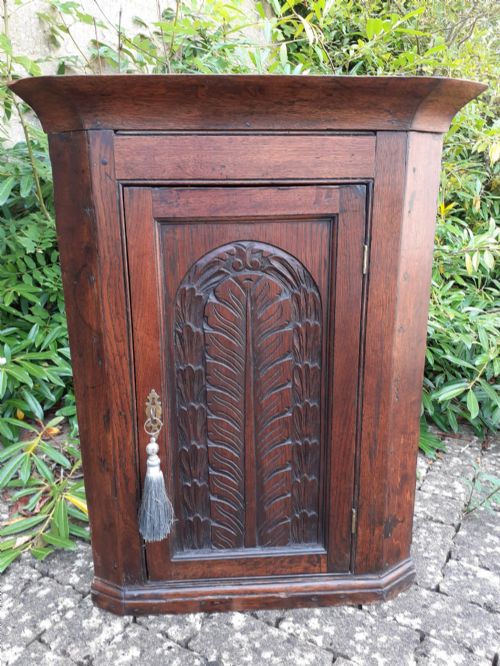
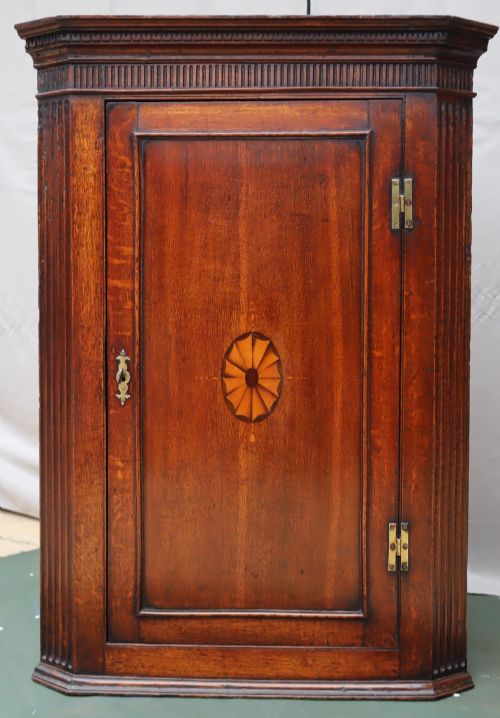
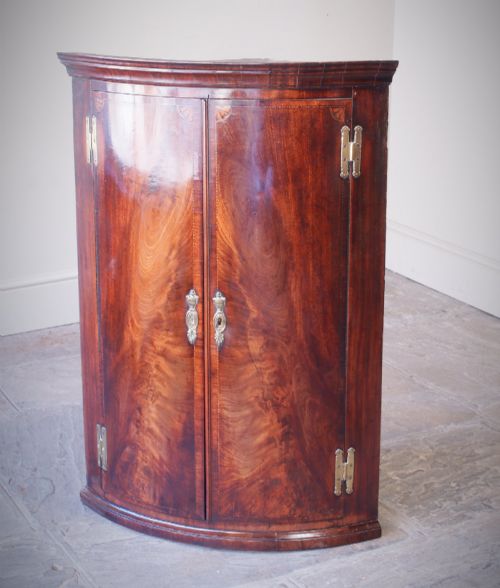
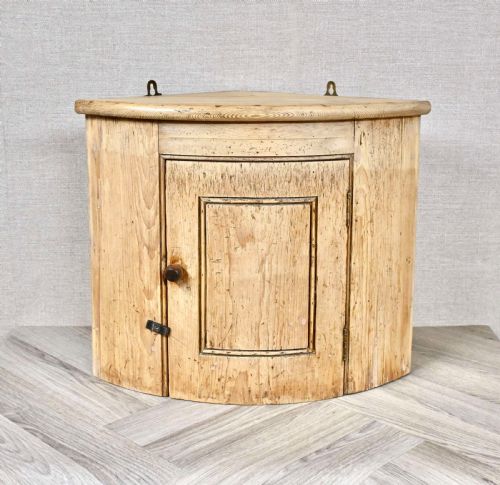


Corner Wall Storage Cabinet
A corner wall storage cabinet makes clever use of unutilised room junctions while keeping floor space entirely clear.
Corner Wall Storage Cabinet
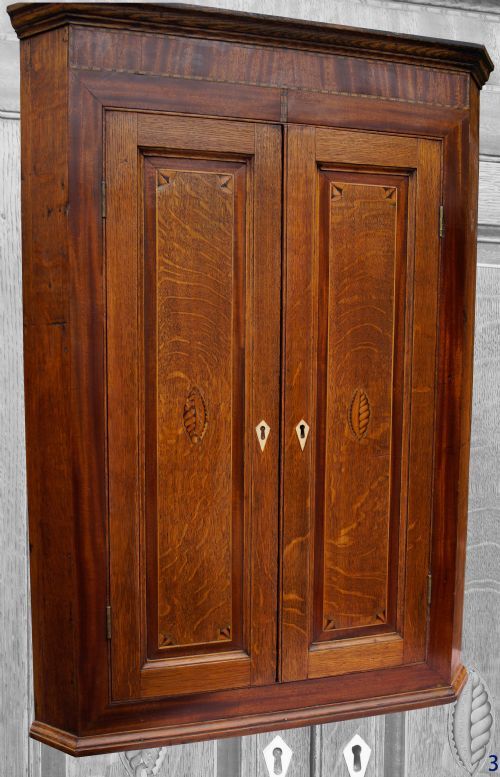
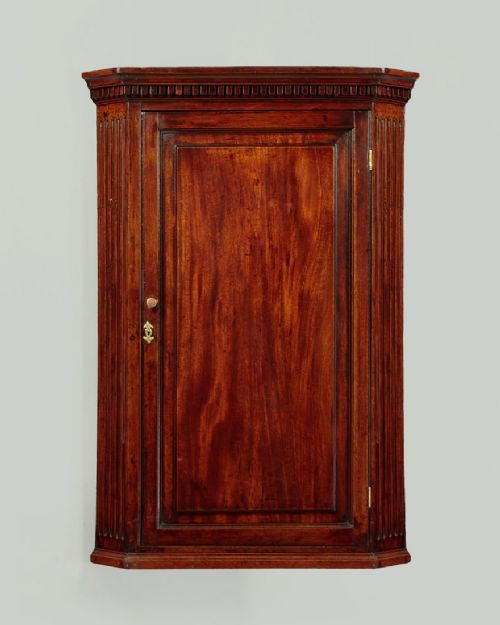
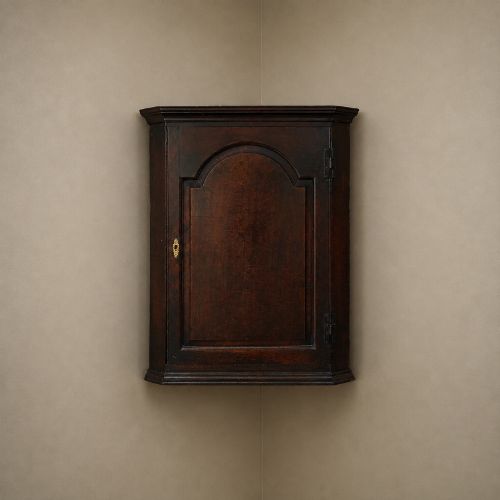
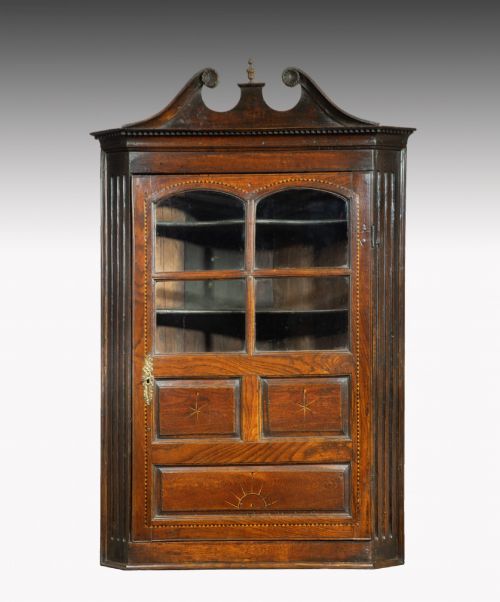
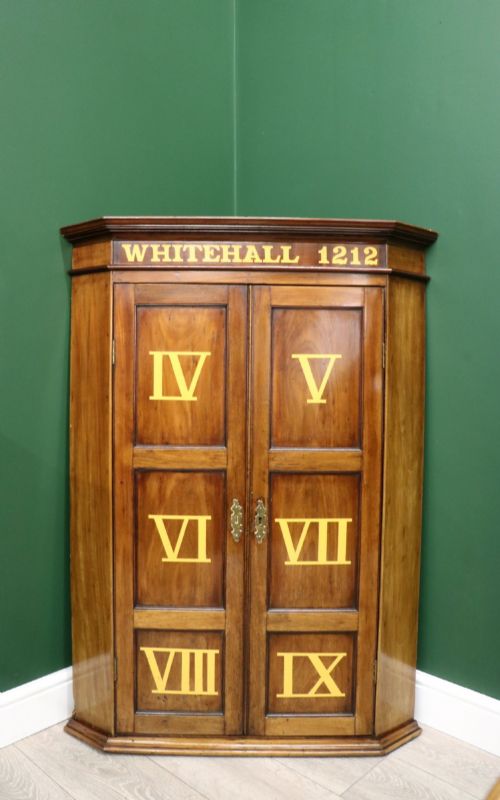
A corner wall storage cabinet provides fitted shelving designed specifically to mount into room angles, making efficient use of otherwise neglected interior space. These hanging cupboards appear frequently in Georgian, 18th Century, and 19th Century forms, offering enclosed display and storage.
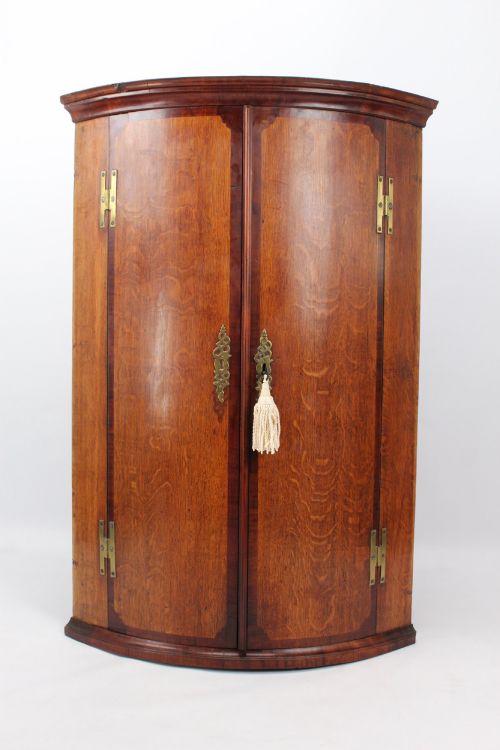
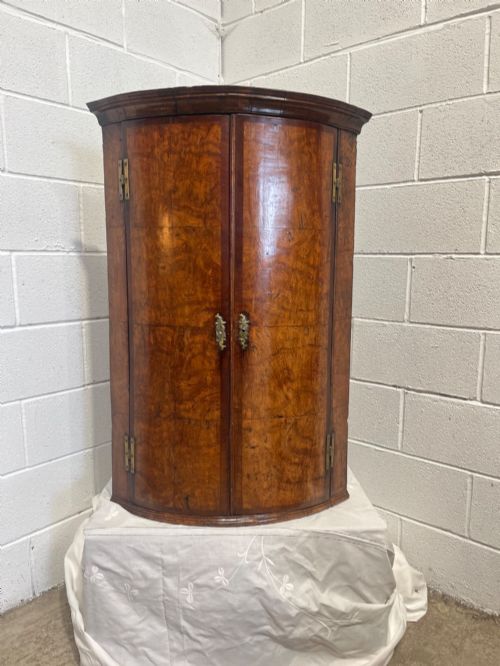
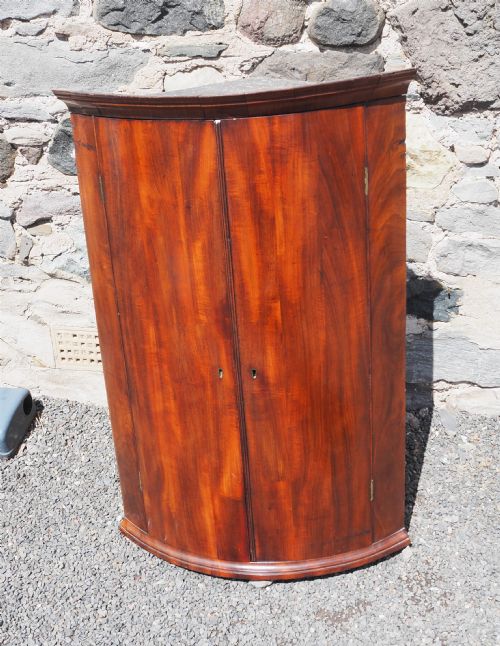
The version most commonly met on this page is the Georgian mahogany or oak hanging corner cupboard, often built with a bow front. Many examples date from the George III period and utilise domestic timbers suited to wall mounting.
How these pieces were made
Cabinet makers constructed these wall units predominantly using timbers such as oak, mahogany, walnut, and pine, frequently selecting figured veneers like burr oak or flame mahogany for primary display surfaces. Solid secondary woods provide structural integrity to the wall-hanging carcass.
Joinery methods include dovetailed joints for the sturdy shelving and carcass construction, alongside brass hinges and escutcheons securing the doors. Bow front designs required specialised bending techniques and segmented framing to achieve the curved profile.
Corner Wall Storage Cabinet Retail Price Guide 2026
Typical asking prices for corner wall storage cabinet among the pieces listed under this phrase on Sellingantiques today, from the lower quarter to the upper quarter. They describe what is for sale here now, not the wider market.
What varies in quality
The distinction between standard examples and finer pieces rests upon the selection of timber figure, such as rich flame mahogany or burr oak veneers, paired with crispness in the mouldings. Simpler pine or plain oak pieces prioritize utilitarian rustic charm over decorative cabinet work.
Internal elements like shaped shelving, brass H-hinges, and well-executed Chinoiserie japanning elevate the decorative merit of a cabinet. The integrity of the original hanging brackets and cornices also governs the overall standing of an individual piece.
The Corner Wall Storage Cabinet Glossary
- Bow front
- A convex curved cabinet front that projects outward from the corner. This curved profile requires precise carpentry to match the door frames.
- Hanging cupboard
- A wall-mounted storage unit designed to be secured directly to wall studs rather than resting on the floor. These often include internal brackets for support.
- Japanning
- A European imitation of East Asian lacquerwork using resin varnishes and painted decoration. This decorative surface finish appears on Chinoiserie pieces.
- Escutcheon
- A protective metal plate surrounding a keyhole, usually fashioned from brass. It prevents the timber around the lock from sustaining wear.
Corner Wall Storage Cabinet: Frequently Asked Questions
How do I hang a heavy antique corner cabinet?
These wall cabinets require secure fixing directly into substantial masonry or timber wall studs using appropriate heavy-duty brackets.
Professional installation is recommended due to the combined weight of solid hardwood timber and internal contents.
What is the difference between Georgian and Victorian corner cupboards?
Georgian and 18th-century cabinets typically display restrained classical proportions with mahogany or oak surfaces, often featuring bow fronts. Victorian examples occasionally incorporate Arts and Crafts design motifs or simpler provincial pine construction.
Cabinet hardware and timber finishing styles help distinguish the earlier periods from later nineteenth-century revivals.
Were these cabinets originally meant for kitchens or parlours?
Hanging corner cupboards served multiple rooms, functioning as corner storage in dining parlours, bedrooms, and kitchens alike. Their enclosed shelving protected provisions, glassware, or household documents from dust.
Smaller wall-mounted formats allowed homeowners to maximise storage without cluttering the main floor area.
How do I care for antique mahogany and oak?
Maintain timber surfaces by applying a traditional beeswax polish sparingly and buffing gently with a soft cloth. Avoid placing wooden cabinets in direct sunlight or near sudden heat sources.
Stable indoor humidity levels prevent the solid timber and veneers from drying out or splitting over time.