

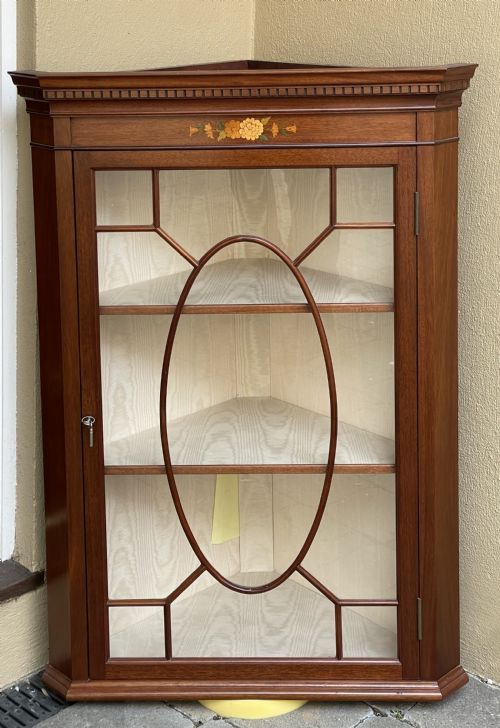


Corner Wall Display Cabinet
A corner wall display cabinet turns wasted room angles into practical shelving for china, glassware and small collections.
Corner Wall Display Cabinet
A corner wall display cabinet is designed to mount securely in the junction of two walls, making clever use of dead space while exhibiting contents through glazed or open doors. The selection relies heavily on Georgian and Victorian examples, alongside Edwardian and 18th-century pieces.
Most pieces seen here adopt a wall-hanging format, though occasional floor-standing variants appear in the broader record. The structure typically employs a triangular footprint to slot neatly into a room angle.
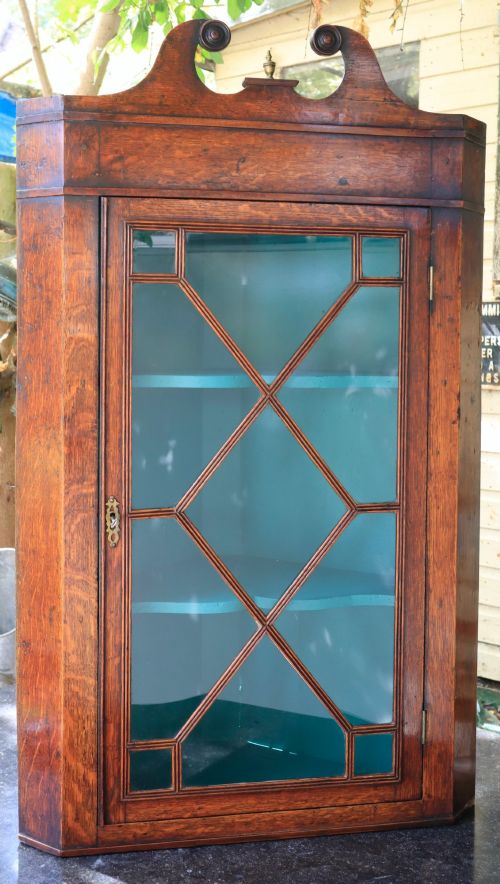
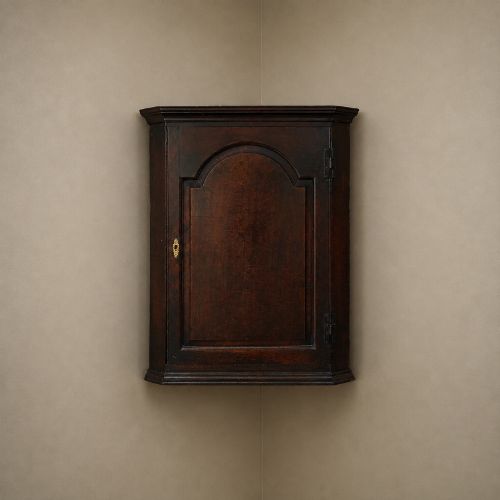
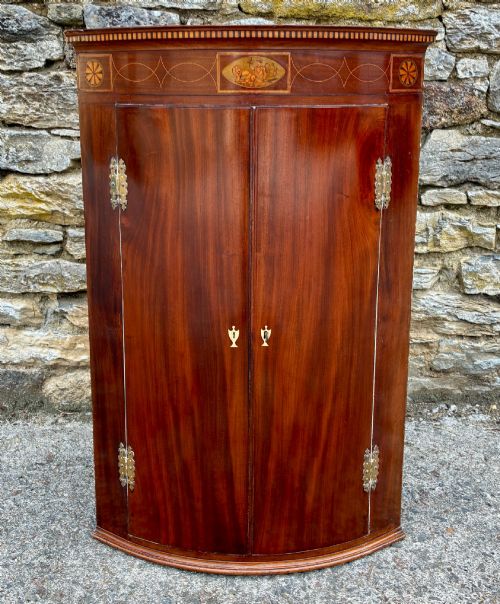
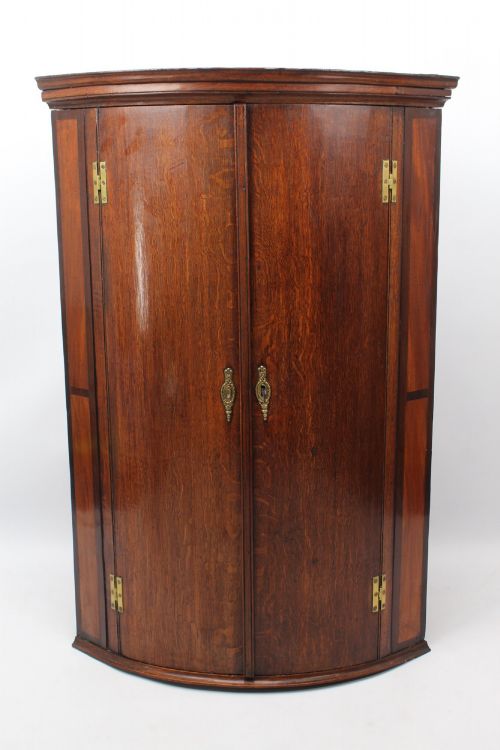
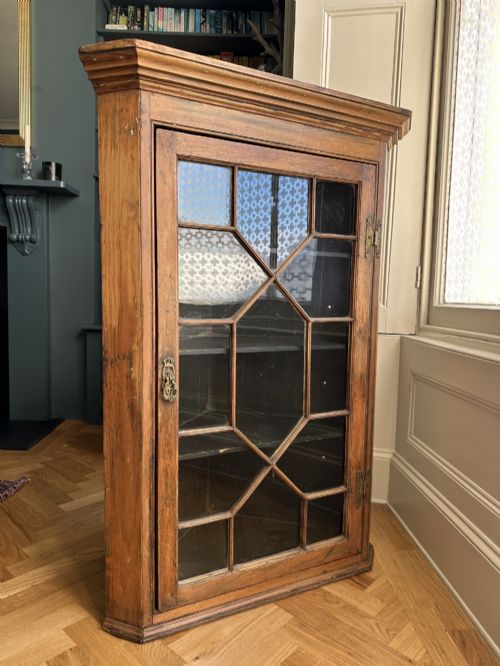
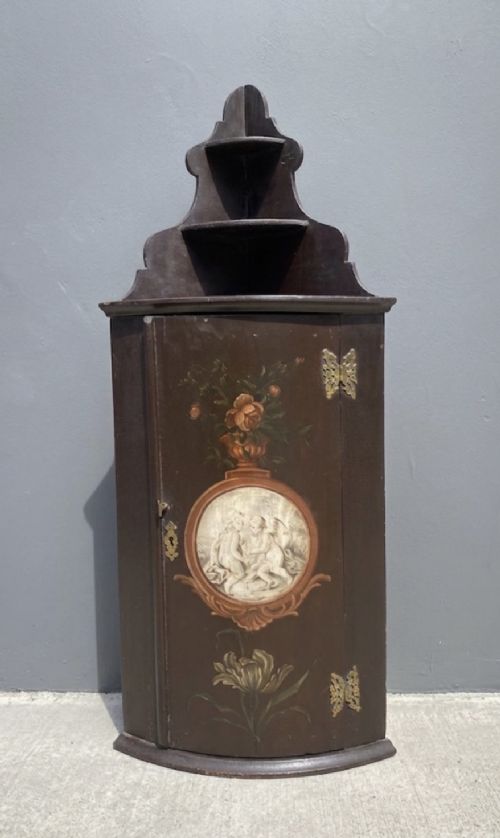
Makers historically favoured compact proportions to suit domestic interiors, resulting in numerous small hanging cupboards with single doors. Glazing varies from simple square panes to astragal bars and bow front shapes.
How they were made
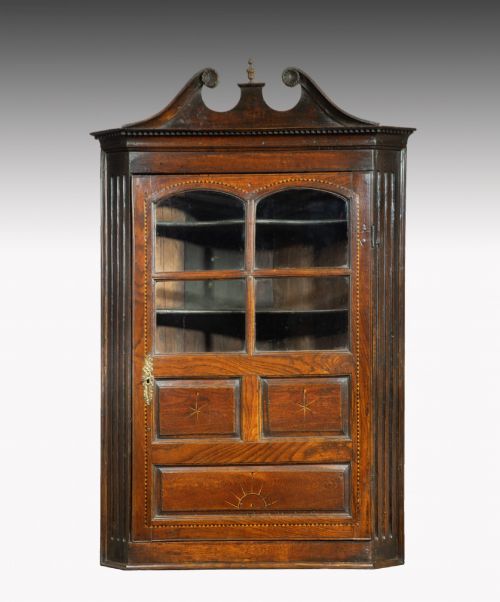
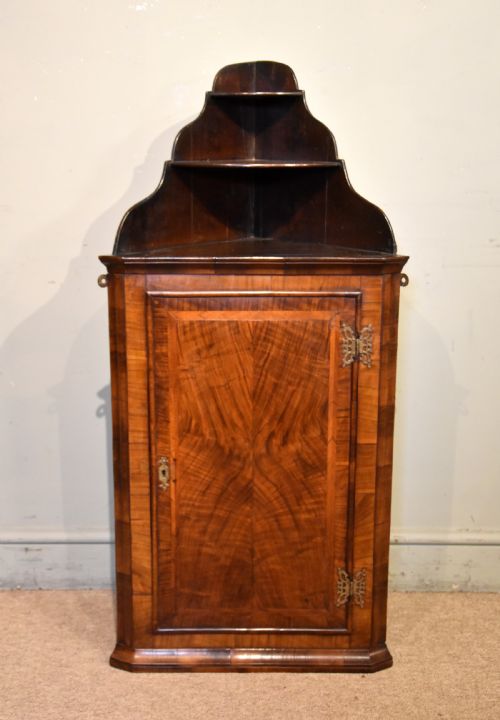
Carpenters constructed the primary carcase using native timbers such as oak, mahogany, walnut and pine, often incorporating crossbanding and satinwood inlay for decorative contrast. Timber selection dictated whether the surface received a polished finish or a painted treatment.
Glazing techniques required delicate wooden framing to hold glass panels securely within the door frame, while brass hinges and working locks with keys secured the enclosure. Interior fittings frequently included shaped shelves and painted backplates to showcase the items stored inside.
Several cupboards preserve original painted interiors behind their glass doors, offering a cheerful splash of hidden colour.
What varies in quality
The choice of cabinet timber and veneer work sets the baseline, with figured mahogany, burr walnut and crossbanded oak sitting above plain deal or stripped pine. More ambitious construction includes bow fronts, broken arch pediments and fine inlay rather than plain panels.
Hardware and interior detailing reveal the standard of original manufacture, distinguished by original brass fitments, intact glazing bars and painted or shelved interiors that survive without alteration.
The Corner Wall Display Cabinet Glossary
- Bow front
- A convex curved cabinet front that projects outward from the corner angles. This shape requires skilled joinery to bend wood or shape solid timber to a precise radius.
- Astragal bar
- A narrow wooden moulding used to divide glass panes within a cabinet door. These bars form geometric patterns such as gothic arches or simple squares.
- Crossbanding
- A strip of veneer laid across the grain of the primary wood around the perimeter of a door or panel. This technique creates a neat framed border using contrasting timber.
- Pediment
- The decorative structure surmounting the top of a cabinet. Examples include broken arch designs that finish the upper cornice with architectural detail.
Corner Wall Display Cabinet: Frequently Asked Questions
How do I hang a corner cabinet safely?
These cabinets attach to walls using internal fixing points or sturdy brackets screwed directly into solid masonry or studwork. Professional installation is recommended given the weight of timber and glass.
Ensuring the fixings catch wall studs or solid brick prevents the loaded cupboard from pulling free under its own weight.
What is the difference between Georgian and Victorian examples?
Georgian pieces tend to feature cleaner architectural proportions, mahogany or oak timbers, and often subtle crossbanding or stringing. They represent 18th-century cabinet making traditions.
Victorian items often introduce revival styles like Chippendale or Arts and Crafts, sometimes utilising fruitwood, rosewood, or darker oak finishes with heavier ornamentation.
Were these cabinets meant for kitchens or parlours?
Historical placement varied from domestic kitchens holding utilitarian wares to formal parlours and dining rooms displaying fine porcelain and glassware. Glazed doors generally indicate a desire to show off contents in public rooms.
Solid panel doors frequently suggest utility storage in private spaces or simpler domestic quarters.
Do most of these cabinets lock?
Many period pieces retain their original working locks and matching brass keys for securing valuable contents. Surviving operational locks add authenticity to antique examples.
Replacements or adaptations sometimes occur where original mechanisms wore out over centuries of domestic use.