


Corner Hanging Storage Cabinet
A corner hanging storage cabinet puts wasted wall junctions to work, bringing timber warmth and concealed space to a room.
Corner Hanging Storage Cabinet
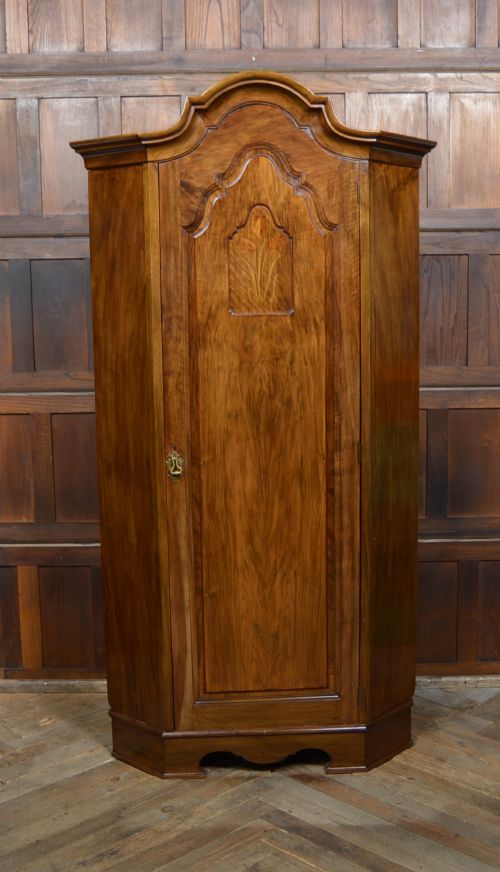
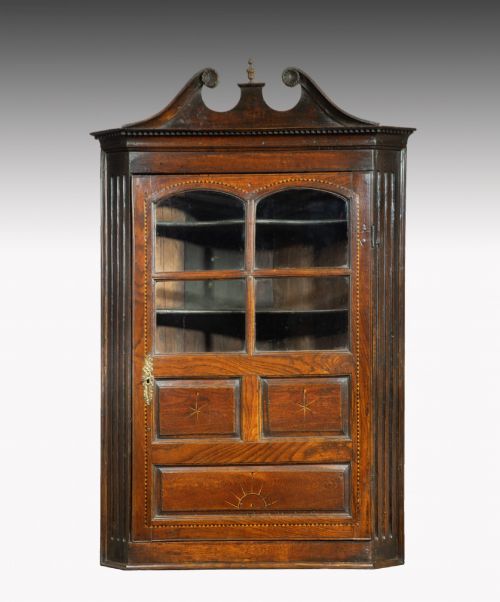
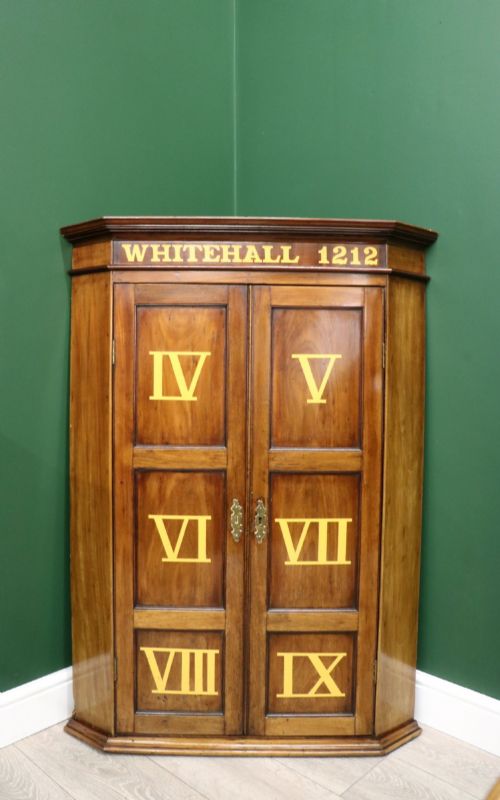
A corner hanging storage cabinet is designed to mount securely onto intersecting walls, turning a difficult junction into useful domestic space. These pieces serve primarily to store tableware, linens or dry goods behind panelled doors while occupying minimal floor space.
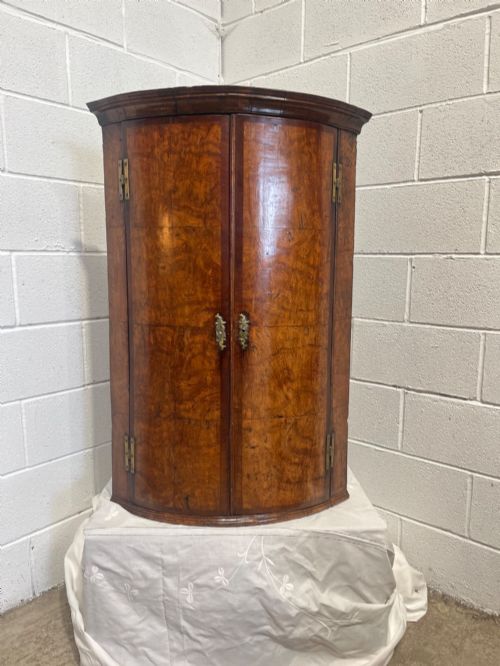
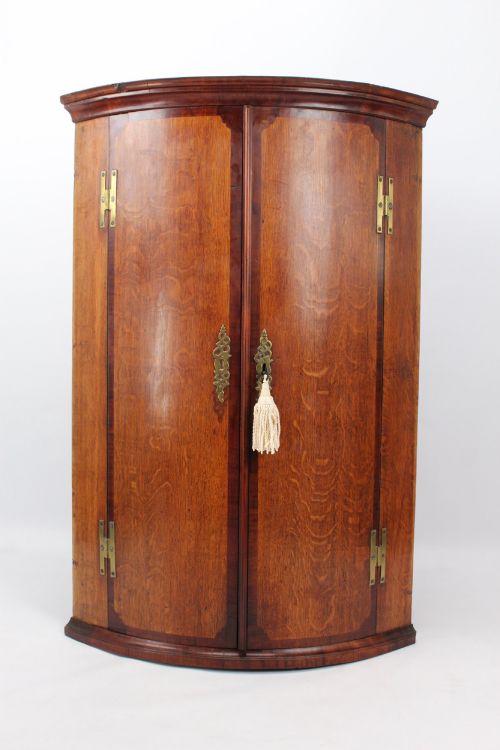
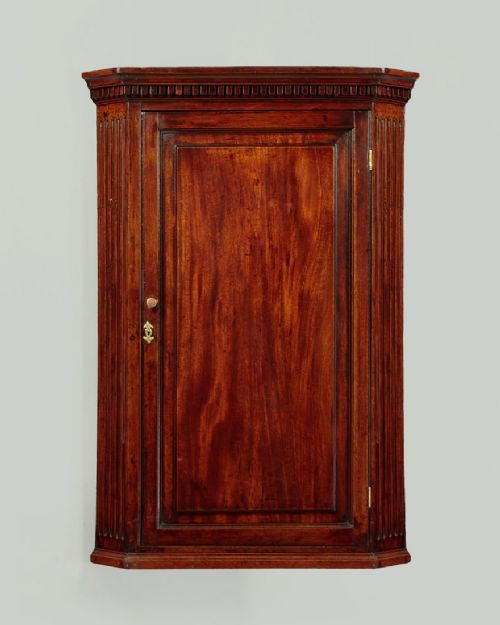
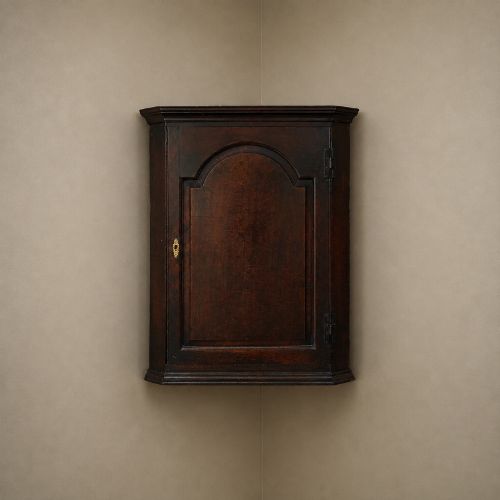
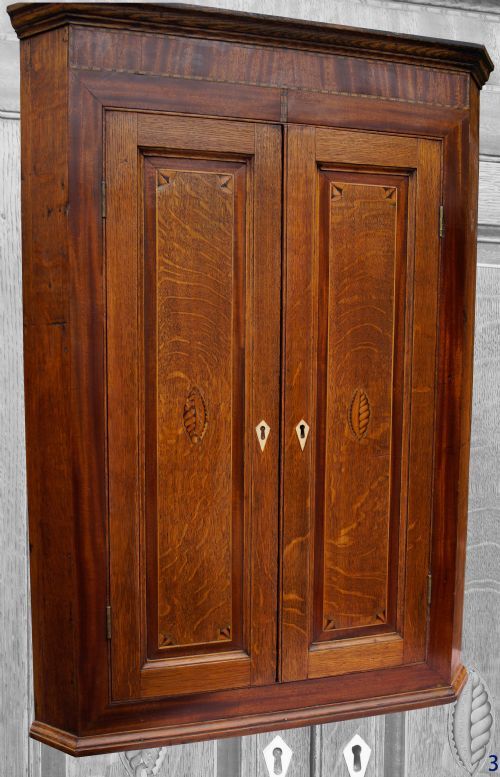
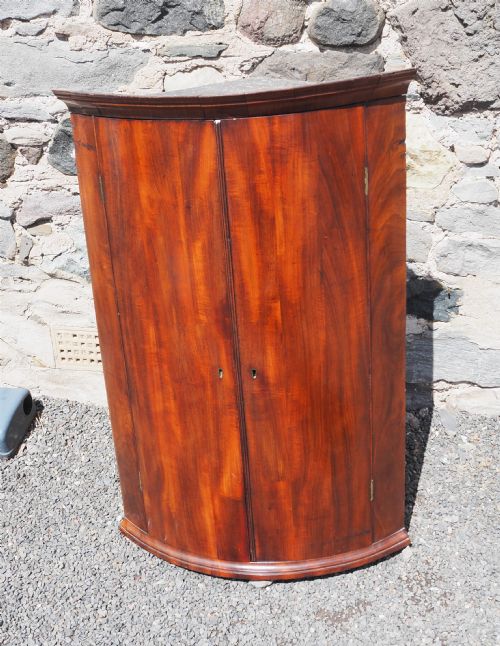
The version most commonly met on this page is the Georgian mahogany or oak wall hanging corner cupboard, often built with a flat or bow front. Pieces span from the 18th century through the Victorian era, utilising native and imported timbers shaped to fit room angles.
How they were made
Cabinetmakers constructed these pieces using solid timbers like oak, mahogany and walnut, frequently housing shaped interior shelves within dovetailed carcases. Brass hinges, escutcheons and latches secure the doors, while boxwood stringing and flame veneers sometimes decorate the exterior surfaces.
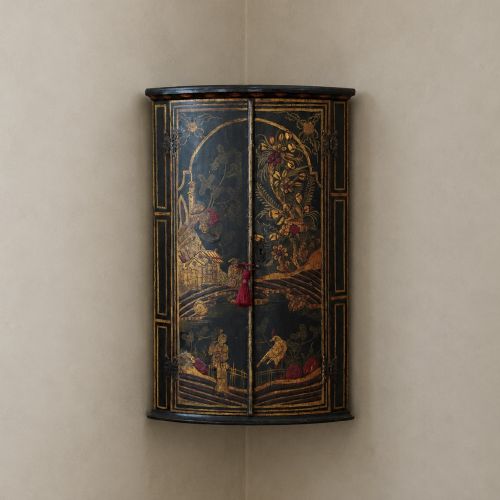
Surfaces received various treatments depending on the period, ranging from clear wax finishes on natural grain to japanned chinoiserie paintwork and dark lacquers. Construction methods prioritized stability under wall-mounted loads, utilising sturdy corner posts and pegged joints.
Listings feature oak and mahogany predominantly, spanning the Georgian, Victorian and Regency periods across several regional British styles.
What varies in quality
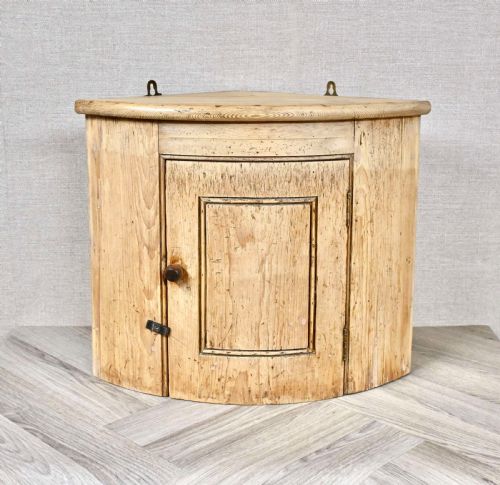
The choice of timber underpins the hierarchy of these cabinets, moving from utilitarian pine to figured burr oak, flame mahogany and walnut veneers. Finer pieces display careful grain matching across the door panels and precise brass hardware.
Construction detail distinguishes workshop output, seen in the smoothness of the shaped interior shelves and the crispness of applied mouldings. Cabinets retaining original brasses and undisturbed painted or lacquered surfaces command greater appreciation than altered examples.
The Corner Hanging Storage Cabinet Glossary
- Bow front
- A convex curved cabinet front that projects outward from the wall corners. This shape gained popularity during the Georgian period.
- Chinoiserie
- European decorative work in the Chinese taste, often involving painted or lacquered scenes on dark backgrounds. Examples frequently appear on 18th-century cabinet doors.
- Japanned
- A style of European finishing that emulates East Asian lacquerware using layered varnishes and metallic dust. It appears on select period cupboards.
- Flame mahogany
- Timber cut from the branch junction where the grain creates a flickering flame pattern. This veneer was prized for high-end Georgian furniture.
- Escutcheon
- A flat plate of brass surrounding a keyhole to protect the surrounding wood. They serve both a functional and decorative purpose on cabinet doors.
Corner Hanging Storage Cabinet: Frequently Asked Questions
How do I hang a heavy wooden corner cupboard?
These cabinets require secure fixing directly into wall studs or solid masonry using heavy-duty brackets suited to the weight of the timber.
Professional installation ensures the structural load is distributed evenly across the corner junction without damaging antique fixings.
Were these cabinets meant for kitchens or parlours?
Period cupboards served multiple domestic roles, holding precious ceramics in the parlour or storing spices and dry goods in the kitchen.
Their enclosed shelving kept contents free from dust and soot in homes heated by open fires.
How do I tell an 18th-century piece from a Victorian copy?
Examination of the internal construction reveals the timber preparation, with hand-sawn boards and pegged joints indicating earlier manufacture.
Secondary woods at the back and interior linings also help determine whether a cabinet dates to the Georgian era or later.
Can these cabinets hold heavy items on their shelves?
The interior shaped shelves suit lighter ceramics, glassware and books rather than heavy cast iron or dense stoneware.
Checking the shelf support ledgers inside the carcase helps determine the weight capacity of each individual cabinet.