


Copper Samovar Tea Urn
A copper samovar tea urn brings heavy metal warmth and period presence to a room, functioning as a striking focal point for historic interiors.
Copper Samovar Tea Urn
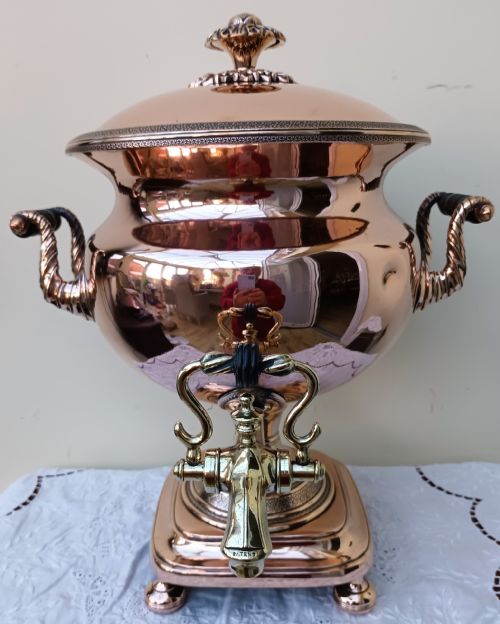
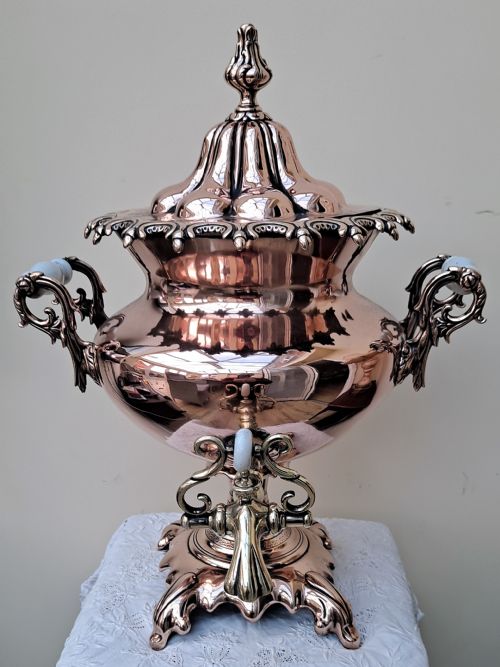
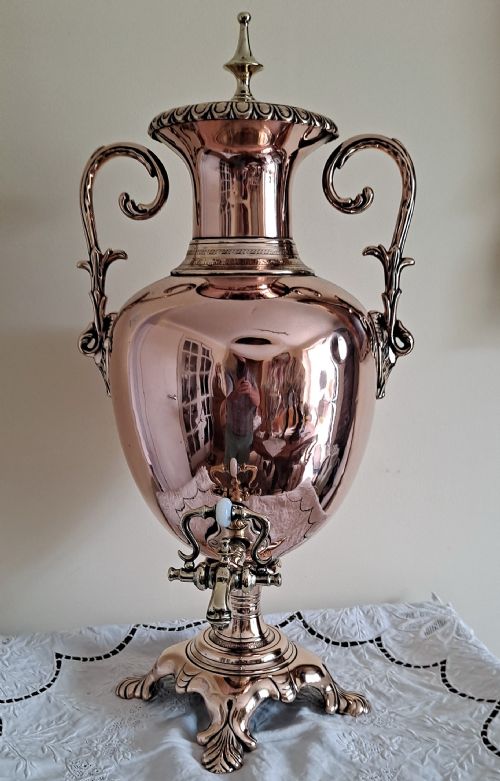
A copper samovar tea urn represents a substantial vessel designed for heating and dispensing water, typically featuring a central internal heating tube and a spigot near the base. When searching for a copper samovar tea urn, collectors encounter items spanning the Georgian, Regency, and Victorian periods, with English origins predominating across the selection.
The objects listed take the form of traditional tea urns, water urns, and kettles, often combining copper with contrasting brass fittings or handles. Pieces range from modest nineteenth-century examples to large scaled specimens suited to grand reception rooms.
Victorian and Georgian specimens dominate the available inventory, frequently displaying the classic urn shape alongside period specific detailing like turned wooden knobs and bone insulators. These vessels capture the domestic hospitality rituals of past centuries through robust metal construction.
Construction and materials
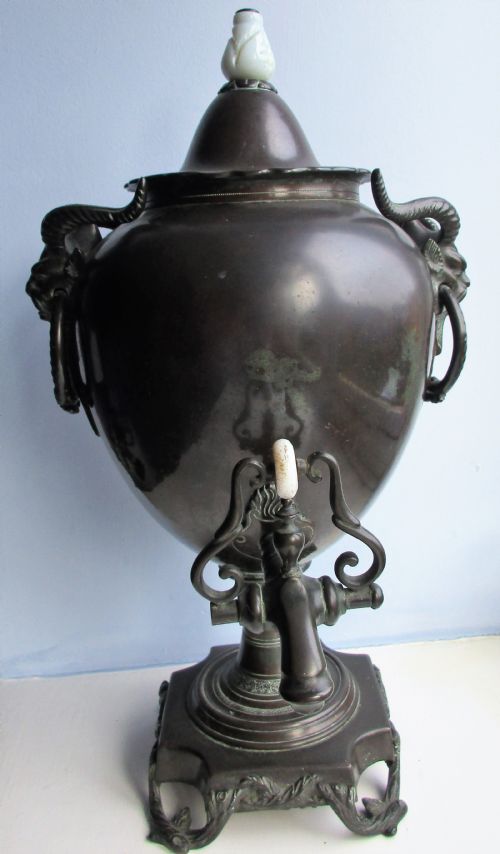
Makers constructed these vessels primarily from sheet copper, often combining them with brass for handles, spigots, and pedestals. Bell metal, bronze, and patinated metal also appear in the construction of specific structural elements and decorative mounts.
Makers incorporated organic and ceramic components into the design to manage heat transfer, utilising bone, wood, and ebonised wood for insulating handle grips and lid finials. Some examples feature japanned surfaces or specialised Pontypool Ware finishes applied over the metal base.
Several Victorian models include bone insulators to keep servants from burning their fingers while pouring hot tea.
Assessing quality
The distinction between standard and superior pieces rests on the crispness of the chased or cast ornamentation and the integration of original fittings. Pieces identified as high quality display heavier gauge metal, refined proportions, and sophisticated surface patination.
The presence of original components, such as internal heating cylinders, spigots, and turned insulators, elevates an example. Finer specimens show careful hand-hammering and sturdy bracket attachments that survive from their period of manufacture.
Benetfink & Co·Benham & Sons
The Copper Samovar Tea Urn Glossary
- Samovar
- A heated metal container traditionally used to boil and heat water in Russia and throughout European households.
- Pontypool Ware
- Japanned metalware produced in Wales, known for its durable and glossy lacquered surface finish.
- Bell Metal
- An alloy of copper and tin traditionally used for casting bells, utilised here for durable vessel fittings.
- Spigot
- A tap or nozzle fitted near the base of the urn to control the flow of hot water.
Copper Samovar Tea Urn: Frequently Asked Questions
How do I date a copper samovar tea urn?
Dating relies on stylistic markers associated with Georgian, Regency, and Victorian design periods, alongside construction methods like hand-riveting. Earlier pieces often display neoclassical urn silhouettes, while later Victorian examples introduce heavier proportions and varied metal combinations.
Examining the materials used for handles and spigots, such as ebonised wood or bone, provides further chronological clues. Maker marks or retailer stamps, when present, narrow down the exact decade of production.
Were these urns used to brew tea directly?
These vessels functioned primarily to heat and dispense water rather than brew tea directly inside the main chamber. Boiling water was drawn from the spigot to dilute strong tea essence brewed in a smaller teapot.
The internal heating tube often held hot charcoal or a heated metal cylinder to keep the water at temperature throughout a gathering.
How should I clean a copper samovar?
Maintenance involves preserving the natural patinated metal surface rather than stripping it to a bright polish unless desired. Gentle dusting and occasional wiping with a soft cloth keep the copper and brass stable without removing historical depth.
Harsh chemical abrasives damage the historic surface finish and should be avoided entirely on antique metalware.