




Copper Kitchenware Pan
These copper kitchenware pan pieces are heavy utilitarian vessels built for centuries of kitchen service, prized today for their thermal warmth and honest weight.
Copper Kitchenware Pan
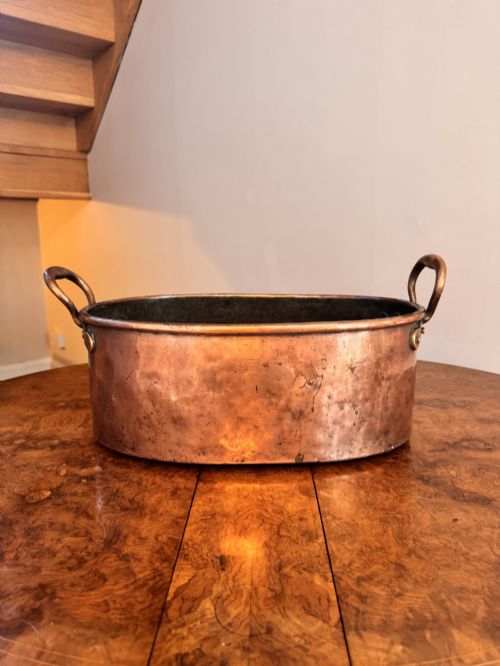
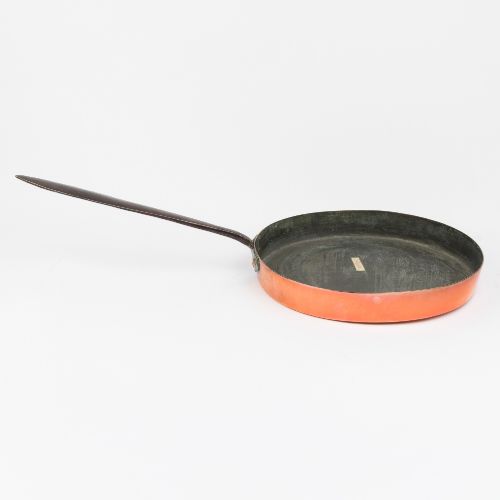
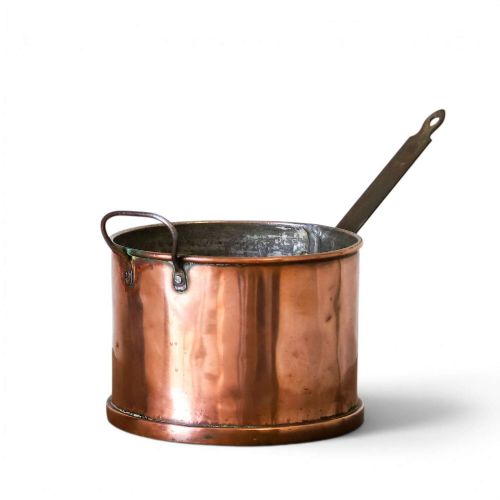
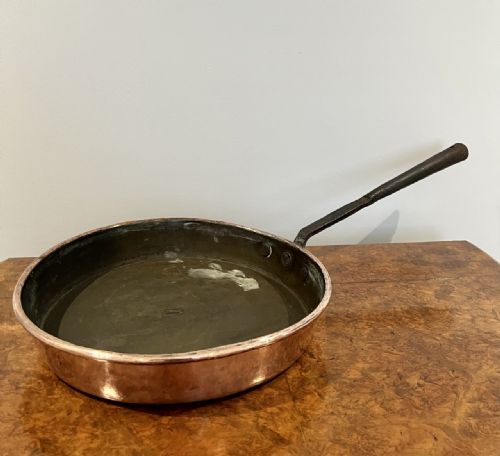
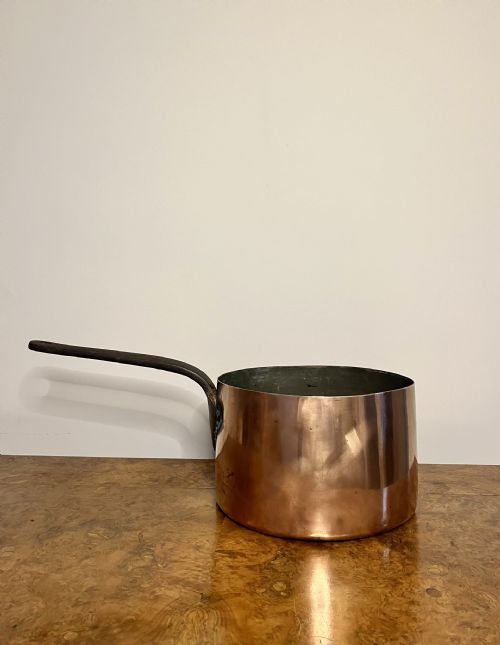
When you search for a copper kitchenware pan, you encounter heavy kitchen vessels originating from the Georgian and Victorian eras. These items include deep saucepans, preserves pans, and sauté pans designed for serious culinary work rather than simple display.
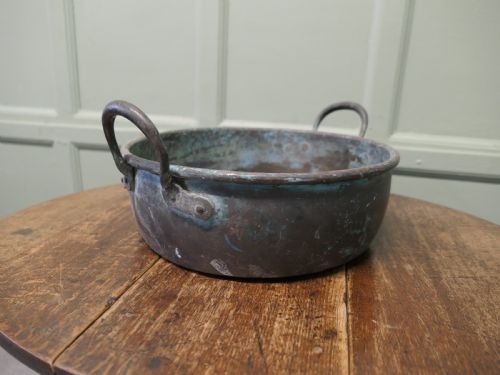
The pieces most frequently met on this page belong to the Victorian period and the nineteenth century, often appearing as matched sets or individual heavy-gauge saucepans. French and English country styles dominate the selection, alongside robust preserve pans fitted with sturdy iron handles.
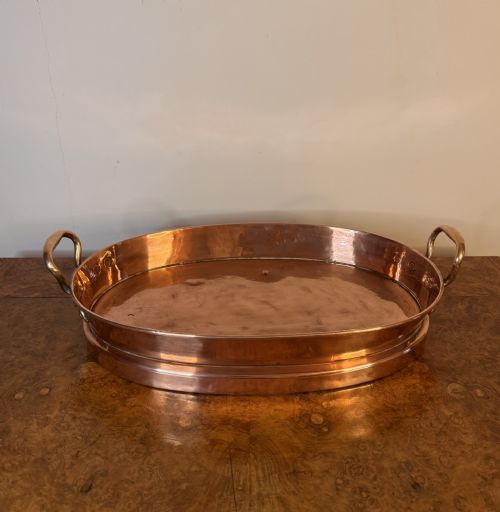
Cookware forms span simple single-handled saucepans, large preserving pans for fruit, and specialised vessels such as fish kettles. Each object reflects the practical demands of nineteenth-century domestic and estate kitchens.
Materials and construction
The primary construction relies on heavy gauge copper hammered into form, paired with strong iron handles riveted securely to the body. Brass fittings also appear on selected Victorian pans, adding structural reinforcement and contrasting detail.
Internal surfaces receive a traditional tin lining to prevent direct contact between food and copper. Hand-beaten techniques mark the earlier nineteenth-century pieces, showing the distinct hammer blows of the metalsmith.
Copper Kitchenware Pan Retail Price Guide 2026
Typical asking prices for copper kitchenware pan among the pieces listed under this phrase on Sellingantiques today, from the lower quarter to the upper quarter. They describe what is for sale here now, not the wider market.
Some preserving pans still carry the faint, sweet scent of Victorian fruit jam cooked over coal fires a century ago.
Assessing quality
Thickness of metal distinguishes superior examples from lighter commercial wares, with heavy gauge copper retaining heat more evenly and resisting distortion over decades of fire exposure. The integrity of the original dovetail or riveted seams indicates the skill of the maker.
Completeness of matching sets and the retention of original iron or brass handles preserve the historical integrity of the cookware. Pieces bearing maker stamps or specific workshop attribution carry greater documentary interest.
Hodges & Sons
The Copper Kitchenware Pan Glossary
- Gauge
- The thickness of the sheet metal used to form the body of the pan. Heavier gauges indicate professional kitchen standards.
- Tin lining
- A protective layer applied to the interior surface of copper cookware. This coating prevents copper toxicity during food preparation.
- Preserving pan
- A wide, open vessel designed for boiling fruit and sugar. These pans feature sloped sides to encourage evaporation.
- Fish kettle
- An elongated oblong pan equipped with a draining insert. This shape allows whole fish to be poached evenly.
Copper Kitchenware Pan: Frequently Asked Questions
Can I still cook with antique copper pans?
Many of these pieces remain structurally capable of food preparation once the interior tin lining is inspected or renewed by a specialist.
Modern cooks appreciate the rapid thermal response and even heat distribution that heavy copper provides on gas or electric ranges.
How do I clean copper kitchenware?
Regular maintenance involves traditional copper cleaners or mild acidic mixtures of lemon and salt to remove oxidation without scratching the metal.
Abrasive scouring pads should be avoided to preserve the original hand-beaten texture and historical patina.
How can I tell a Georgian pan from a Victorian one?
Georgian examples often display distinctive hand-hammered surfaces and heavier handle fixings typical of eighteenth-century workshop production.
Victorian pieces frequently show standardised rolling techniques and may appear in coordinated matched sets of three to five items.
Why do some pans have iron handles?
Wrought iron or cast iron handles provided the necessary strength and heat resistance for heavy kitchen use over open hearths or stove tops.
Iron was selected for its durability and secure rigid fixing to the main copper body using heavy rivets.