

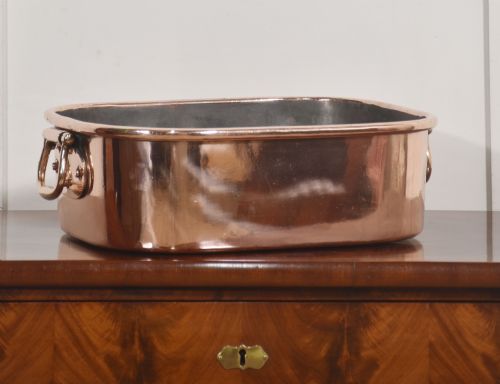


Antique Metalware Cookware
Antique metalware cookware brings heavy copper, brass, and iron straight from Georgian and Victorian kitchens into daily use.
Antique Metalware Cookware
These pieces are functional culinary vessels originating from the Georgian and Victorian eras, designed for heavy daily hearth and stove work. When you search for antique metalware cookware, you encounter domestic items built to withstand intense heat and constant use over open fires or early ranges.
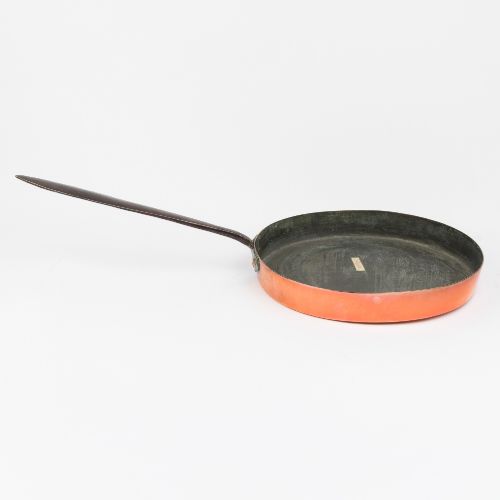
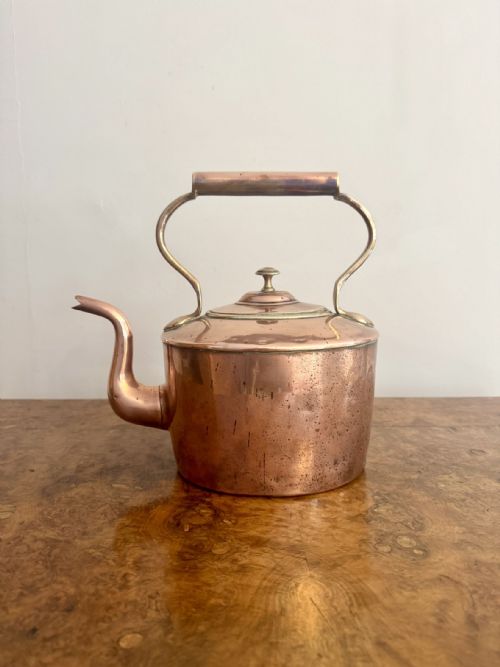
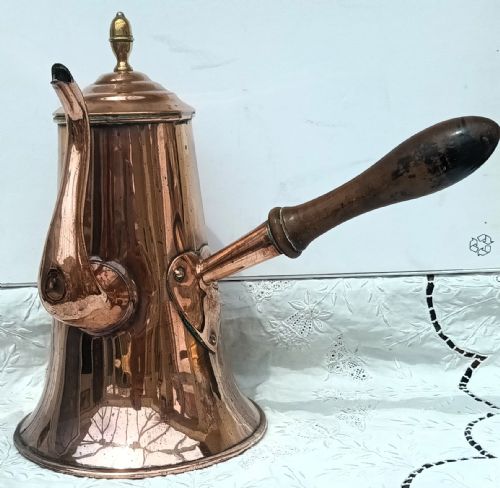
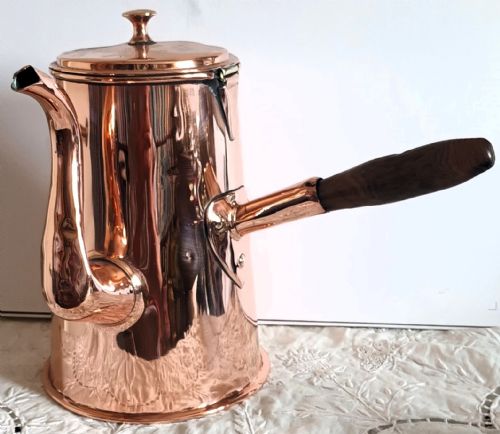
The selections on this page concentrate on heavy metal utensils rather than decorative ornaments. You will find copper kettles, coffee pots, saucepans, sauté pans, fish kettles, and duck roasting pans dating from around 1800 through the nineteenth century.
The origins span English workshops, often reflecting domestic utility in robust forms. Surviving examples demonstrate the shift from open hearth cooking to enclosed stove preparation through their varying shapes and handle placements.
How they were made
Construction relies heavily on hand-beaten copper paired with structural elements of brass, iron, and wood. Makers shaped sheet metal by hammering over stakes, joining seams with dovetails or early brazing methods to hold liquids under heat.
Interiors typically received a protective lining of tin to prevent copper toxicity during food preparation. Handles and mounts utilise cast brass or iron, riveted firmly to the vessel walls and occasionally insulated with turned wooden grips.
Antique Metalware Cookware Retail Price Guide 2026
Typical asking prices for metalware cookware among the pieces listed under this phrase on Sellingantiques today, from the lower quarter to the upper quarter. They describe what is for sale here now, not the wider market.
Listings span the Georgian and Victorian periods, featuring materials such as copper, brass, iron, bronze, tin, and wood.
What varies in quality
Thickness of the metal plate dictates durability and heat distribution across the base and walls. Heavier gauge copper resists warping under intense flame far better than thinner sheets produced later in the period.
Maker marks and stamps provide tangible evidence of workshop origin, elevating certain pieces above unmarked utilitarian output. Clean lines in the hand-beaten surface and robust dovetail seams reveal the skill of the original metalsmith.
William Soutter And Sons·Liptons
The Antique Metalware Cookware Glossary
- Brazing
- A method of joining metals using a molten filler alloy at high temperatures. This technique secured seams on heavy copper vessels before modern welding.
- Dovetail seam
- An interlocking joint pattern used along the cylindrical walls of pots and kettles. It provides mechanical strength before sealing.
- Tinning
- The process of applying a thin protective layer of molten tin to the interior surface of copper cookware. It prevents acidic foods from reacting directly with the copper.
- Spun copper
- A later mechanical method of forming vessels on a lathe rather than raising them entirely by hand hammering. It produced thinner, more uniform walls.
Antique Metalware Cookware: Frequently Asked Questions
Can I still cook with antique copper pans?
Many surviving pans remain structurally sound enough for use on modern hobs, provided the interior tin lining is intact.
Check the thickness of the base and ensure the tin coating shows no exposed copper before heating food.
How do I clean old copper cookware?
Traditional polishing pastes remove tarnish without stripping the underlying metal too aggressively.
Avoid harsh steel wool that scratches the hand-beaten surface and diminishes the historical patina.
How do I date a Georgian copper kettle?
Georgian pieces often display characteristic heavy gauge metal, hand-dovetailed seams, and cast brass mountings.
Compare the handle construction and fastening methods with documented examples from the 1800 period.
Why are some pots lined with tin?
Copper reacts adversely with acidic foods during cooking, creating harmful compounds.
Tin provides a safe, non-reactive barrier between the ingredients and the metal body of the pan.