


Copper Jam Vessel
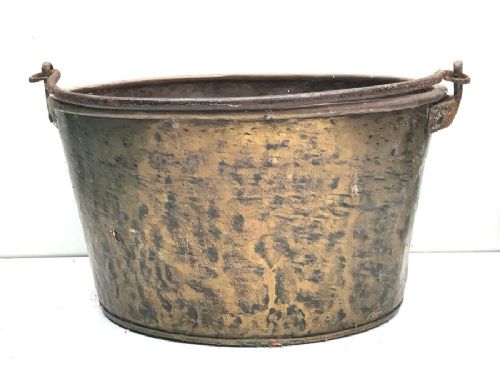
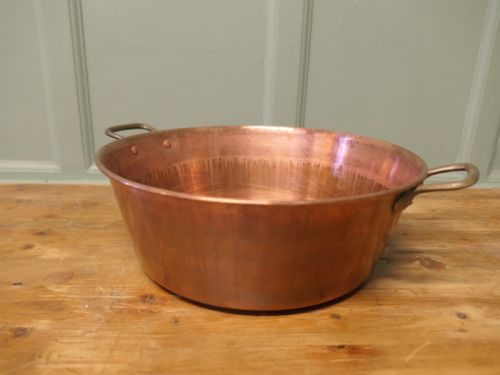
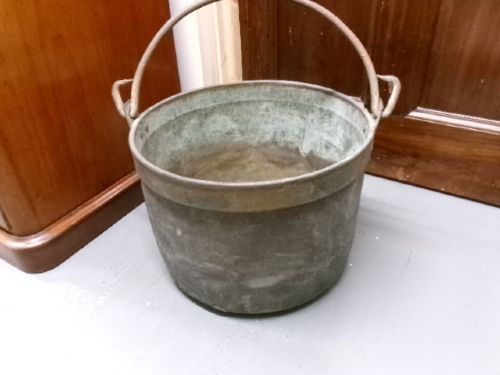
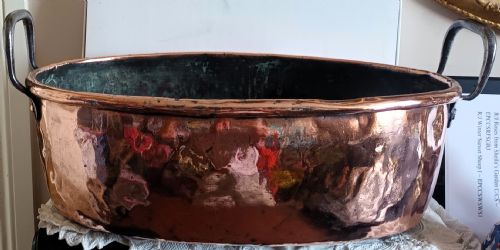
These heavy copper jam vessel pieces are hardworking utilitarian cookware from rural kitchens, built to cook fruit over an open fire or hearth.
Copper Jam Vessel
A copper jam vessel is a functional item of cookware or kitchenware designed for preserving and cooking over heat. The examples gathered here span the eighteenth and nineteenth centuries, taking forms such as preserving pans, cauldrons, cream setting pans, and cooking pots.
Most pieces seen on this page date to the nineteenth century, reflecting the Victorian era of domestic kitchen equipment. They appear alongside earlier Georgian examples, showing the enduring utility of heavy metal cookware in rural and domestic settings.
Forms vary from double-handled bowls and swing-handled cauldrons to saucepans and large cooking vessels. Their original purpose in the kitchen has often transitioned into decorative use as planters or fireplace accessories.
How they were made
These vessels are primarily constructed from hammered or sheet copper, sometimes featuring embossed brass details or tin linings. Metalworking techniques of the period relied on heavy gauge materials capable of withstanding direct heat.
Attachments such as handles and fixings frequently utilise iron, wrought iron, or brass. Rivets secure these handles to the main body, showing the robust construction required for heavy kitchen tasks.
Listings feature copper, brass, iron, wrought iron, and tin across Georgian and Victorian periods.
What varies in quality
Quality in these pieces is dictated by the thickness of the metal plate and the integrity of the construction. Heavier gauge copper and substantial wrought iron handles indicate items built for rigorous culinary use rather than lighter decorative wares.
The method of assembly marks the difference between standard kitchen utility items and finer workshop production. Visible hand-beating, neat riveting, and careful finishing distinguish better examples from simpler utilitarian pans.
Hodges & Sons
The Copper Jam Vessel Glossary
- Cauldron
- A large metal pot with a swing handle designed for cooking over an open fire. These deep vessels are frequently fitted with wrought iron bails for suspension or lifting.
- Preserving Pan
- A wide, open pan specifically shaped for boiling fruit and sugar to make jam. The wide brim allows rapid evaporation during the preserving process.
- Cream Setting Pan
- A shallow vessel utilised in dairies to let cream rise to the top of milk before skimming. These pieces often feature specific pan proportions suited to liquid separation.
- Wrought Iron
- Iron that has been heated and hammered into shape by a blacksmith. This material provides sturdy, fibrous handles and fixings that resist bending under heavy loads.
- Riveted
- Joined together using metal pins hammered flat at the ends. This technique fastens handles securely to the copper body of the pan without modern adhesives.
Copper Jam Vessel: Frequently Asked Questions
Can I use an old copper pan for cooking?
While these pieces were originally made for culinary tasks like preserving and cooking, many older vessels lack modern food-safe linings such as tin. Modern users often repurpose them as decorative items or planters rather than for daily food preparation.
Inspect the interior surface carefully before deciding to use any antique metalware with food. Many surviving pieces show wear from hearth use that makes display the safer option.
How do I clean a copper preserving pan?
Cleaning depends on whether you prefer to maintain a bright polished shine or preserve the dark patination accumulated over centuries. Traditional copper cleaners remove tarnish quickly, though many collectors prefer to leave the aged surface untouched.
Avoid harsh abrasives that scratch the soft metal. Gentle washing with warm soapy water and a soft cloth is usually sufficient for general maintenance.
What is the difference between a cauldron and a pan?
Cauldron forms generally feature a rounded bottom and a swing handle designed for hanging over an open hearth or fireplace. Pans tend to have flat bases intended for sitting directly on stove rings or hearth trivets.
Both styles utilise heavy copper construction, but their handles and base shapes reflect different methods of kitchen heating during the Georgian and Victorian periods.
How do I date a nineteenth century copper vessel?
Dating relies on observing construction details such as the style of the handles, the type of rivets used, and the thickness of the metal sheet. Georgian and Victorian pieces often display distinct hand-beating marks that differ from later factory-made goods.
Comparing the form and maker's marks, where present, helps narrow down the period of manufacture. Surviving examples frequently span the eighteenth through the late nineteenth centuries.