
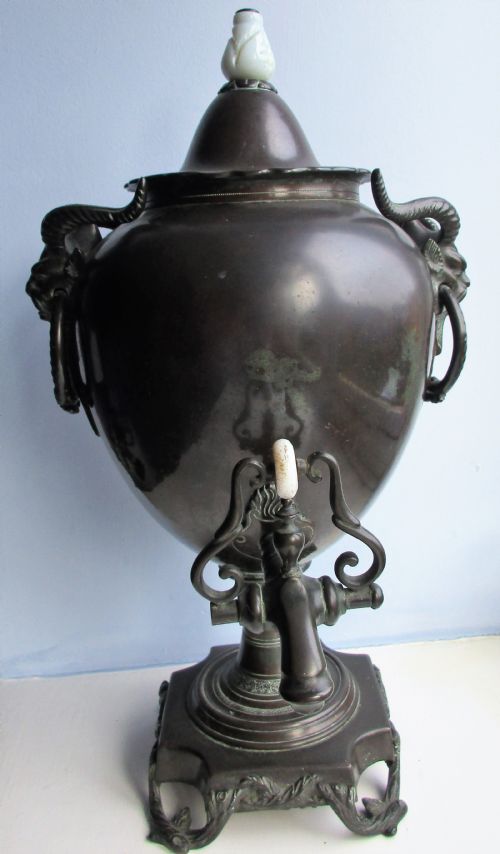


Copper Hot Water Urn
A copper hot water urn brings warmth and historic weight to a room, functioning as a commanding centrepiece of tea service.
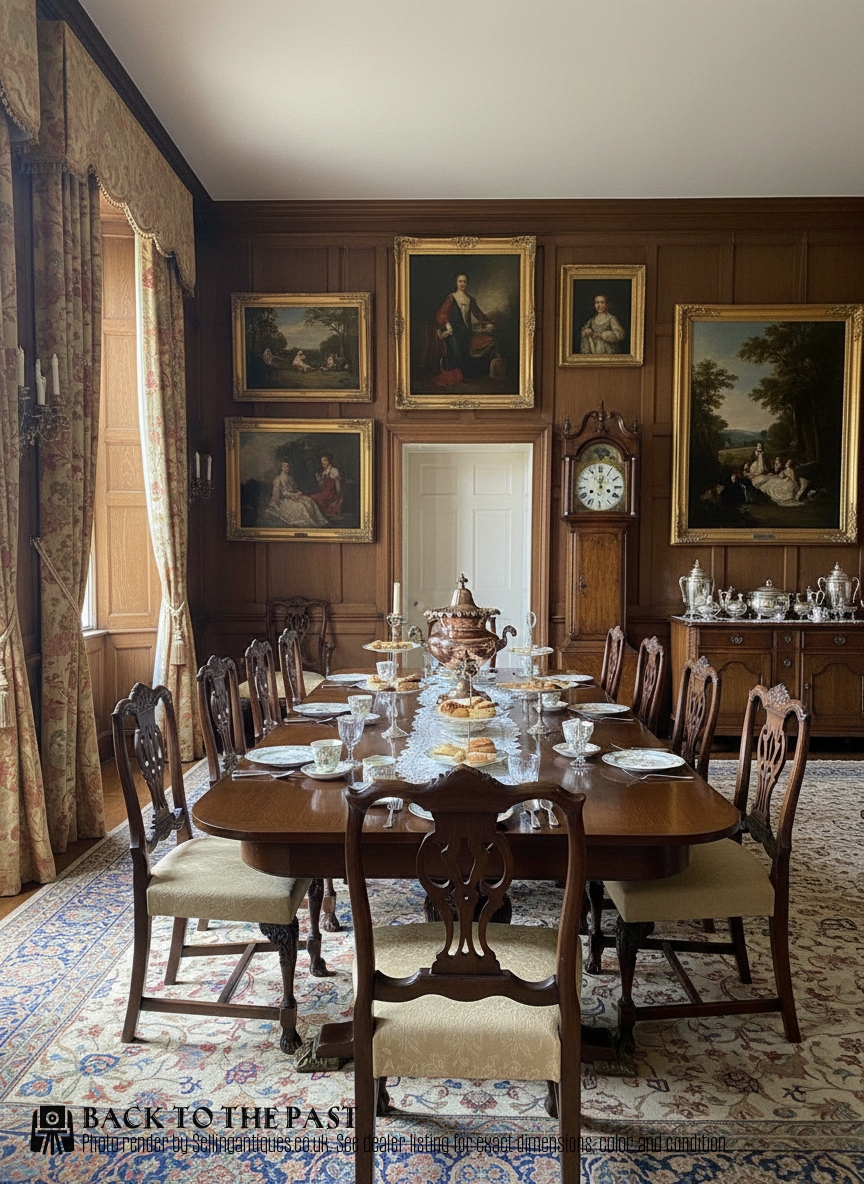
Copper Hot Water Urn
A copper hot water urn is a substantial vessel designed to supply hot water for tea, appearing across Georgian, Regency and Victorian periods.
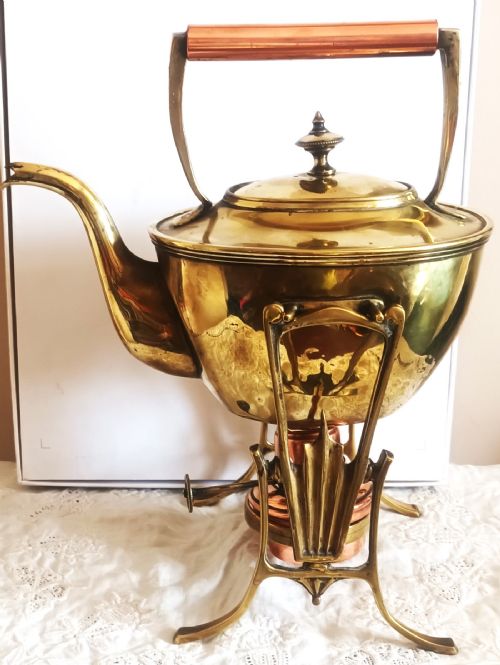
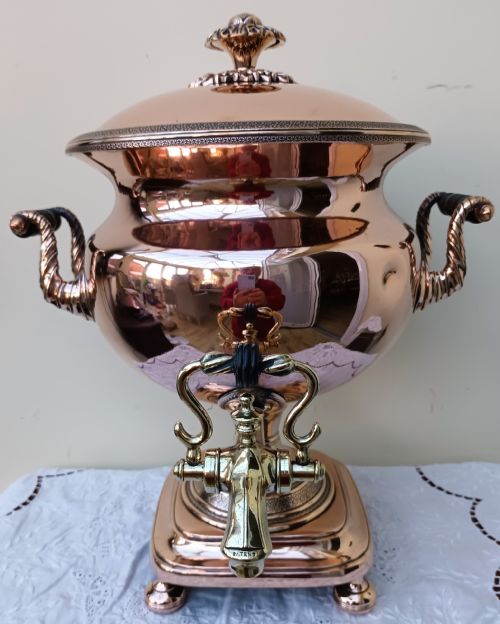
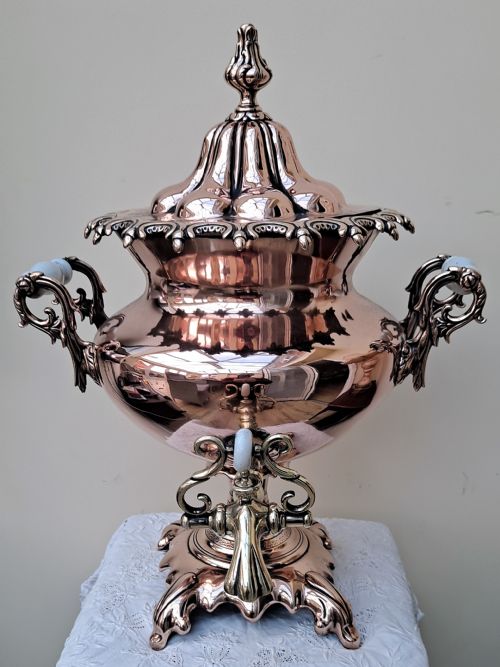
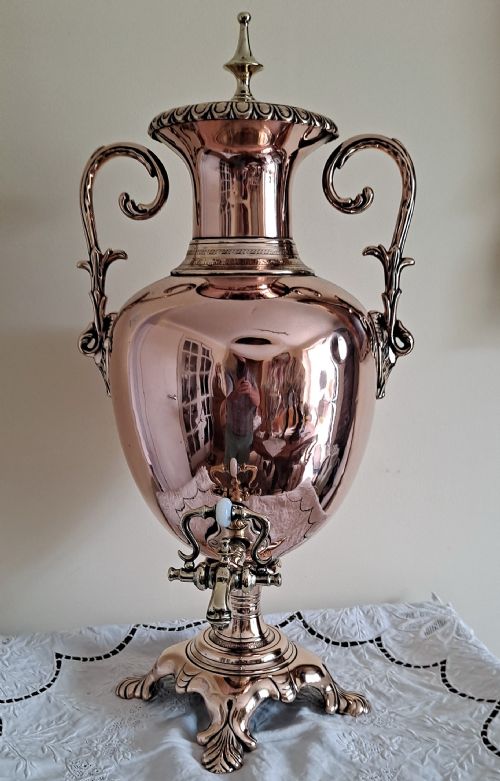
Most examples seen here take the form of samovars and tea urns, often paired with spirit kettles and stands.
Originating primarily from English workshops, these pieces combine utilitarian function with decorative metalwork suited to formal hospitality.
Materials and construction
Craftsmen built these vessels predominantly from sheet copper, often incorporating brass for taps, handles and mountings.
Secondary materials such as bone, wood, ceramic, ebonised wood and bronze appear on handles, finials and stands.
Specialised techniques include japanning, as seen in Pontypool ware, alongside patinated metal finishes and original cast fittings.
Copper Hot Water Urn Retail Price Guide 2026
Typical asking prices for copper hot water urn among the pieces listed under this phrase on Sellingantiques today, from the lower quarter to the upper quarter. They describe what is for sale here now, not the wider market.
Listings feature pieces from the Georgian, Regency and Victorian eras, utilising copper, brass, bronze, ceramic and ebonised wood.
Distinctions in execution
The degree of hand-finishing and ornamentation marks the difference between standard utility items and masterwork samovars.
The integrity of original fittings, including brass taps and turned wooden components, dictates historical completeness.
Proportion and decorative detailing, such as ornate casting and combined metal usage like bell metal, elevate specific examples.
William Soutter And Sons·Benetfink And Co
The Copper Hot Water Urn Glossary
- Samovar
- A heated metal urn traditionally used to boil and heat water for tea. These vessels typically feature an internal heating tube or a space for a hot iron core.
- Spirit kettle
- A kettle mounted on a metal stand with an integrated spirit burner underneath. It kept water hot at the tea table.
- Pontypool ware
- English japanned metalware produced in Pontypool, known for its durable lacquered finishes. It often resembles oriental lacquer work.
- Bell metal
- A hard alloy used for bells and metalware vessels. It consists of copper and tin, giving a resonant quality and distinct tone.
- Japanned
- A style of European decorative finishing that imitates Japanese lacquer. It involves layering resin-based coatings on metal or wood.
Copper Hot Water Urn: Frequently Asked Questions
How do I date a copper urn?
Dating relies on stylistic markers associated with Georgian, Regency and Victorian periods, alongside construction methods and maker marks where present. Form and decorative details shift visibly across these eras.
Examining the handles, tap design and secondary materials like bone or ebonised wood further helps place the vessel within a specific decade.
Were these urns used every day?
These vessels served a central role in formal domestic hospitality, providing constant hot water for tea during gatherings and meals.
Wealthy households utilised them in reception rooms and dining spaces as both practical appliances and displays of social status.
How should I clean a copper urn?
Maintenance involves preserving the historic surface rather than striving for a bright, modern shine. Gentle dusting and minimal intervention protect the aged patina.
Aggressive polishing removes the historical character built up over centuries, so gentle care is preferred by collectors.
What is the difference between an urn and a samovar?
While both heat and dispense water, a samovar typically incorporates an internal vertical tube for charcoal or a heating element. Standard tea urns often relied on external heat sources or held pre-heated water.
In marketplace descriptions, the terms frequently overlap to describe similar vessels from the eighteenth and nineteenth centuries.