
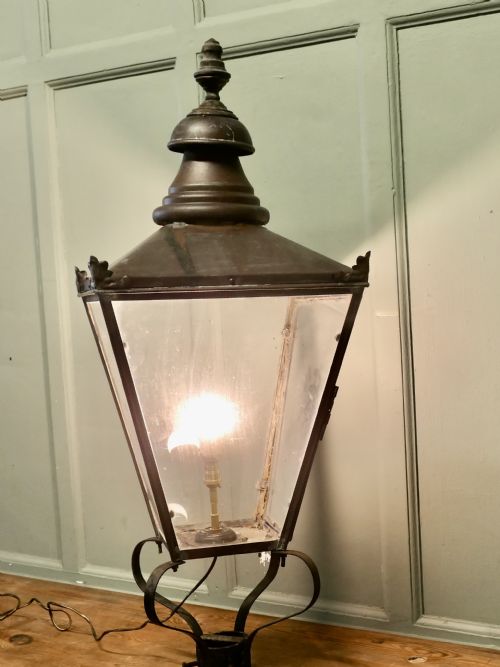
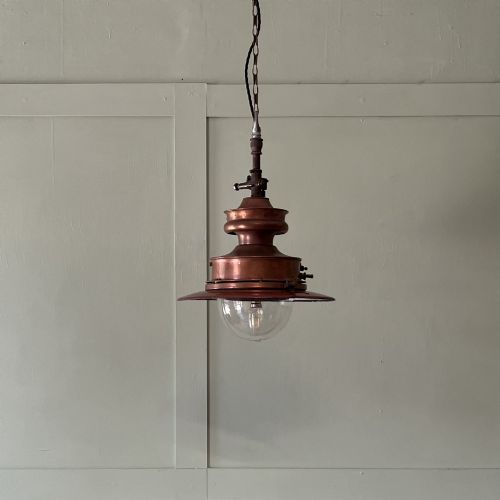
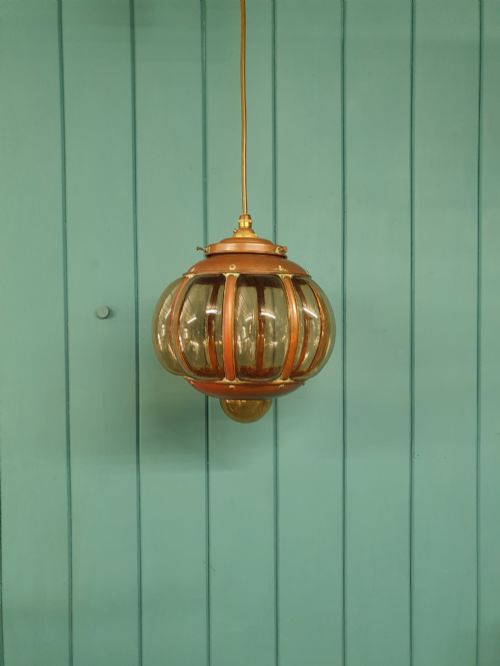


Copper Glass Lantern
A copper glass lantern brings warmth and character to an interior or entryway, combining robust metalwork with transparent or tinted panes.
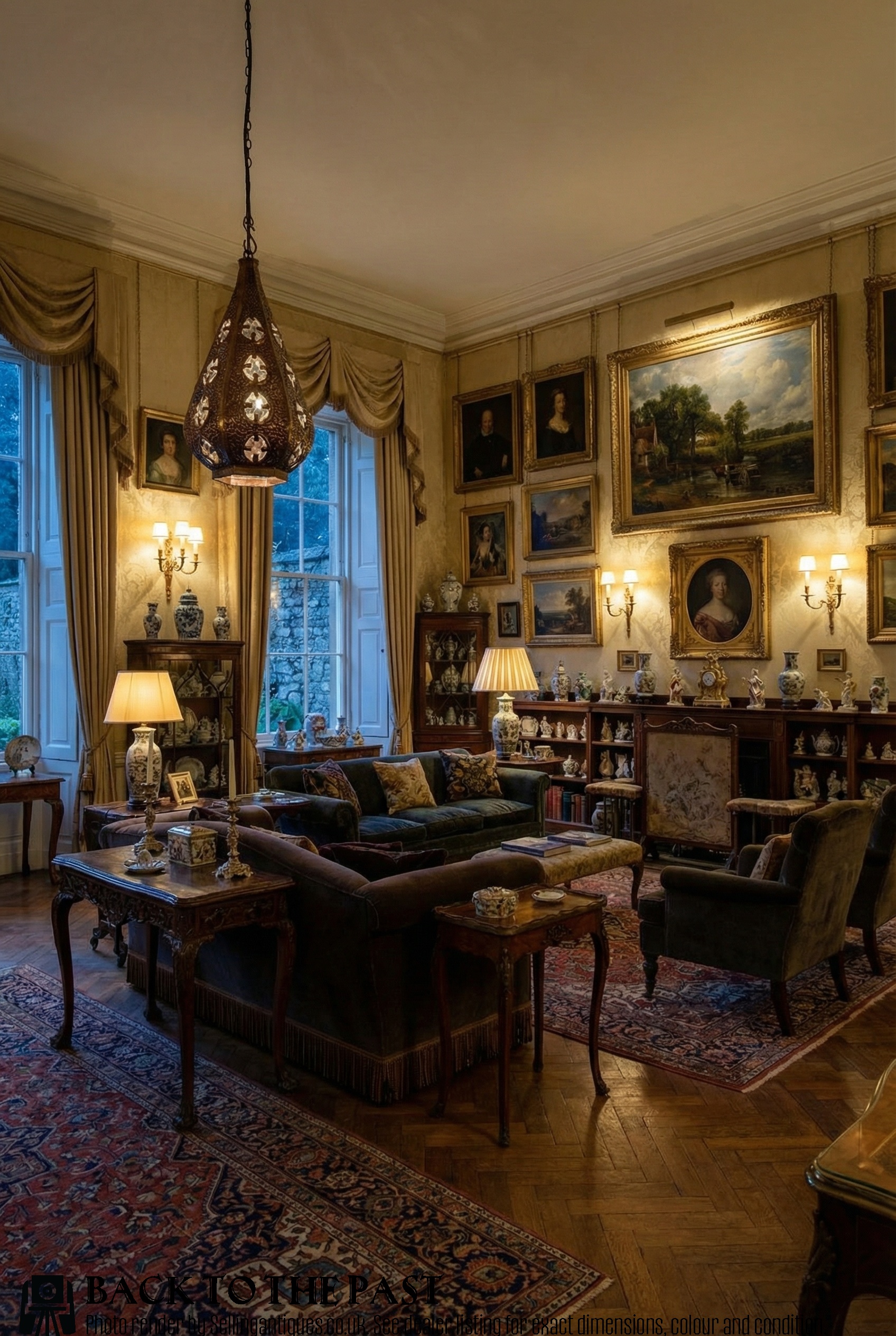
Copper Glass Lantern
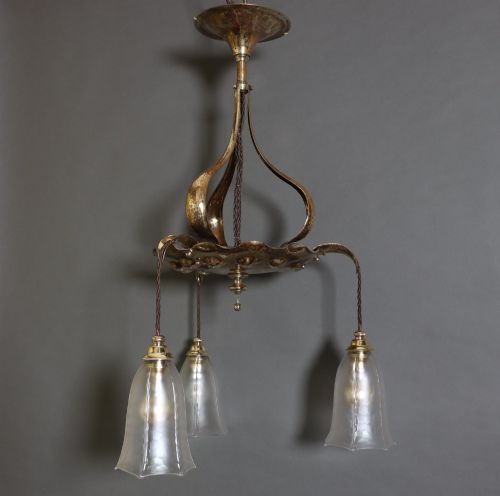
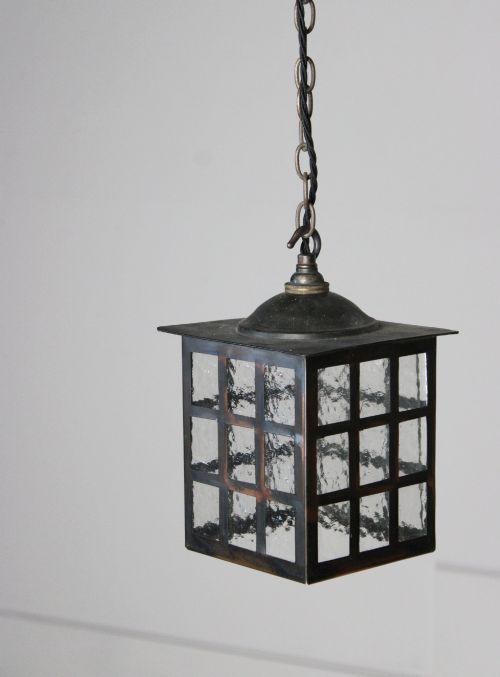
When you search for a copper glass lantern, you encounter functional lighting from the nineteenth century through the mid-twentieth century. The selection spans ceiling lights, pendant lights, wall lanterns, street lights, and hall lanterns originating from Victorian, Edwardian, Arts and Crafts, and later periods.
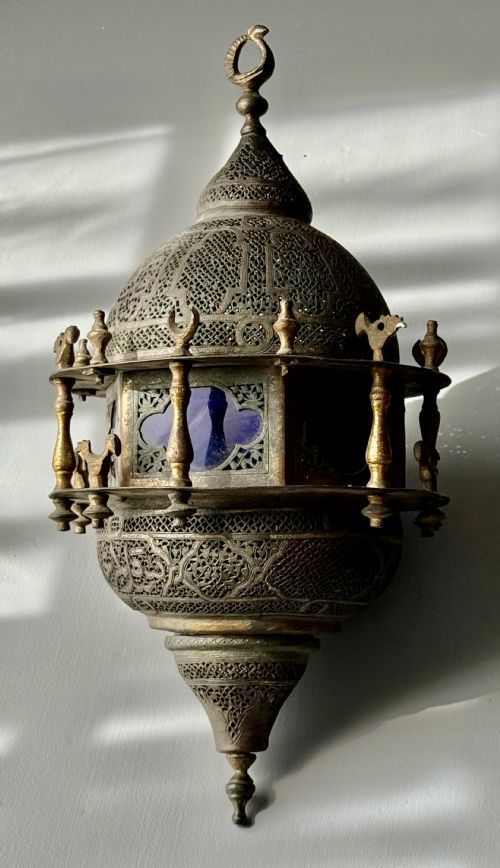
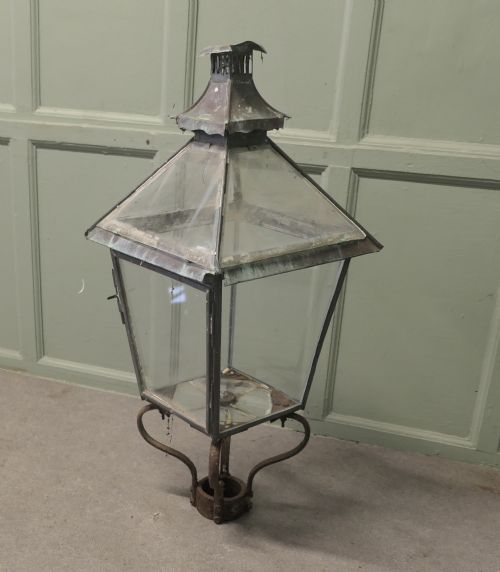
You are most likely to meet pieces designed for practical service, such as railway hanging lanterns, street lamps, and ships lanterns, alongside domestic hall lights. These fixtures draw on styles ranging from Victorian industrial and nautical to Moorish revival and French chateau.
The forms vary from large octagonal and rounded shapes to pierced hanging designs and half lanterns meant for wall mounting. Many pieces incorporate brass, iron, or steel elements alongside the primary copper structure.
Assessing quality in lanterns
Quality reveals itself in the weight and thickness of the copper sheet and the robustness of the structural frame. Finer pieces demonstrate careful hand assembly, substantial metal gauges, and integrated decorative elements like pierced metalwork or patinated surfaces.
The glass selection also distinguishes the range, with hand-blown, cranberry, vaseline, or leaded stained glass representing more ambitious workshops compared to standard clear panes. Original matching components and intact period fixings elevate a piece from utility to craftsmanship.
Materials appearing across the inventory include copper, brass, iron, steel, smoked glass, vaseline glass, and leaded stained glass.
The Copper Glass Lantern Glossary
- Pendant light
- A hanging light fixture suspended from the ceiling by a chain, cord, or rod. These units project illumination downwards into a space.
- Smoked glass
- Darkened or translucent glass created by adding smoke or specific minerals during production. It softens bulb glare and diffuses light evenly.
- Arts and Crafts
- A design movement prioritising traditional craftsmanship and visible construction. Pieces from this style often feature hand-worked copper and leaded glass.
- Half lantern
- A wall-mounted lighting fixture flattened on one side to sit flush against an exterior or interior surface. They are frequently used in pairs by doorways.
- Vaseline glass
- Pressed or blown glass containing uranium dioxide, which glows under ultraviolet light. It appears in yellow or greenish-yellow tones.
Copper Glass Lantern: Frequently Asked Questions
Where should I hang a copper glass lantern?
These lanterns suit entryways, hallways, porches, and high-ceilinged rooms where their scale and metalwork can act as a focal point. Pendant versions work well centered over tables or in stairwells.
Wall lanterns attach beside doors or along passages, providing practical illumination while bringing historical character to the threshold.
How do I date an antique lantern?
Dating relies on examining the metal fabrication methods, screw types, wiring channels, and glass characteristics. Victorian and nineteenth-century pieces often feature heavier cast elements and hand-riveted copper construction.
Later Edwardian and 1930s examples introduce different proportion styles and smoother industrial rolling techniques, while Arts and Crafts pieces display distinct hand-beaten surfaces.
Are these lanterns suitable for outdoor use?
Many surviving examples originated as street lights, gate post lights, or trade sign lights built to withstand the weather. Copper naturally develops a protective patina when exposed to the elements over time.
Checking the wiring and weather-sealing ensures safe exterior installation, though some fragile or indoor hall lanterns are better kept inside.
What is the difference between an industrial and an Arts and Crafts lantern?
Industrial lanterns focus on utility, utilising plain sheet copper, iron frames, and clear glass designed for railway, street, or maritime service. Their construction is straightforward and robust.
Arts and Crafts lanterns emphasise aesthetic design, featuring patinated copper, decorative metalwork, and specialised glass shades like cranberry or leaded stained panels.