






Coopered Wooden Peat Bucket
These coopered wooden peat bucket pieces are traditional fireside vessels designed to hold fuel, combining sturdy stave construction with decorative metal bands.
Coopered Wooden Peat Bucket
A coopered wooden peat bucket serves as a practical fireside container, historically utilised for holding fuel such as peat or logs. The items appearing here span periods from the Georgian era through to the Victorian and Edwardian times, showing considerable variety in form and regional origin.
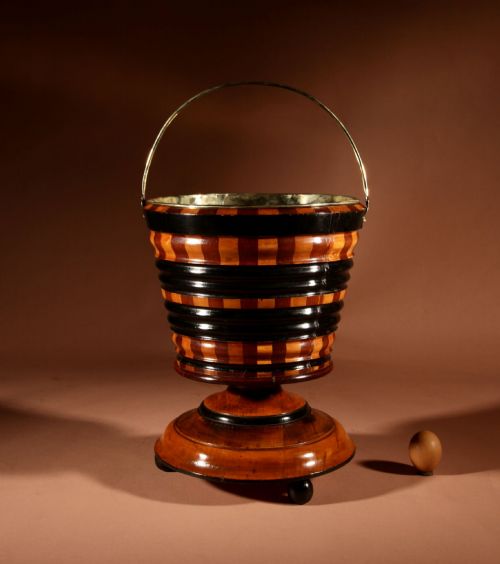
The selection includes Dutch traditional tea stoves, butter barrels, oyster buckets, and planters alongside classic British fireside accessories. These vessels often double as jardinières or wine coolers, reflecting how utilitarian objects adapted to decorative domestic roles.
How They Were Made
Maker construction relies on traditional coopering techniques, joining individual wooden staves together to form a watertight or sturdy cylindrical vessel. Craftsmen shape woods such as oak, mahogany, walnut, teak, and ebonised wood to build the structural body.
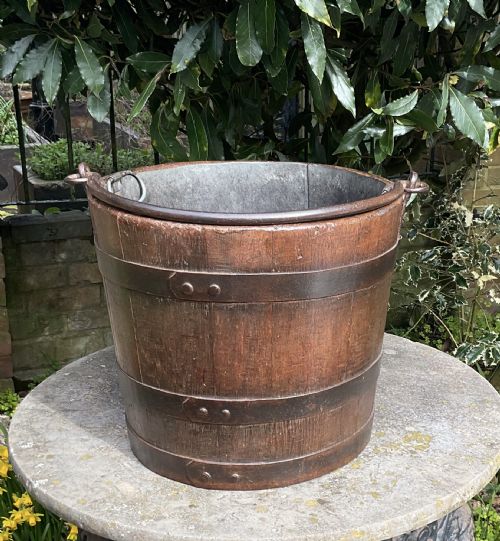
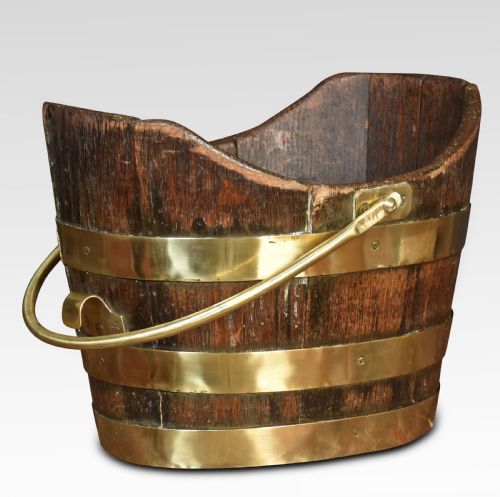
Metal components play a vital structural and decorative role, featuring heavy brass bands, iron hoops, and sometimes zinc linings to protect the wood from moisture. These metal bands are fitted tightly around the wooden staves to secure the barrel shape.
Object types recorded across the site include fireside accessories, butter barrels, oyster buckets, and tea stoves.
What Varies in Quality
Quality rests primarily on the calibre of the timber selection and the precision of the cooper's stave joints. Finer pieces demonstrate tight, seamless joinery and superior figure in woods like mahogany or walnut.
The integrity and craftsmanship of the metal fittings distinguish standard examples from finer items. Substantial brass work, original liners, and well-turned handles elevate the decorative presence of the vessel.
The Coopered Wooden Peat Bucket Glossary
- Coopered
- Constructed from wooden staves fitted together side by side and bound by hoops. This method forms cylindrical or tapered vessels traditionally used for liquids and dry goods.
- Teestoof
- A Dutch term for a foot stove or tea stove container. These items frequently double as small fireside buckets.
- Jardiniere
- An ornamental pot or stand for holding plants or flowers. Many peat buckets transitioned into this domestic role during the Victorian period.
- Stave
- One of the narrow vertical strips of wood that form the sides of a barrel or bucket. The precise shaping of each stave determines the overall profile of the vessel.
- Ebonised
- Wood treated with a finish to imitate ebony. This dark staining technique appears on selected period decorative pieces.
Coopered Wooden Peat Bucket: Frequently Asked Questions
What were coopered wooden peat buckets used for?
These vessels originally served to store and transport peat or other solid fuel near the domestic hearth. Their robust construction allowed them to handle heavy loads of fuel safely.
Over time, many of these containers transitioned into decorative domestic roles. Owners repurposed them as planters, jardinières, or wine coolers within period interiors.
How do I identify a Georgian peat bucket?
Georgian examples typically display formal proportions, refined timber choices such as mahogany or walnut, and classic brass binding. Their design reflects the restrained elegance characteristic of eighteenth-century cabinet making.
Makers from this period focused on clean lines and superior joinery. Surviving pieces often exhibit patination that develops over centuries of handling.
What is a Dutch tea stove bucket?
A Dutch tea stove bucket, or teestoof, is a specialised vessel originating from the Netherlands. These pieces were historically associated with heating devices used in Dutch domestic life.
They frequently feature distinctive brass mountings and turned woodwork. Today, collectors value them for their unusual form and decorative versatility.
Can I use these buckets as planters?
Many of these vessels function successfully as planters or jardinières in modern interiors. Examples fitted with original zinc or metal liners are particularly well-suited for holding potted plants.
Care should be taken to protect antique wood from excess moisture if a liner is absent. Regular maintenance preserves both the timber and the metal hoops.