
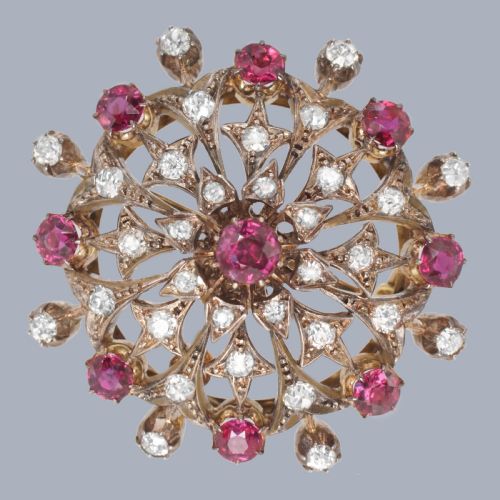


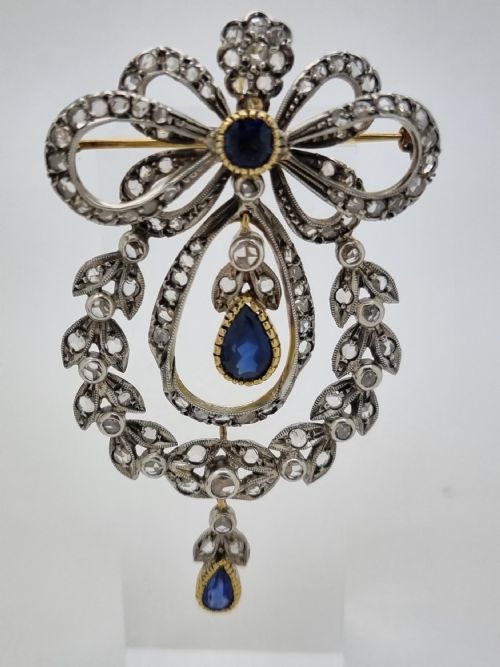
Conversion Pendant Brooch
A conversion pendant brooch bridges two eras of jewellery, offering a dual-purpose piece that wears securely on a lapel or suspends gracefully from a chain.
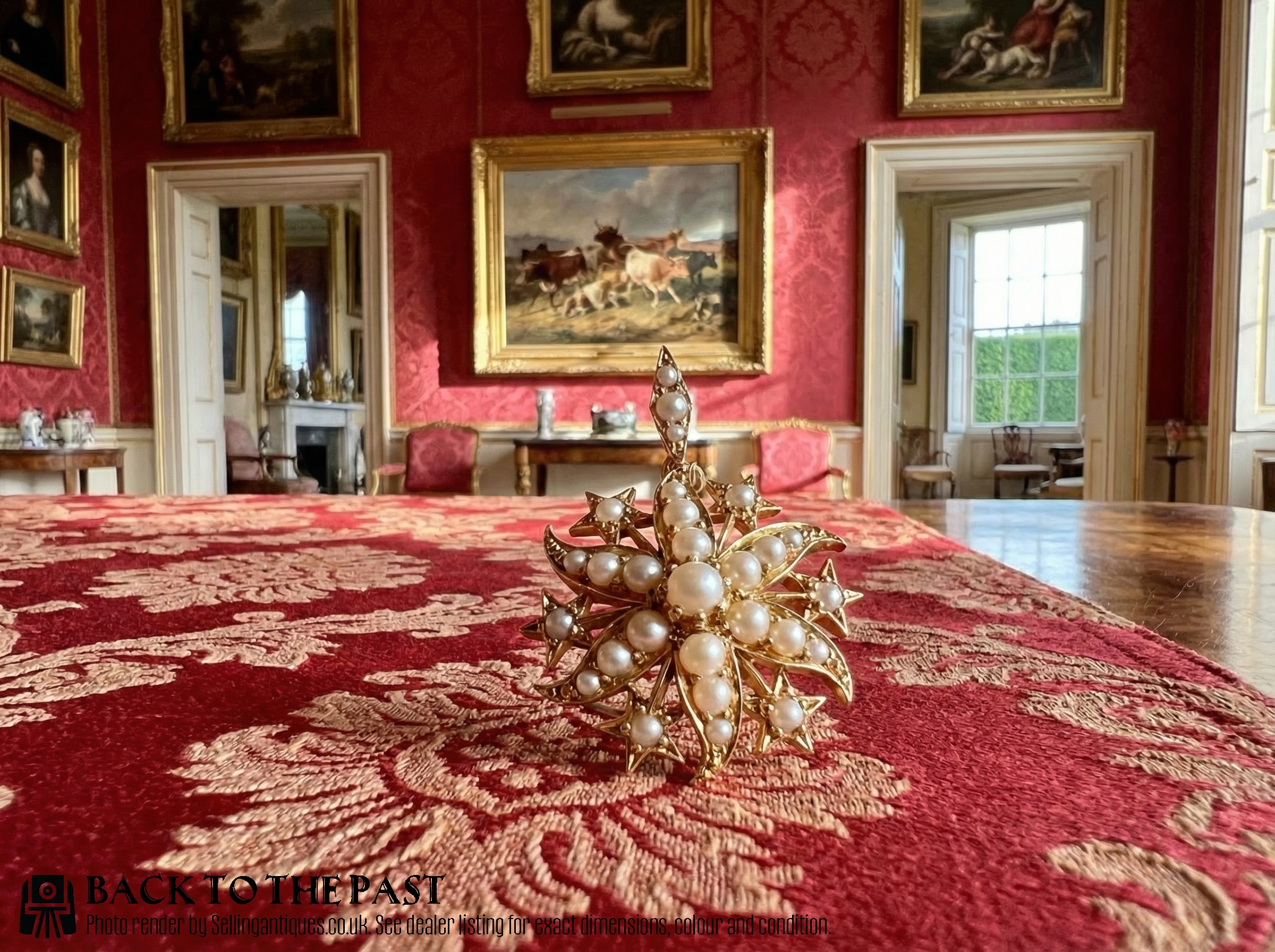
Conversion Pendant Brooch
A conversion pendant brooch is a versatile item of antique jewellery engineered to function both as a breast ornament and a neck pendant. These pieces bridge the late nineteenth century and the early twentieth century, spanning Victorian, Edwardian, and Art Deco periods.
The form most frequently met on this page combines a secure hinged pin and safety catch with a discreet folding loop or fixed bail at the reverse. Such dual functionality allowed the original owner to adapt a single precious jewel for day wear or evening display.
Makers from the 1880s onward utilised multi-faceted settings to accommodate chains and ribbons alongside traditional pin stems. This structural flexibility defines the conversion pendant brooch across styles from Renaissance Revival motifs to delicate sunburst designs.
Materials and construction methods
Goldsmiths constructed these convertible jewels using 9ct, 14ct, 15ct, and 18ct yellow gold, alongside silver-gilt and silver mountings designed to reflect the brilliance of diamonds. Natural gemstones such as rubies, sapphires, peridots, and pearls form the visual centrepieces.
Techniques relied upon hand-setting precious stones into closed or open-backed metal housings, often enriched with red guilloche enamel or intricate chased acanthus leaf motifs. Mechanics required robust hidden hinges and sliding bails that endured repeated alterations without straining the primary design.
Listings feature pieces spanning the late nineteenth century through to the 1930s, utilising gold, silver, diamonds, rubies, sapphires, and enamel.
Markers of distinction and craftsmanship
Quality rests upon the seamless integration of the conversion mechanism, where folding bails and pin assemblies operate smoothly without disrupting the symmetry of the front design. Superior examples conceal their dual nature entirely when viewed from the front.
The selection and matching of gemstones, from untreated rubies to calibrated sapphires and pearls, determine the calibre of the piece. Master goldsmiths ensured that the weight distribution remained balanced whether the object hung vertically from a chain or rested horizontally as a brooch.
The Conversion Pendant Brooch Glossary
- Bail
- The loop on top of a pendant that holds the chain or ribbon. It often folds down flush against the reverse when the piece is worn as a brooch.
- Guilloche
- An ornamental pattern engraved into metal by an engine-turning machine before translucent enamel is applied over the top. This technique creates a repeating geometric wave under the coloured glass.
- Sunburst
- A radial design motif radiating outwards from a central gemstone, highly popular during the late Victorian and Edwardian eras. It mimics the rays of the sun using diamonds, pearls, or gold spikes.
- Silver-gilt
- Silver that has been coated with a thin layer of gold, often used in nineteenth-century mounting to combine the bright white reflection behind diamonds with a warm golden tone against the skin.
Conversion Pendant Brooch: Frequently Asked Questions
How do I wear a conversion pendant brooch?
You can attach the piece to a lapel or fastening using the integrated pin stem, or thread a fine chain through the folding bail at the back to wear it around the neck.
Most pieces are designed to transition between these two states instantly, allowing you to adapt the jewel to different necklines and outfits throughout the day.
Are these pieces original or later conversions?
Many items were manufactured with dual functionality built into their original design from the late nineteenth and early twentieth centuries, rather than being altered from brooches into pendants at a later date.
Examining the original hinges, bails, and metalwork provides clear evidence of the maker's initial structural intentions.
How should I care for antique enamel and gold?
Enamel requires careful handling because it can chip or crack if struck hard against a hard surface, so you should store each piece in a padded box away from other jewellery.
Clean the metal and gemstones using a soft brush and warm soapy water, avoiding harsh chemical dips that might damage fragile pearls or delicate enamel work.
What periods do these pieces represent?
The selection spans from the late Victorian era of the 1880s and 1890s through Edwardian designs up to the 1930s, encompassing Renaissance Revival and Art Deco influences.
Each period brings distinct material combinations, such as bright silver-topped gold for diamonds in the nineteenth century and lighter yellow gold or platinum-faced mountings later on.