


Antique Gold Star Pendant
An antique gold star pendant brings celestial motifs and old cut stones together in wearable Victorian and Edwardian craftsmanship.
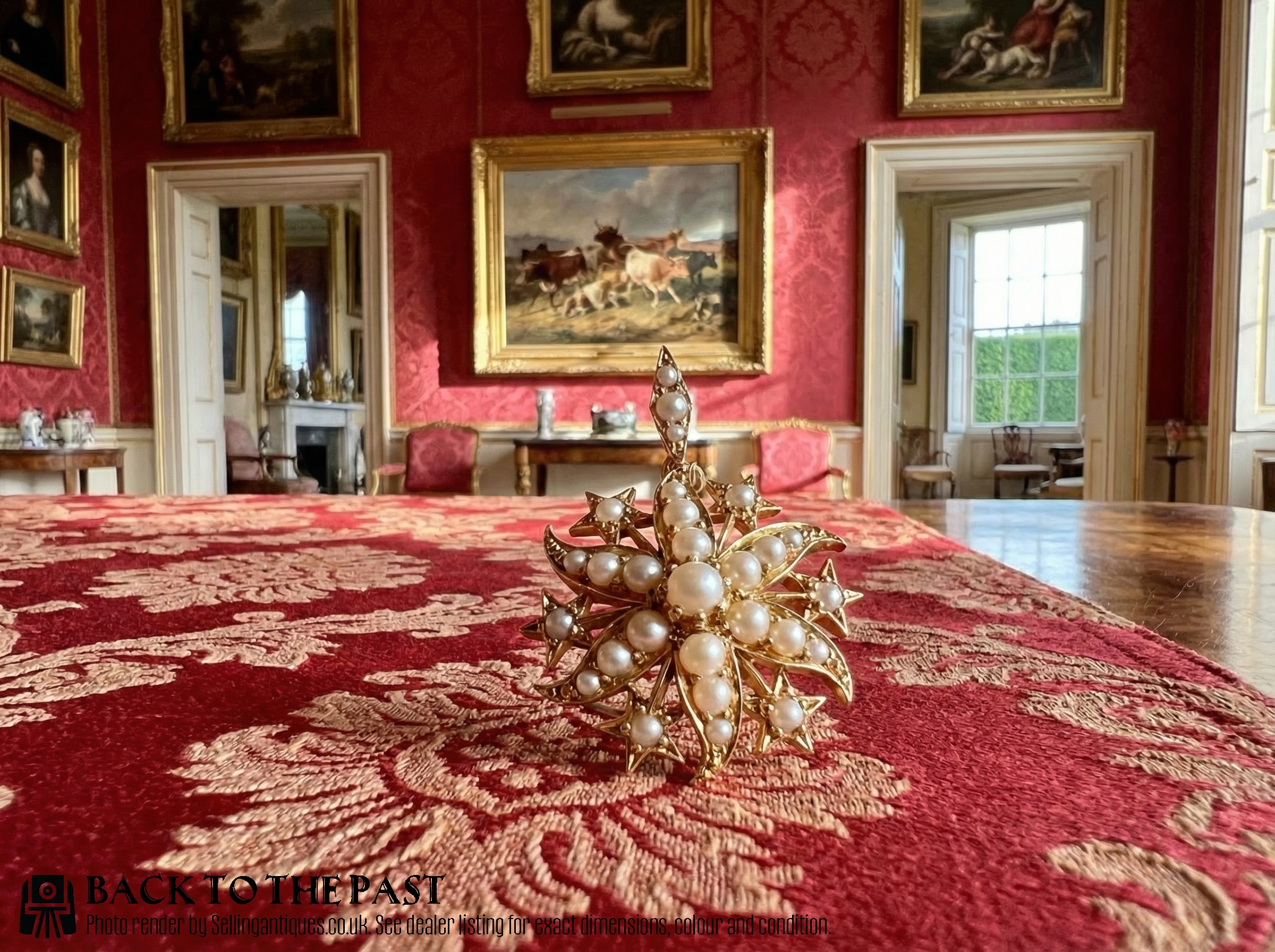
Antique Gold Star Pendant
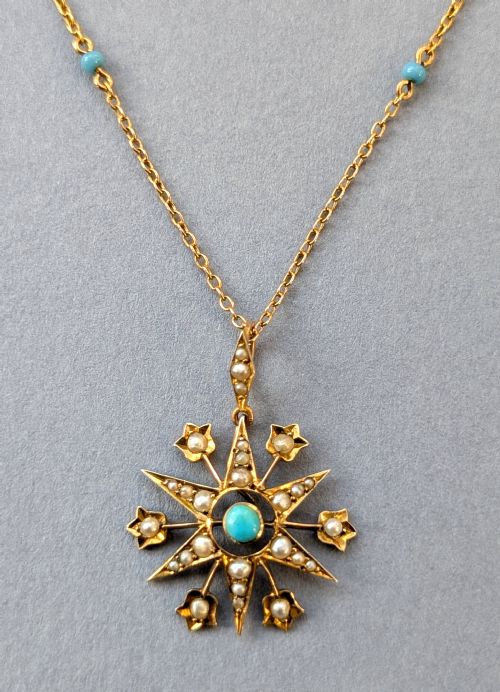
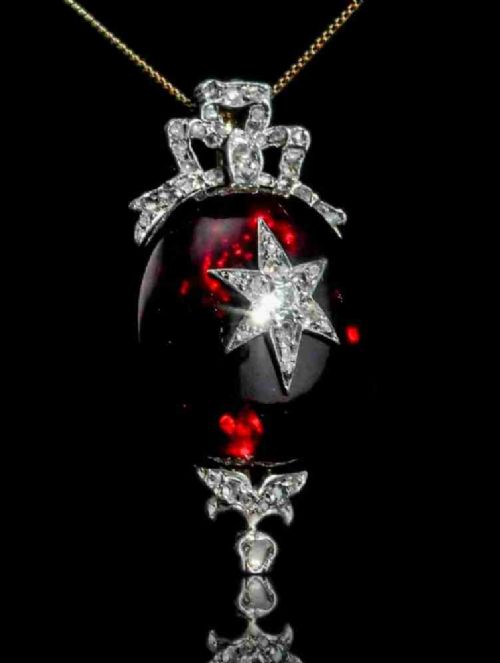
An antique gold star pendant is a piece of historical jewellery shaped around celestial motifs, ranging from simple turquoise clusters to elaborate diamond starbursts. Buyers searching for an antique gold star pendant will find that Victorian and Edwardian examples dominate the selection, often taking the dual form of a pendant and brooch combination.
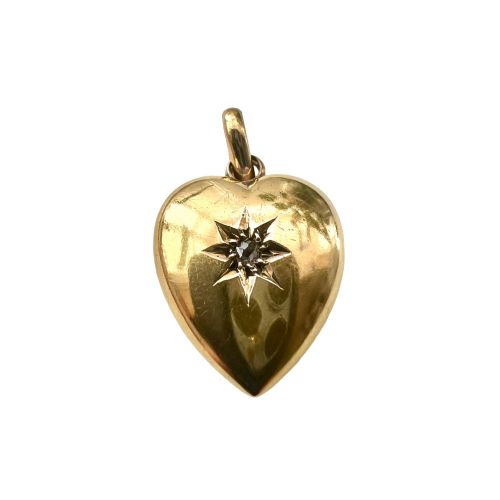
The materials span low and high carat gold, including nine carat, fifteen carat, and eighteen carat variations alongside silver settings for stones. Alongside stars, related forms on this page include lockets, heart pendants, and garnet fringe necklaces that share the same late nineteenth and early twentieth century origins.
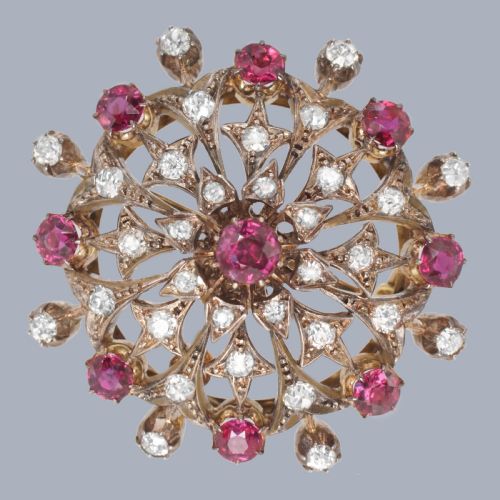
Many of these items incorporate pearls, seed pearls, and turquoise alongside diamonds and rubies, set within yellow or rose gold frames. The celestial theme extends to zodiac charms and sunburst designs dating from the nineteenth century through the mid-twentieth century.
How They Were Made
Goldsmiths constructed these pieces using yellow and rose gold in nine, fifteen, and eighteen carat purities, frequently pairing the gold with silver settings on the face to brighten diamond settings. Stones including diamonds, rubies, garnets, sapphires, peridots, and opals were hand-set alongside seed pearls and turquoise cabochons.
Techniques included open and closed back settings, intricate wirework for floral and foliate motifs, and enamelling in blue or red applied to gold bases. Many star pendants were built with convertible fittings, allowing a single item to function interchangeably as a brooch or a pendant.
What Varies in Quality
Quality in these items rests on the precision of the stone setting, the weight and purity of the gold, and the preservation of delicate seed pearl or enamel work. Finer examples display symmetrical ray configurations, secure claw or collet settings, and well-matched natural stones without visible replacement elements.
The complexity of the conversion mechanism for dual pendant and brooch pieces also distinguishes finer workshops from standard production. Superior items retain their original boxes, clear hallmarks, and undamaged enamel or shagreen details that indicate careful preservation.
Perroud·Becker·Hirsch and Oppenheimer
The Antique Gold Star Pendant Glossary
- Cabochon
- A gemstone shaped and polished with a smooth, rounded convex surface rather than faceted. This style highlights the natural colour and lustre of stones like garnet, turquoise, and opal.
- Seed pearl
- A very small natural pearl, often drilled and threaded onto silk or wire, frequently utilised in clusters and floral star motifs during the Victorian and Edwardian eras.
- Collet setting
- A low collar of metal that encircles the edge of a gemstone to hold it securely in place. This method was widely utilised before the adoption of modern prong settings.
- Old cut
- A term for diamond cutting styles predating the modern brilliant cut, characterised by a smaller table, higher crown, and open culet. These stones exhibit distinctive soft light dispersion under candlelight.
- Convertible
- A piece of jewellery designed with hidden bails, fold-down loops, or detachable pin stems so it can be worn as either a brooch or a necklace pendant.
Antique Gold Star Pendant: Frequently Asked Questions
How do I wear a convertible star pendant?
Many Victorian and Edwardian pieces feature a fold-down loop or a detachable brooch pin on the reverse side. This allows the item to transition from a lapel brooch to a necklace pendant.
Securing the piece to a chain involves passing it through the integrated bail while ensuring the pin mechanism remains safely tucked away behind the frame.
What gold purity should I expect?
These items appear in a range of gold standards, most commonly nine carat, fifteen carat, and eighteen carat yellow or rose gold. High carat options reflect the traditional standards of the nineteenth century.
Silver was also frequently used on the top face of the gold structure to enhance the brilliance of mounted diamonds.
Are the pearls natural or cultured?
Pearls found in these nineteenth and early twentieth century pieces are natural saltwater or freshwater pearls predating widespread cultured pearl production. Seed pearls and larger pearls were threaded or pegged into gold star and floral arrangements.
Care should be taken with moisture and chemicals to preserve their original lustre.
How can I date a star pendant?
Dating relies on hallmarks, metal purities, stone-setting styles, and overall design characteristics like Victorian garnet fringe or Edwardian seed pearl work. Pieces marked with specific decades or assayed years provide a precise timeline.
Stylistic cues such as French zodiac themes or Victorian mourning motifs also help place the item within a specific period.