




Continental Porcelain Group
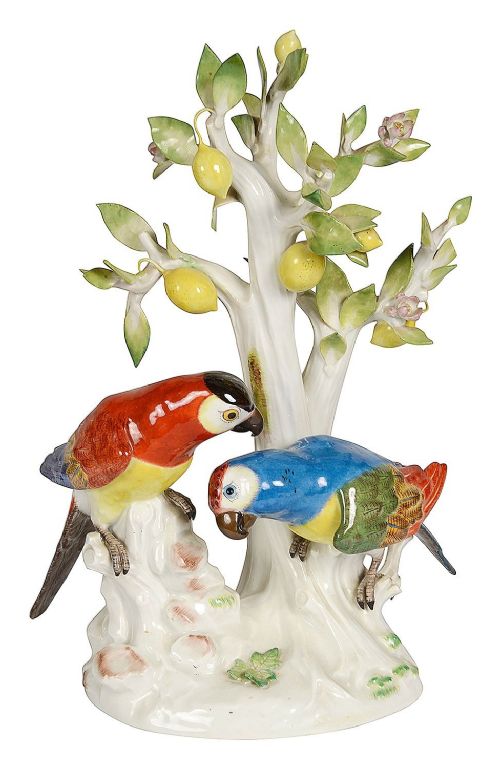
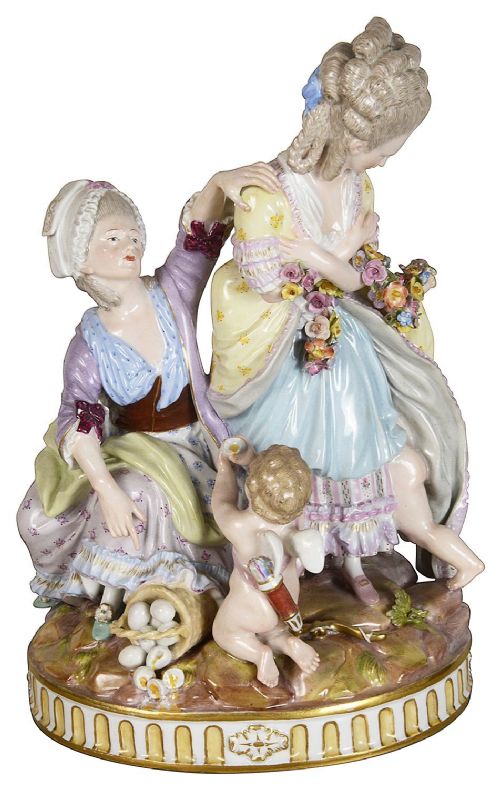
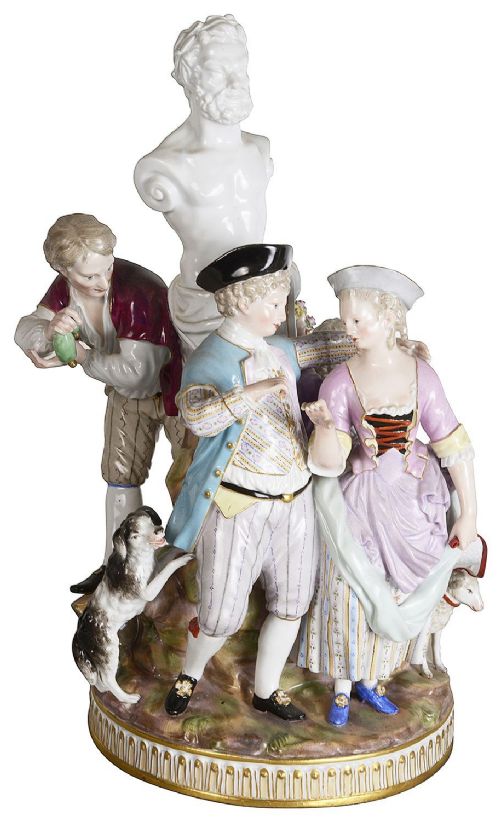
These continental porcelain group pieces bring figurative elegance to a room, offering sculpted porcelain forms that collectors prize for their intricate detail.
Continental Porcelain Group
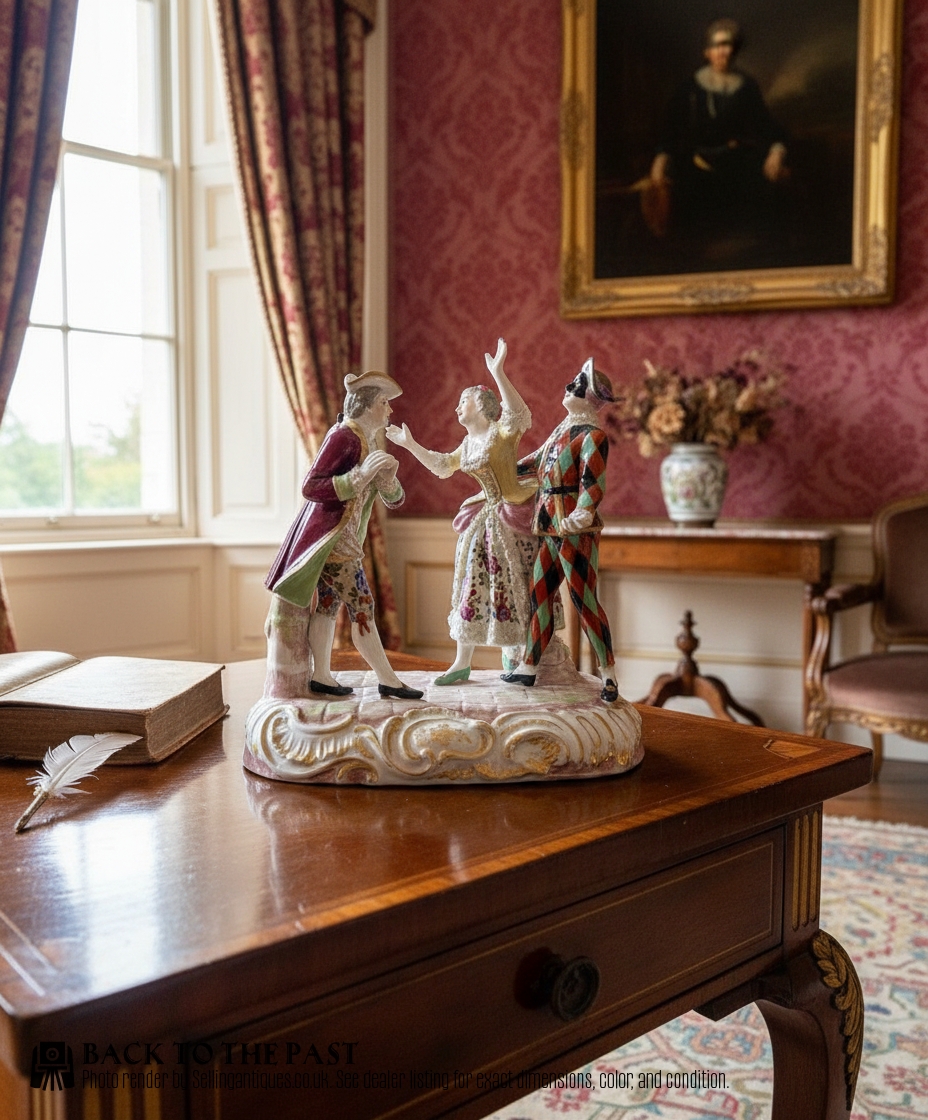
A continental porcelain group brings together multi-figure scenes, pairs and figural compositions rendered in hard-paste porcelain. When collectors search for a continental porcelain group, they find figurative works ranging from pastoral pairs to classical figures and children in gardens.
The pieces on this page span the eighteenth, nineteenth and early twentieth centuries, drawing on German, French and wider continental traditions. Buyers frequently encounter eighteenth-century models alongside nineteenth-century revivals and later Victorian interpretations.
Forms extend from figural salt and pepper holders and sedan chair scenes to centrepiece bowls and substantial sculptural groups. Maker traditions reflected here include Meissen, Samson Paris, Niderviller, Volkstedt and Ludwigsburg alongside unmarked Victorian pieces.
How they were made
Manufacturers shaped hard-paste porcelain in moulds before firing the body at high temperatures to achieve a dense, vitrified ceramic. Artisans then applied polychrome enamel painting by hand, often accentuating garments and architectural elements with gold leaf and gilding.
Certain pieces utilise bisque porcelain, leaving the fired body unglazed to highlight the crisp modelling of skin and drapery in the manner of marble sculpture. Other works combine glazed hard-paste porcelain with detailed hand-painting and gilt highlights to define facial expressions and foliage.
Object forms recorded on this page include porcelain figurines, figural groups, salt and pepper holders, sedan chair figures and centrepiece bowls.
What varies in quality
The application of enamel and gilding distinguishes master workshops from secondary productions, with superior pieces showing layered pigments and precisely placed gold leaf. Early eighteenth-century productions and skilled nineteenth-century revivals command attention for their sculptural depth and chromatic control.
Meissen·Samson Paris·Niderviller·Volkstedt·Ludwigsburg·Eugene Clauss
The Continental Porcelain Group Glossary
- Hard-paste porcelain
- A true porcelain composed of kaolin and petuntse, fired at very high temperatures to create a hard, impermeable white body. This material allows for sharp modelling and accepts high-temperature enamel colours.
- Bisque porcelain
- Unglazed porcelain fired once to create a matte, porous surface resembling white marble. It was widely utilised for figural groups to accentuate fine sculptural detail without surface gloss.
- Gilding
- The application of gold leaf or powdered gold to porcelain surfaces, often used to highlight borders, bases and decorative motifs. High-quality gilding is frequently burnished to create a subtle shine.
- Rococo Revival
- A nineteenth-century design style drawing inspiration from eighteenth-century rococo forms, characterised by asymmetrical scrollwork, C-scrolls and naturalistic floral motifs.
Continental Porcelain Group: Frequently Asked Questions
How do I identify eighteenth century pieces?
Eighteenth-century examples typically display lighter paste bodies, hand-modelled details and specific period palettes associated with factories like Meissen or Ludwigsburg.
Markings, where present, offer further guidance, though many genuine early pieces rely on stylistic indicators and sculptural quality for attribution.
How were these figure groups used historically?
These pieces served primarily as decorative ornaments for dining tables, mantelpieces and drawing room cabinets during the eighteenth and nineteenth centuries.
Certain forms also fulfilled specific domestic functions, such as salt and pepper holders or centrepiece bowls designed to impress dinner guests.
How do I care for antique porcelain?
Antique porcelain requires gentle handling away from direct sunlight and abrupt temperature changes to protect the delicate enamel and gilding.
Dusting with a soft, dry brush is generally sufficient for maintenance, avoiding harsh cleaning agents that can damage the surface.