
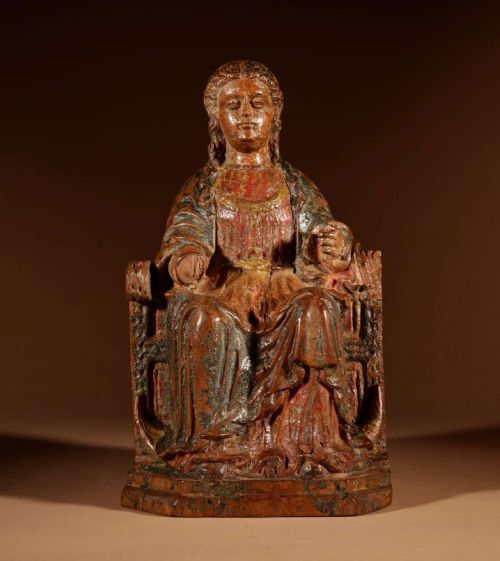
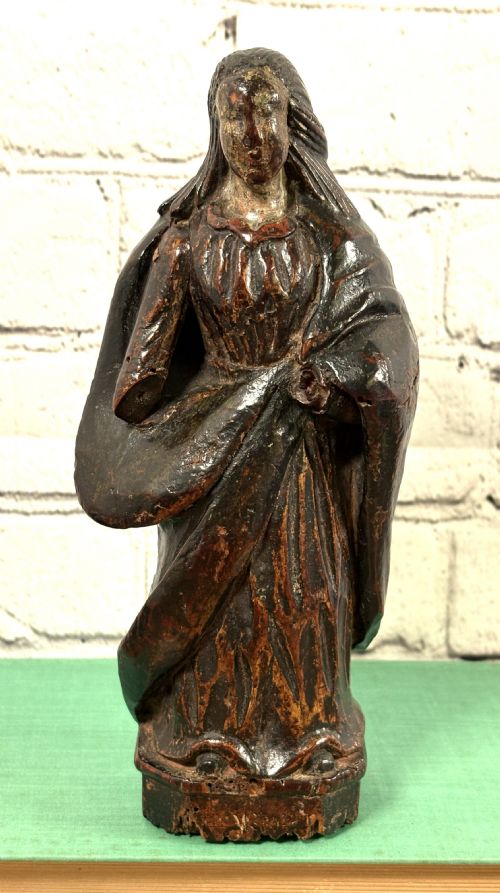


Continental Gothic Statue
A continental gothic statue brings centuries of devotion into a room, carved in dense timber and painted with traditional pigments.
Continental Gothic Statue
A continental gothic statue is a carved wooden figure representing saints, the Madonna, or biblical scenes created across European workshops. When you search for continental gothic statue, you encounter sacred sculptures carved from timbers like oak, limewood, and walnut.
The pieces on this page span from pre-sixteenth century medieval works to nineteenth-century Gothic Revival interpretations. You will find seated Madonnas, figures of Christ, and various saints shaped for ecclesiastical and domestic devotion.
How they were made
Carvers shaped these figures primarily from solid blocks of hardwood such as oak, walnut, and limewood using gouges and chisels. The grain of the wood dictated the depth of the drapery folds and the expression on each face.
Many surfaces received a layer of gesso before painters applied polychrome pigments and gilt details. This combination of carved wood and surface paint created lifelike devotional objects for churches and private chapels.
Listings feature woods such as oak, walnut, limewood, and pine, alongside gesso and polychrome paint across several centuries.
What varies in quality
The survival of original polychrome paint and gesso elevates a piece significantly. Retained pigment and gilding show the intended visual impact, whereas stripped or heavily repainted surfaces alter the historical character.
The Continental Gothic Statue Glossary
- Polychrome
- Painted in several colours. This surface treatment was applied over gesso to bring realism to wooden religious figures.
- Gesso
- A plaster mix applied to wood as a smooth base for paint and gilding. It seals the timber and provides a bright ground for pigments.
- Limewood
- A fine-grained timber favoured by European carvers for detailed work. It resists splitting and allows for crisp undercuts in drapery.
- Giltwood
- Wood that has been decorated with gold leaf. This technique highlighted halos and vestments on sacred statues.
- Anna Selbdritt
- An iconographic grouping showing Saint Anne, the Virgin Mary, and the infant Jesus together. These devotional sculptures date from the late medieval period onwards.
Continental Gothic Statue: Frequently Asked Questions
Where were these statues originally placed?
These figures stood in churches, monastic chapels, and private domestic shrines for prayer and contemplation. Many formed parts of larger altarpieces or architectural niches.
Smaller examples served personal devotion in homes or travelled with itinerant clerics.
How do I care for wooden statues?
Keep wooden and polychrome sculptures away from direct sunlight and sudden temperature shifts. Stable indoor humidity prevents the timber from splitting.
Dust gently with a dry, soft brush and avoid using liquid cleaners on painted or gilded surfaces.
How can I tell the period?
Examine the tool marks, wood selection, and style of the drapery folds. Earlier pieces often display deeper, heavier carving with traces of medieval or renaissance dress.
Nineteenth-century revival pieces tend to use standardised proportions and cleaner joins compared to older work.
Did these statues have paint originally?
Most continental religious figures were painted and gilded when new to enhance their lifelike appearance. Pigments over gesso brought robes and faces to life in dimly lit churches.
Over the centuries, some pieces lost their paint through wear or stripping, leaving bare wood.