
Continental Commode Chest
A continental commode chest is a low storage unit carrying distinct regional lines, chosen to anchor a formal room with substantial weight and presence.
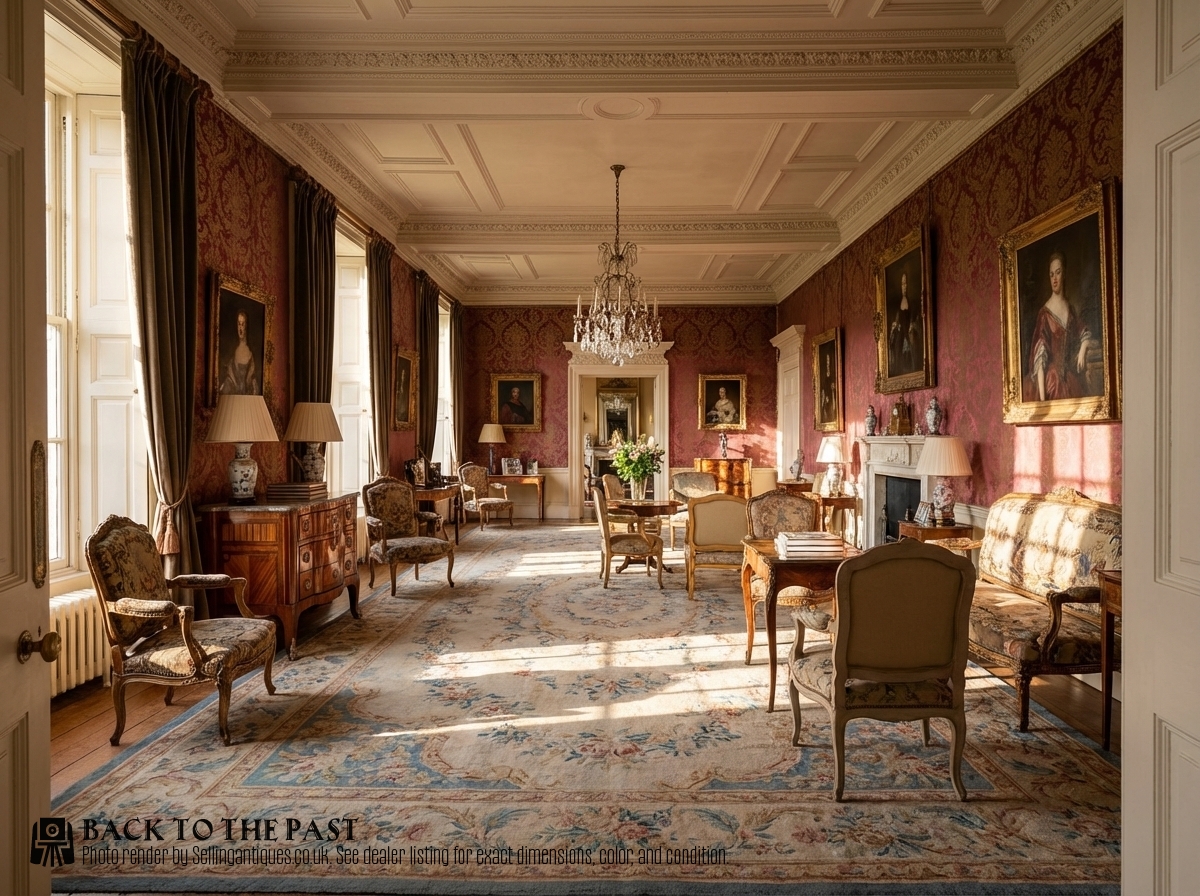
Continental Commode Chest
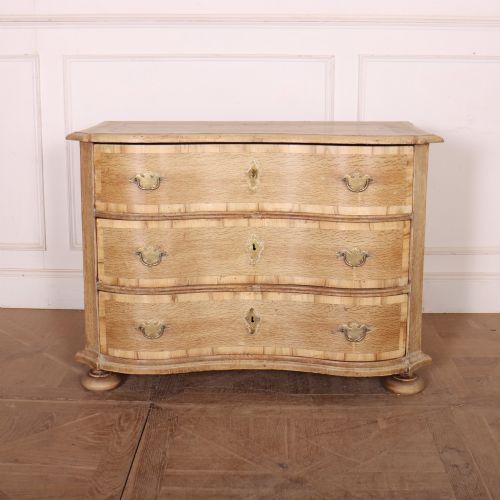
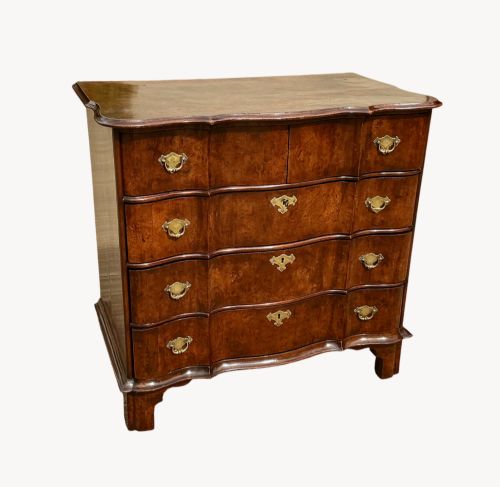
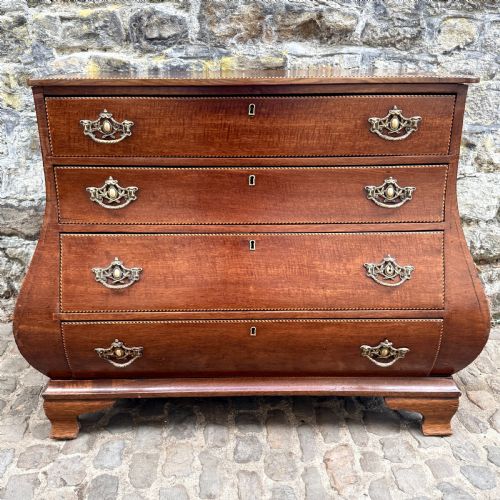
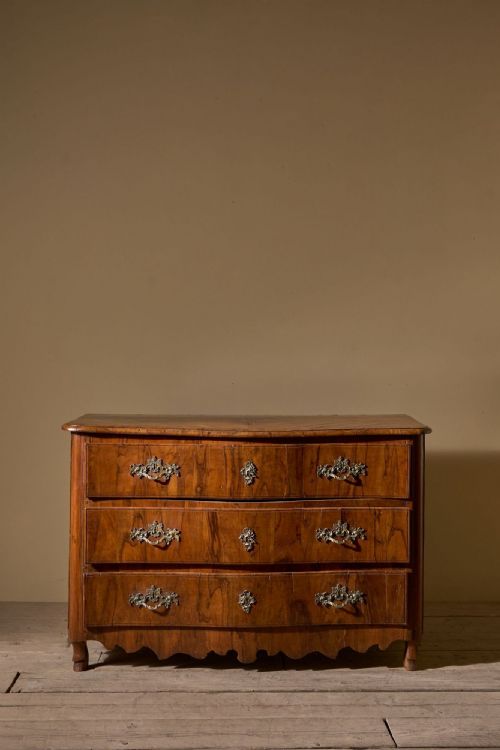
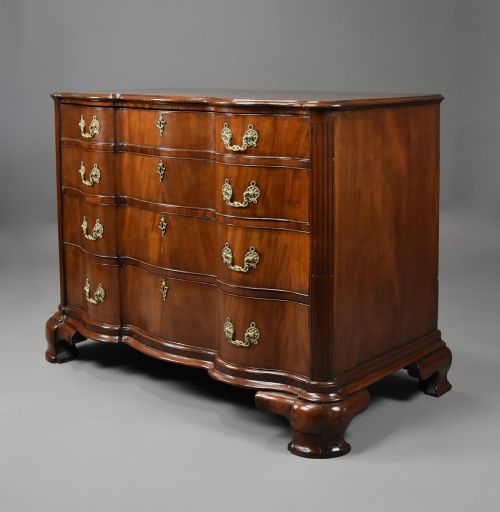
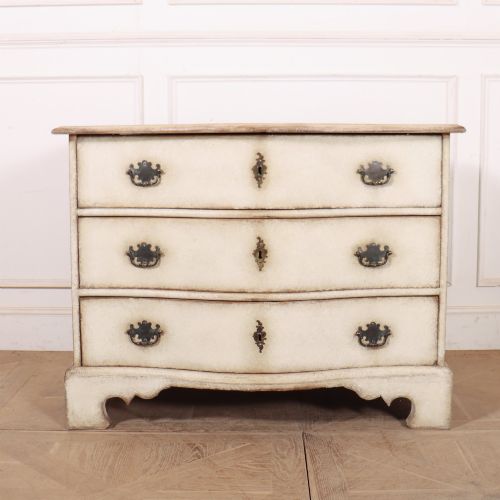
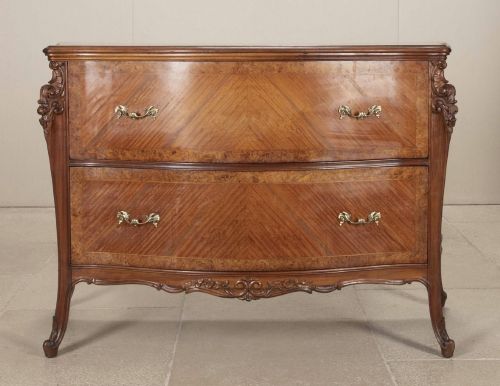
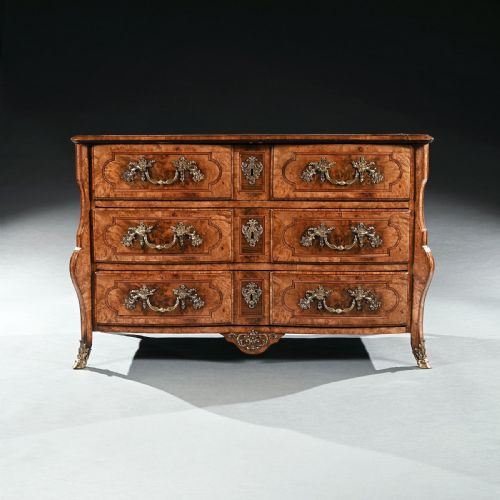
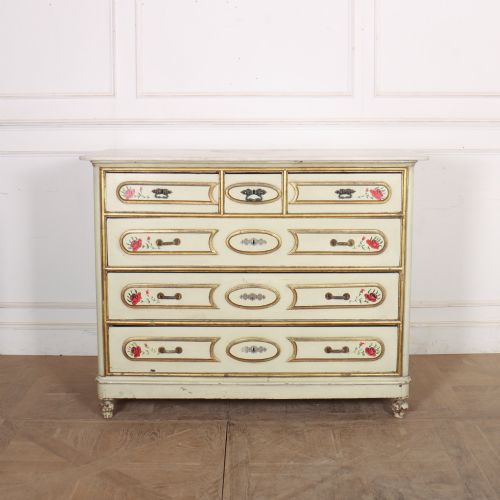
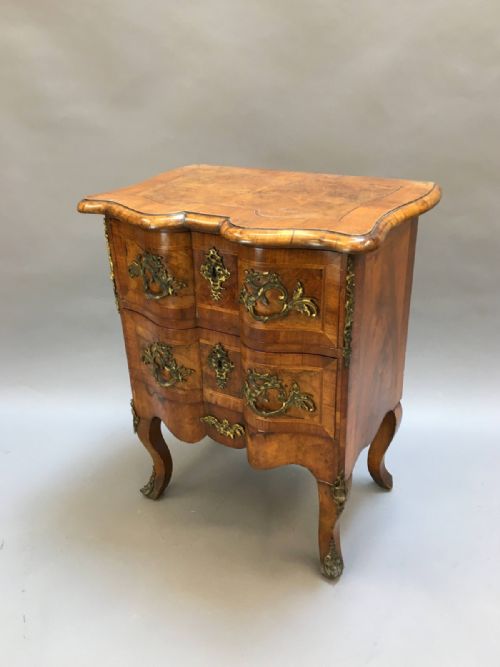
A continental commode chest sits at the heavier end of European case furniture, functioning primarily as a drawer unit for storage in domestic interiors. When exploring this selection, buyers encounter pieces originating from countries such as France, Italy, Germany, Austria, and the Netherlands. The forms range from strict architectural fronts to sweeping serpentine and bombe profiles.
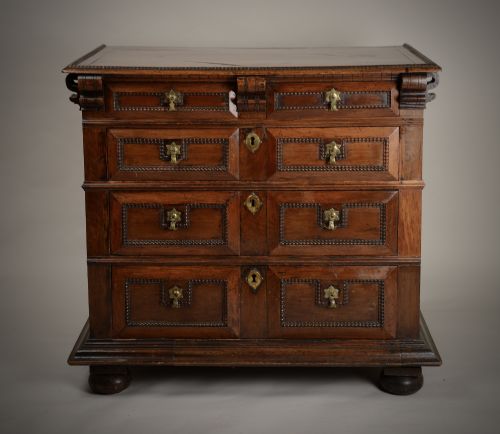
The periods represented span several centuries, starting from the seventeenth century through the eighteenth and nineteenth centuries, including Victorian examples. Alongside grand walnut and marquetry pieces, the selection includes simpler pine and elm versions. Regional characteristics define the overall silhouette, separating northern European restraint from southern baroque flourishes.
How they were made
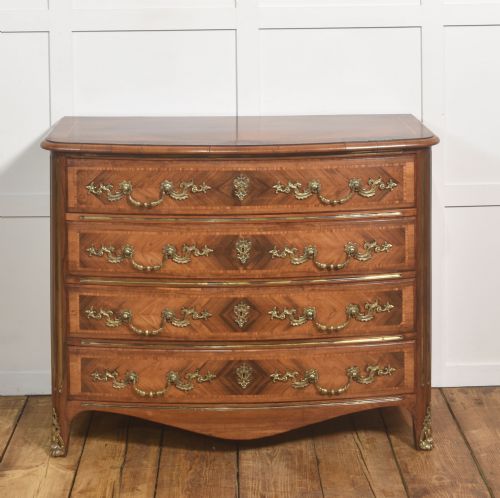
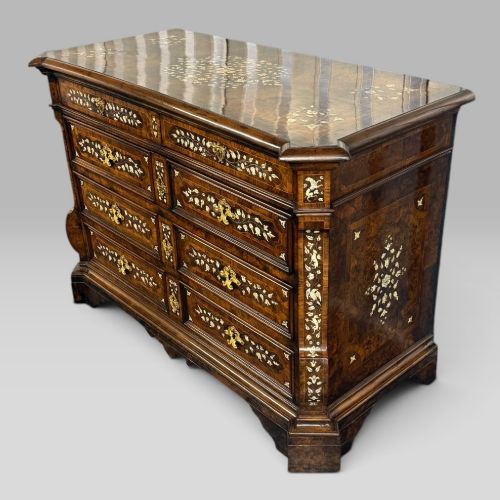
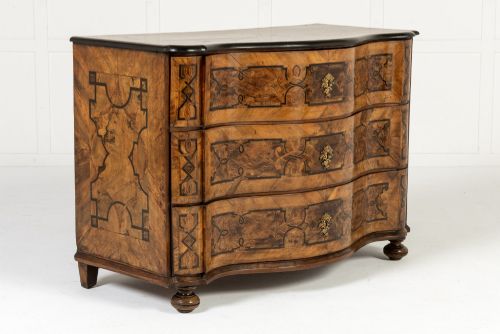
Cabinetmakers utilised native and exotic timbers such as walnut, burr walnut, oak, mahogany, and olive wood over pine or oak carcases. Marquetry and inlay required precise hand-cutting of contrasting veneers to form geometric or floral panels across the drawer fronts and sides. Surface finish relied on traditional wax or polish applied directly to the timber, preserving the natural grain.
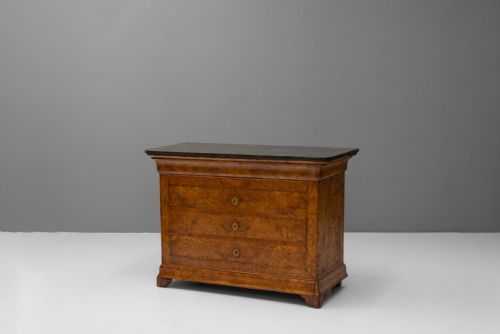
Many examples incorporate thick marble slabs fitted precisely to the top surface, adding considerable weight and a cool tactile contrast to the wood below. Cast brass handles and escutcheons secured the drawers, fastened with hand-beaten pins or screws. Drawer construction typically employed hand-cut dovetailing to join the sides to the fronts and backs.
Materials recorded across the selection include walnut, burr walnut, oak, elm, mahogany, olive wood, satinwood, pine, paint, brass, and marble.
What varies in quality
The standard of timber selection dictates the visual impact of the piece, particularly when figured burr walnut or detailed marquetry is employed. Grain matching across multiple drawer fronts requires exceptional skill from the cabinetmaker, creating a cohesive pattern rather than a disjointed assembly of boards.
Structural complexity influences distinction, with double-curved bombe profiles and complex serpentine shapes demanding advanced woodworking techniques. The crispness of carved mouldings and the integration of original brass hardware further separate standard domestic furniture from elite workshop output.
Grand Ducal Workshops·Thomas Hache of Grenoble
The Continental Commode Chest Glossary
- Bombe
- A swollen, convex shape where the front and sides of the chest curve outward in a rounded profile. This swelling requires advanced shaping of the timber carcase.
- Serpentine
- A front contour characterised by a central convex curve flanked by two concave curves. It creates a gentle wave effect across the drawer fronts.
- Marquetry
- The art of forming decorative patterns using thin veneers of various woods applied to a carcase. It creates pictorial or geometric designs across the surface.
- Escutcheon
- A protective plate surrounding the keyhole of a drawer. It is usually cast in brass and acts as a decorative accent.
- Biedermeier
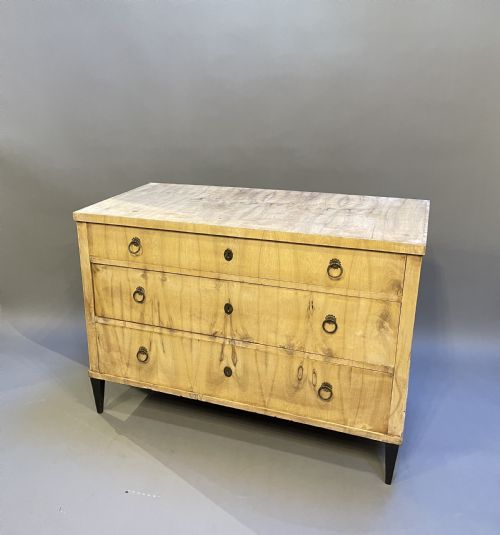
- A style originating in Central Europe during the nineteenth century, prioritising clean lines and blonde wood grains over heavy ornamentation.
Continental Commode Chest: Frequently Asked Questions
What is a continental commode chest?
A continental commode chest is a European drawer unit designed for domestic storage, characterised by regional cabinetmaking styles from countries like France, Italy, and Germany.
These pieces typically feature low proportions and substantial timber construction, often finished with detailed marquetry, burr veneers, or marble tops.
How do I clean the wood surface?
Dust the surface regularly with a soft, dry cloth to prevent dirt accumulation in the grain and carved details.
Apply a traditional beeswax polish sparingly when the timber appears dry, buffing gently to maintain the natural sheen without building up heavy residue.
How were marble tops fitted?
Marble slabs on these chests were cut to match the exact profile of the wooden carcase, resting securely under their own considerable weight.
They provided a durable surface for washing or displaying objects, protecting the underlying timber from spills.
How do I distinguish baroque from neoclassical?
Baroque pieces display heavy, dramatic curves, elaborate carving, and dynamic movement across the drawer fronts and bases.
Neoclassical designs introduce straight architectural lines, symmetrical geometry, and restrained proportions influenced by classical antiquity.