
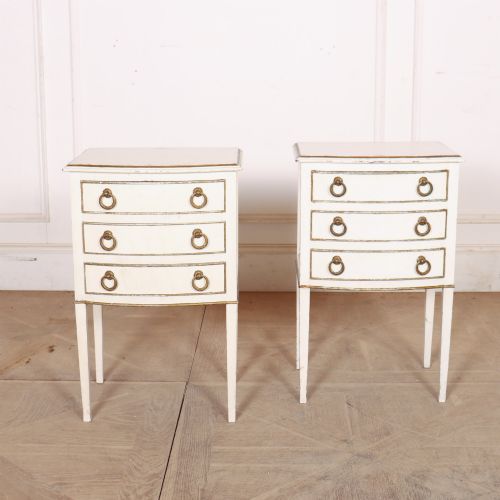
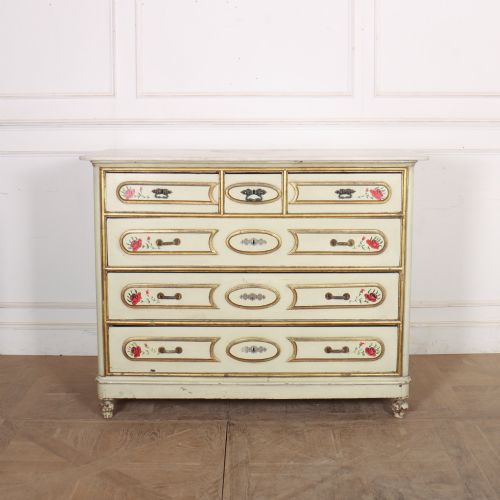
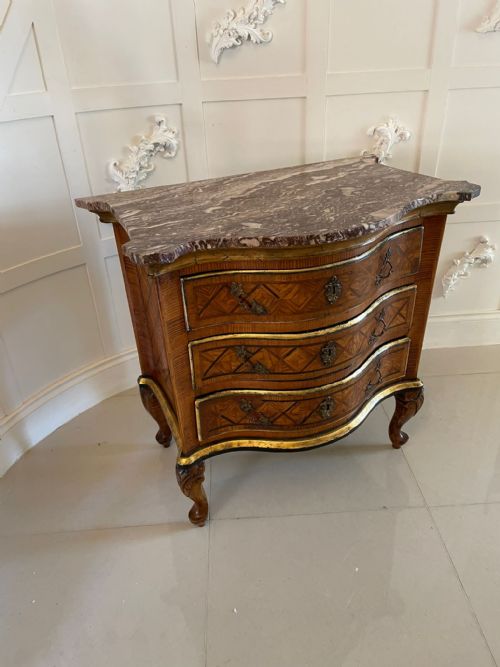


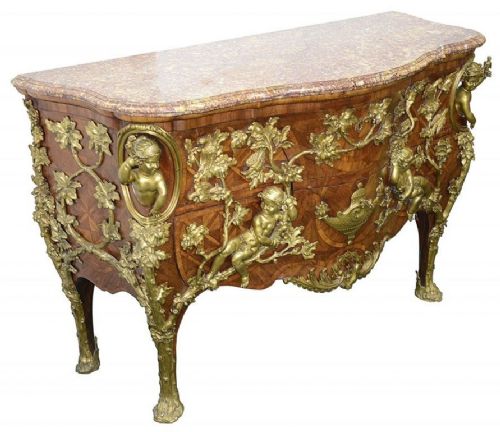


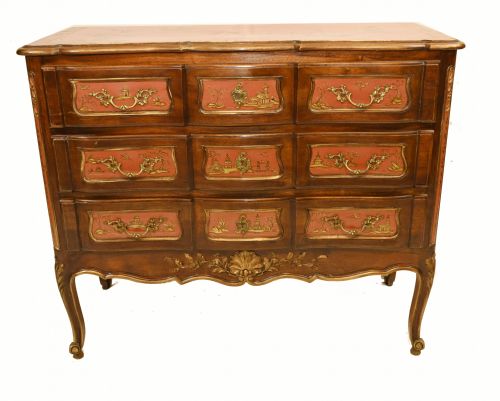

Gilded Drawer Chest
A gilded antique drawer chest brings rich surface finish and traditional cabinetwork to a room, offering both display presence and practical storage.
Gilded Drawer Chest
When you search for a gilded antique drawer chest, you find case furniture that combines functional storage compartments with decorative surface gilding. The selections range widely in scale and origin, covering bedside chests, commodes, and larger bedroom pieces.
The versions most commonly met on this page span the eighteenth and nineteenth centuries, alongside select early twentieth-century examples. Forms vary from serpentine commodes with marble tops to Japanese and Chinese lacquered cabinets and English spice cupboards.
Makers and workshops from various European and Asian traditions utilised distinct regional styles, including French Rococo, Louis XVI, and Edwardian Chinoiserie. Each piece reflects the decorative taste of its period, whether through Spanish neoclassical lines or German grotto carving.
How they were made
Construction relies primarily on traditional timber carcases using walnut, satinwood, and painted wood as structural foundations. Artisans applied gold leaf, gilt wood, and paint directly to surfaces to create the characteristic metallic sheen.
Surface ornamentation often incorporates complex techniques such as black lacquer, parquetry inlay, and carved detailing. Marble tops appear frequently on commodes, providing a contrasting heavy stone surface above the gilded woodwork.
Listings include items spanning the eighteenth century through to the 1930s, featuring walnut, satinwood, and black lacquer.
What varies in quality
Quality separates ordinary storage pieces from exceptional examples through the precision of the cabinetwork and the execution of the surface decoration. Hand-carved details and refined parquetry inlay indicate higher craftsmanship than simpler applied mouldings.
The integrity and preservation of the gold leaf or lacquer finish determine the visual impact of the piece. Superior items retain their original gilded surfaces and integrated brass hardware without heavy modern intervention.
Charles Cressant
The Gilded Drawer Chest Glossary
- Commode
- A ornamental chest of drawers or cabinet, typically low in height and originating from French furniture traditions. They often feature decorative mounts and shaped marble tops.
- Parquetry
- A geometric mosaic of wood pieces used for decorative floors and cabinet surfaces. Craftsmen arrange contrasting timbers to form repeating patterns.
- Chinoiserie
- The European interpretation and imitation of Chinese and East Asian artistic traditions, popular in furniture decoration. This style frequently employs black lacquer and gold painted motifs.
- Giltwood
- Wood that has been prepared and coated with a thin layer of gold leaf or gold powder. It provides a bright metallic finish to carved architectural and furniture elements.
- Serpentine
- A furniture front or edge that curves outward at the centre and inward at the sides. This flowing contour requires advanced woodworking skill to execute properly.
Gilded Drawer Chest: Frequently Asked Questions
What is a gilded antique drawer chest?
It is a historic storage unit made of wood and enhanced with gold leaf, paint, or gilt decoration. These pieces function as decorative focal points while providing practical drawer space.
They encompass a variety of forms, including commodes, bedside chests, and specialised cabinets originating from different European and Asian design traditions.
How were these chests used historically?
Historically, these pieces served functional storage roles in bedrooms, parlours, and shops. Finer commodes held clothing or valuables in domestic settings, while specialised cabinets stored smaller items.
Their decorative surfaces also allowed owners to display status and complement the interior design of period rooms.
How do I care for a gilded wooden surface?
Maintenance requires gentle dusting with a soft, dry cloth to prevent abrasion of the delicate metallic leaf. Avoid liquid cleaners, chemical polishes, and direct sunlight, which can damage old finishes.
Stable room humidity helps preserve both the underlying timber and the delicate gilding or lacquer work over time.
How can I tell different periods apart?
Distinguishing periods relies on observing structural forms, decorative motifs, and assembly techniques. Eighteenth-century pieces often display hand-carved serpentine lines and parquetry, while later Victorian and Edwardian examples show different revival styles.
Material choices, such as the specific type of lacquer or marble top, also provide strong clues to a piece's era of manufacture.