


Continental Church Statue
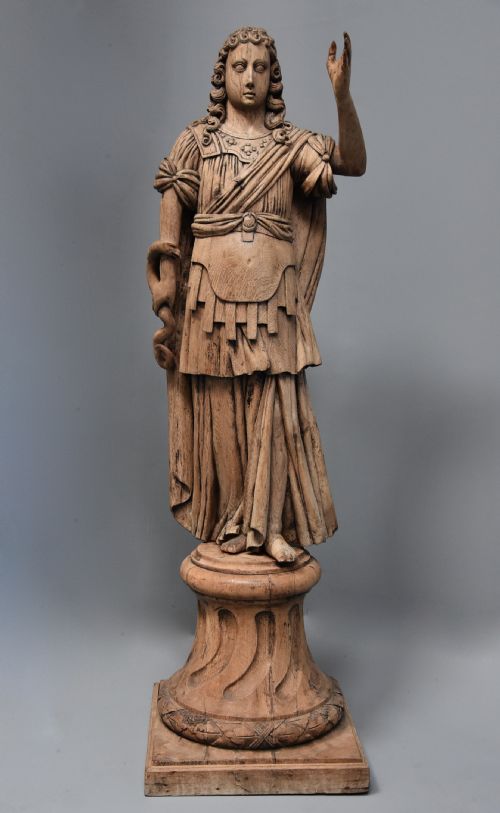
Continental church statue pieces are carved wooden figures of saints and holy figures that bring devotional presence and historic craftsmanship into a room.
Continental Church Statue
A continental church statue represents religious figures such as saints, the Virgin Mary, or Christ, carved from timber for ecclesiastical settings. These sculptures range from life-size oak figures to smaller devotional carvings originating from various European workshops.
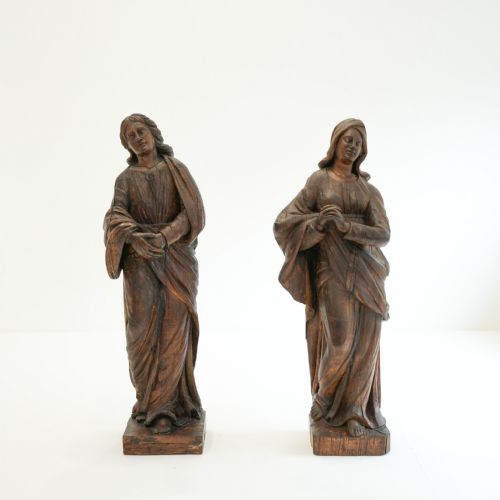
The selections span several centuries, with pieces dating from the sixteenth century through to the nineteenth century, encompassing Renaissance, Baroque, and Gothic Revival styles. Common forms include single standing saints, pairs of figures, and specialised forms like acolyte candlestick holders.
Buyers will encounter subjects including specific saints like St. Nicholas, St. Roche, and St. John the Baptist, alongside representations of the Madonna and child. These objects often display the remnants of their original decorative treatments, connecting directly to their sacred origins.
Materials and construction
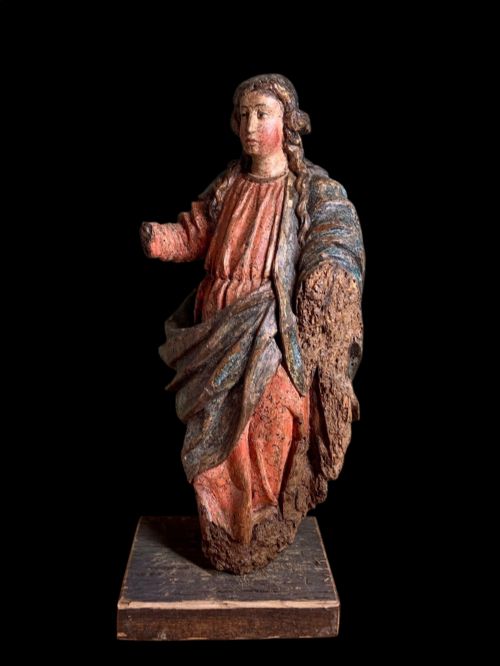
Many surfaces received layers of gesso preparation before being finished with polychrome paint and gold leaf to add lifelike colour and divine radiance. Over centuries, these painted and gilded finishes have aged naturally, often showing characteristic craquelure and weathering.
Saint Nepomuk stands ready to guard bridges against floods, whether placed beside a rustic farmhouse table or a city mantelpiece.
Indicators of quality
The sculptural finesse of the carving dictates the primary tier of quality, distinguishing master-carved anatomy and expressive drapery folds from simpler workshop output. Proportions, depth of undercut work, and the psychological presence of the face separate exceptional pieces from routine ecclesiastical production.
The preservation of original surface treatments also influences desirability, particularly where early polychrome paint or gold leaf survives intact beneath later layers or modern interventions. The harmony between the original timber substrate and its decorative finish determines the integrity of the piece.
The Continental Church Statue Glossary
- Polychrome
- Decorated in a variety of colours. This technique was widely applied to wood sculptures to make saints and holy figures appear more lifelike in dim church interiors.
- Gesso
- A plaster-like mixture applied to wood as a base for paint or gold leaf. It provides a smooth surface for detailed decoration and gilding.
- Acolyte
- An assistant to a member of the clergy. In sculpture, figures of acolytes frequently take the form of candlestick bearers.
- Baroque
- An ornate artistic style prevalent from the seventeenth to the mid-eighteenth century. It is characterised by dramatic movement, deep drapery folds, and emotional intensity in religious art.
Continental Church Statue: Frequently Asked Questions
How do I date a wooden statue?
Dating relies heavily on the tool marks left by the carver, the species of timber used, and stylistic indicators in the costume and hair. Early pieces often display distinct adze or chisel marks hidden on the uncarved reverse.
Changes in polychrome pigments and the composition of the underlying gesso layer also provide strong clues to the period of origin. Comparing the drapery style to known architectural periods helps narrow the manufacturing window.
Where were these statues displayed?
These figures originally stood within churches, chapels, and monastic buildings across continental Europe, often mounted on altars, flanking doorways, or integrated into rood screens. They served as focal points for private devotion and communal worship.
In domestic settings today, they occupy prominent positions on console tables, mantels, or dedicated display brackets. Their scale makes them commanding focal points within a room.
How should I clean polychrome wood?
Maintenance requires minimal intervention to protect fragile historic paint and gesso layers from accidental removal. Dusting should be done gently with a soft, dry brush without applying moisture or chemical cleaners.
Avoid placing these figures in areas with direct sunlight or fluctuating humidity, which can cause the underlying wood to expand and the paint to flake. Professional conservators should handle any structural repairs or deep cleaning.
What is a saint statue?
A saint statue represents a recognised holy person, frequently identified by specific attributes or items held in their hands. For instance, St. Nicholas might appear with traditional bishop's vestments, while other figures carry symbols of their martyrdom or life.
These representations allowed worshippers to seek intercession from particular patron saints associated with specific trades, diseases, or locations. The symbolism helps historians identify anonymous figures from church inventories.