




Continental Carved Wood Saint
A continental carved wood saint brings devotional art into the home, shaped by centuries of European religious sculpture.
Continental Carved Wood Saint
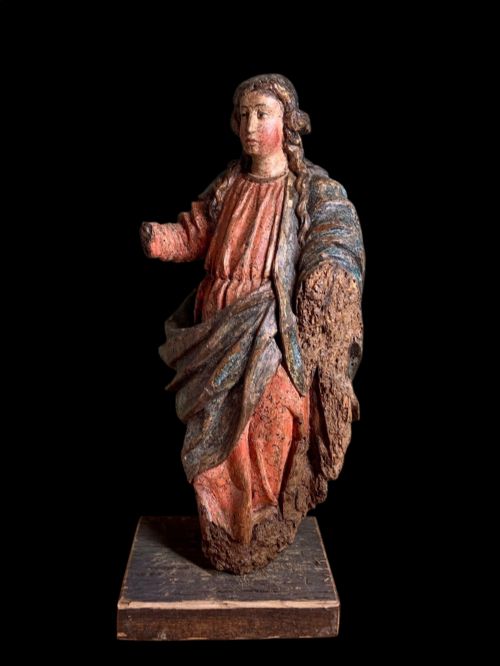
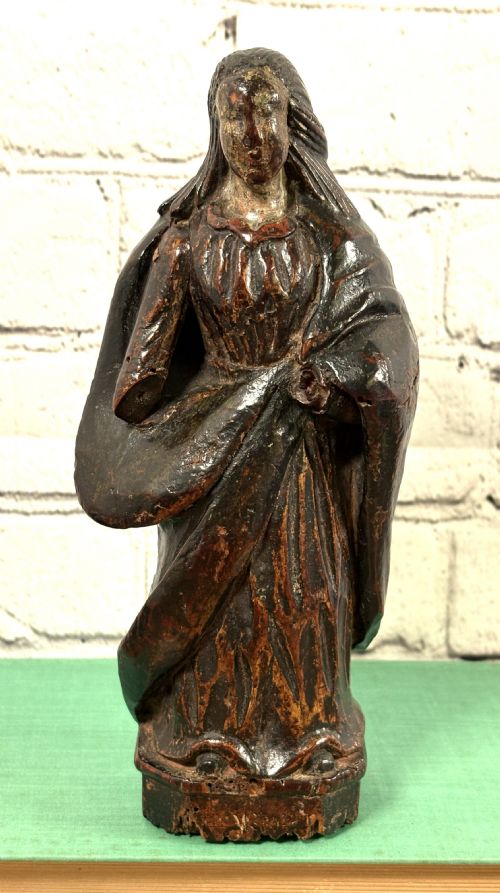
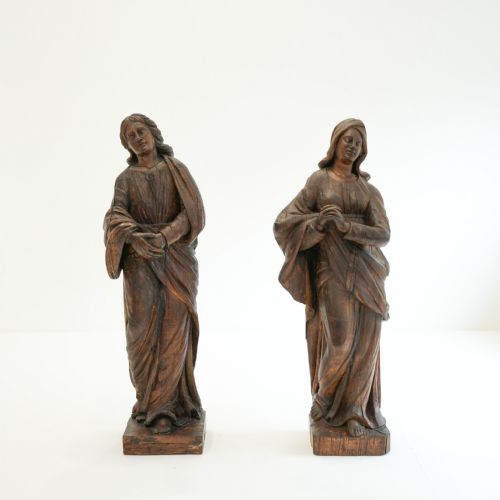
A continental carved wood saint represents holy figures from Christian tradition, originating from workshops across Europe from the late medieval period through the nineteenth century. These sculptures take the form of full-length statues, pairs, and occasional framed panels depicting specific figures such as Saint Jerome, Saint Barbara, and the Virgin Mary. Oak, limewood, and applewood provide the primary timber base for these devotional objects.
The selections span distinct historical eras, including sixteenth-century Renaissance and late medieval pieces alongside seventeenth-century Baroque examples and eighteenth-century works. Buyers encounter both monumental large statues and smaller devotional carvings, sometimes retaining their original painted surfaces or gilding. This category encompasses individual holy figures as well as acolyte candlestick figures and complex groupings like the Anna Selbdritt.
Materials and construction methods
Surfaces were frequently finished with gesso to create a smooth ground for subsequent layers of polychrome paint and gold leaf. This application of colour and metal leaf brought lifelike vibrancy and devotional splendour to the figures, though centuries of handling and environmental exposure have often left these finishes weathered or partially lost.
Materials documented in the inventory include oak, limewood, applewood, gesso, polychrome paint, and gold leaf.
Evaluating sculptural mastery and surface preservation
The distinction between ordinary and exceptional pieces rests primarily on the anatomical confidence of the carving and the expressiveness rendered in the face and hands. Superior examples display deep, undercut drapery that creates convincing folds, alongside meticulous attention to the posture and individual attributes of the saint.
Originality of surface finish heavily influences the standing of a piece, particularly the survival of authentic polychrome paint and gold leaf over gesso. Sculptures that retain their early painted decoration without extensive modern repainting offer a more complete historical record of European devotional art.
The Continental Carved Wood Saint Glossary
- Polychrome
- Decoration consisting of several colours applied to the surface of wood or gesso. This technique added realistic detail to religious statues.
- Gesso
- A plaster mixture applied to wood as a base for paint or gold leaf. It provided a smooth, uniform ground for rich surface decoration.
- Giltwood
- Timber decorated with thin sheets of gold leaf. This finish caught candlelight in religious interiors to create a luminous effect.
- Limewood
- A fine-grained, pale wood favored by continental carvers for detailed work. Its consistent density allowed for sharp, complex cuts without splitting.
- Baroque
- An artistic style characterised by dramatic movement and rich detail. Figures from this period display dynamic poses and emotional intensity.
Continental Carved Wood Saint: Frequently Asked Questions
How do I identify the saint?
Look for specific attributes held by the figure, such as books, keys, or architectural models, which traditionally identify particular holy individuals.
Animals or specific clothing styles also provide key clues to the identity of the carved saint.
Were these figures painted originally?
Many continental wood figures received coatings of gesso, polychrome paint, and gold leaf to enhance their visual impact in churches and chapels.
Over the centuries, much of this original pigment has worn away or been subjected to later overpainting during conservation efforts.
How do I care for antique wood?
Keep wooden sculptures away from direct heat sources and dramatic fluctuations in humidity to prevent the timber from splitting or warping.
Dust the surface gently with a dry, soft brush rather than using liquid polishes that might damage fragile gesso or paint.
How are different periods told apart?
Late medieval and Renaissance pieces often feature heavier, planar drapery and solemn expressions, reflecting earlier devotional art traditions.
Seventeenth and eighteenth-century Baroque figures introduce greater theatrical movement, dynamic poses, and more naturalistic rendering of anatomy and clothing.