
Concealed Blade Walking Cane
A concealed blade walking cane conceals a steel blade inside a wooden shaft, offering gentlemen an unobtrusive personal defence tool in Victorian and Edwardian society.
Concealed Blade Walking Cane
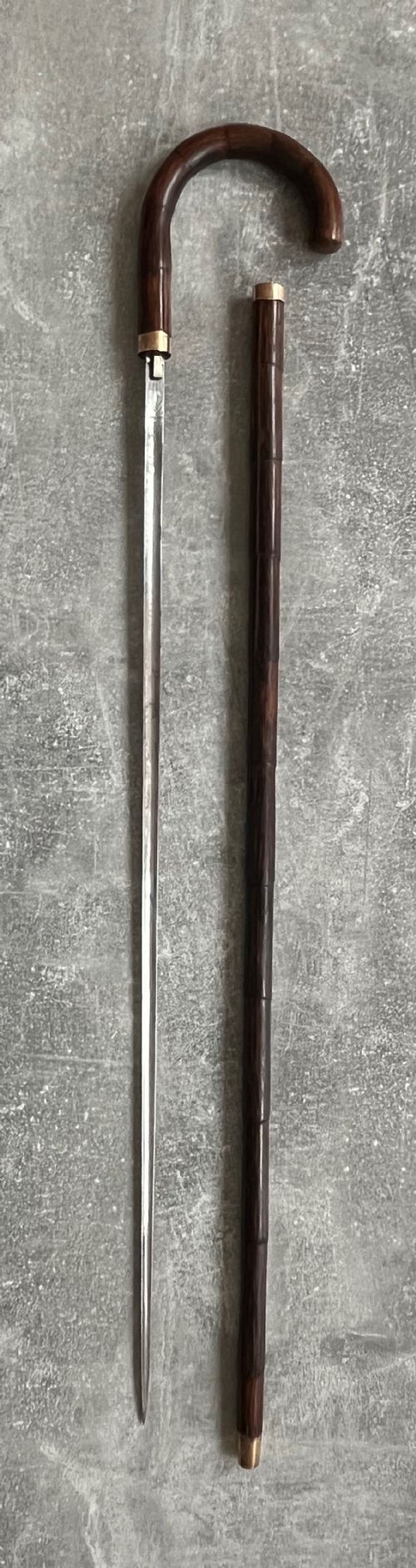
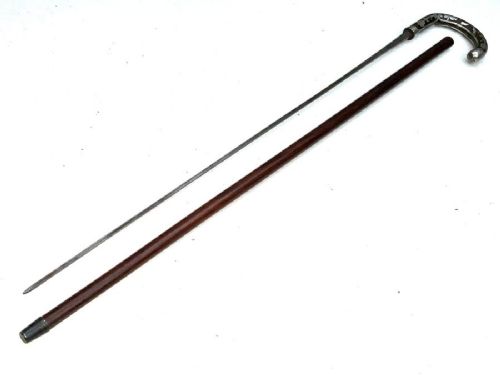
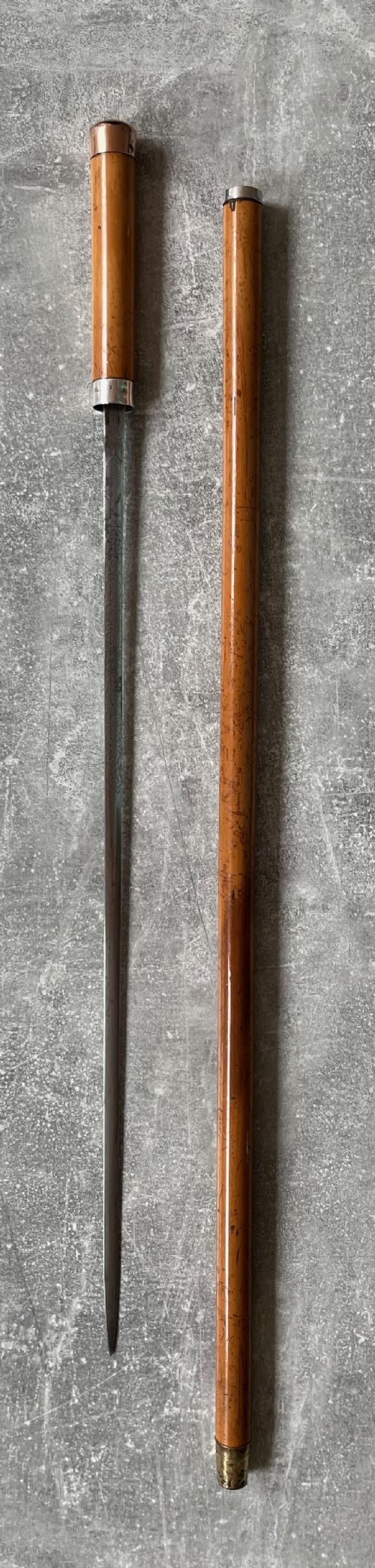
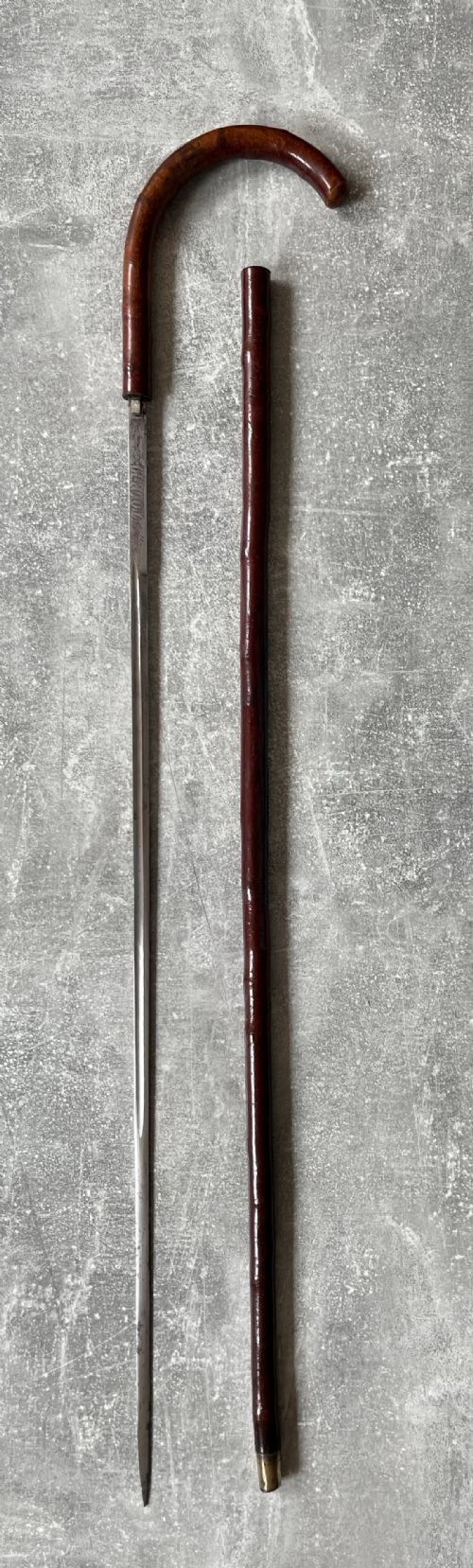
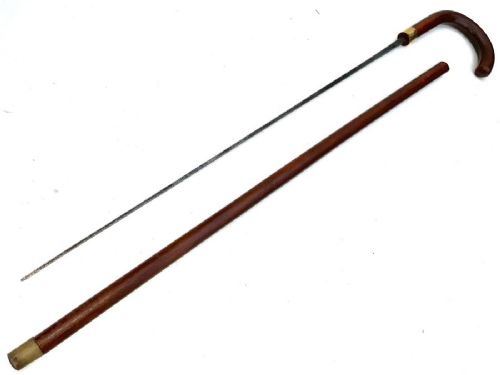
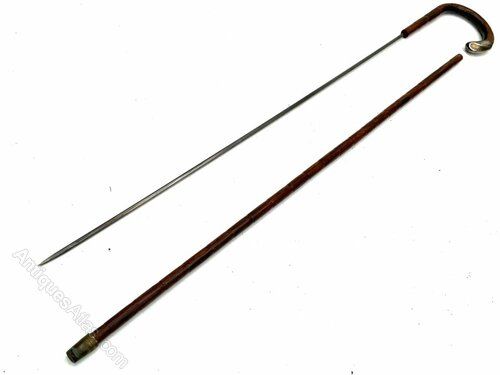
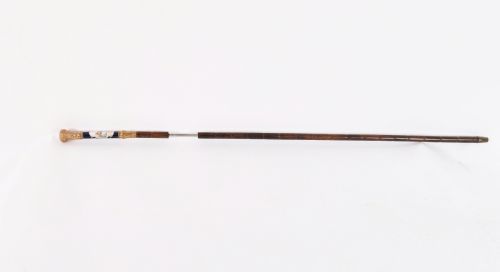
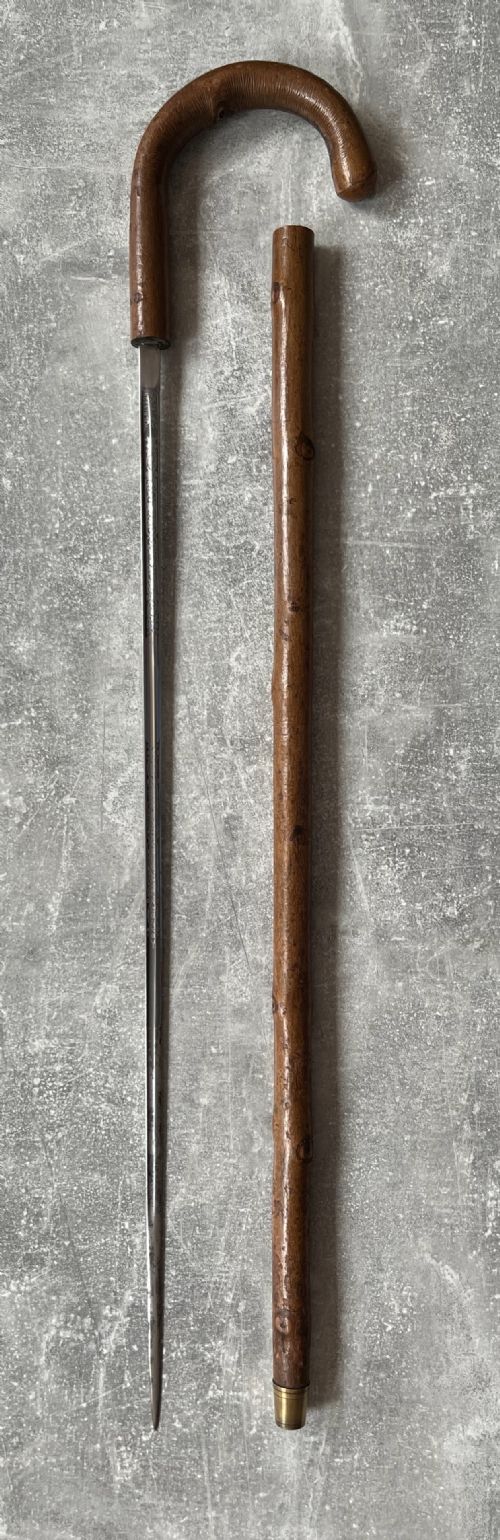
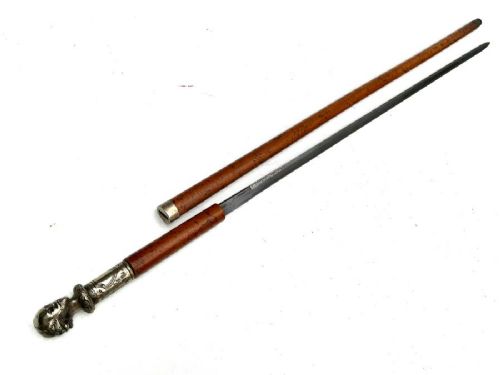
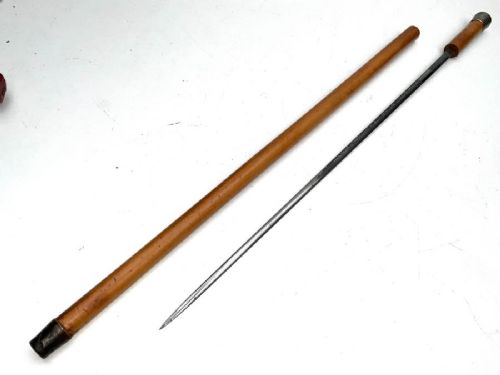
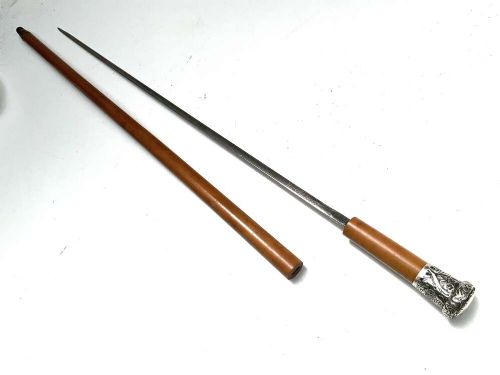
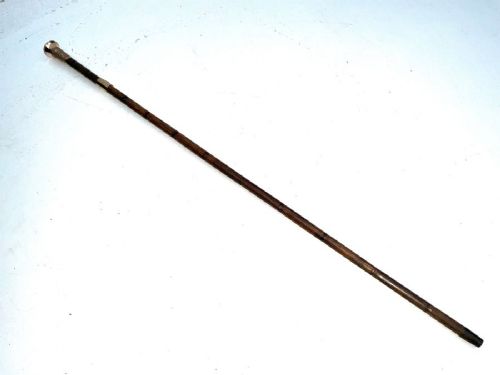
A concealed blade walking cane, also known in the evidence as a sword stick or swagger stick, combines a functional walking aid with a hidden steel blade. These pieces date primarily from the Victorian and Edwardian eras, spanning the late nineteenth century into the early twentieth century.
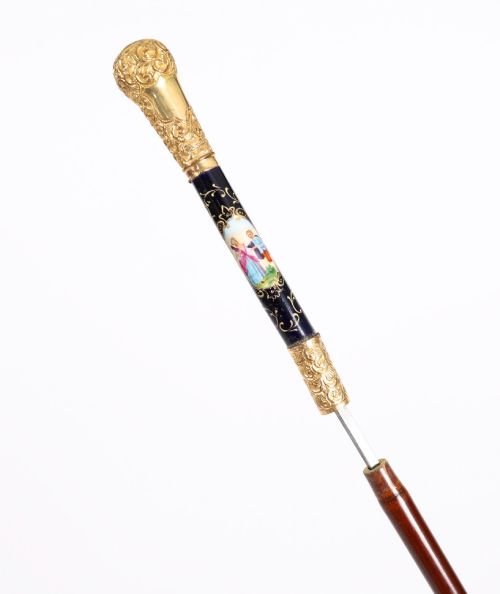
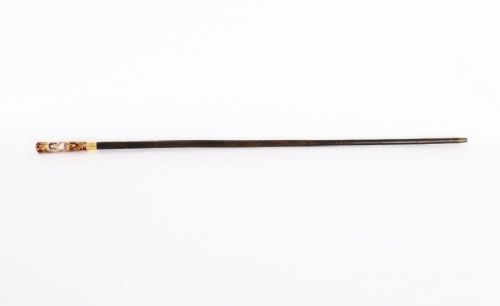
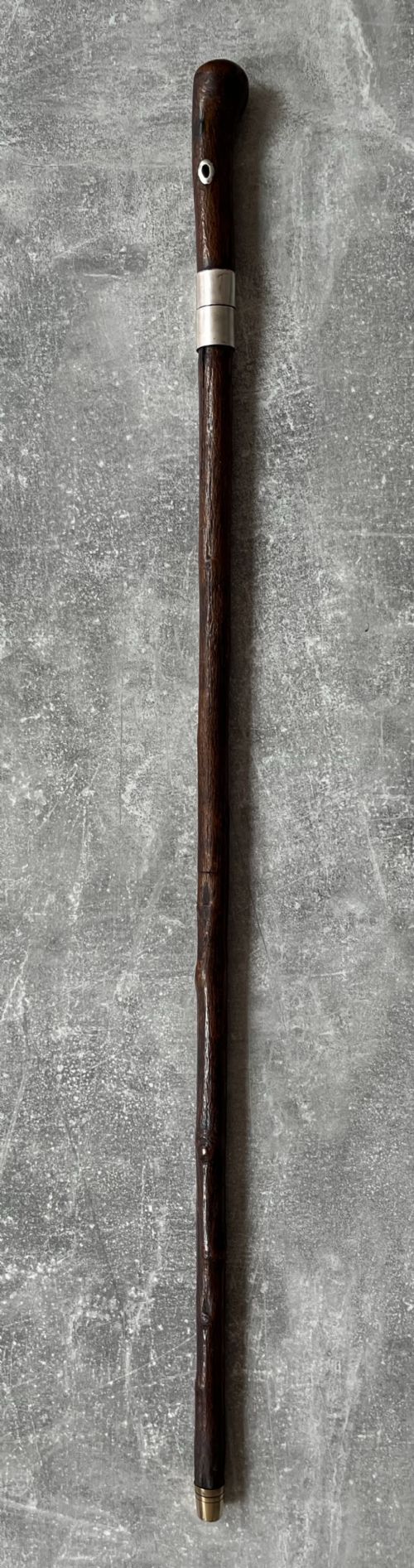
The form appears in various timber shafts, including malacca cane, ebonised wood, cherrywood, partridge wood, hazel wood, holly wood, bamboo, and rosewood. Handles range from simple crook shapes and root ends to horn, bone knops, and porcelain mounts.
Military officers, Masonic members, and civilian gentlemen carried these items for status and protection. Surviving examples reflect this division through military markers, silver collars, and inscribed blades.
How they were made
Maker construction relies on hollowing out timber shafts to securely house a steel blade, often utilising button releases or friction fits to keep the weapon secure during normal walking use. Metal collars in silver, brass, or gold plate reinforce the mouth of the shaft where the handle meets the body.
Blades themselves display specialised metalworking, with Toledo steel and maker-signed Wilkinson blades appearing frequently alongside etched decoration. Handles feature carved horn, bone, or gold-plated Sevres porcelain, attached securely to the internal tang of the blade or the timber shaft.
Listings feature periods from 1880 to 1920, with materials including steel, malacca cane, silver, brass, horn, and ebonised wood.
What varies in quality
Quality separates mass-produced civilian pieces from bespoke commissions through the choice of materials and the precision of the blade fitting. Superior examples feature named blades such as Wilkinson or Toledo, matched with precious metal collars and hand-carved horn or porcelain handles.
The engineering of the catch mechanism also marks the grade of a piece, with high-quality specimens maintaining a flush, seamless join between the handle and shaft when closed. Lesser examples show loose tolerances in the wooden channel and plain unbranded steel without etching.
Brigg·Wilkinson
The Concealed Blade Walking Cane Glossary
- Malacca cane
- A species of rattan from Southeast Asia featuring characteristic rings and a warm brownish mottled surface, prized for its flexibility and strength.
- Toledo blade
- A steel blade produced in the Spanish city of Toledo, renowned historically for tempering quality and durability.
- Swagger stick
- A short cane carried by military officers, sometimes incorporating a hidden blade for ceremonial or personal use.
- Ebonised wood
- Timber treated with a dark stain or finish to imitate true ebony, creating a uniform black surface.
- Collar
- A metal band, often in silver or brass, fitted around the top of the shaft to prevent splitting.
Concealed Blade Walking Cane: Frequently Asked Questions
How do you release the hidden blade?
Many examples utilise a button release mechanism built into the collar or handle mount to disengage the internal catch. Other pieces rely on a simple friction fit that allows the user to pull the handle straight out from the shaft.
Collectors should inspect the join carefully to understand whether the cane uses a mechanical latch or relies on a snug wooden fit.
What woods were used for the shafts?
Makers utilised a wide selection of timbers including malacca, ebonised wood, cherrywood, partridge wood, hazel, holly, bamboo, and rosewood. Each wood offered different properties of weight, flexibility, and grain pattern.
Exotic imports like malacca and bamboo were particularly favoured for their distinctive jointed appearance and resilience.
Were these used by the military?
Military officers frequently carried swagger sticks and sword sticks as part of their walking attire during the Victorian and Edwardian periods. Pieces often bear unit references, such as the Grenadier Guards, or Imperial German military markings.
These items served both as badges of rank and practical personal equipment for officers off duty.
How are Masonic examples identified?
Masonic walking sticks feature specific iconography, symbols, or inscriptions related to Freemasonry on the handles, collars, or engraved onto the concealed blades. These pieces date primarily around the late nineteenth and early twentieth centuries.
They reflect the fraternal associations of the owners who carried them during civilian life.