





Compact Secretaire Desk
These compact secretaire desk pieces combine a writing surface with concealed drawers, offering practical work space within a small footprint.
Compact Secretaire Desk
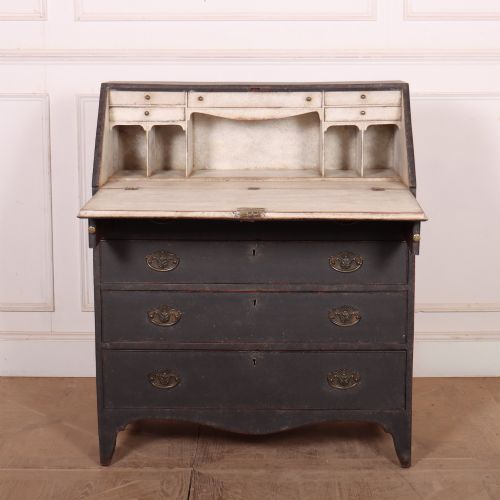
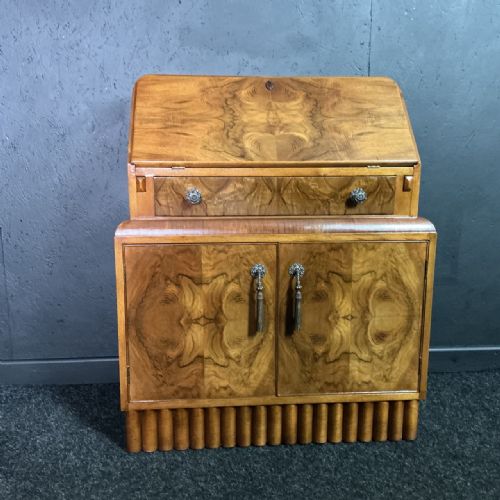
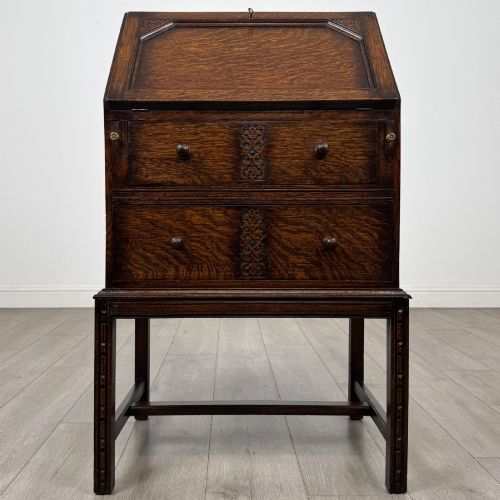
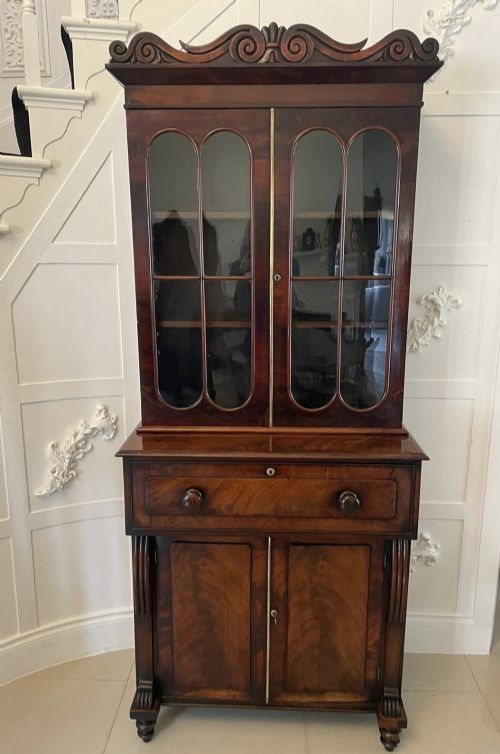
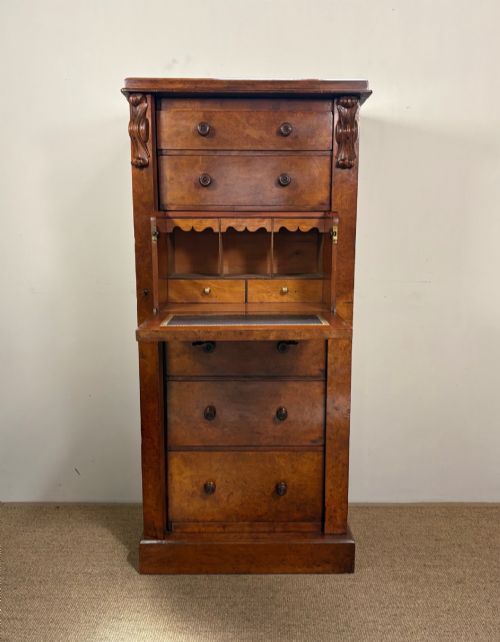
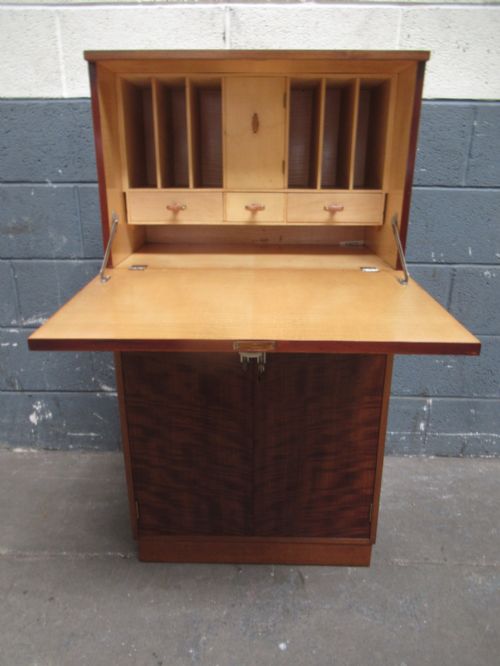
A compact secretaire desk brings together cabinetry and a fitted writing compartment, appearing in forms such as bureau bookcases, Wellington chests, and fall-front abattants. Buyers searching for a compact secretaire desk encounter pieces spanning the nineteenth century through the Art Deco period, including Victorian and Edwardian examples. These items serve as functional writing stations while occupying minimal floor space in a room.
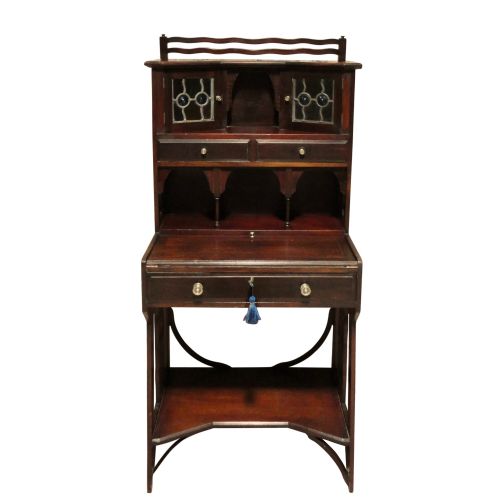
The selection ranges from tall secretaire bookcases featuring glazed upper sections to low chests of drawers with drop-down writing flaps. Walnut, mahogany, and rosewood predominate among the woods, often enhanced by amboyna or satinwood veneers. Each configuration conceals pigeonholes and small drawers behind the main writing surface.
Materials and construction
Cabinet makers constructed these pieces using dense hardwoods such as mahogany, walnut, and rosewood, frequently applying decorative veneers like amboyna to the exterior surfaces. Brass hardware, including drop handles and escutcheons, secures the drawers and fall fronts. Leather inserts often line the pull-down writing surfaces to provide a smooth plane for penwork.
Internal compartments utilise secondary timbers for drawer linings, assembled with traditional dovetail joints to ensure durability. Glazed doors on bookcase variants employ delicate timber framing to support individual panes of glass. Wellington chests incorporate a locking side pilaster that secures all drawers simultaneously.
Compact Secretaire Desk Retail Price Guide 2026
Typical asking prices for compact secretaire desk among the pieces listed under this phrase on Sellingantiques today, from the lower quarter to the upper quarter. They describe what is for sale here now, not the wider market.
Side locking bars on Wellington chests were supposedly invented to prevent anyone from reading your secret correspondence while you slept.
Judging quality and execution
Quality in a compact secretaire desk rests on the selection of timber veneers and the precision of the internal cabinet work. Finer examples display continuous grain patterns across the drawer fronts and tightly fitted pigeonholes within the secretaire drawer. The integration of the drop-down mechanism requires robust hinging and smooth runner action to support writing pressure.
Druce & Co.
The Compact Secretaire Desk Glossary
- Secretaire
- A piece of furniture containing a drawer or compartment that folds down to form a writing surface. This feature conceals a fitted interior of small drawers and pigeonholes.
- Wellington chest
- A tall, narrow chest of drawers secured by a hinged vertical locking bar on one side. This design originated in the nineteenth century and often includes a secretaire drawer.
- Abattant
- A wall cabinet or freestanding piece featuring a vertical drop-front panel that serves as a desk. It provides enclosed storage above and below the writing plane.
- Pigeonhole
- A small, open compartment within a desk interior used for sorting letters and papers. These compartments are frequently arched or stepped in better pieces.
- Escutcheon
- A flat plate of brass surrounding a keyhole to protect the surrounding wood from wear. They are often decorative as well as functional.
Compact Secretaire Desk: Frequently Asked Questions
What is a compact secretaire desk?
A compact secretaire desk is a piece of furniture that integrates a pull-down or drop-front writing flap with concealed internal drawers and pigeonholes. These items range from small bureau bookcases to tall Wellington chests designed for smaller rooms.
They provide a dedicated writing area that can be closed away when not in use, hiding correspondence and stationery from view.
How do I use one in a modern home?
These pieces function well as laptop stations or writing desks in bedrooms, living rooms, or hallways where floor space is limited. The interior compartments organise modern stationery, tablets, and small accessories efficiently.
Keeping the writing flap closed maintains a tidy appearance while concealing work materials at the end of the day.
How do I tell Victorian from Edwardian pieces?
Victorian examples, dating from the mid to late nineteenth century, often feature heavier timbers like dark mahogany and walnut with rich, deep patination. They frequently incorporate elaborate brass fittings and traditional cabinet proportions.
Edwardian pieces from the early twentieth century tend to be lighter in tone, sometimes utilising satinwood or simpler oak designs with restrained decorative detailing.
What woods were used for these desks?
Cabinet makers predominantly utilised dense tropical hardwoods such as mahogany, rosewood, and walnut for the primary carcass and drawer fronts. Decorative veneers like amboyna were also applied to create figured surfaces on the exterior.
Secondary timbers such as pine or oak were typically employed for drawer linings and internal divisions.