


Compact Desk with Drawers
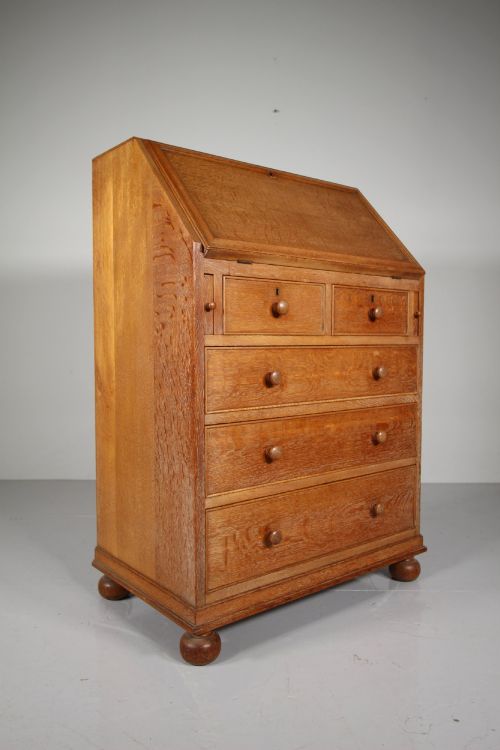
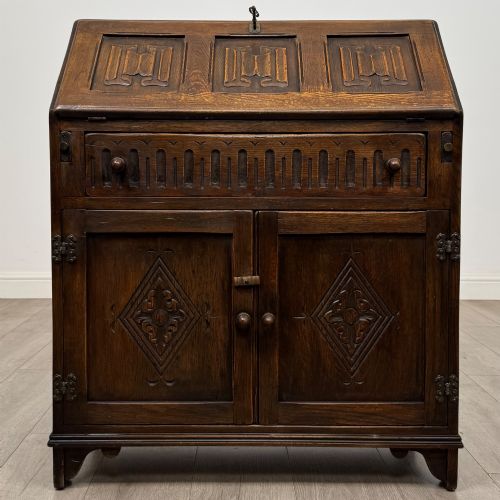
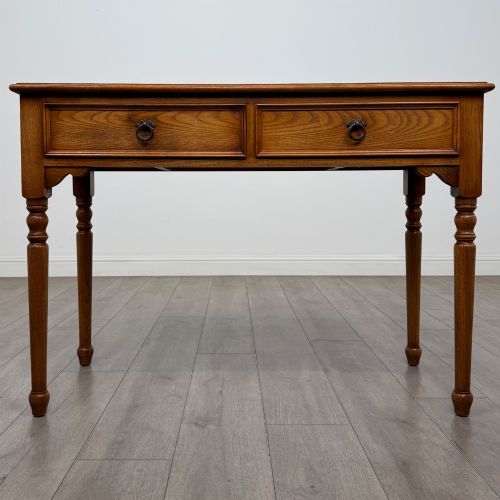
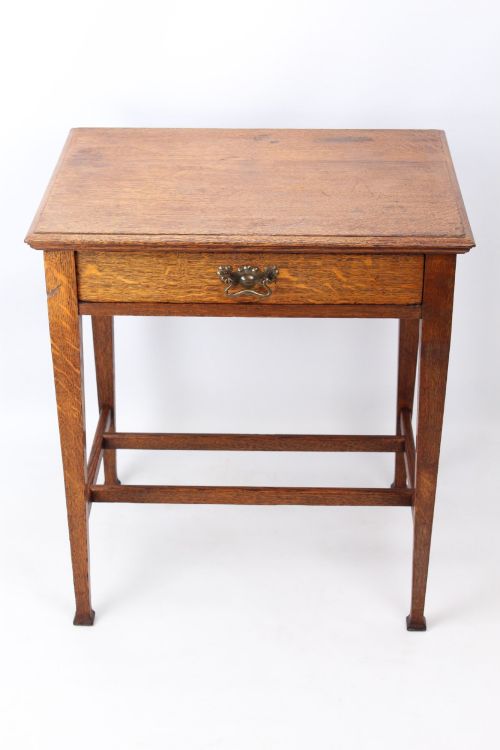
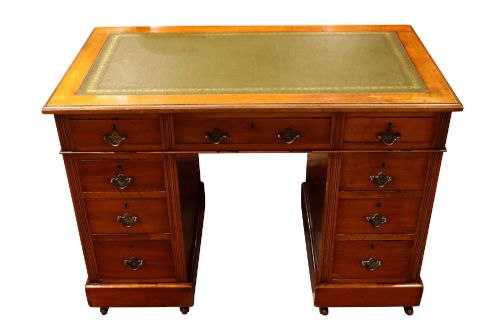
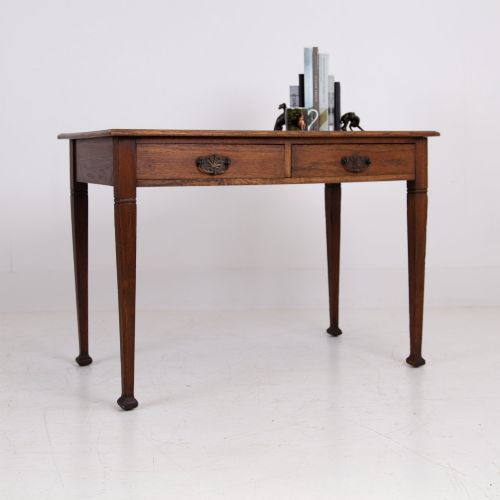
A compact desk with drawers offers dedicated writing space and storage while fitting neatly into modest rooms.
How they were made
Cabinet makers utilised a range of dense hardwoods including mahogany, walnut, burr walnut, rosewood, oak, and occasional exotic timbers like amboyna and coromandel. These timbers were often selected for striking grain patterns such as flame figures or burr growths.
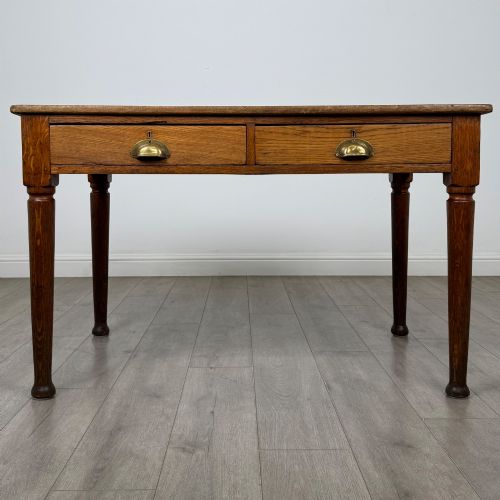
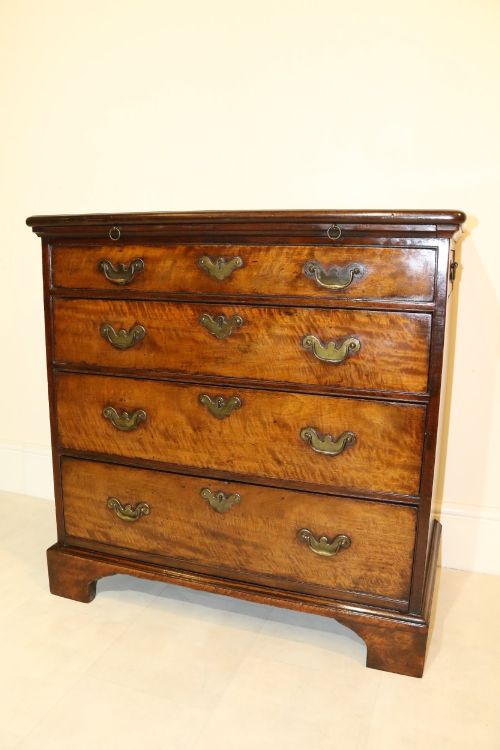
Construction techniques combined solid timber framing with fine veneers applied to secondary woods. Hardware elements typically include brass drop handles and leather writing inserts, alongside fitted internal compartments for stationery.
What varies in quality
The quality of a compact desk with drawers depends largely on the selection of timber and the precision of its cabinet work. Pieces featuring highly figured veneers like burr walnut or flame mahogany sit higher in the range than plain surfaces.
Detailing also dictates standing, with superior examples exhibiting refined secondary timbers, original brass hardware, and intricate internal stationery fittings rather than plain or later replacements.
Listings feature timbers including mahogany, walnut, burr walnut, rosewood, oak, and brass hardware.
Gillows·Gillow and Co·Heals of London
The Compact Desk with Drawers Glossary
- Davenport
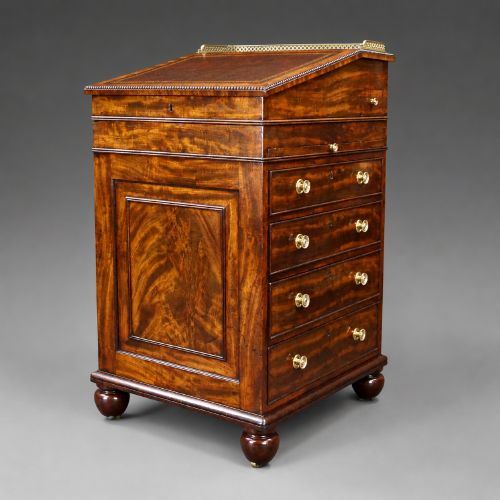
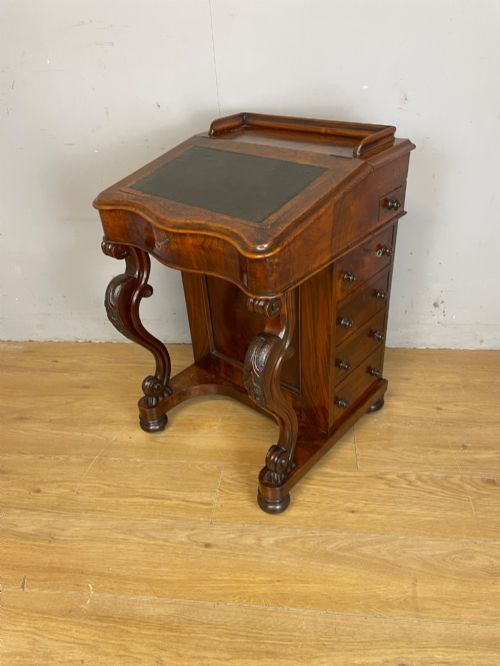
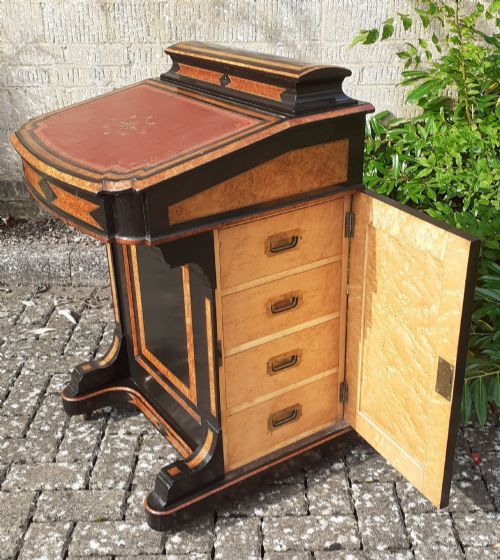
- A small pedestal desk featuring a sloping writing top and drawers accessed from the side. Originating in the Regency period, it became a popular form throughout the Victorian era.
- Bureau
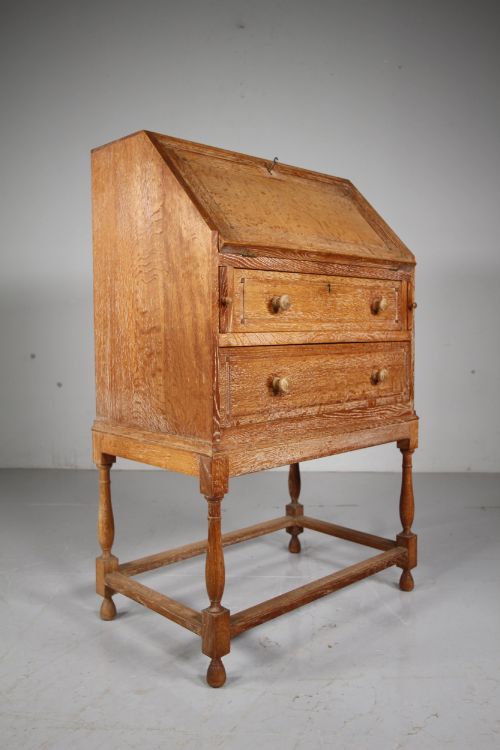
- A desk with a sloping flap that opens to reveal a fitted interior of small drawers and pigeonholes. It typically sits above a set of full-width external drawers.
- Secretaire
- A piece of furniture containing a drawer or compartment that pulls out to form a writing surface. These often conceal inner compartments for letters and inkwells.
- Linenfold
- A style of wood carving resembling folded linen, frequently seen on oak panels of earlier revival pieces. It provides distinct textural relief on cabinet doors and falls.
- Metamorphic
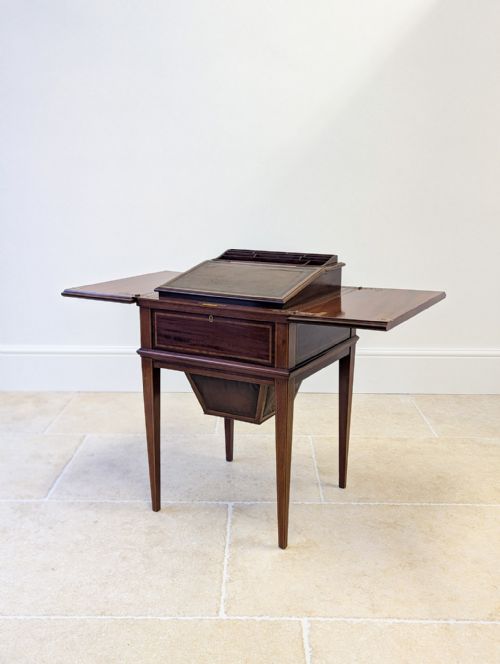
- Describing furniture designed to transform from one form into another, such as a table that converts into a desk. These pieces showcase ingenious concealed mechanisms.
Compact Desk with Drawers: Frequently Asked Questions
Where do I put a compact desk?
These small pieces suit corners, alcoves, and bedrooms where full-sized furniture overwhelms the floor plan. Their modest footprints allow them to function as writing stations or occasional tables.
Because many feature finished backs or side drawers, several variations sit comfortably away from walls as freestanding items in living spaces.
How do I identify a Davenport?
A Davenport is easily recognised by its compact pedestal form with a sloping, often leather-lined writing lid. Drawers typically pull out from one side while dummy drawers balance the other.
Originating in the Regency period and remaining popular through Victorian times, they often incorporate internal pen trays and stationery compartments.
What is a bureau bookcase?
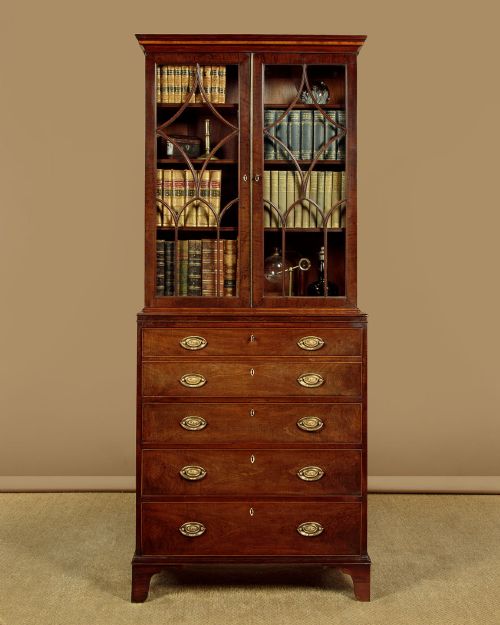
A bureau bookcase combines a sloping desk flap with shelving enclosed by doors above. The lower section provides a drop-down writing surface and storage drawers.
These taller forms offer vertical storage while maintaining a compact footprint for the writing area.
Are these desks suitable for daily use?
Many people use antique desks for writing, laptop work, and correspondence today. Solid hardwood construction and durable leather writing surfaces withstand regular daily tasks.
Care should be taken with historical finishes and delicate veneers when placing modern equipment on the writing surfaces.