
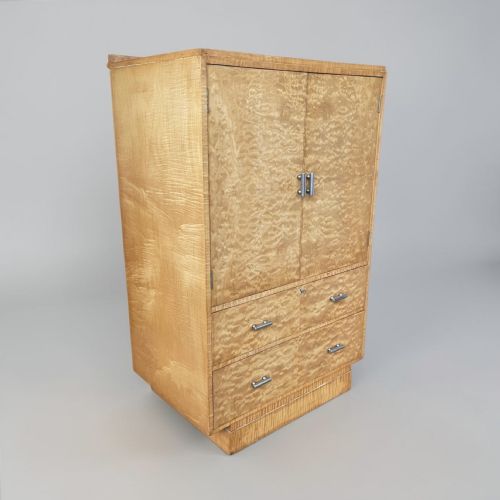
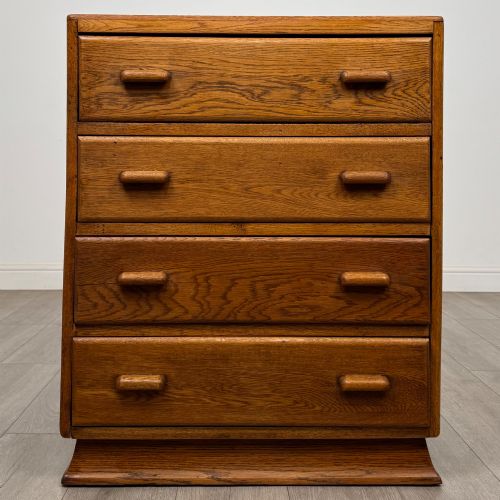
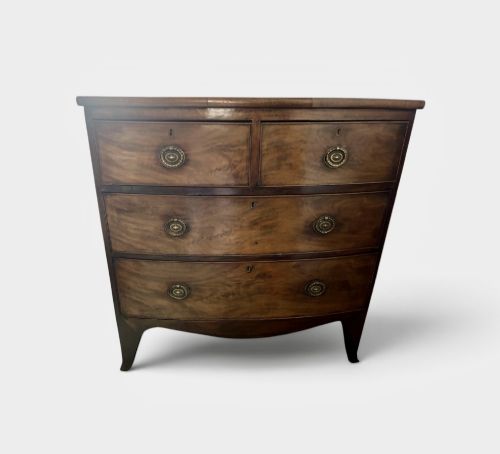
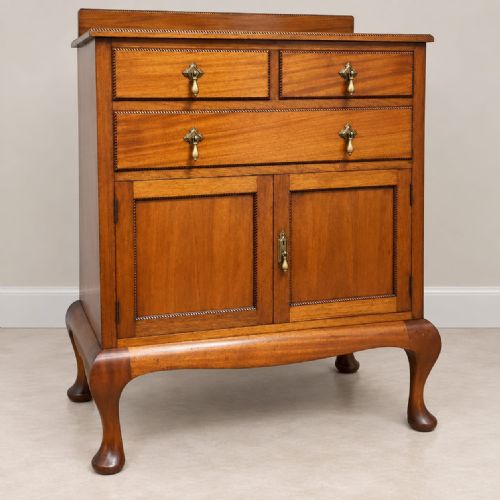
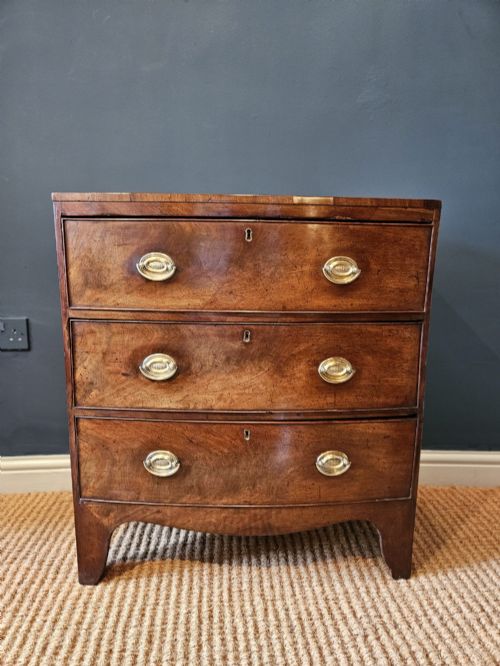
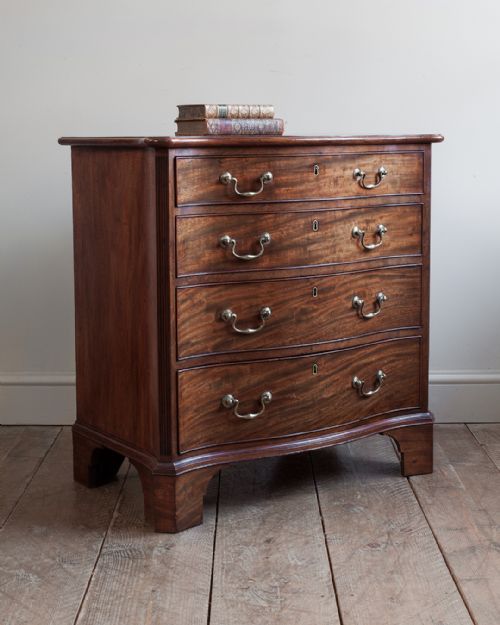
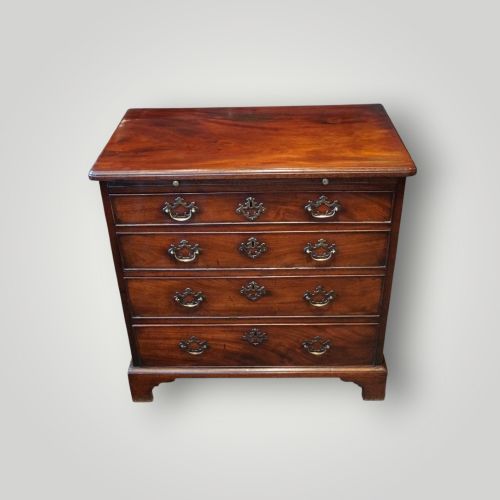
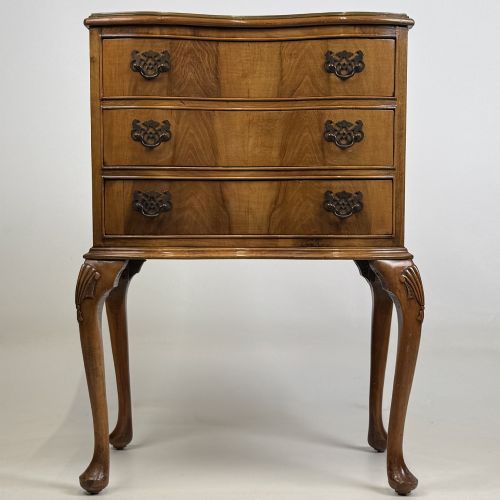
Compact Bedroom Chest
A compact bedroom chest offers practical storage with smaller proportions, fitting neatly into tighter spaces while bringing period character to a room.
Compact Bedroom Chest
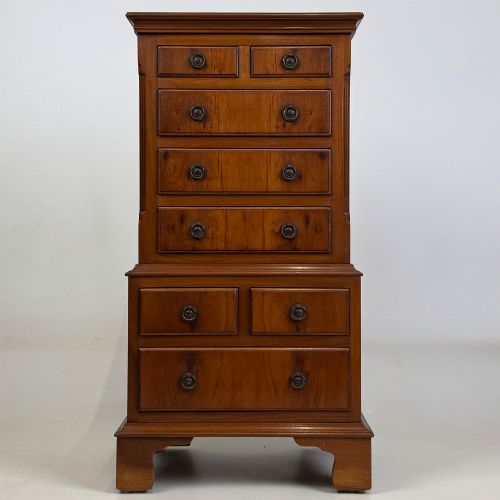
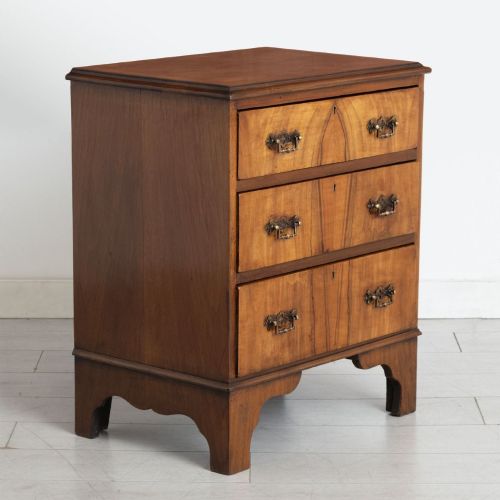
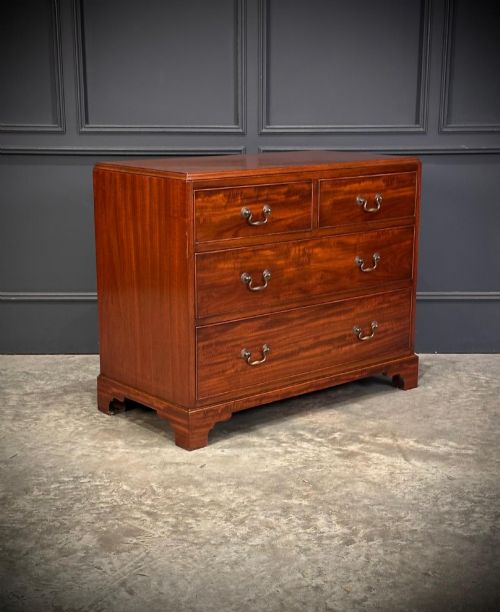
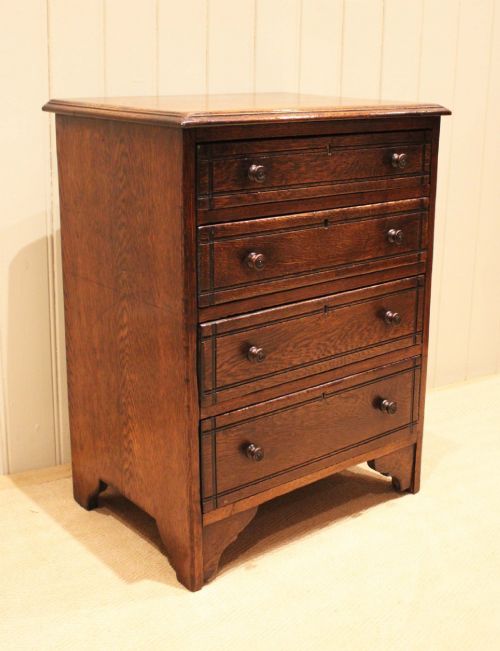
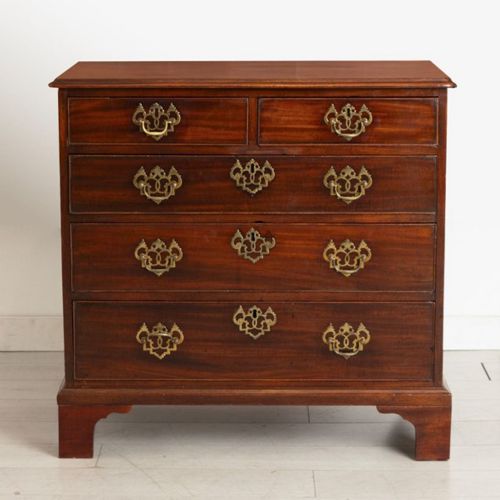
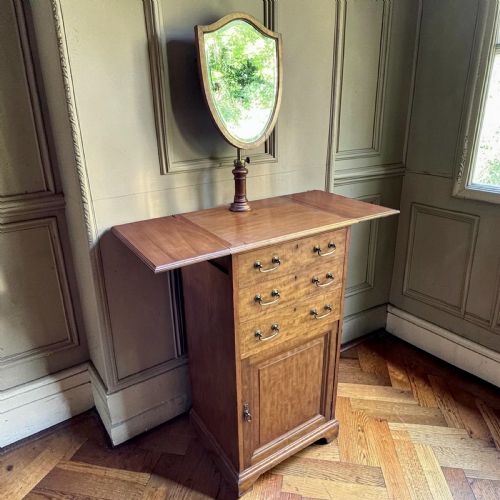
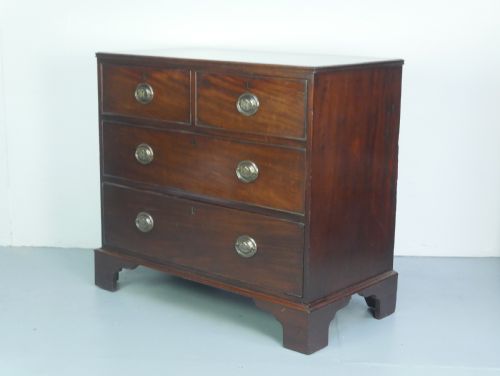
A compact bedroom chest provides essential drawer storage in reduced dimensions, making them suitable for rooms where floor space is limited. When searching for a compact bedroom chest, buyers encounter various forms including traditional chests of drawers, tallboys, dressing chests, and bachelor's chests.
The pieces span multiple periods, from 18th century George III designs and Regency pieces to Victorian examples and 20th century Edwardian and Art Deco pieces. Mahogany and walnut appear frequently, alongside oak, yew wood, ash, and pine.
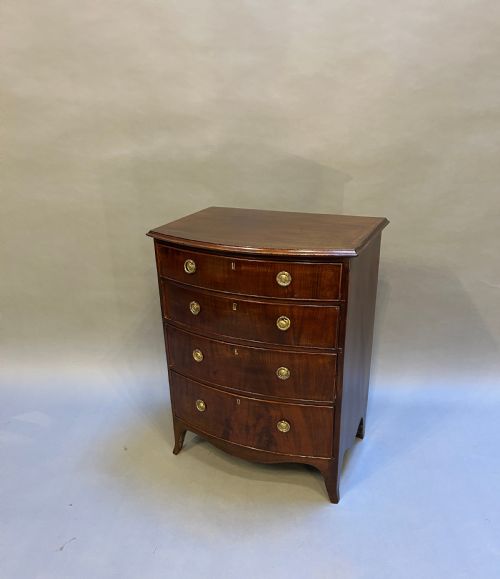
Most examples lean towards smaller proportions, narrow widths, or bow fronts, ensuring they occupy minimal wall space while maintaining usable drawer depth. These pieces range from simple utilitarian oak designs to highly figured mahogany and burr walnut furniture.
How They Were Made
Cabinet makers built these pieces using dense hardwoods like mahogany, walnut, and oak, often selecting highly figured veneers for drawer fronts. Solid timbers provided structural integrity for carcases, bracket feet, and mouldings.
Secondary woods supported internal drawer construction, while brass hardware such as drop handles and backplates added functional detail. Surface finishes ranged from polished timber grains to country house scumble paint.
What Varies In Quality
Quality rests in the choice of timber and the degree of figuring in the mahogany, walnut, or burr walnut veneers. Superior examples display careful grain matching across the drawer fronts and well proportioned carcases.
Finer pieces incorporate specific architectural details like bracket feet, serpentine fronts, or bow fronts executed with crisp lines. Original handles and undisturbed patina distinguish the most desirable specimens.
Gillows of Lancaster
The Compact Bedroom Chest Glossary
- Bachelor's chest
- A small folding top chest originating in the 18th century, useful for compact writing or storage. These often feature bracket feet and fitted top drawers.
- Wellington chest
- A tall, narrow chest secured by a locking side pilaster bar that fastens the entire column of drawers. They typically contain multiple shallow drawers.
- Tallboy
- A tall chest of drawers consisting of one chest stacked upon another, or a tall single carcase offering vertical storage. They maximise drawer capacity while occupying minimal floor space.
- Bow front
- A convex curved front contour that softens the rectangular profile of a chest. This shape appears frequently on Regency and later mahogany and walnut pieces.
- Bracket foot
- A foot fitted beneath the corners of a case piece, shaped like a bracket and often mitred at the corner. They provide a stable, elevated base for Georgian and later chests.
Compact Bedroom Chest: Frequently Asked Questions
What is a compact bedroom chest?
A compact bedroom chest is a smaller scale storage unit designed to fit into restricted spaces without sacrificing drawer capacity. These pieces include narrow chests, tallboys, and bachelor's chests.
They originate from periods spanning the 18th century to the 20th century, utilising timbers such as mahogany, oak, and walnut.
How do I style a compact chest?
A compact chest fits easily beside a bed, in an alcove, or along a smaller wall where standard furniture overwhelms the room. Their reduced proportions make them versatile additions to modern or period interiors.
Pair them with a simple mirror or utilise the top surface for everyday items while storing clothing in the drawers below.
What is the difference between a tallboy and a chest?
A tallboy offers vertical storage, often built as a tall single unit or as two stacked sections to increase the number of drawers. Standard chests maintain a lower, wider profile.
Both forms provide solutions for limited floor space, though tallboys reach higher up the wall.
Which woods are most common?
Mahogany and oak appear most frequently across these listings, alongside walnut, burr walnut, yew wood, and pine. Cabinet makers selected these timbers for their durability and attractive grain patterns.
Figured veneers were frequently applied to drawer fronts on higher grade Georgian and Art Deco pieces.