





Colonial Writing Table
A colonial writing table brings dense hardwoods and global craftsmanship into the home, offering a practical workspace shaped by centuries of trade.
Colonial Writing Table
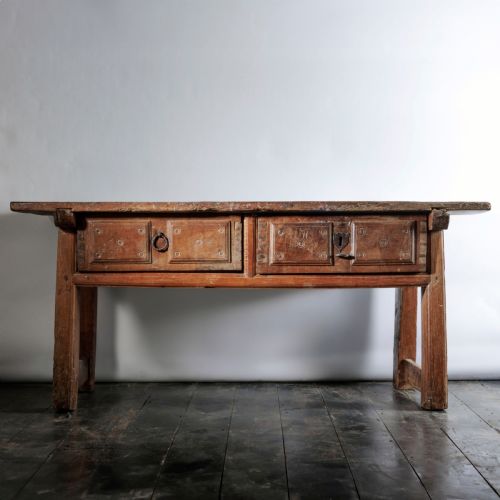
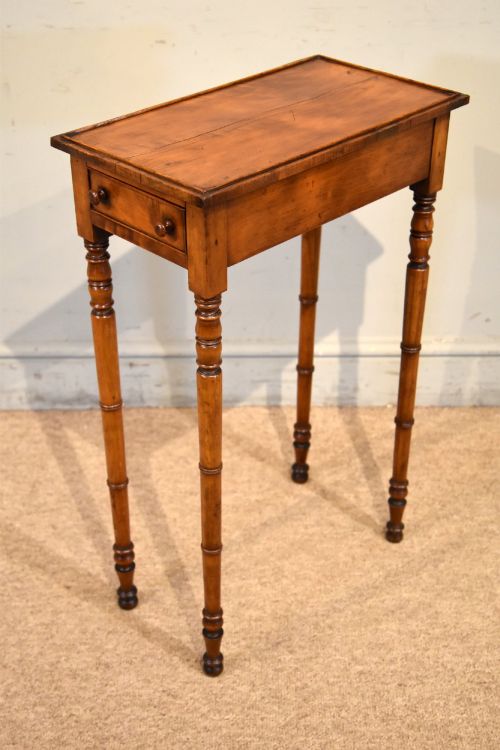
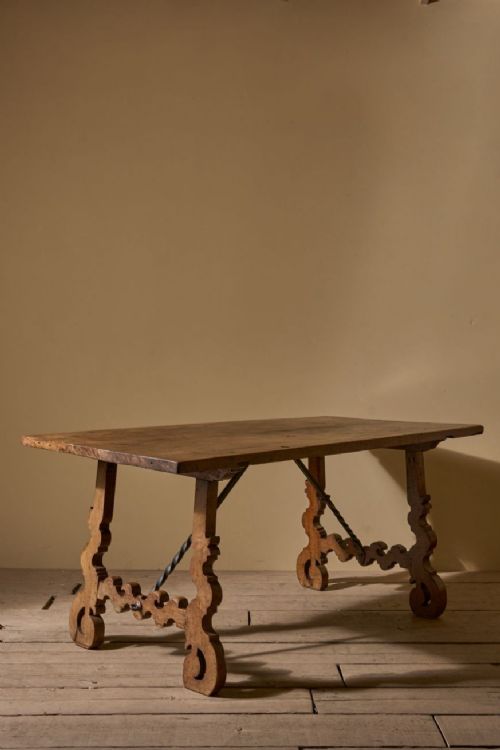
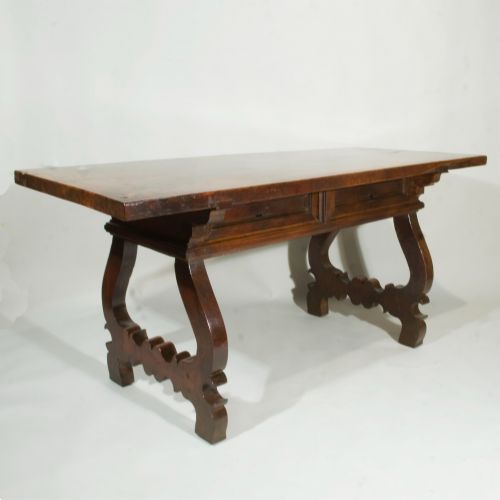
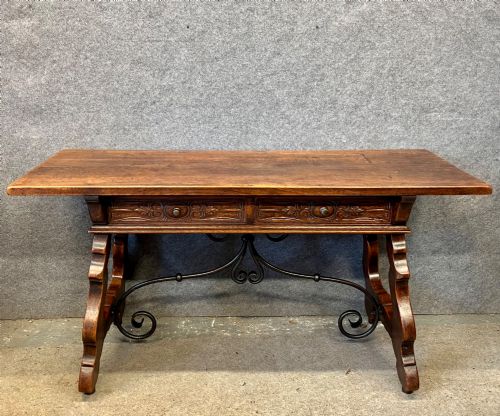
A colonial writing table encompasses various desks, library tables, and side tables produced across different global territories under European influence during the seventeenth, eighteenth, and nineteenth centuries. Buyers searching for a colonial writing table will encounter pieces ranging from Anglo-Indian padauk desks to Portuguese rosewood tables and Spanish colonial furniture.
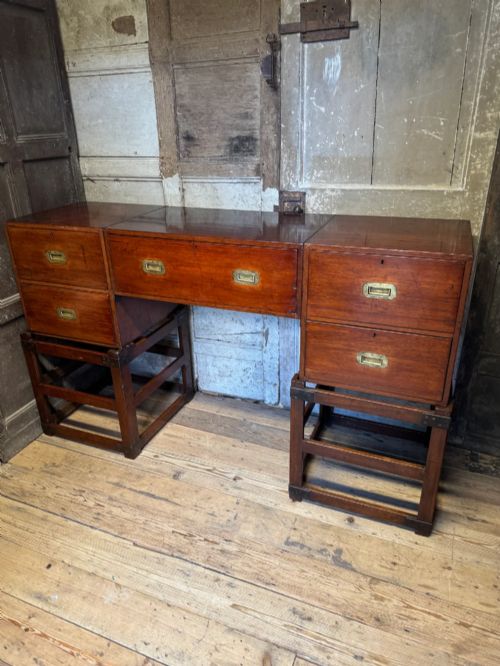
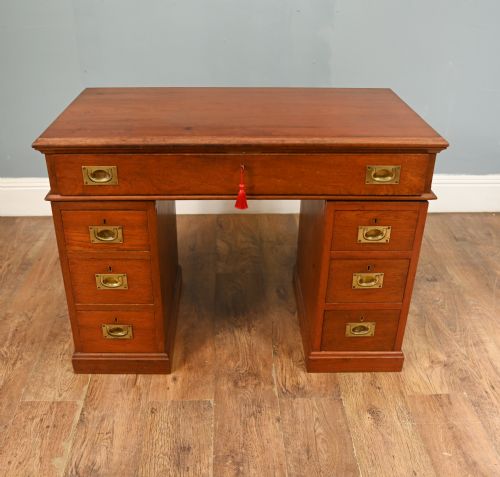
The form frequently emerges from diverse stylistic traditions, including Anglo-Indian, Spanish Baroque, Portuguese Colonial, and Victorian military designs. These items serve as functional writing surfaces or partners desks while carrying the distinct aesthetic of their regions of origin.
Materials and construction
Cabinetmakers utilised dense exotic hardwoods such as padauk, rosewood, walnut, and mahogany, often pairing them with brass hardware and wrought iron supports. These heavy timbers provided the necessary durability for furniture transported across long maritime distances.
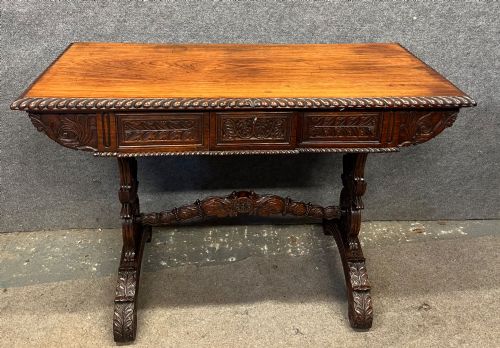
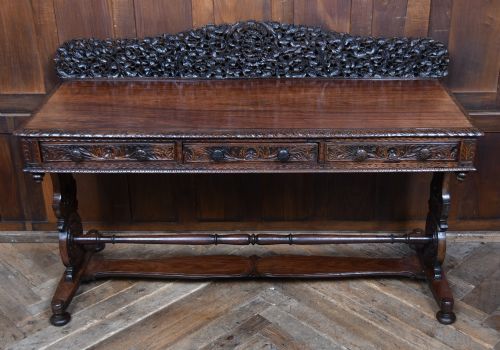
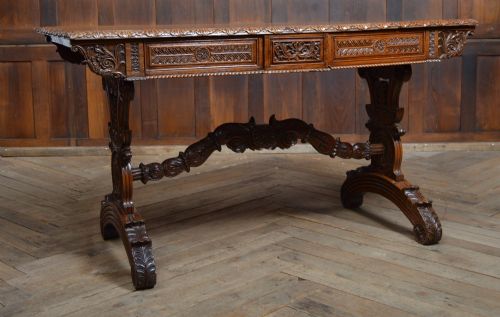
Surfaces frequently display intricate carved details, particularly on Anglo-Indian padauk library tables and partners desks. Construction techniques accommodated campaign use in some instances, allowing large pieces to break down for travel while maintaining structural integrity.
Colonial Writing Table Retail Price Guide 2026
Typical asking prices for colonial writing table among the pieces listed under this phrase on Sellingantiques today, from the lower quarter to the upper quarter. They describe what is for sale here now, not the wider market.
Some partners desks allow two people to argue over paperwork simultaneously from opposite sides of the exact same chunk of padauk.
Assessing quality and execution
Quality separates standard regional utility pieces from exceptional cabinetwork through the crispness of the wood carving and the selection of timber grain. Superior examples exhibit tightly fitted drawer joints, well-chosen padauk or rosewood boards, and original brass fittings.
The refinement of the proportions and the complexity of the stylistic motifs, whether Spanish provincial or Anglo-Indian, determine the standing of an individual desk. Coarser execution appears in utilitarian rustic pieces, whereas master workshops delivered deeply articulated relief carving and balanced pedestals.
Currie & Co Calcutta
The Colonial Writing Table Glossary
- Padauk
- A dense, heavy tropical hardwood prized for its deep reddish-brown colour and durability. Cabinetmakers in Anglo-Indian workshops frequently selected this timber for large desks and library tables.
- Partners desk
- A large double-sided desk designed for two people to work opposite one another. These pieces often feature drawers and cupboards on both faces.
- Campaign furniture
- Portable furnishings built for travel and military use, typically featuring brass corners, recessed handles, and knock-down construction.
- Rosewood
- A richly grained dark wood utilised in Portuguese colonial and nineteenth-century furniture. Its distinct aromatic quality and varied figure made it popular for high-status tables.
- Inverted breakfront
- A cabinet or desk configuration where the central section recedes rather than projects forward. This architectural form appears on larger sideboards and pedestal desks.
Colonial Writing Table: Frequently Asked Questions
What is a colonial writing table?
A colonial writing table is a desk or library table produced in regions under European rule, combining European furniture forms with local timbers and craftsmanship. These pieces span from the seventeenth century through the Victorian era and reflect diverse trade routes.
They frequently employ woods like padauk, rosewood, and walnut, often featuring carved ornamentation unique to Anglo-Indian or Portuguese colonial traditions. Their construction accommodated both stationary study use and the demands of travel.
How do I identify Anglo-Indian furniture?
Anglo-Indian furniture is typically identified through the use of padauk timber combined with dense, intricate hand-carved relief work depicting foliage and floral motifs. These pieces often take the form of library tables, partners desks, or campaign items.
The integration of European furniture forms with indigenous carving styles creates a distinct aesthetic. Hardware like brass drawer pulls and recessed handles further characterises these works.
Where were these tables made?
These tables originated in various overseas territories and European provinces connected to global trade networks. Production centres included regions influenced by British, Spanish, and Portuguese administration.
Items reflect local materials and regional styles, ranging from Spanish colonial walnut pieces to West Indian occasional tables and Calcutta-made library furnishings. Each origin imparts specific characteristics to the timber and joinery.
How do I care for rosewood and padauk?
Care for dense tropical hardwoods involves maintaining stable indoor humidity and avoiding direct sunlight to prevent the timber from drying or fading. Regular dusting with a soft, dry cloth preserves the polished surface.
Harsh chemical cleaners should be avoided in favour of traditional furniture waxes applied sparingly. Protecting the surface from moisture ensures the longevity of antique rosewood and padauk.