



Colonial Travel Trunk
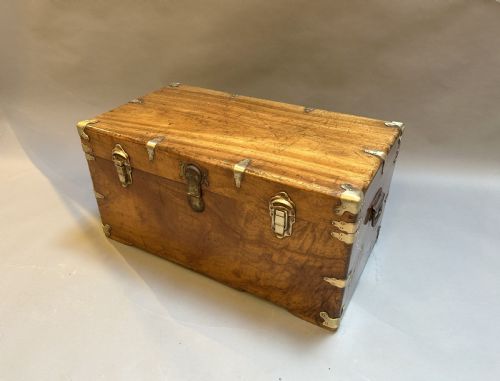
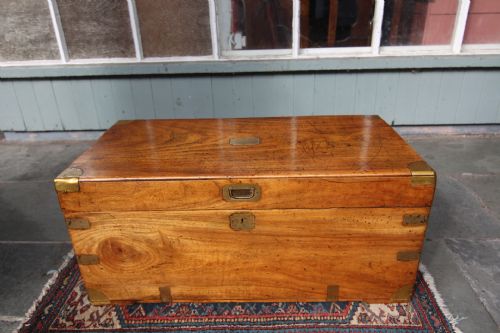
These colonial travel trunk pieces are robust timber chests built for distant journeys, prized for their rich woods and practical brass mounts.
Colonial Travel Trunk
A colonial travel trunk serves as a sturdy receptacle designed for officers and merchants navigating distant territories during previous centuries. Buyers searching this phrase encounter robust chests fashioned from resilient timbers intended to withstand arduous voyages.
The selections appearing here most frequently date from the nineteenth century, reflecting periods such as the Victorian era and the Regency years. Pieces span various regional identities including China Trade, Spanish, and Anglo-Indian origins.
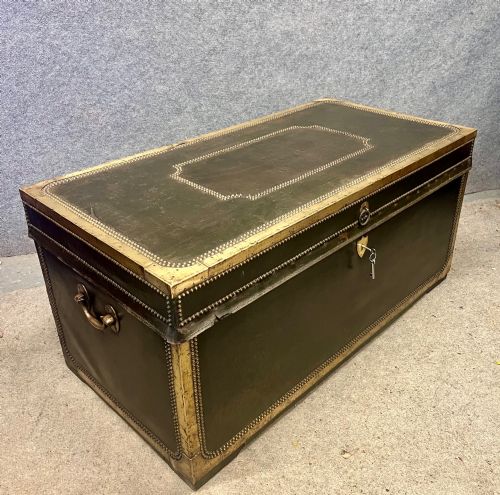
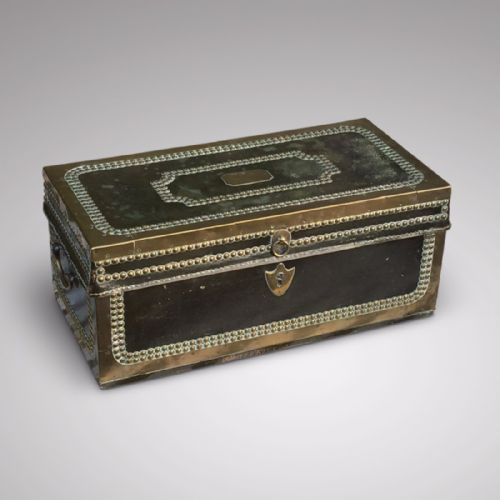
Forms range from simple dome top coffers to fitted interior storage chests and gentleman travelling trunks. Materials predominantly feature camphor wood and teak, supplemented by elm, satinwood, larchwood, and leather.
Materials and construction
Construction relies heavily on durable timbers such as camphor wood and teak, chosen for their resilience against humidity and insects during transit. Wood panels are joined securely to endure the physical strains of long distance movement.
Metal hardware plays an essential structural and decorative role, with brass corners, straps, and mounts reinforcing the edges and joints. Leather coverings and iron studs appear on specific Spanish and China Trade variants to add further protection.
Colonial Travel Trunk Retail Price Guide 2026
Typical asking prices for colonial travel trunk among the pieces listed under this phrase on Sellingantiques today, from the lower quarter to the upper quarter. They describe what is for sale here now, not the wider market.
Camphor wood trunks retain their distinct herbal scent after centuries, serving as a built-in moth repellent for modern wardrobes.
Assessing quality and craftsmanship
Quality reveals itself in the selection of primary timbers, where dense grains of satinwood or figured camphor wood elevate a piece above standard utility items. The integration of solid brass mounts rather than plated substitutes signals superior original commissioning.
Internal complexity also distinguishes finer examples, particularly those retaining fitted compartments, writing surfaces, or original locking mechanisms. The precision of the joinery and the condition of the exterior leather or polished wood determine the standing of each chest.
The Colonial Travel Trunk Glossary
- Campaign chest
- A portable storage box constructed in sections with recessed brass handles to facilitate transport by military officers.
- Camphor wood
- An aromatic timber native to Asia, traditionally utilised for travel trunks due to its insect-repellent properties.
- China Trade
- Objects manufactured in China specifically for export to Western markets during the eighteenth and nineteenth centuries.
- Dome top
- A curved lid configuration found on earlier coffer style chests designed to shed water during travel.
- Brass bound
- Furniture reinforced along the edges and corners with metal strips and brackets to withstand rough handling.
Colonial Travel Trunk: Frequently Asked Questions
What is a colonial travel trunk?
A colonial travel trunk is a portable storage chest built from durable timbers like teak or camphor wood for officers and merchants on long journeys.
These pieces feature protective brass mounts and recessed handles designed to withstand the rigours of transit across distant regions.
How were these trunks used?
Owners used these sturdy chests to transport clothing, documents, and personal valuables safely during extended voyages by land and sea.
Many incorporated internal compartments or writing surfaces so travellers could organise their belongings and conduct business on the move.
Where do these chests originate?
The pieces originate from various global outposts and trade routes associated with British, Spanish, and European colonial expansion.
Common origins include China Trade workshops, Anglo-Indian centres, and Spanish colonial territories active during the eighteenth and nineteenth centuries.
How do I care for camphor wood?
Keep the wood away from direct heat sources and harsh sunlight to prevent the natural oils from drying out.
Maintain the finish by applying a light coat of appropriate wax periodically to preserve the grain and the characteristic aroma.