


Colonial Pedestal Table
A colonial pedestal table brings dense tropical hardwoods and intricate regional carving into British interiors, spanning the nineteenth century and the Regency and Victorian periods.
Colonial Pedestal Table
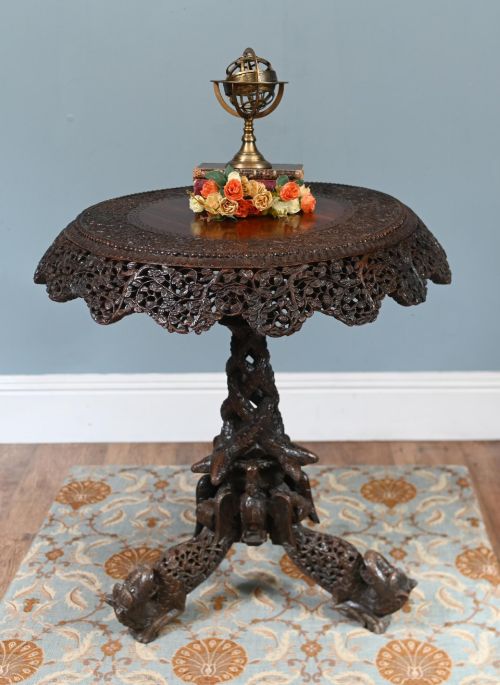
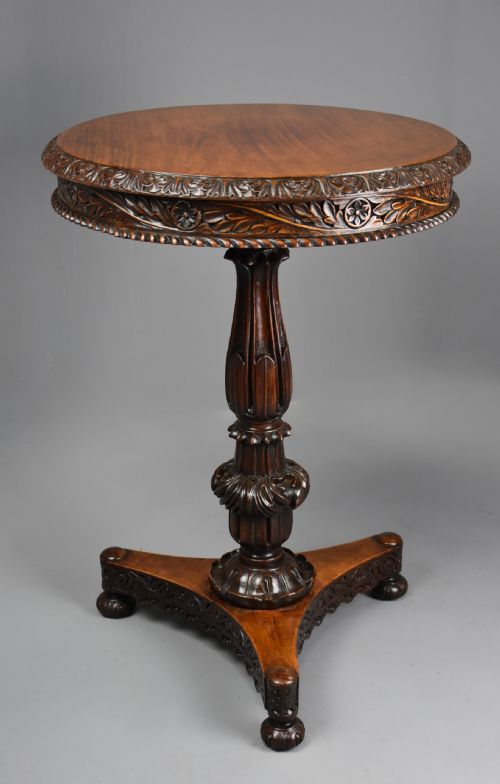
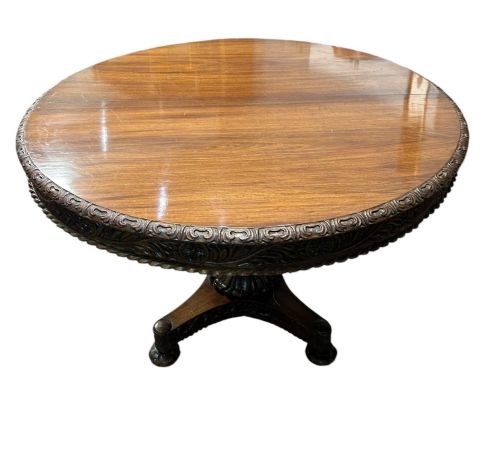
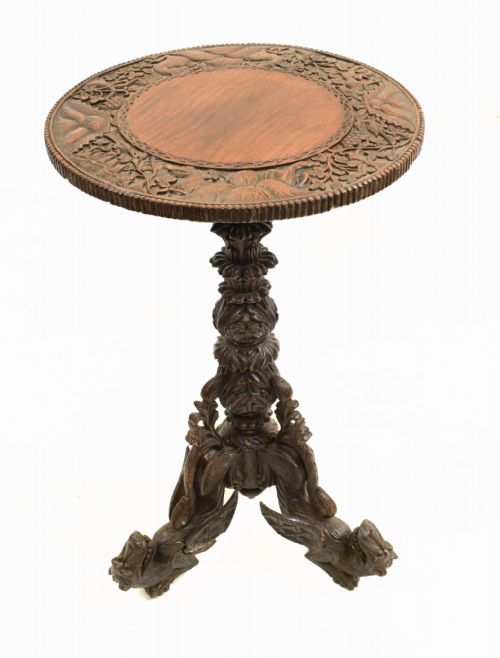
A colonial pedestal table bridges British domestic forms with overseas craftsmanship, produced across India, Burma, and Ceylon during the nineteenth century. These pieces emerge under British colonial influence, combining familiar European silhouettes like tilt-tops and centre tables with local carving traditions and native timbers.
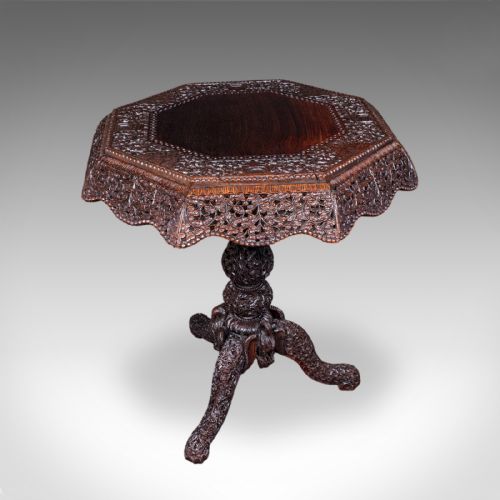
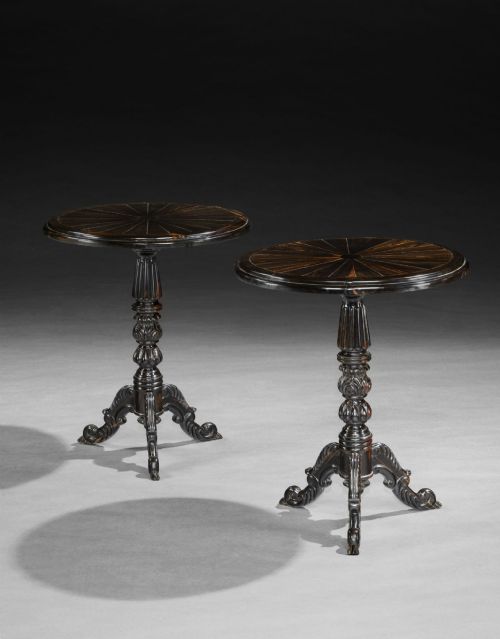
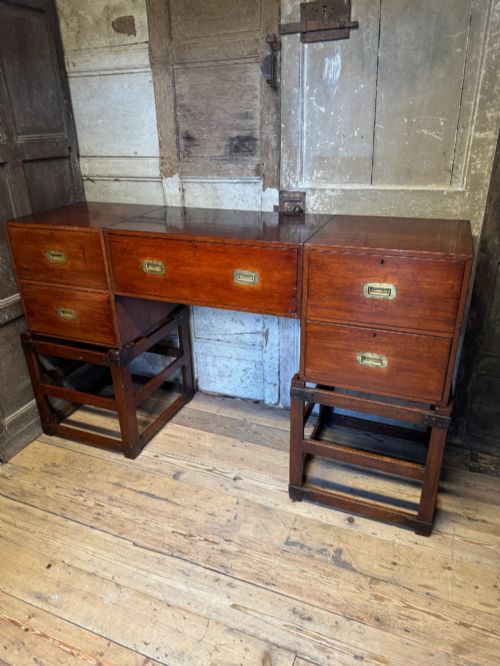
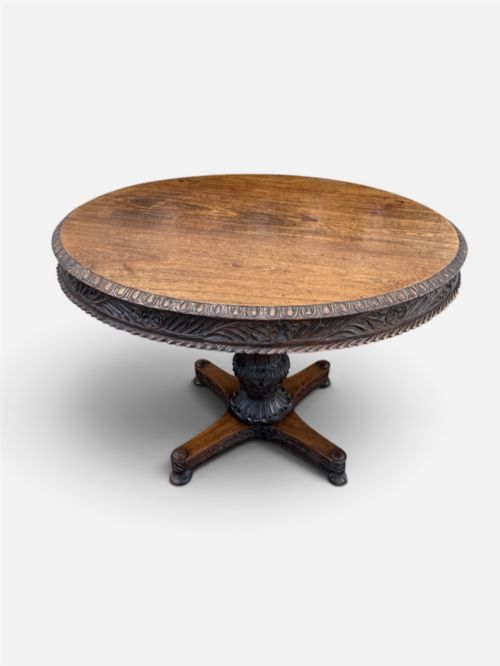
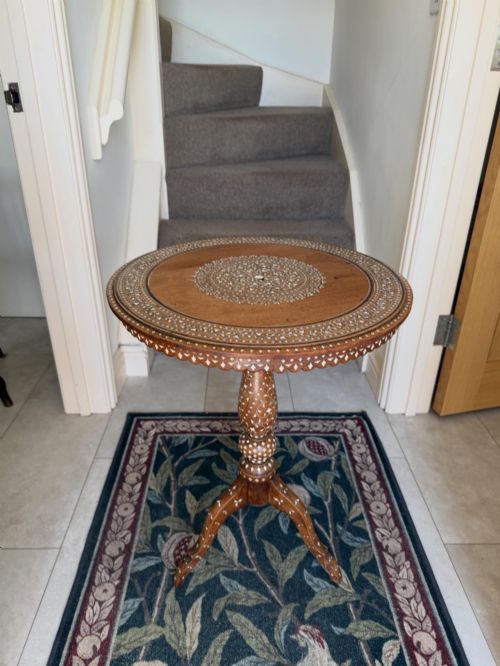
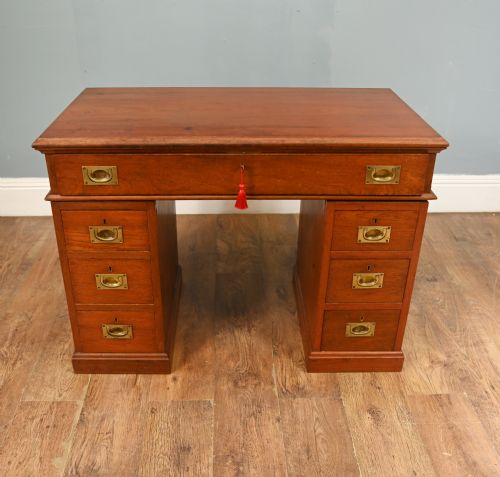
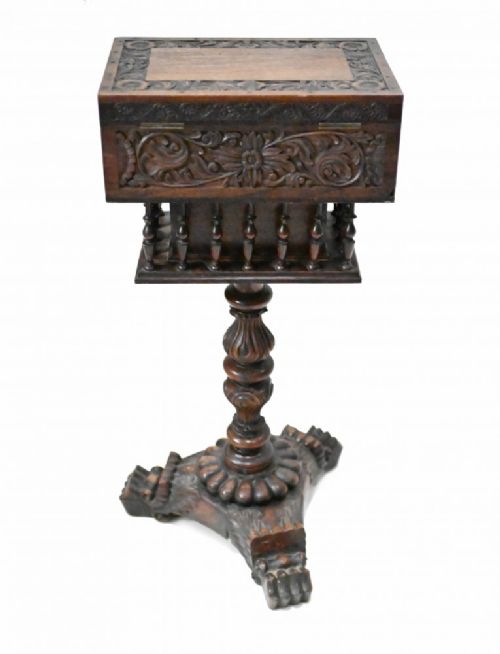
The versions most commonly met on this page include Anglo-Indian padouk occasional tables, carved Burmese tilt-tops, and Ceylonese tripod tables resting on central pillars or pedestals. Alongside these standard occasional forms appear specialised campaign desks, teapoys, and larger centre tables suited to formal reception rooms.
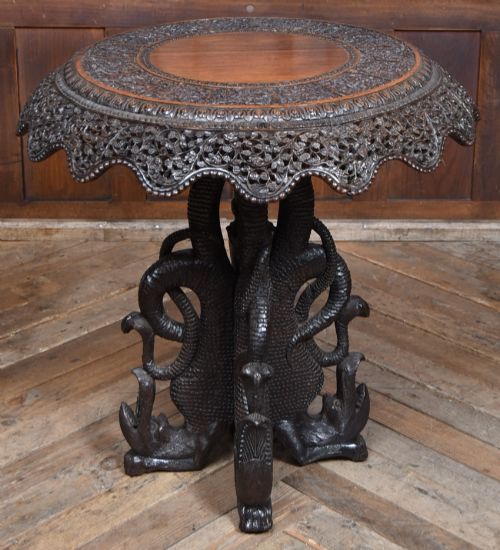
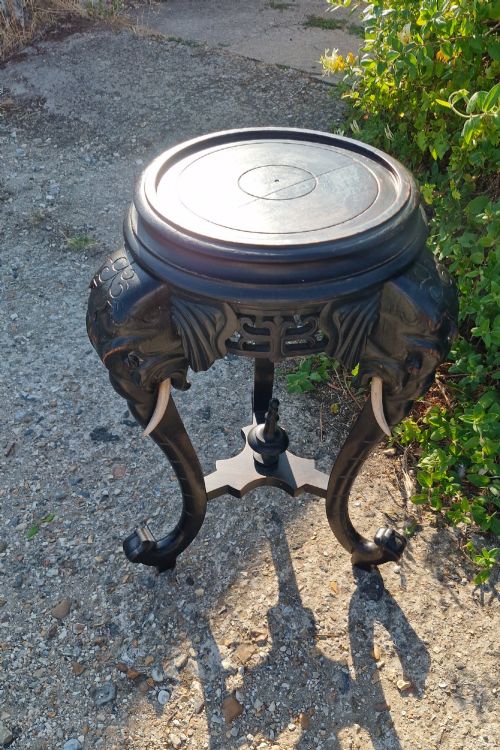
The regional origins dictate the decorative vocabulary, ranging from deep relief foliage and scrolling tendrils associated with Hoshiarpur and Bombay workshops to figural supports shaped as elephants or camels. Dating primarily from the eighteen-forties to the close of the nineteenth century, the pieces reflect both British utility and native artisanal skill.
Materials and Construction
Makers constructed these tables from dense tropical hardwoods including padouk, teak, rosewood, ebony, and satinwood, selected for their stability and capacity for micro-detailing. These timbers were often turned on a lathe for central pedestals and joined to heavy tripod bases or platform feet.
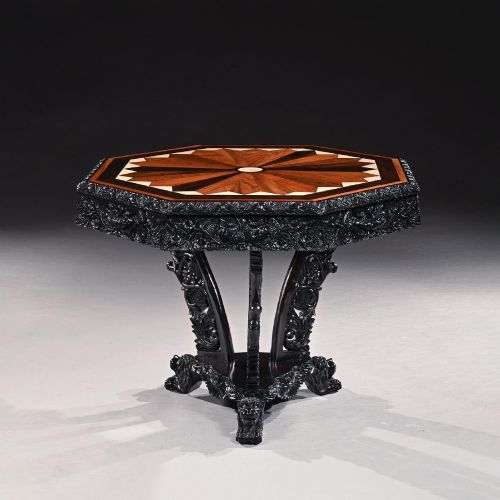
Carvers employed deep relief chisel work, piercing, and inlay with materials such as mother-of-pearl or contrasting specimen woods to articulate surface designs. Tilt-top mechanisms utilised brass catches and iron hinges to allow circular or polygonal table tops to fold vertically when not in use.
Colonial Pedestal Table Retail Price Guide 2026
Typical asking prices for colonial pedestal table among the pieces listed under this phrase on Sellingantiques today, from the lower quarter to the upper quarter. They describe what is for sale here now, not the wider market.
Object types range from side and occasional tables to pedestal desks, teapoys, sideboards, and plant stands with regional Anglo-Indian or Burmese carving.
Evaluating Quality and Execution
The distinction between ordinary production and superior execution rests upon the crispness of the hand-carving and the choice of timber. Finer examples display deep, undercut foliage without splintering, whilst simpler items rely on shallow stamping or mechanical grooving.
Timber selection governs structural longevity, with solid padouk or ebony framing holding up better through temperature shifts than veneered alternatives. The integration of the pedestal joint to the tabletop block determines stability, separating robust centre tables from those with excessive wobble.
The Colonial Pedestal Table Glossary
- Padouk
- A heavy, durable reddish-brown tropical hardwood native to Asia and Africa. Cabinetmakers favoured it for large desks, sideboards, and occasional tables due to its resistance to splitting.
- Tilt-top table
- A table featuring a hinged mechanism beneath the surface allowing the top to pivot upright. This design enabled easy storage against walls when the furniture was not required.
- Teapoy
- A small occasional table or stand originally designed to hold tea canisters and equipment. Nineteenth-century colonial examples frequently incorporated lidded compartments or carved pedestals.
- Specimen wood
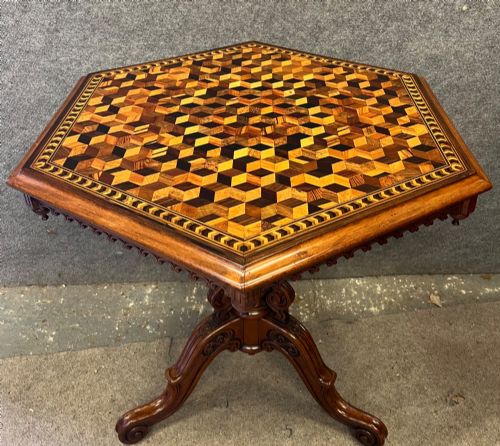
- Furniture constructed from multiple distinct timber species arranged to display contrasting natural grains and colours. Ceylonese workshops frequently utilised this technique for decorative tabletops.
- Campaign furniture
- Portable pieces designed for military officers on the move, featuring removable legs, brass corners, and folding structures. Surviving nineteenth-century examples often use durable hardwoods like teak or padouk.
Colonial Pedestal Table: Frequently Asked Questions
How do I date a colonial pedestal table?
Dating relies upon a combination of construction methods, timber choice, and stylistic markers recorded across the nineteenth century. Regency and early Victorian pieces from around eighteen-twenty to eighteen-fifty often display heavier proportions and restrained classical turning before more exuberant carved foliage took over later in the period.
The presence of original brass hardware, screw threads, and regional carving styles help narrow down the decade of production. Comparative examination of recorded workshop output from regions like Bombay, Burma, and Ceylon provides further chronological context.
Where were these tables made?
Workshops operated across British-administered territories in South and Southeast Asia, primarily in regions with established woodworking traditions. Major centres included Bombay, Northern India, Burma, and Ceylon.
Local artisans adapted European furniture forms requested by British residents while employing indigenous woods and decorative motifs. This cross-cultural exchange produced distinct regional signatures such as the figural animal supports from India or the specimen wood mosaics from Ceylon.
How should I care for tropical hardwood?
Maintenance requires protecting dense timbers like padouk, teak, and rosewood from sudden shifts in humidity and direct heat sources. Regular dusting with a dry lint-free cloth preserves the polished surface without the need for heavy chemical waxes.
Applying a minimal amount of natural beeswax periodically helps nourish the dry grain of older hardwoods. Avoid placing tables near radiators or in conservatories where extreme temperature changes can cause timber movement.
Were these tables used in British homes originally?
Many of these pieces arrived in Britain via officers, administrators, and merchants returning from overseas service during the Victorian era. They were subsequently integrated into drawing rooms, libraries, and studies as occasional stands or centre tables.
Their robust construction and decorative carving made them fashionable additions to eclectic nineteenth-century interiors. Today, they function similarly in modern spaces as lamp tables, plant stands, or central display pieces.