
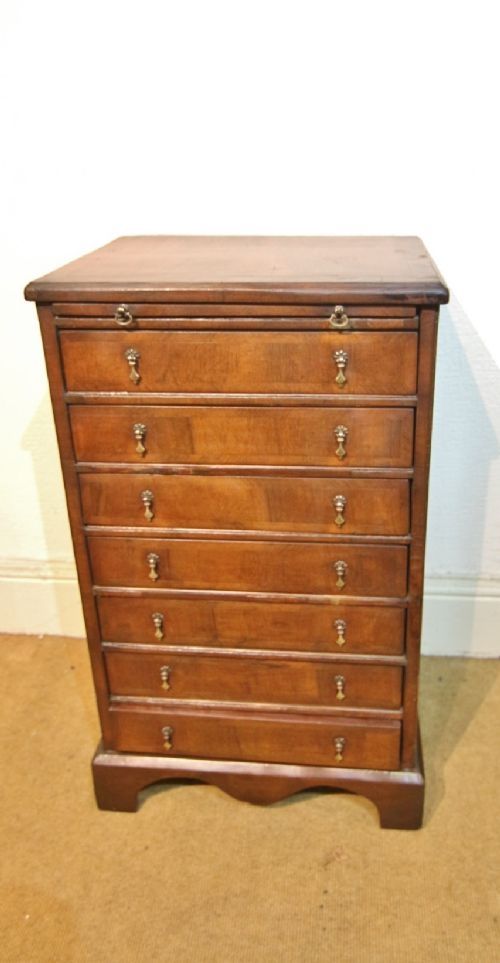
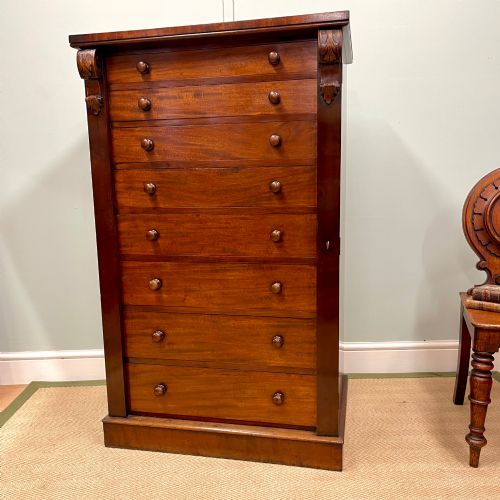


Collectors Tallboy Cabinet
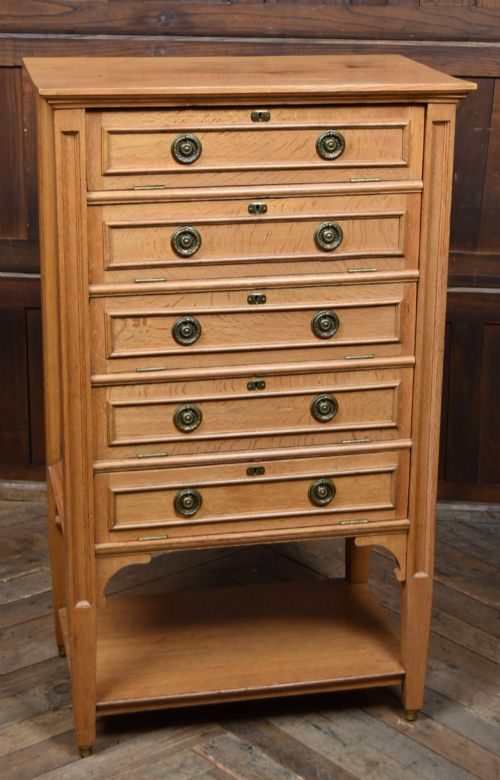
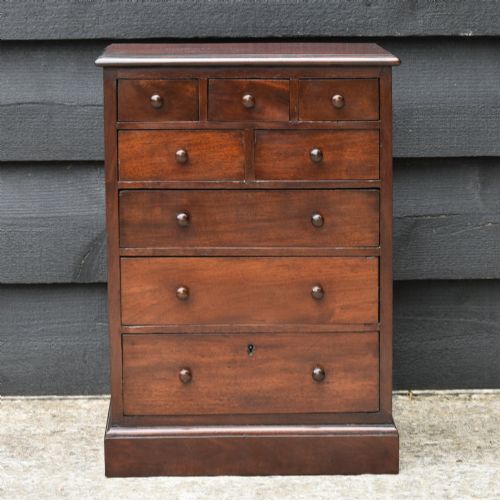
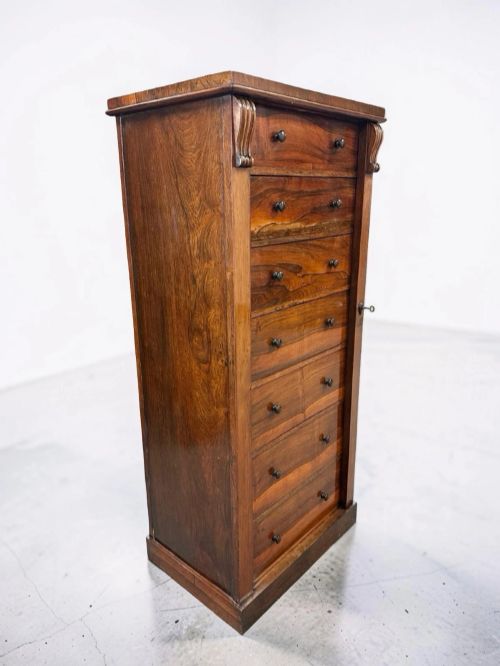
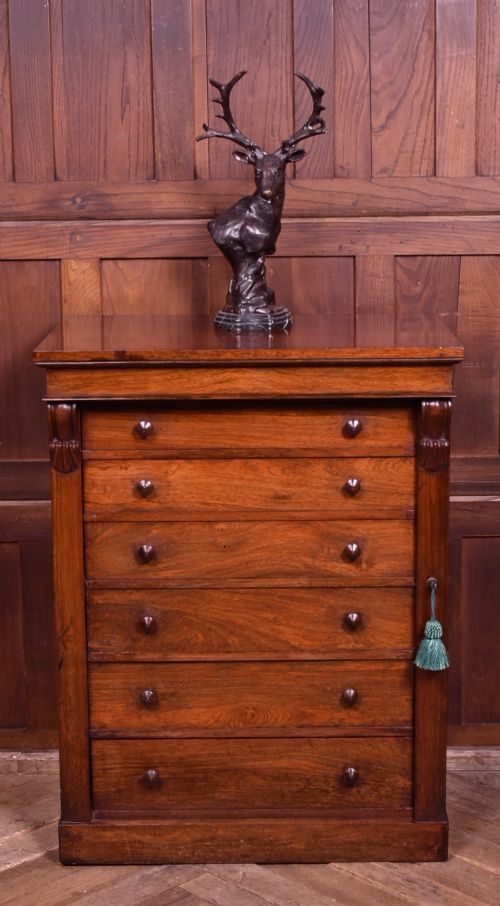
These collectors tallboy cabinet pieces are narrow vertical chests designed to hold specimens, papers, or small treasures without taking up much floor space.
Collectors Tallboy Cabinet
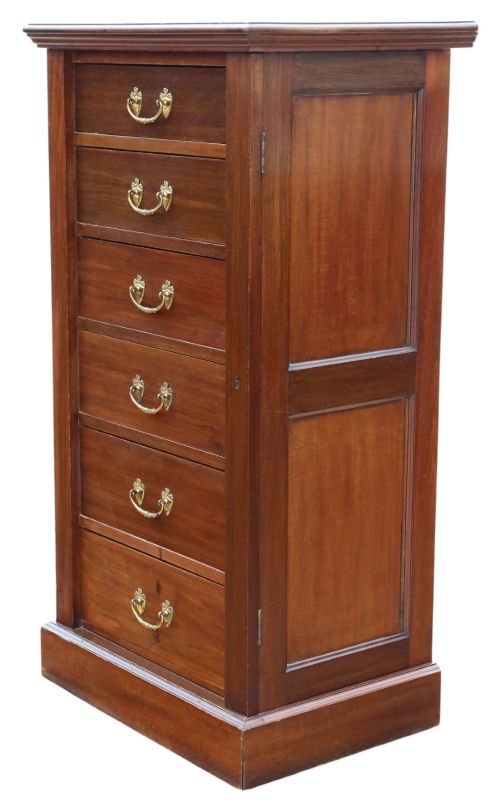
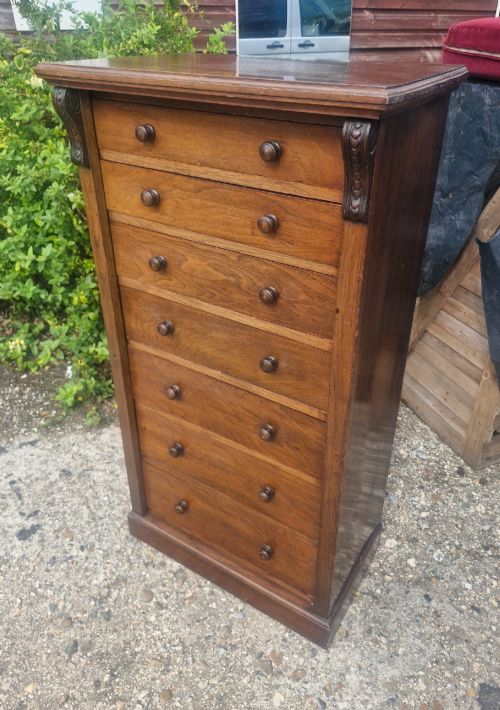
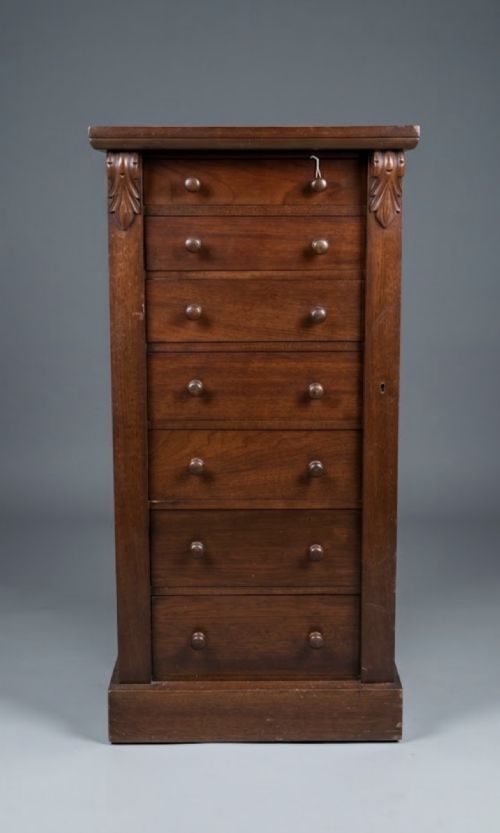
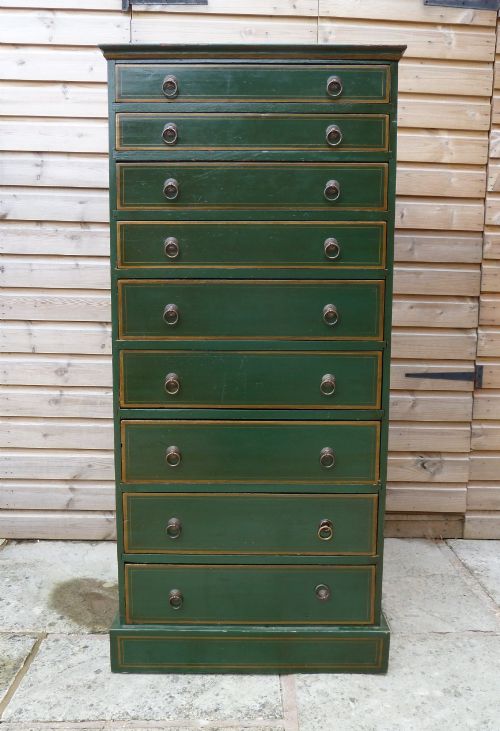
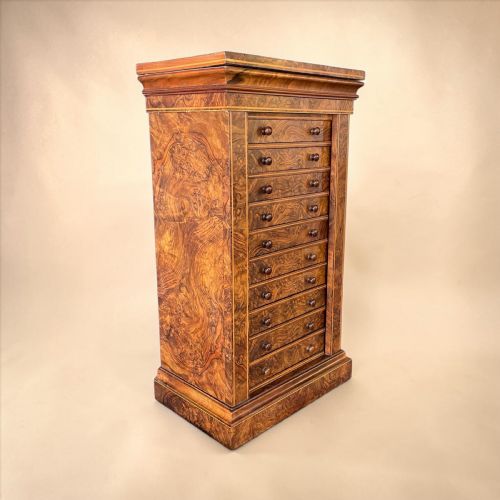
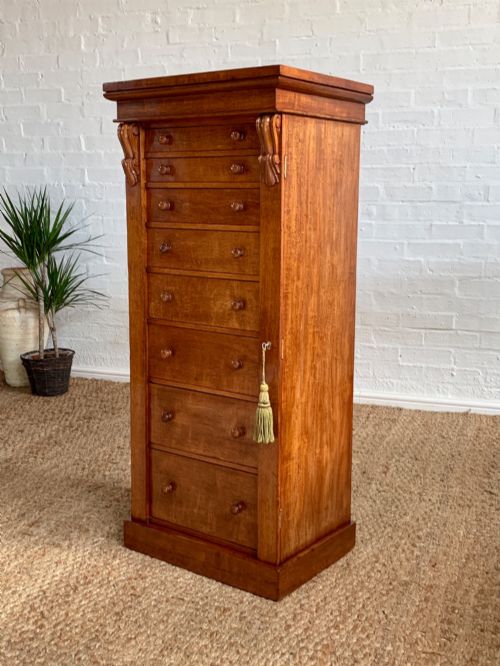
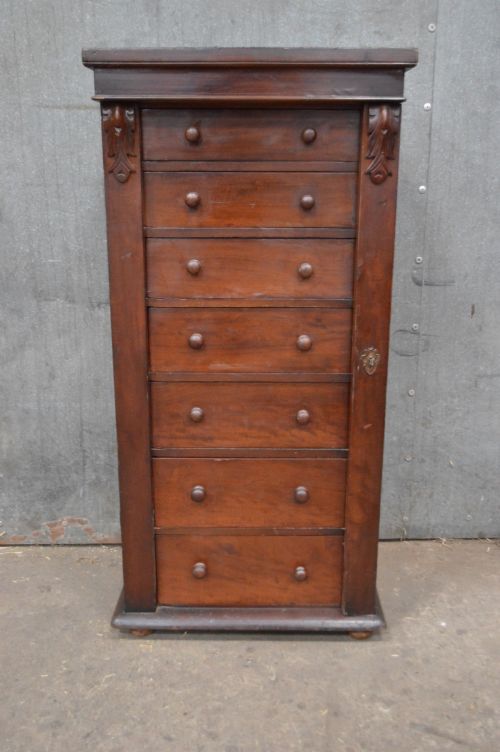
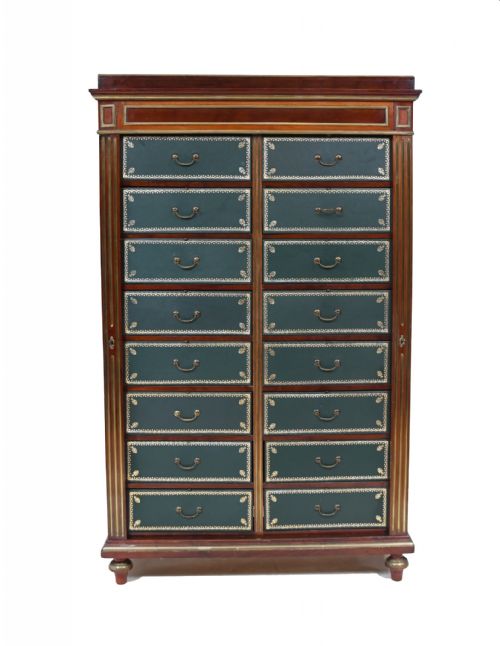
When you search for collectors tallboy cabinet examples, you encounter tall, narrow vertical pieces primarily functioning as multi-drawer storage for specimens, documents, or small belongings. The most common form on this page is the Wellington chest, alongside specialised collectors chests and slim office or filing cabinets.
The evidence spans the nineteenth century through the Edwardian period and into the nineteen-twenties, incorporating Victorian, Regency, and Georgian styles. Most examples lean towards traditional timber construction, utilising a vertical stack of numerous small drawers operated by a locking side stile.
Materials and construction methods
Cabinetmakers built these tall cabinets using dense hardwoods such as mahogany, walnut, rosewood, and oak, frequently selecting figured veneers like burr walnut and fiddleback mahogany for the primary visual surfaces. Secondary woods like pine appear in the interior drawer construction.
Construction relies on traditional joinery to support numerous shallow drawers within a narrow frame, paired with brass hardware, leather details, and the characteristic locking side pilaster or stile typical of Wellington designs.
Quality factors in tall cabinets
The distinction between standard examples and superior pieces rests in the choice of timber figurations, such as highly figured mahogany or burr walnut veneers, and the crispness of the original turned wooden knobs or brass mounts.
Internal execution also separates the tiers, including the neatness of drawer dovetailing, the retention of working locking stiles with original keys, and the preservation of untreated interior secondary timbers.
Gillows of Lancaster
The Collectors Tallboy Cabinet Glossary
- Wellington chest
- A tall, narrow chest of drawers featuring a hinged locking side stile that secures all drawers when locked. This design originated in the nineteenth century.
- Collectors chest
- A specialised cabinet containing numerous shallow drawers intended for organising small specimens or coins. These pieces often feature glass tops or specialised internal dividers.
- Fiddleback mahogany
- A figured mahogany timber showing a wavy, undulating grain pattern resembling the back of a violin. Cabinetmakers reserved this material for high-end statement fronts.
- Burr walnut
- A decorative veneer harvested from the burl growths of walnut trees, displaying intricate swirling patterns. It is prized for its rich texture on Victorian and Georgian cabinetry.
Collectors Tallboy Cabinet: Frequently Asked Questions
What is a Wellington chest?
A Wellington chest is a tall, narrow set of drawers distinguished by a hinged wooden flap or stile on one side. When closed and locked, this stile secures every drawer simultaneously.
This clever mechanism made the form popular in the nineteenth century for keeping private papers or valuable specimens secure in limited bedroom or study spaces.
How were collectors cabinets used?
Collectors cabinets were built with many shallow drawers to house natural history specimens, coins, medals, or mineral samples. The internal depths accommodated flat items and small objects rather than bulky clothing.
Owners sorted their collections systematically across the tiers, often utilising felt or leather linings inside the drawers to protect delicate items from shifting.
Which woods are most common?
Mahogany and walnut dominate the surviving examples, appearing both as solid timber and as figured veneers. Rosewood and oak also feature regularly across the nineteenth-century pieces.
Pine and pitch pine served primarily for utility filing cabinets or internal drawer carcases, while choice burr walnut and fiddleback grain adorned the main display surfaces.
How do I spot an antique tallboy?
Examine the construction methods visible inside the drawers and along the back panels, looking for hand-cut dovetails and traditional secondary timbers like pine. Antique proportions tend to be narrower and heavier than modern reproductions.
Check for the characteristic locking side stile and original turned wooden knobs which help confirm nineteenth-century or Edwardian origins.