





Collectors Bank of Drawers
A collectors bank of drawers offers compartmentalised storage in woods like pine, mahogany, and walnut, bringing functional antique organisation to modern spaces.
Collectors Bank of Drawers
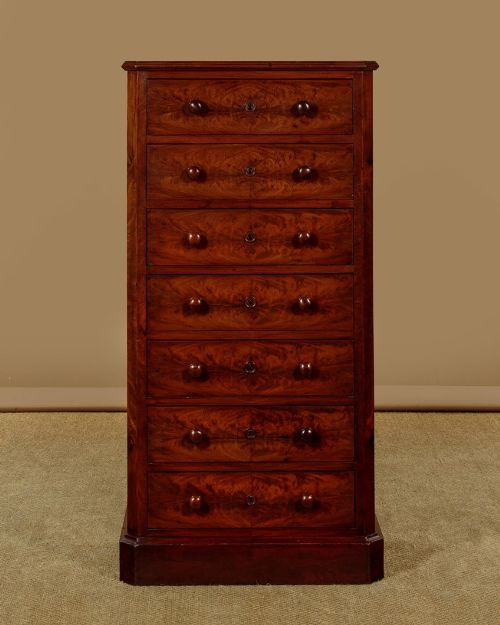
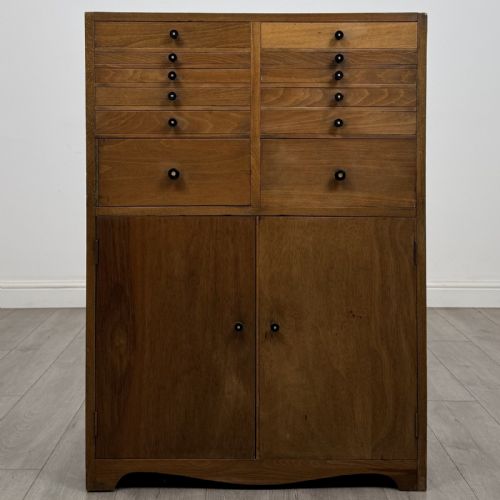
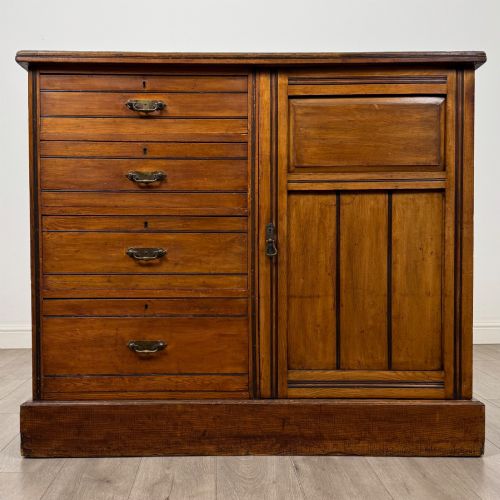
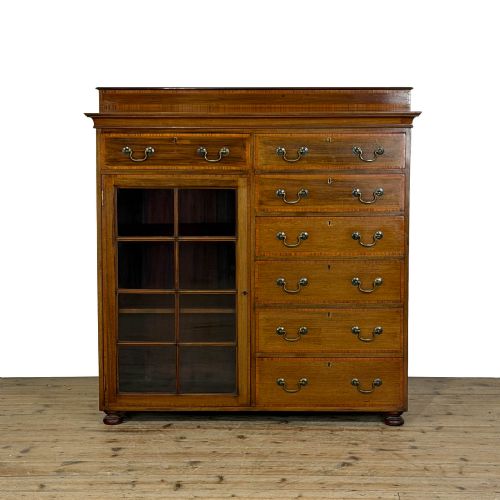
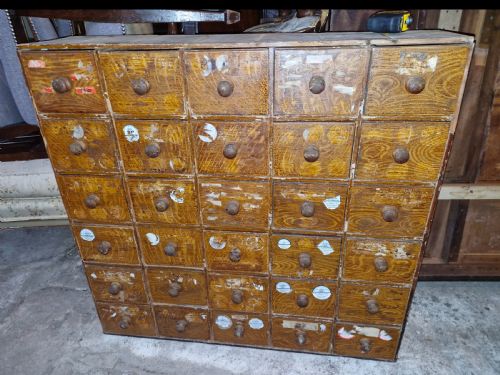
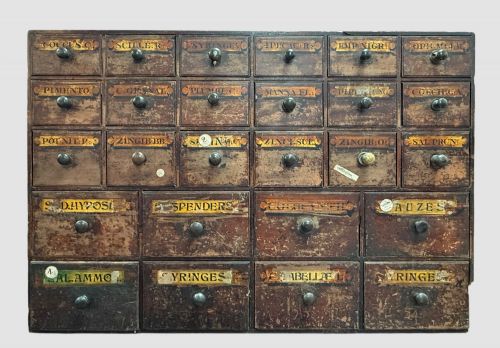
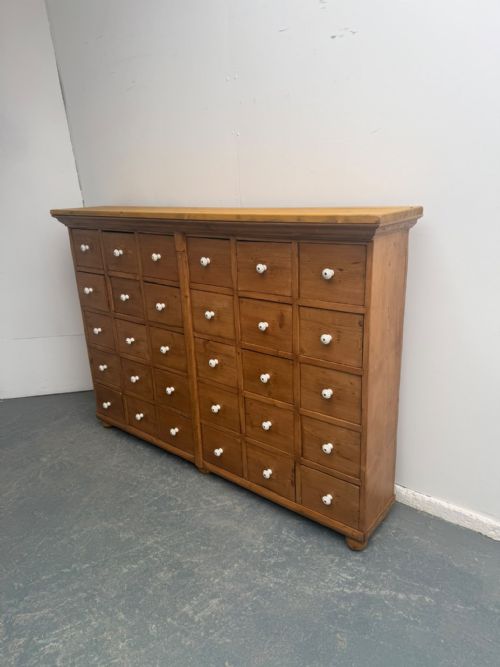
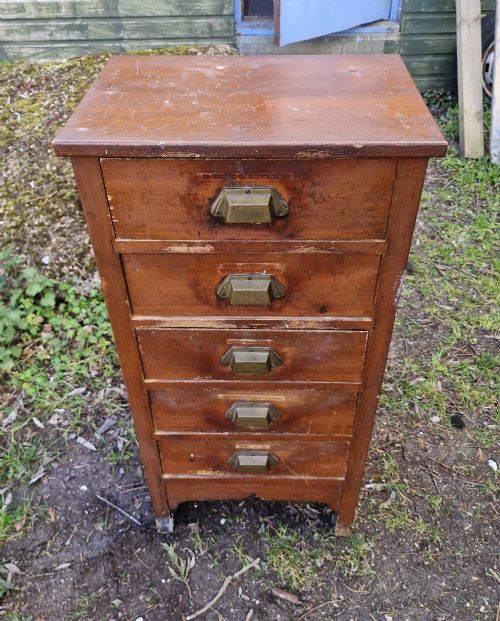
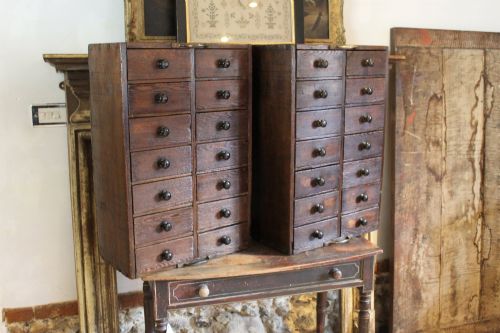
A collectors bank of drawers is a multi-drawer storage unit designed for sorting small items, appearing in forms such as apothecary cabinets, filing cabinets, and haberdashery units. The pieces seen here span the nineteenth century, the Victorian era, the Edwardian period, and into the nineteen-thirties.
Pine and mahogany examples appear frequently alongside walnut, oak, and metal variations. These multi-drawer banks serve utilitarian functions originating in pharmacies, shops, offices, and estate rooms.
Victorian and nineteenth-century pine and mahogany versions dominate the available selection, often featuring numerous small compartments for specialised storage needs.
Materials and construction methods
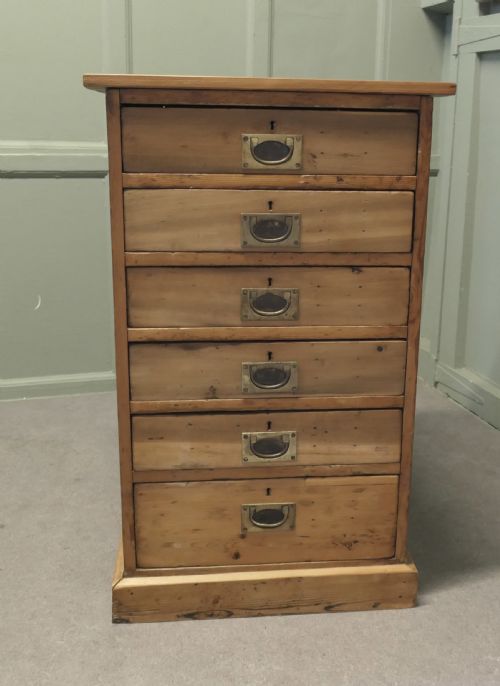
Cabinet makers utilised solid timbers including pine, mahogany, walnut, and oak to construct these multi-drawer storage units. Pine often forms the carcase of utilitarian workshop or apothecary pieces, while mahogany and walnut serve finer office and shop cabinets.
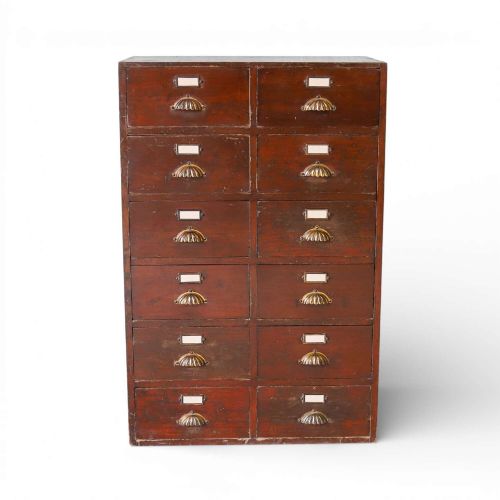
Hardware details such as brass shell pulls, label holders, drop handles, and ebonised knobs are integral to the construction. These metal fittings assist the daily retrieval of contents from numerous small compartments.
Collectors Bank of Drawers Retail Price Guide 2026
Typical asking prices for collectors bank of drawers among the pieces listed under this phrase on Sellingantiques today, from the lower quarter to the upper quarter. They describe what is for sale here now, not the wider market.
A watchmaker required an exceptionally tall bank of nine drawers to keep tiny gears from rolling away into oblivion.
Distinctions in quality
Quality rests in the integrity of the timber selection and the retention of original hardware, such as brass shell pulls, label holders, and drop handles. Cabinets retaining their surface patination and matching handles demonstrate superior preservation.
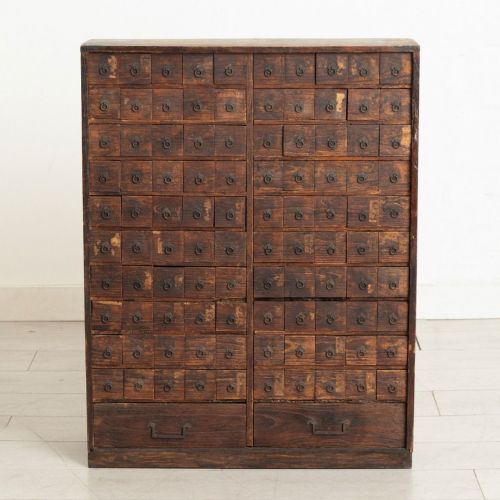
The complexity of the drawer configuration, from compact four-drawer shop chests to extensive thirty-drawer pharmacy and watchmaker banks, dictates the structural sophistication of the piece.
Luxmore's of Ilfracombe·D Napier & Sons
The Collectors Bank of Drawers Glossary
- Apothecary cabinet
- A multi-drawer storage unit historically used in pharmacies for organising medicines, herbs, and ingredients. These pieces typically feature numerous small drawers.
- Haberdashery cabinet
- A shop display and storage unit designed for textiles and small dry goods, often featuring glass panels or banks of shallow drawers. These pieces served retail environments.
- Shell pull
- A semi-circular brass handle shape resembling an open shell, frequently combined with a label holder. This hardware style appears commonly on nineteenth-century filing drawers.
- Graduated drawers
- A vertical stack of drawers decreasing in depth from bottom to top. This arrangement provides aesthetic balance and practical storage scaling.
Collectors Bank of Drawers: Frequently Asked Questions
What were bank of drawers used for?
These multi-drawer units served commercial, medical, and domestic purposes for sorting small items. Pharmacists, shopkeepers, watchmakers, and offices utilised them to keep inventories organised.
Over time, collectors adopted them for displaying and sorting small objects. Their compartmentalised design suited anyone requiring systematic storage.
How do I date a collectors bank of drawers?
Dating relies on timber choices, construction techniques, and hardware styles. Nineteenth-century and Victorian examples often use solid pine or mahogany with hand-cut joints.
Later Edwardian and early twentieth-century pieces incorporate different woods like satin walnut or oak. Original label holders and brass pulls also help anchor a piece to a specific decade.
Are these cabinets suitable for modern homes?
Their compact footprints and numerous small compartments make them practical for contemporary organisation. They fit into studies, kitchens, and living spaces for storing stationery or small collections.
Placing them in modern interiors provides functional surface space alongside historical character. The variety of sizes accommodates different spatial requirements.
What is the difference between a haberdashery and an apothecary cabinet?
Apothecary cabinets originated in pharmacies for medicinal storage, featuring many narrow drawers suited to powders and vials. Haberdashery units came from drapery shops for storing textiles and ribbons.
Both fall under the wider category of multi-drawer storage but reflect distinct retail and professional origins. Their internal drawer dimensions usually reveal their intended trade.